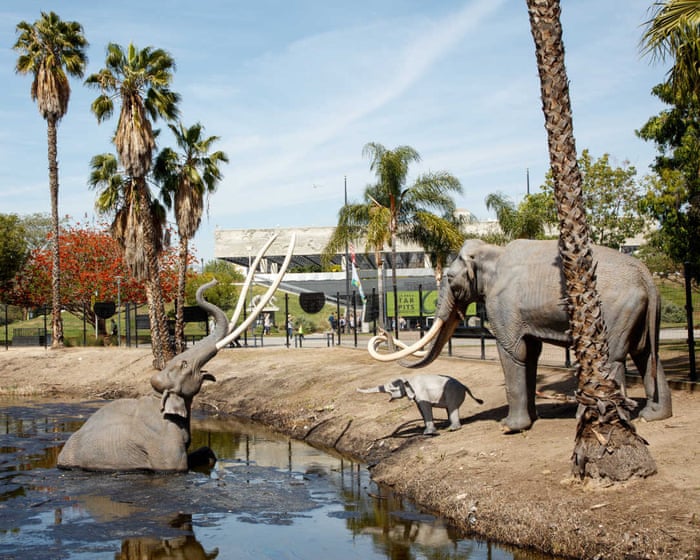
‘Pompeii, but in the middle of a massive city’: the ice age fossil site hidden in Los Angeles
Summary
The La Brea Tar Pits and Museum in Los Angeles holds one of the world’s richest fossil sites from the Ice Age, containing over 2 million preserved plants and animals trapped in natural tar pits. The museum, a unique urban excavation site, will close in July for two years to undergo a $240 million renovation to update its exhibitions and public spaces.Key Facts
- The La Brea Tar Pits hold more than 2 million fossils from Ice Age animals like mastodons and saber-toothed cats.
- These fossils were preserved in natural tar pits, which are pools of sticky asphalt that still bubble today.
- The site is unique because it is a working excavation within a large city (Los Angeles).
- The museum opened in 1977 and includes a research center, a museum, and a 13-acre public park.
- A $240 million renovation project starting in July 2024 will update the museum's interior and surrounding park over two years.
- The redesign is led by the New York firm Weiss/Manfredi, known for major park and museum projects.
- The site shows the entire process of fossil discovery and study, helping the public understand science.
- The tar pits were formed by natural oil upwellings and were used by the indigenous Chumash people for waterproofing boats before fossil discovery.
Read the Full Article
This is a fact-based summary from The Actual News. Click below to read the complete story directly from the original source.