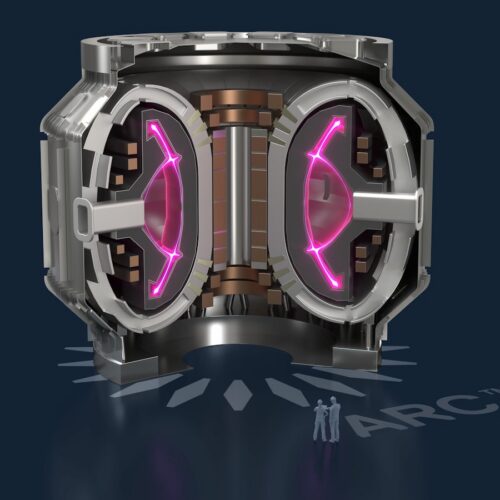
Commonwealth Fusion makes the physics case for its 400 MW reactor
Summary
Commonwealth Fusion is developing a new fusion reactor called ARC that aims to produce 400 megawatts (MW) of usable electricity by using advanced superconducting magnets. Their SPARC reactor, a smaller version of ARC, is more than 70% complete and expected to operate next year, which is much sooner than other projects like ITER that are still years away. The company recently published detailed scientific papers explaining their reactor design and how they plan to use fusion to generate power efficiently.Key Facts
- Commonwealth Fusion is building the SPARC tokamak, expected to operate by next year.
- ARC is a larger fusion power plant planned to produce about 1.13 gigawatts (GW) of fusion power and 400 MW of electricity sent to the power grid.
- ARC uses fusion of deuterium and tritium, isotopes of hydrogen, to generate helium, neutrons, and radiation.
- The reactor uses molten salt with lithium ions to absorb neutrons and generate tritium fuel continuously.
- ARC’s power output relies on cycles of 15 minutes of fusion followed by 1-minute resets, using thermal inertia to maintain heat.
- High-temperature superconductors will enable stronger magnetic fields for a smaller, faster-built reactor.
- The company has published five peer-reviewed papers outlining the science and design of ARC.
- ARC aims to deliver fusion energy sooner than large international projects like ITER, which expects to operate in the 2030s.
Read the Full Article
This is a fact-based summary from The Actual News. Click below to read the complete story directly from the original source.