The article discusses information related to a singer known as the "Life of a Showgirl" and hints at details about their wedding plans. It suggests that the singer has indicated where the wedding will take place.
Key Facts
The singer is nicknamed "Life of a Showgirl."
There is talk about the location of the singer’s wedding.
The singer may have shared details about this wedding location.
The article focuses on wedding-related news connected to the singer.
The specific wedding location is implied but not directly stated in the text provided.
Read the Original
Want the full story? Tap a source to open the original
article.
Scientists mapped underground fungal networks called arbuscular mycorrhizal fungi, which stretch across the Earth in vast webs that help plants get nutrients and store carbon. Their research showed these networks are longest in grasslands and shrinking in farmed areas, affecting how plants grow and how much carbon stays underground instead of warming the air.
Key Facts
Underground fungal threads total 110 quadrillion kilometers, enough to stretch nearly a billion times the distance between Earth and the sun.
These fungi connect with about 80% of the world’s plants, exchanging nutrients for carbon.
The networks store about 1 billion tons of carbon underground annually, helping slow climate change.
The study combined past research, soil samples worldwide, machine learning, and lab tests to map fungal distribution.
The fungi’s thin threads are smaller than human hair and can reach nutrients deep in the soil.
The densest fungal networks are found in grasslands; they are declining in agricultural areas.
The new global fungal map helps understand how these networks support plants and capture carbon.
Researchers used a robot with a camera to measure fungal thread size in lab conditions for more accurate data.
Read the Original
Want the full story? Tap a source to open the original
article.
A woman in the U.K. planned routine surgery was surprised to find out she was pregnant after a hospital pregnancy test, despite a negative home test the week before. Her surgery was canceled, and she is now 26 weeks pregnant and preparing to have the baby.
Key Facts
Amy Christophers, 39, went to Duchy Hospital in Cornwall, England, for routine surgery on New Year’s Eve.
She had taken a home pregnancy test a week before that was negative.
The hospital performed a standard pregnancy test using her urine before surgery.
The hospital test came back positive, revealing she was pregnant.
The planned surgery was canceled because it was not urgent and she was advised to wait until after pregnancy.
Christophers had previously lost twins in 2019 and had struggled with conception.
She shared the news first with a friend, then with her partner, who was surprised.
She is currently 26 weeks pregnant and preparing for the new baby.
Read the Original
Want the full story? Tap a source to open the original
article.
A man in Yemen known as "Spider-Man" died after falling while climbing a 120-meter volcanic crater without any safety equipment. He was known for sharing videos of his risky climbs, and many people expressed sadness after his death.
Key Facts
The man was known as Al-Qa’qa’ bin Antar, nicknamed Yemen’s "Spider-Man."
He was climbing the Haradhat Damt volcanic crater, which is 120 meters tall.
He did not use any climbing equipment during the climb.
He fell and died while making this climb.
He became popular for sharing videos showing his dangerous climbing attempts.
Fans and followers paid tribute to him after his death.
Read the Original
Want the full story? Tap a source to open the original
article.
Derbyshire Police is investigating an officer accused of using artificial intelligence (AI) to create fake evidence in some cases. The officer has been taken off frontline duties while the inquiry continues, and no arrests have been made so far.
Key Facts
A Derbyshire Police officer is accused of using AI to produce false evidence.
The police have started a criminal investigation into the officer for possibly perverting the course of justice.
No arrests have been made yet in connection with the case.
The accused officer has been removed from active police duties during the investigation.
The Crown Prosecution Service is involved and working with police and defense teams.
The investigation is at an early stage, so more details are not available.
This case comes just after the launch of a new national AI center for policing called PoliceAI.
PoliceAI aims to help law enforcement use AI responsibly to improve crime fighting and public safety.
Read the Original
Want the full story? Tap a source to open the original
article.
The UK government announced a £1.1 billion investment in AI hardware during London Tech Week to build its AI infrastructure. It also introduced plans to improve AI skills and encourage businesses to use AI technology more widely.
Key Facts
The UK plans to invest £1.1 billion in AI hardware like semiconductor chips and data centers.
Most advanced AI chips today are made by Taiwan Semiconductor Manufacturing Corporation (TSMC).
UK chip designer Arm Holdings is expected to benefit from a new “strategic industry partnership.”
£400 million will be spent on UK chip makers through procurement opportunities, some of which were previously announced.
The government will invest £20 million to study how AI is changing entry-level jobs and support employee up-skilling.
A “bridge AI” scheme will help UK companies buy AI products developed domestically.
The UK will expand its “tech town” program to spread AI adoption in cities like Barnsley.
Sector-specific plans will support AI use in advanced manufacturing and creative industries.
Read the Original
Want the full story? Tap a source to open the original
article.
A new lab in the UK, called Nerve Lab, is using brain imaging and artificial intelligence (AI) to study how children respond to different types of screen content. Researchers aim to understand how features like pacing and colors affect children’s attention and develop tools to help creators make age-appropriate programs.
Key Facts
The Nerve Lab at University of the Arts London opened recently and is the first of its kind in the UK.
The lab uses wearable brain imaging, motion capture, and AI to study how people react to media in real time.
Researchers are focusing on how children aged 3 to 6 watch animated TV shows with different styles and speeds.
They have collected a database of about 1,000 episodes of popular children’s shows for AI analysis.
The research looks at features like pacing, loudness, colorfulness, shot frequency, and story structure.
Families in the UK are being invited to join an online study to explore children’s short-term attention during viewing.
The goal is to create tools that help animators, producers, and regulators understand the impact of children’s content.
Experts say AI can analyze children’s media more quickly and accurately than older manual methods.
Read the Original
Want the full story? Tap a source to open the original
article.
A New York man named Dmitriy Popov has been convicted of manslaughter as a hate crime for fatally stabbing vogue dancer O’Shae Sibley in 2023. Popov faces 8 to 25 years in prison, with sentencing planned for June 30.
Key Facts
Dmitriy Popov was 17 at the time of the stabbing and is now 20 years old.
Popov stabbed O’Shae Sibley outside a Brooklyn gas station on July 29, 2023.
Popov claimed he acted in self-defense, but prosecutors said the attack was motivated by anti-LGBTQ+ hatred.
The jury found Popov guilty of manslaughter as a hate crime and several other charges but acquitted him of murder as a hate crime.
Popov’s lawyer said the verdict was bittersweet because Popov was not found guilty of murder but still faces serious prison time.
O’Shae Sibley was a 28-year-old vogue dancer known for celebrating his LGBTQ+ identity through dance.
Sibley was with friends dancing and listening to music when the encounter with Popov started.
New York law allows those 13 or older to be tried as adults for murder, which applied in this case.
Read the Original
Want the full story? Tap a source to open the original
article.
President Donald Trump signed a law that adds about $70 billion to the Department of Homeland Security to support immigration enforcement through the end of his second term. Most of the money goes to Immigration and Customs Enforcement (ICE) and Customs and Border Protection (CBP) to strengthen border security and deportation efforts. The bill does not include requested reforms from Democrats focused on accountability and oversight.
Key Facts
The law provides roughly $70 billion through September 2029 for DHS immigration enforcement.
About $38 billion goes to ICE, $26 billion to CBP, and $5 billion for DHS general use.
Funds support border agents, ICE personnel, law enforcement cooperation, deportation legal teams, and facility maintenance.
$350 million is set aside to enforce immigration laws in areas that do not cooperate with federal agencies, targeting sanctuary cities.
The bill prohibits spending on programs that release immigrants into the community with monitoring tools like ankle monitors.
Immigration advocates say the law lacks rules for agency accountability and congressional oversight of detention centers.
The bill passed without Democratic demands for reforms such as requiring warrants for arrests on private property, banning masks for officers, enforcing body cameras, or limiting enforcement near sensitive locations.
This latest funding follows earlier large allocations totaling hundreds of billions for immigration enforcement under President Trump’s current administration.
Read the Original
Want the full story? Tap a source to open the original
article.
The article describes a man in his early 40s reflecting on his recent breakup and his experiences with relationships over time. It also discusses a social media trend where people share videos of themselves enjoying being alone, showing that solitude can be positive rather than something to feel bad about.
Key Facts
The author is a 41-year-old man who recently ended a serious relationship.
He has experienced multiple breakups and a failed marriage, and has an eight-year-old son.
People on TikTok are posting "loneliness influencer" videos, showing everyday solo activities like walking or eating alone.
These videos promote the idea that being alone is okay and can be enjoyable.
The trend challenges the cultural belief that solitude is socially undesirable or abnormal.
The author relates to the appeal of solitude, especially after many relationship struggles past age 40.
Social media validates the need for connection but in an easier, one-way way.
The article is a personal reflection on relationships, loneliness, and modern social habits.
Read the Original
Want the full story? Tap a source to open the original
article.
The Federal Communications Commission (FCC) has started an early public comment period for Disney’s ABC to renew its licenses for eight local TV stations. This unusual move lets anyone in the US argue against ABC’s license renewal, based on issues including but not limited to diversity practices and how well ABC serves the public.
Key Facts
The FCC ordered ABC to apply early for renewing licenses for its eight local TV stations.
The early renewal order is seen by some as retaliation against ABC’s criticism of President Donald Trump.
The FCC chair said the decision was based on an investigation of ABC’s diversity, equity, and inclusion (DEI) practices.
ABC disputes the FCC’s reasoning and says the investigation is just an excuse to punish the network for political reasons.
The public and organizations can file petitions against ABC’s license renewals until June 29.
Petitioners can challenge any part of ABC’s fitness for broadcasting, not just diversity issues.
Legal experts expect a lengthy review process, possibly lasting two to three years, including hearings, appeals, and court cases.
ABC can keep operating while the license renewal process takes place.
Read the Original
Want the full story? Tap a source to open the original
article.
A Japanese-American woman married a man she had never met in person through a group wedding ceremony organized by the Unification Church. She held his photograph during the ceremony and met him for the first time a week later in South Korea, where they faced language barriers and personal differences.
Key Facts
The woman was 20 years old when she married.
She participated in a mass wedding event led by Reverend Sun Myung Moon.
The ceremony involved over 3,000 couples.
Brides often married men they had not previously met or seen.
Her parents paid several thousand dollars to arrange the marriage.
She learned about her husband only three days before the wedding.
She met her husband for the first time in South Korea after the wedding.
They communicated with broken English, broken Korean, and hand gestures.
Read the Original
Want the full story? Tap a source to open the original
article.
Many historic landmarks and museums across the United States are reopening in 2026 after years of renovations. These reopenings are planned to coincide with the country’s 250th anniversary and follow major federal funding efforts to improve and preserve national sites.
Key Facts
Several important historic sites in Washington D.C., Philadelphia, Virginia, and Iowa are reopening or have reopened in 2026.
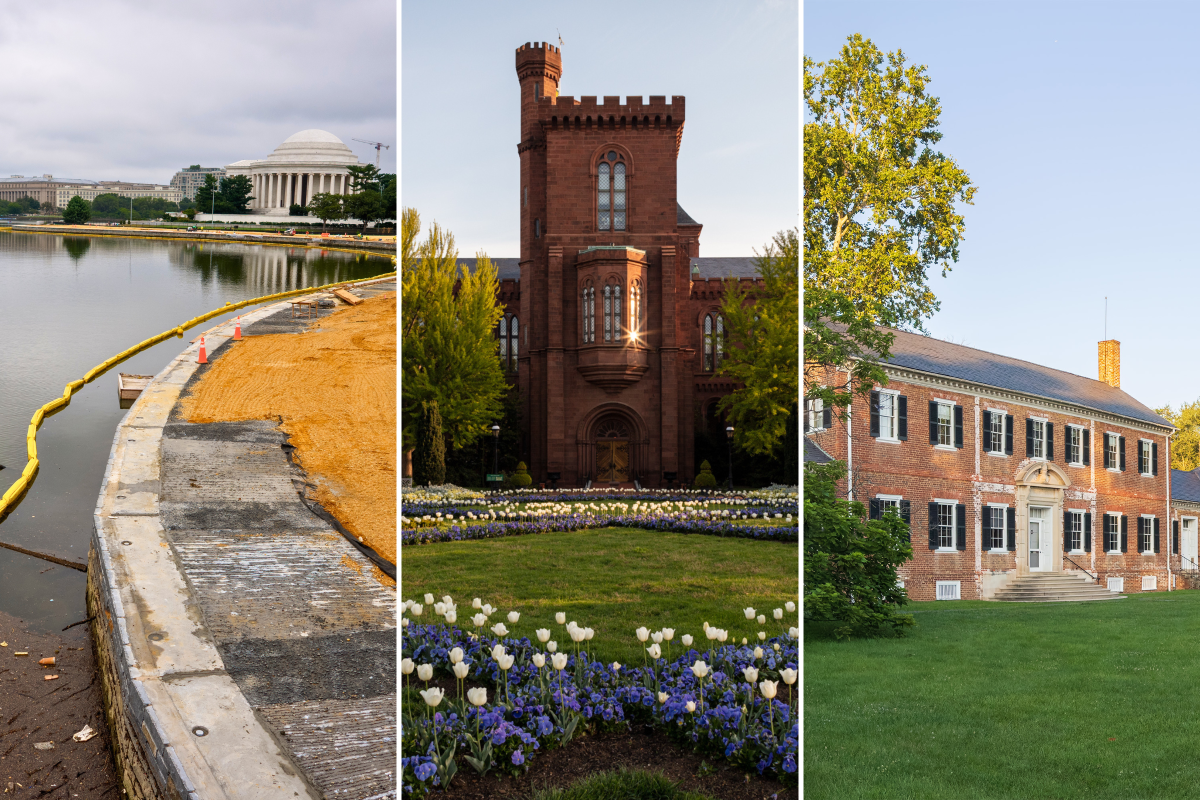
The Smithsonian Castle reopened temporarily in May 2026 after renovations started in 2023.
The Smithsonian Arts and Industries Building is reopening in June 2026 for regular public visits for the first time since 2004.
The First Bank of the United States in Philadelphia is reopening after a $43 million restoration.
Historic Chatham estate in Virginia and the Herbert Hoover Presidential Library in Iowa are also reopening after major work.
The Tidal Basin seawall in Washington, D.C. was rebuilt by April 2026 to protect landmarks like the Jefferson Memorial.
The Colonial Parkway in Virginia is undergoing a $123 million rehabilitation with phased reopenings.
The Lincoln Memorial Undercroft will open as a new museum space in June 2026.
These projects were largely funded by federal programs including the 2020 Great American Outdoors Act, which provided billions to fix maintenance backlogs at national parks and historic sites.
Read the Original
Want the full story? Tap a source to open the original
article.
Paris and the surrounding region will face major public transport disruptions during July and August 2026 due to planned infrastructure work. Key train and metro lines will be partly or fully closed, causing longer travel times, especially to popular places like Disneyland, Versailles, and Paris airports.
Key Facts
Major construction will affect RER train lines A, B, C, D, and E, as well as several metro and tram lines in Paris and Île-de-France.
The RER A line will close certain sections, including Nation station and a part between Vincennes and Noisy-le-Grand Mont d’Est, requiring shuttle buses for Disneyland visitors.
The central section of RER B between Gare du Nord and the south, including the route to Charles-de-Gaulle Airport, will close from July 25 to August 16.
RER C will be suspended between Paris Austerlitz and Versailles Château Rive Gauche from July 15 to August 22, affecting access to the Palace of Versailles.
RER D lines between Gare du Nord and Gare de Lyon will have partial closures and limited services in late July to mid-August.
RER E line will face major disruptions from July 11 to August 7 due to extension and modernization work.
Metro lines 4 and 5 will be busier as passengers shift routes, and five metro lines overall will run with limited service.
Travelers are advised to check transport apps and allow extra time for journeys, especially during evenings, weekends, and transfers.
Read the Original
Want the full story? Tap a source to open the original
article.
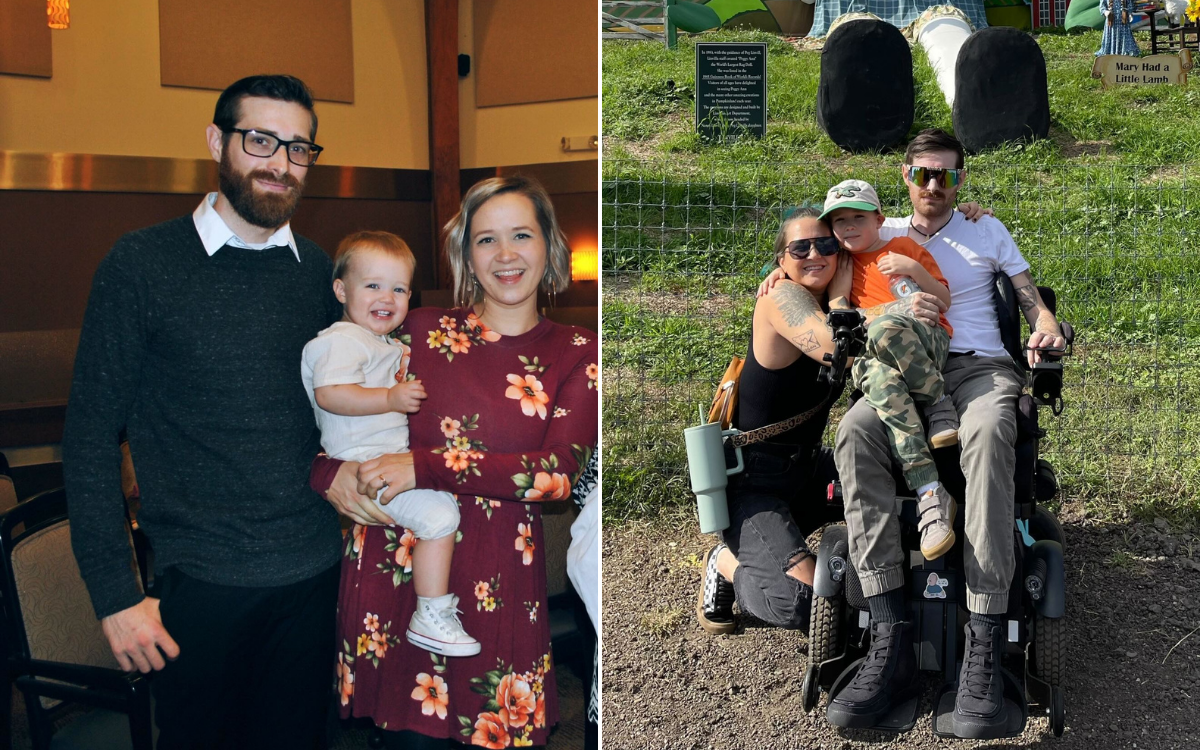
Eric Coultas was diagnosed with amyotrophic lateral sclerosis (ALS), a serious nerve disease, at age 33 after doctors initially missed early signs of his symptoms. His wife, Allie, is sharing their story to raise awareness about warning signs of ALS that doctors may overlook.
Key Facts
Eric first felt weakness in his hands in January 2020.
Early doctor visits, some by video due to COVID-19, did not lead to thorough testing.
Eric experienced worsening symptoms including falling and muscle loss.
In November 2020, during a face-to-face exam, Eric was diagnosed with ALS.
ALS causes gradual loss of muscle control and has no cure; average survival is 2-5 years after diagnosis.
Despite the diagnosis, Eric pursued riding his motorcycle on a long trip before symptoms worsened.
Their young son Logan has been gradually told about his father’s illness over several years.
Eric’s family focuses on emotional support and making the most of the time they have together.
Read the Original
Want the full story? Tap a source to open the original
article.
Anti-immigrant riots recently took place in Belfast, Northern Ireland, in areas still divided along religious and political lines from past conflicts. The violence is linked to long-standing community divisions stemming from decades of sectarian unrest known as the Troubles, which officially ended with a 1998 peace agreement.
Key Facts
Riots began after a video surfaced showing a stabbing incident involving a Sudanese man and a local Belfast man.
Violence occurred mainly in Protestant unionist neighborhoods, especially in "interface areas" separated from Catholic neighborhoods by fences.
Cars and houses were set on fire, and some minority ethnic families were forced to leave their homes.
Loyalist paramilitary groups, remnants from the Troubles, still have influence in Protestant areas but claim they did not organize the violence.
High youth unemployment and limited access to housing, healthcare, and education contribute to frustration in affected communities.
Belfast’s Catholic population has grown larger than the Protestant population since the Troubles ended.
Many residents feel their cultural identity is shrinking due to demographic changes and immigration.
Northern Ireland has one of the smallest proportions of ethnic minorities in the UK, roughly three percent of the population.
Read the Original
Want the full story? Tap a source to open the original
article.
Recent riots in Belfast, Northern Ireland, show that the long history of conflict between Catholic and Protestant communities still affects life today. Violence broke out after a stabbing incident, with attacks mainly in areas where these communities live separately, highlighting ongoing tensions and challenges around immigration and social issues.
Key Facts
Belfast experienced several days of riots sparked by a violent stabbing incident involving a Sudanese man and a local man.
The conflict reflects the lingering effects of the Troubles, a three-decade conflict between mostly Catholic republicans and Protestant unionists that ended with a 1998 peace agreement.
Violence happened in "interface areas" where Protestant and Catholic neighborhoods are separated by fences and signs.
Protesters, often masked young men, burned cars and houses and targeted homes of ethnic minorities.
Loyalist paramilitary groups, linked to the unionist community, are said to still influence areas, although they claim they did not start the riots.
Some local people blame immigrants for poor housing, healthcare, and education access, but experts say this is a misconception.
Northern Ireland has a very small ethnic minority population, just over 3%, but protests show rising racial tensions within unionist communities.
There is a shift in some unionist areas, focusing hostility more on immigrants than on the Catholic community, marking a new social division.
Read the Original
Want the full story? Tap a source to open the original
article.
Albanian Prime Minister Edi Rama held a rally with supporters in Tirana on June 13, 2026. At the same time, thousands of people gathered nearby asking him to resign over an ongoing dispute involving a resort linked to President Donald Trump.
Key Facts
The rally took place in Tirana, the capital of Albania.
Supporters of Prime Minister Edi Rama showed up to support him publicly.
At the same time, many protesters were calling for Rama’s resignation.
The protests are related to a controversy involving a resort in Albania.
The resort has connections to President Donald Trump.
The situation has caused political tension and daily demonstrations.
The article reports on these events as of June 13, 2026.
Read the Original
Want the full story? Tap a source to open the original
article.
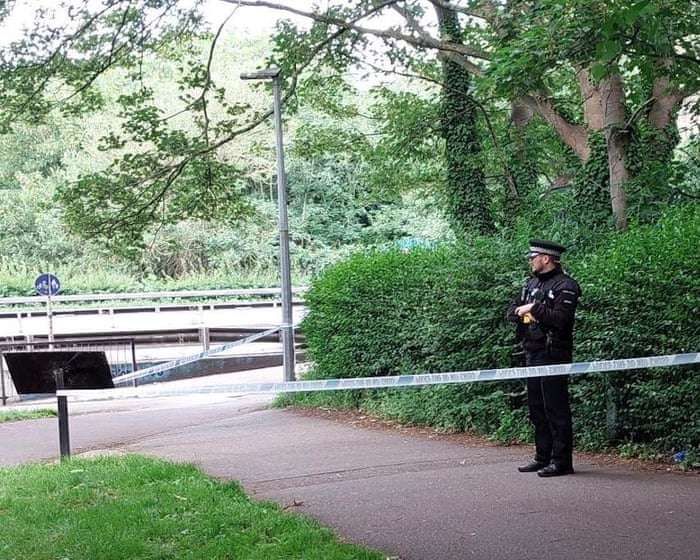
Three teenagers, aged 14, 17, and 18, were arrested for the suspected murder of a 21-year-old man in a park in Essex. The victim was found with serious injuries and died at the scene despite medical efforts.
Key Facts
The incident happened around 7 pm on a Friday in Central Park, Chelmsford, Essex.
The victim, a 21-year-old man, died at the scene from critical injuries.
Three suspects, aged 14, 17, and 18, were arrested shortly after the incident.
Police are not looking for any more suspects and say there is no ongoing danger to the public.
The victim’s family has been informed and is receiving support from trained officers.
An investigation is ongoing, and police are asking the public for any information.
The police believe even small details from witnesses could help the case.
Officers are trying to understand exactly what happened in this busy public area.
Read the Original
Want the full story? Tap a source to open the original
article.
Hundreds of people gathered in southwestern France to say goodbye to an 11-year-old girl who was killed. Her death caused protests across France and highlighted problems in the country's legal system.
Key Facts
The girl was 11 years old.
Her suspected murder led to nationwide protests in France.
The incident revealed issues with how the French justice system works.
The farewell gathering took place in southwestern France.
The case caught the attention of many citizens and media.
The protests showed public anger about safety and justice.
The article was published on June 13, 2026.
Read the Original
Want the full story? Tap a source to open the original
article.