U.S. Ambassador to China David Perdue said that President Donald Trump suggested the idea of selling weapons to China during meetings with Chinese President Xi Jinping. This was mentioned in an interview on "Fox News Sunday."
Key Facts
President Trump proposed selling weapons to China.
This proposal happened during meetings with Chinese President Xi Jinping.
The information was shared by U.S. Ambassador to China David Perdue.
Perdue spoke about this on the show "Fox News Sunday."
President Trump highlighted that the U.S. sells arms to many countries worldwide.
Selling weapons to China would be a notable change in U.S. policy.
The discussions were part of ongoing talks between the U.S. and China.
Read the Original
Want the full story? Tap a source to open the original
article.
Madonna performed at the 2026 MTV Video Music Awards for the first time in 23 years. Her show included guest performances by Sabrina Carpenter and Charli XCX and featured appearances from actors linked to a Madonna biopic.
Key Facts
Madonna opened the 2026 MTV VMAs with a live performance in Los Angeles.
Sabrina Carpenter joined Madonna to sing their song "Bring Your Love" from Madonna’s new album "Confessions II."
Charli XCX made a surprise appearance to perform her remix of Madonna's song "Danceteria."
Actors Seth Rogen, Sombr, and Julia Garner appeared during the performance; they are connected to a planned movie about Madonna's life.
The VMAs broadcast was delayed due to a football game between the Baltimore Ravens and Dallas Cowboys.
Snoop Dogg hosted the 2026 VMAs, which were held on the West Coast for the first time in almost ten years.
Taylor Swift arrived on the red carpet wearing a black halter bodysuit and silver skirt.
The VMAs were broadcast live on CBS and streamed on MTV and Paramount+.
Read the Original
Want the full story? Tap a source to open the original
article.
Hundreds of supporters of Venezuelan opposition leader Maria Corina Machado held protests to demand her safe return and new presidential elections. Machado has been living in exile, and opposition groups accuse the government of blocking her return while promising a democratic transition.
Key Facts
Supporters wore sky blue shirts and waved Venezuelan flags during protests in Caracas and other cities.
Machado has been in exile for nine months and made three failed attempts to return to Venezuela.
Opposition claims the government is preventing her return; authorities deny this.
Venezuela recently released over 30 political prisoners after talks backed by the United States.
Machado was barred from running in the last election, which opposition says was rigged in favor of Nicolás Maduro.
Maduro’s government cracked down on dissenters after the election, forcing Machado and others into hiding.
Maduro was taken from Caracas in January by US special forces, but Machado has not returned since.
The current government, led by Maduro ally Delcy Rodriguez, says it plans elections but has not set a date.
Read the Original
Want the full story? Tap a source to open the original
article.
More than 50 people were arrested by police in Liverpool during protests supporting the banned Palestine Action group outside the UK Labour Party conference. The group was declared a terrorist organization by the Labour government in July 2025, and the arrests were made under the Terrorism Act as protesters displayed supportive materials.
Key Facts
Over 50 protesters were arrested outside the Labour Party conference in Liverpool.
The protest was organized by Defend Our Juries in support of Palestine Action.
Palestine Action was banned and labeled a terrorist group by the UK government in July 2025.
More than 250 people protested with banners supporting Palestine Action before arrests started.
Police said they respected lawful protest rights but acted to maintain public safety.
Amnesty International UK criticized the arrests as an attack on free speech.
Activists also confronted Foreign Secretary Ed Miliband, asking to lift the ban on Palestine Action.
Since the ban, over 3,600 people have been arrested showing support for Palestine Action.
Read the Original
Want the full story? Tap a source to open the original
article.
Taylor Swift became the most-awarded artist in MTV Video Music Awards (VMA) history by winning her 31st award at the 2026 ceremony. She received the first-ever Artist Director Honors for her work directing music videos and premiered her new video for the song “Patient Zero.”
Key Facts
Taylor Swift now holds the record for the most MTV VMA wins with 31 awards, surpassing Beyoncé.
She was awarded the inaugural Artist Director Honors, recognizing artists who direct music videos and contribute to visual storytelling.
Swift has worked on about 60 music videos, writing and directing 18 of them.
At the ceremony, she premiered the self-directed video for “Patient Zero,” starring actors Colin Farrell and Dakota Johnson.
“Patient Zero” is her first single release since marrying Travis Kelce, a Kansas City Chiefs football player, in July 2026.
The 2026 MTV VMAs took place at the Peacock Theater in Los Angeles and aired live on CBS.
Madonna performed and won the award for artist of the year during the show.
Snoop Dogg hosted the event, with other artists like LISA and Charli XCX winning awards and performing.
Read the Original
Want the full story? Tap a source to open the original
article.
The UK will experience warm temperatures early this week due to a large low-pressure system drawing warm winds from the south. After Tuesday’s warmth, rain and stronger winds will move in, especially in northern and western areas, while southeastern England may stay drier.
Key Facts
A low-pressure system in the Atlantic will bring warm south to south-easterly winds to the UK early this week.
Tuesday is expected to be the warmest day, with temperatures up to 26°C in some parts of England and Wales.
Rain will reach Northern Ireland Tuesday afternoon and spread eastward, bringing wet and windy weather, especially to Scotland, Northern Ireland, and western England and Wales.
Central, southern, and eastern England, which have drought issues, may see little to no rain this week.
After the rain passes, the weather will be sunnier but still windy on Wednesday in western regions.
High pressure is expected to bring calmer and drier conditions by Thursday and Friday.
September has been warmer than average and marked by a sharp contrast in rainfall, with northwest areas much wetter than southeast England.
Some places in northern Scotland have had rain every day for nearly a month, while parts of eastern England remain very dry.
Read the Original
Want the full story? Tap a source to open the original
article.
France’s far-right National Rally (RN) party won a record 14 seats in the French Senate, increasing their presence four times from before. This is the first time RN has enough senators to form an official group in the 348-seat Senate, just months before the presidential election.
Key Facts
The National Rally (RN) and its allies won 14 seats in the French Senate elections.
RN previously had only three senators in 2023, and two in 2014.
The Senate has 348 seats, with half chosen every three years for six-year terms.
RN presidential candidate Marine Le Pen called the result a historic victory.
RN allied with Eric Ciotti’s Union of the Right for the Republic, which won two seats.
Eric Ciotti left the Republicans party in 2024 and supports an alliance with the far right.
The right, center, and Socialist parties remain the main groups in the Senate.
The far-left France Unbowed party won a Senate seat for the first time.
Read the Original
Want the full story? Tap a source to open the original
article.
Celebrities attended the 2026 MTV Video Music Awards red carpet event in Los Angeles. The awards show was hosted by Snoop Dogg, and stars like Taylor Swift and Charli XCX wore stylish outfits for the event.
Key Facts
The 2026 MTV Video Music Awards took place on Sunday night in Los Angeles.
Snoop Dogg was the host of the event.
Celebrities including Taylor Swift and Charli XCX walked the red carpet.
The event showcased glamorous and fashionable looks from the stars.
The awards focus on music videos and celebrate achievements in the music industry.
Read the Original
Want the full story? Tap a source to open the original
article.
The 2026 MTV Video Music Awards featured performances by Madonna, Kacey Musgraves, LISA, and a tribute to Dolly Parton. Taylor Swift received a new Artist Director honor, making her the most-awarded artist in VMA history.
Key Facts
Madonna performed songs with Sabrina Carpenter and Charli XCX, including "Bring Your Love" and "Danceteria."
Kacey Musgraves sang "I Will Always Love You" as a tribute to Dolly Parton, who died last month.
K-Pop singer LISA performed "SaWaDiKa" for the first time on TV and won Best Pop for "Dream feat. Kentaro Sakaguchi."
Nirvana members received the Video Vanguard award recognizing their impact on music videos, with clips of late singer Kurt Cobain shown.
Taylor Swift was honored with the first-ever Artist Director award for her work behind the camera in music videos.
Swift is nominated in 11 categories and is set to become the VMAs’ most-awarded artist, surpassing Beyoncé.
The show took place at the Peacock Theater in Los Angeles and was broadcast on CBS and MTV with streaming on Paramount+.
Read the Original
Want the full story? Tap a source to open the original
article.
Police arrested five men near RAF Fairford in the UK after they found explosives in three vans. The arrests followed a call from a local woman who spotted suspicious activity, and officials are investigating possible links to Iran. The base is now on high alert.
Key Facts
Five men were arrested for terror and explosive offenses near RAF Fairford.
Three vans containing explosive devices were found and examined by bomb disposal teams.
The incident happened after Iran threatened to attack RAF Fairford, which has been used by US forces to strike Iran.
A local woman reported seeing people in balaclavas near the base, leading to a police call that helped stop the plot.
Police say the arrests were not planned or based on prior intelligence; the intervention came after the emergency call.
RAF Fairford and RAF Lakenheath, both hosting US troops, have raised their threat levels.
About 85 families near the base were evacuated as a safety measure.
US President Donald Trump said the suspects intended to cause "big damage" to the base where US forces operate.
Read the Original
Want the full story? Tap a source to open the original
article.
Ethiopia’s army chief said that Eritrea and Sudan are supporting armed groups fighting against Ethiopian federal troops. The Tigray People’s Liberation Front (TPLF) has seized airports and towns, escalating clashes that risk reigniting the deadly civil war from 2020-2022.
Key Facts
Ethiopia’s army commander accused Eritrea and Sudan of helping groups fighting Ethiopian forces in the north.
The TPLF said it is defending itself and has took control of airports and the town of Erebti in Afar region.
The conflict has caused displacement of about 150,000 people in Afar.
The TPLF is moving toward Afdeera, aiming to cut supply routes from Djibouti, Ethiopia’s main trade port.
The headquarters of Tigrai TV, seen as a TPLF media outlet, was hit by a drone strike and is currently off-air.
The Ethiopian government suspended Tigrai TV and banned other stations from broadcasting its reports.
Phone and internet services have been disrupted in Tigray since Friday, making communication difficult.
The United Nations expressed concern about drone use and civilian harm in the conflict.
Read the Original
Want the full story? Tap a source to open the original
article.
UK Foreign Secretary Ed Miliband was confronted by activists at a restaurant in Liverpool about the government banning a group called Palestine Action. At the same time, over 50 protesters were arrested outside a Labour Party meeting while showing support for the group.
Key Facts
Ed Miliband is the UK Foreign Secretary.
Activists challenged him at a Pizza Express restaurant in Liverpool.
The activists were protesting the ban on Palestine Action.
Palestine Action is a group that has been proscribed, meaning it is officially banned.
More than 50 people were arrested during protests outside a Labour Party conference.
The protests were in support of Palestine Action.
The incident happened near a political event related to the Labour Party.
Read the Original
Want the full story? Tap a source to open the original
article.
Israel’s security minister Itamar Ben-Gvir released a video threatening to kill Hassan Salameh, a senior Hamas member. Salameh is in jail serving multiple life sentences for attacks organized by Hamas in 1996, including bombings on buses.
Key Facts
Itamar Ben-Gvir is Israel’s security minister.
Ben-Gvir released a video threatening Hassan Salameh’s life.
Hassan Salameh is a senior member of Hamas.
Salameh is serving several life sentences in prison.
He was convicted for his role in Hamas attacks in 1996.
The 1996 attacks included bus bombings.
Hamas is a Palestinian militant group.
Read the Original
Want the full story? Tap a source to open the original
article.
More than 1,000 news organizations worldwide support World News Day to highlight the importance of trustworthy journalism. The event aims to address declining public trust in news as more people turn to social media and AI tools for information.
Key Facts
Over 1,000 news providers, including the New York Times and Reuters, participate in World News Day.
Global trust in news reached a new low in 2026, according to the Reuters Institute.
People are increasingly using social media and AI chatbots as news sources, though these are less trusted.
World News Day encourages news organizations to collaborate to survive changes in the media landscape.
The media faces challenges such as public anxiety, distrust, and a wide variety of news sources.
Traditional news outlets are still seen as more accurate and impartial than most online platforms.
The founder of South Africa’s Daily Maverick emphasized the need for media to explain the value of truth and facts.
The article notes ongoing disputes over "fake news," including tensions involving President Donald Trump.
Read the Original
Want the full story? Tap a source to open the original
article.
Hundreds of protesters blocked a road in Portadown, Northern Ireland, stopping an Orange Order parade from happening for the first time in 30 years. Political leaders and community members are involved in ongoing discussions to find a solution to the dispute.
Key Facts
The Drumcree parade, linked to past serious violence in Northern Ireland, was scheduled to happen after 30 years.
Protesters blocked the parade route, causing the event to be delayed and largely stopped.
Northern Ireland's First Minister, Michelle O'Neill, took part in the protest.
Members of the Orange Order and some politicians from the Democratic Unionist Party waited nearby, unable to proceed.
DUP leader Gavin Robinson accused O’Neill of breaking the law by protesting.
Northern Ireland Secretary Sir Chris Bryant urged compromise and continued talks but said no solution had been reached yet.
Local residents' groups want to permanently stop the parade from passing through certain areas.
Discussions are ongoing between political parties and community leaders to find a way forward.
Read the Original
Want the full story? Tap a source to open the original
article.
Slinger Francisco, known as the Mighty Sparrow and called the "calypso king of the world," died at age 91 in New York after a brief illness. He was a famous singer and songwriter from Trinidad and Tobago who helped make calypso music popular worldwide.
Key Facts
Slinger Francisco was born in Grenada in 1935 and moved to Trinidad and Tobago as a child.
He became famous in 1956 with his hit song "Jean and Dinah."
Mighty Sparrow recorded hundreds of songs and performed around the world, including at Madison Square Garden in New York.
He helped spread calypso music, which started in Trinidad and Tobago, to a global audience.
His career lasted over 60 years as a singer, songwriter, and mentor.
He received national awards from Trinidad and Tobago and an honorary degree from the University of the West Indies.
Francisco died peacefully surrounded by family on a Sunday in New York.
He was respected as a major cultural figure and entertainer in the calypso music genre.
Read the Original
Want the full story? Tap a source to open the original
article.
Some Indian civil servants become well-known by being strict and efficient in their work, such as inspecting restaurants for safety and stopping illegal construction. These officials are seen as heroes because many government services in India often face delays and corruption, so doing their jobs properly stands out to the public.
Key Facts
Tukaram Mundhe leads Maharashtra’s Food and Drug Administration and has exposed poor hygiene and expired food in restaurants.
He also found big differences between hospital supply costs and patient charges.
Mundhe’s work is popular on social media and many people want similar officials in other states.
Other officials, like RS Batth in Gurugram, have won praise for stopping illegal construction.
Indian civil servants usually face criticism for delays, bribes, and being unhelpful.
Past officials like TN Seshan and Kiran Bedi became famous for strong rule enforcement.
Many government offices in India are known for long waits and difficult procedures.
Some strict officers receive criticism for not adapting rules to real-life situations.
Read the Original
Want the full story? Tap a source to open the original
article.
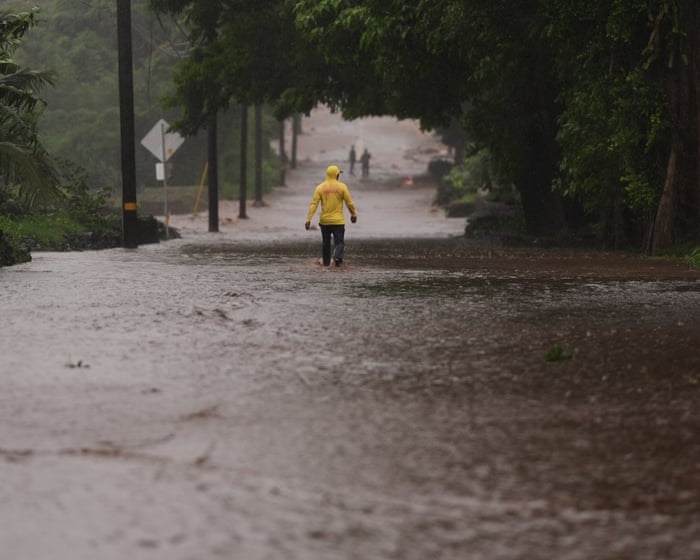
Hurricane Nolo is moving away from the Hawaiian Islands but continues to bring heavy rain, strong winds, and flood risks to areas still recovering from earlier storms. Meanwhile, Mexico’s Baja California region is preparing for the arrival of Hurricane Polo, a strong storm with winds up to 125 mph.
Key Facts
Hurricane Nolo was about 365 miles south-southwest of Honolulu, moving away at 12 mph.
Nolo’s maximum sustained winds increased to 115 mph and is expected to strengthen.
Hawaii has active warnings for high winds, flooding, and high surf due to Nolo.
Parts of the Big Island could receive up to 20 inches of rain, risking flooding and mudslides.
More than 120 Hawaii National Guard members were activated after an emergency declaration signed by President Donald Trump.
Hawaiian Electric deployed crews to restore power damaged by storms.
The Pacific hurricane season is unusually active, linked to El Niño weather patterns.
Hurricane Polo, a Category 3 storm with 125 mph winds, is approaching Mexico’s Baja California peninsula.
Read the Original
Want the full story? Tap a source to open the original
article.
Dr. Chris McCarthy, a physiotherapist, explains that the best pillow depends on how you sleep—on your side, back, or front. He provides tips on how to choose the right pillow thickness and shape based on your sleeping position, shoulder width, and mattress firmness to avoid neck pain.
Key Facts
Most people sleep on their side, back, or front; front sleeping is not recommended due to neck strain.
Side sleepers need a pillow thickness that matches their shoulder width and mattress softness.
Back sleepers should consider the natural curve of their upper spine when choosing pillow thickness.
Softer mattresses require thinner pillows because your body sinks more into the mattress.
A folded towel can be used under a pillow to adjust its height for comfort before buying a new one.
Pillows with special shapes, like ergonomic or orthopedic designs, may help some sleepers but the evidence is limited.
People with larger, heavier heads may need a thicker and firmer pillow.
Feather pillows keep you cool but may change shape during the night, especially for restless sleepers.
Read the Original
Want the full story? Tap a source to open the original
article.
A bear attacked a couple in northern California, seriously injuring both and killing their dog who tried to protect them. The couple is recovering from multiple injuries sustained during the rare encounter with the bear.
Key Facts
The attack occurred early on September 19 in rural northern California.
Jeff Wilson was injured with two broken ribs and bite wounds when a cinnamon bear attacked him.
His wife, Mallory Wilson, was injured in the head and neck after trying to fight off the bear.
Their French bulldog, Cassie, died two days later from injuries sustained protecting Jeff.
The couple runs a small hospitality business and has experience living peacefully alongside wildlife.
They take precautions to coexist with animals that live near their home.
Increased bear-human conflicts are reported in the American West due to changes in climate affecting bears’ food supply.
A GoFundMe was set up to support the couple’s ongoing medical treatment and recovery.
Read the Original
Want the full story? Tap a source to open the original
article.