Neutral summaries of your favorite news sources — just the facts.
Your favorite news sources, one neutral feed — we distill their reporting into fact-first
summaries and always link to the original story. How it works
The U.S. Army has finished investigating an Iranian missile and drone attack in Kuwait that killed six American soldiers in March. The Army plans to share the investigation results with the families of the fallen soldiers, addressing possible failures in the unit’s defense and leadership before and after the attack.
Key Facts
Six U.S. soldiers died in the March 1 Iranian attack at the Port of Shuaiba in Kuwait.
The attack was part of a series of strikes after the U.S. and Israel launched Operation Epic Fury against Iran.
The Army’s investigation was ordered to find out what happened and why.
Survivors and witnesses said the unit was unprepared and had little to no defense against drones.
Intelligence showed Iran was targeting the unit before the attack, but concerns were allegedly ignored.
Some soldiers blame their commanders for moving troops into a dangerous area despite warnings.
The Pentagon says the facility was fortified and denies trying to downplay the attack.
Results of the probe will be briefed to Gold Star families, the relatives of soldiers who died in combat.
Read the Original
Want the full story? Tap a source to open the original
article.
A Maine state lawmaker said that Senate candidate Graham Platner asked her to enter the race to take his place on the ballot. Platner suspended his campaign after allegations of sexual assault became public.
Key Facts
Graham Platner was running for Senate in Maine.
He stopped his campaign after sexual assault accusations surfaced.
State Rep. Valli Geiger said Platner encouraged her to replace him as a candidate.
This conversation happened shortly before Platner ended his campaign.
Geiger shared this information with a local news outlet, WMTW.
The events took place in Maine, involving local lawmakers.
Platner is a member of the Democratic Party (D).
Geiger is also a Democrat and a state representative.
Read the Original
Want the full story? Tap a source to open the original
article.
Nearly 1,000 people in Michigan have been diagnosed with cyclospora, a parasite that causes long-lasting diarrhea. The Michigan health department reported 992 cases and 40 hospital stays related to this infection.
Key Facts
Cyclospora is a parasite that causes watery diarrhea lasting for weeks.
Michigan has confirmed 992 cases of cyclospora in this outbreak.
40 people have been hospitalized due to this infection.
This is one of the largest cyclospora outbreaks in Michigan's history.
Cyclospora infections can spread through contaminated food or water.
The Michigan Department of Health and Human Services is monitoring the situation.
Symptoms often include diarrhea, stomach cramps, and nausea.
Cyclospora outbreaks have also occurred in other parts of the United States.
Read the Original
Want the full story? Tap a source to open the original
article.
Residents of southern Iran experienced two nights of explosions caused by U.S. attacks on port cities Bandar Abbas and Sirik. The U.S. military said the strikes aimed to reduce Iran’s ability to threaten ships passing through the nearby Strait of Hormuz. Iranian officials report casualties and damage, including to water facilities that affected thousands of civilians.
Key Facts
The U.S. launched attacks on Iranian port cities Bandar Abbas and Sirik.
The U.S. Central Command stated the strikes target Iran’s ability to threaten navigation in the Strait of Hormuz.
Iranian residents heard multiple explosions during late-night attacks.
At least 14 people were killed, and more than 78 were injured according to Iranian officials.
The strikes damaged water storage facilities, worsening water shortages for over 20,000 civilians.
Many local people depend on fishing and are worried about their safety and livelihoods.
The area has previously experienced an internet blackout, and residents fear it could happen again if the conflict escalates.
Locals express anxiety and uncertainty about future attacks or a prolonged conflict.
Read the Original
Want the full story? Tap a source to open the original
article.
More than 1,000 people protested in Houston after an ICE officer fatally shot Lorenzo Salgado Araujo, a 52-year-old Mexican man living in the US without documents. Officials say the officer shot Salgado Araujo after he ignored commands and tried to hit the officer with his car, but no video has been released.
Key Facts
The protest happened on 8 July near the place where the shooting occurred.
Lorenzo Salgado Araujo was 52 years old and a Mexican national living in the US without legal papers for many years.
His family and a Texas congresswoman said he had no criminal record.
The Department of Homeland Security said Salgado Araujo ignored commands and tried to ram the ICE officer, who then fired in self-defense.
No videos or pictures of the shooting or vehicle damage have been released by federal officials.
The protest started with a few hundred people and grew to over 1,000 as they marched to a nearby park.
The shooting and protest took place in Houston’s East End, a mostly Hispanic and working-class neighborhood.
Protesters are calling for an independent investigation into the shooting.
Read the Original
Want the full story? Tap a source to open the original
article.
American Express has started building its new global headquarters at 2 World Trade Center in New York City, 25 years after the 9/11 attacks destroyed the original towers. The new 55-story glass and steel skyscraper is expected to be finished by 2031 and will bring thousands of jobs and billions of dollars to the city’s economy.
Key Facts
The new 2 World Trade Center will have 55 floors and cover 2 million square feet.
It will include outdoor terraces and gardens covering more than an acre.
The building will be 1,226 feet tall.
American Express will use the building as its global headquarters.
Construction began in July 2026, 25 years after the September 11, 2001 attacks.
The project is expected to create about 3,200 jobs.
The development will add $6 billion to New York City’s economy.
Lisa Silverstein’s company, Silverstein Properties, has managed the site since 2001.
Read the Original
Want the full story? Tap a source to open the original
article.
A former top economist at mining company BHP says stronger government climate policies are needed to push miners to reduce their emissions faster. He supports using a carbon price to encourage big resource companies to make tougher decisions on cutting pollution.
Key Facts
BHP delayed or canceled major projects that would have significantly reduced emissions.
Internal documents showed BHP planned to delay switching diesel trucks and trains to electric power until decades later.
Experts warn this slowdown risks Australia’s climate goals and exposes problems with the safeguard mechanism climate policy.
Dr. Huw McKay, ex-BHP chief economist, calls for stronger government climate rules rather than voluntary company targets.
He supports a carbon pricing policy that makes companies include climate costs in their investment decisions.
BHP aims to reduce emissions by 30% from 2020 levels by 2030 and has made some progress using renewable energy deals.
The Australian government’s "safeguard mechanism" requires large polluting sites to reduce emissions intensity yearly or buy carbon offsets.
Climate Change Minister Chris Bowen defends the current safeguard framework and says there will be no carbon tax.
Read the Original
Want the full story? Tap a source to open the original
article.
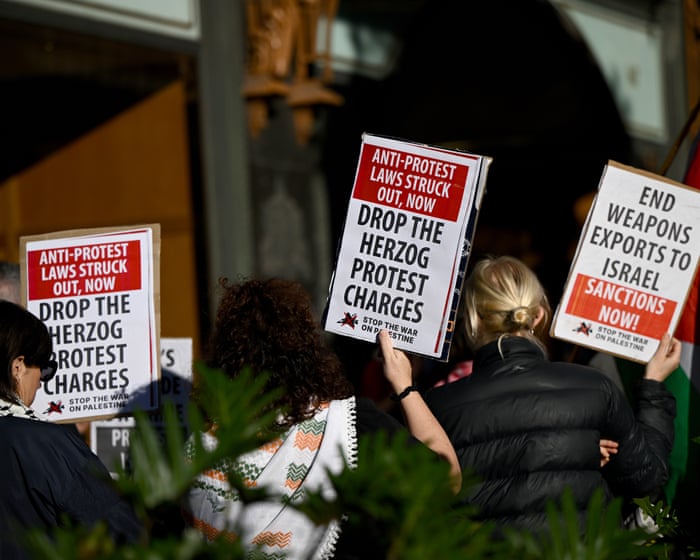
The New South Wales (NSW) government has spent over $300,000 in legal fees trying to defend protest laws that courts declared unconstitutional. These laws, aimed at limiting protests, were challenged by activist groups and struck down because they violated free political speech. The police also spent tens of thousands of dollars opposing protest permits related to pro-Palestine demonstrations.
Key Facts
NSW government spent $117,455.50 on defending a protest law linked to restrictions after the Bondi terror attack.
The court of appeal found the protest laws violated constitutional rights to political communication and canceled them in April.
This is the second anti-protest law by the Minns government found unconstitutional in six months.
Legal fees for defending an older law giving police extra protest powers near places of worship were about $96,400.
NSW police spent over $91,600 on lawyers opposing a pro-Palestine protest permit on Sydney Harbour Bridge, losing the case.
Police also spent almost $59,500 opposing a pro-Palestine march near the Sydney Opera House and won due to safety concerns.
Total legal spending by NSW government and police related to cases against pro-Palestine groups exceeds $305,500.
Activist groups argue the legal costs show government efforts to limit democratic rights.
Read the Original
Want the full story? Tap a source to open the original
article.
Scientists studied the running speeds of over 250 spider species and found that the brown huntsman spider from Australia may be the fastest spider, reaching speeds up to 3.59 meters per second (8 mph). The brown huntsman uses a mix of muscle movement and hydraulic pressure to move quickly and is common in homes along Australia’s east coast.
Key Facts
The brown huntsman spider (Heteropoda jugulans) was recorded running at a peak speed of 3.59 m/s (about 8 mph).
This speed is faster than the previous fastest recorded spider, the Moroccan flic-flac spider, which runs around 1.7 m/s.
Researchers measured spider speeds by filming them running over gridded paper tracks.
The study included spiders from the UK, Germany, North America, southern Europe, and Australia.
Spiders move using muscles to pull limbs in and hydraulic pressure to extend them, a different method from most animals.
Brown huntsman spiders live mainly on Australia’s east coast and rarely bite humans; their bites are usually mild.
Larger spiders are not always faster; there is a size limit where speed decreases due to body and muscle limits.
The researchers say other huntsman spiders might be even faster but have not been tested yet.
Read the Original
Want the full story? Tap a source to open the original
article.
People in the US are concerned about the building of data centers used for artificial intelligence (AI) because of their impact on land, energy, and the environment. However, focusing only on data centers might miss bigger issues like the growing power and influence of AI companies and how AI could change jobs and industries.
Key Facts
Opposition to AI data centers in the US comes from worries about using land, higher energy costs, environmental harm, and few local jobs created.
Lower-income communities are often the most opposed because they feel tech companies benefit while they get little in return.
The US is spending about $750 billion this year on building data center infrastructure, but this is smaller than other tech markets.
AI companies aim to expand their impact beyond data centers to areas like software, creative work, management, education, and healthcare.
Some big data center projects continue despite local opposition; for example, a project in Michigan backed by OpenAI and Oracle overcame local rejection through legal action.
The current wave of data center growth may be temporary, as future technology might reduce the need for so much centralized computing power.
The Trump administration supports the growth of AI infrastructure, even willing to override state decisions and use federal lands.
Read the Original
Want the full story? Tap a source to open the original
article.
President Donald Trump has proposed new tariffs with a different reason but aims for the same result. These tariffs mainly affect American households and companies by making goods more expensive.
Key Facts
President Trump introduced a new tariff plan recently.
The reasons behind the tariffs have changed from previous proposals.
Despite the new rationale, the tariffs still increase costs on many goods.
U.S. consumers (households) pay more because of these tariffs.
American businesses also face higher expenses due to the tariffs.
Tariffs act as taxes on imported goods.
The burdens of tariffs usually fall on people and firms inside the U.S.
Read the Original
Want the full story? Tap a source to open the original
article.
Millions of Americans who buy health insurance through the Affordable Care Act (ACA) marketplaces face large price increases in 2027. Rising medical costs, expensive new drugs, labor shortages, and the end of certain government subsidies are driving these higher premiums and causing fewer people to enroll.
Key Facts
Health insurers want an average premium increase of 14% for ACA plans in 2027.
Some proposed increases are over 20%, following an 18% median increase in 2026.
The cost of medical care and prescription drugs grew 10% last year, faster than usual.
New, costly drugs like Ozempic and Wegovy for diabetes and obesity are increasing insurer spending.
Shortages of doctors and nurses add to healthcare costs, raising insurance premiums.
Federal subsidies that helped many Americans pay for ACA plans are ending after 2025.
Without these subsidies, fewer people are signing up, and healthier people may be dropping coverage.
Insurers say the remaining enrollees tend to have more expensive health needs, pushing premiums higher.
Read the Original
Want the full story? Tap a source to open the original
article.
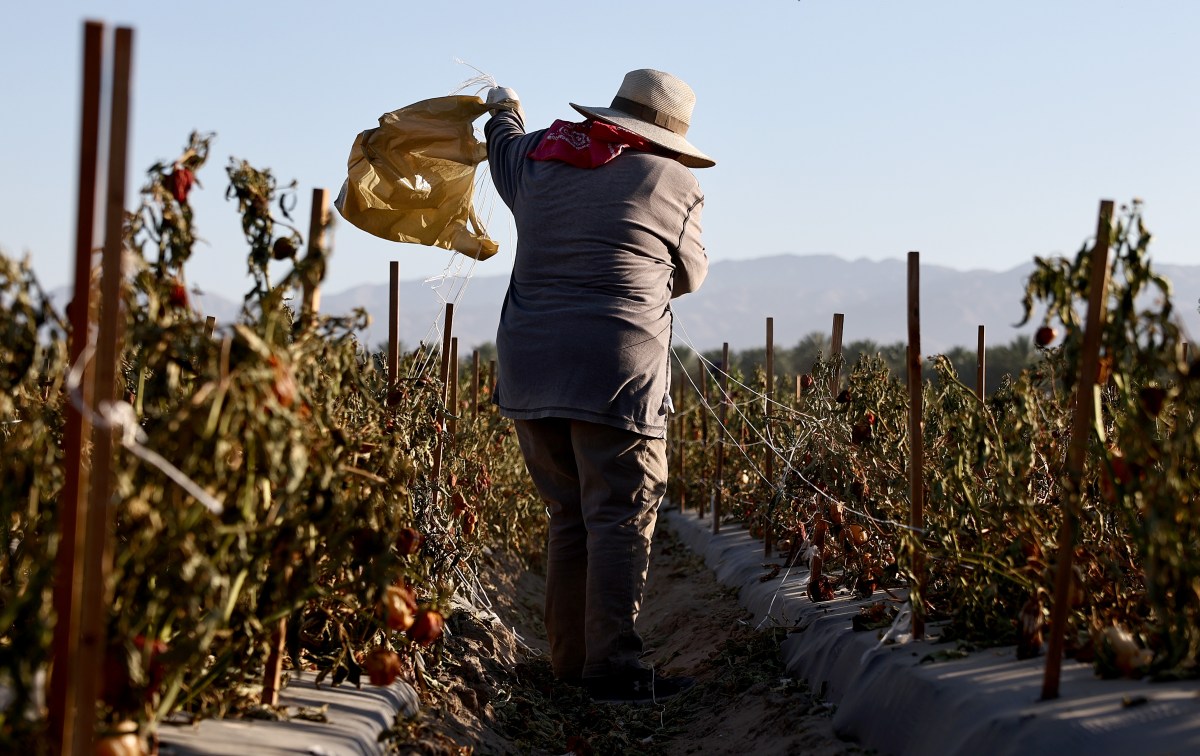
House Republicans introduced a bill to expand the H-2A visa program, which lets farmers hire foreign workers for agricultural jobs. The bill aims to allow more year-round hiring for farms like dairies and livestock producers, addressing labor shortages in farming.
Key Facts
The bill is called the Securing Agriculture’s Workforce Act and was introduced by House Agriculture Committee Chairman Glenn Thompson, a Pennsylvania Republican.
The current H-2A program allows temporary or seasonal farmworker visas; the bill would extend work contracts up to 350 days.
It would let more year-round farm operations, such as dairy and livestock farms, use H-2A workers.
The bill proposes changes to wage rules and simplifying how farmers hire foreign workers.
Labor Department certifications for H-2A workers could be valid for up to three years under the new rules.
Employers could stagger worker entry and exit to match labor needs during contracts.
Some undocumented farmworkers already in the U.S. may gain a limited way to obtain H-2A status, even if they had prior immigration violations.
The bill has bipartisan support, including 45 Republicans and four Democrats, mostly from farming states.
Read the Original
Want the full story? Tap a source to open the original
article.
A group of U.S. lawmakers from both parties asked Health and Human Services Secretary Robert F. Kennedy Jr. to create new rules to prevent discrimination in hospices when providing medically assisted suicide. They want better oversight to protect vulnerable people who might face unfair treatment.
Key Facts
Bipartisan lawmakers sent a letter to HHS Secretary Robert F. Kennedy Jr.
The letter asks for new monitoring rules at hospices.
The goal is to stop discrimination in medically assisted suicide services.
The lawmakers include Senator James Lankford (Republican from Oklahoma) and Senator Tim Kaine (Democrat from Virginia).
Medically assisted suicide means helping a patient end their life with medical support.
Hospices are places that care for people who are terminally ill.
Lawmakers are concerned vulnerable groups might be treated unfairly in these situations.
The request aims to ensure safe and fair access to end-of-life options.
Read the Original
Want the full story? Tap a source to open the original
article.
After a divorce, who must pay credit card debt depends on factors like whose name is on the card, when the debt was made, and where the couple lives. Even if a divorce agreement says one person should pay, credit card companies can still ask either person on a joint account to pay if the debt is unpaid.
Key Facts
If a credit card is in only one spouse's name, that spouse usually has to pay the debt after divorce.
In community property states, debts made during marriage are often shared, no matter whose name is on the account.
Both spouses are legally responsible for joint credit card debts, regardless of divorce agreements.
Authorized users on an account are not legally required to pay the debt but should be removed during divorce to avoid problems.
Courts may separate debts made during marriage from debts made after separation.
Creditors are not bound by divorce orders and can pursue either party for payment.
If one spouse stops paying, the other can face credit damage and fees.
Paying off shared credit card debt before finalizing divorce can prevent future issues.
Read the Original
Want the full story? Tap a source to open the original
article.
Commentator Bill O’Reilly said he believes New York City Mayor Zohran Mamdani is a communist. He based this on Mamdani’s support for freezing rents for everyone, which O’Reilly said is a way to control where people live. This view is similar to claims made by President Trump, Republicans, and some Democrats.
Key Facts
Bill O’Reilly called New York City Mayor Zohran Mamdani a communist.
O’Reilly’s statement was made during a Wednesday broadcast.
The comment relates to Mamdani’s policy of freezing rents across the city.
O’Reilly argues that freezing rents aims to control residents’ housing choices.
President Donald Trump, some Republicans, and some Democrats have also described Mamdani this way.
Zohran Mamdani is a Democratic mayor in New York City.
Rent freezing means stopping landlords from increasing rent prices.
Read the Original
Want the full story? Tap a source to open the original
article.
Sales of previously owned homes in the U.S. fell in June but home prices reached a record high. The median home price rose to $440,600, making it harder for buyers to afford homes despite some lower mortgage rates compared to last year.
Key Facts
Existing home sales dropped 2.4% in June to a yearly rate of 4.09 million homes.
Sales were 2.8% higher than in June last year but below economists’ predictions.
The typical annual sales pace is about 5.2 million, higher than the current 4-million level.
Mortgage rates rose since the U.S.-Iran conflict began, contributing to slower sales.
The median home price in the U.S. hit $440,600 in June, the highest since records began in 1999.
Home prices have increased for 36 months in a row.
The housing market has been weak since 2022 due to rising mortgage rates.
Sales in the first half of this year only slightly increased from last year by 0.7%.
Read the Original
Want the full story? Tap a source to open the original
article.
Netflix has released a new series based on the "Little House on the Prairie" books by Laura Ingalls Wilder. The show follows the Ingalls family settling in the American frontier in the late 1800s and explores their interactions with Native American neighbors and the challenges of that time.
Key Facts
The new "Little House on the Prairie" series is adapted from Laura Ingalls Wilder’s semi-autobiographical books.
The show is set in the late 1800s and focuses on the Ingalls family moving west to build a new life.
Luke Bracey plays Charles Ingalls (Pa), and Alice Halsey plays Laura Ingalls.
The series highlights the limited information settlers had about land politics and treaties involving Native American nations.
The Ingalls family meets the Osage Nation, their neighbors, introducing interactions based on mutual respect and friendship.
The show emphasizes themes of community, understanding different people, and the American spirit of rugged individualism.
Characters from the original books, like Mr. Edwards, appear to support the family and build their home.
Showrunner Rebecca Sonnenshine says the series connects the past frontier spirit to today’s view of the American dream.
Read the Original
Want the full story? Tap a source to open the original
article.
An Irish man was sentenced to 14 years in prison by a Hungarian court for killing an American tourist in Budapest in 2024. The victim, Mackenzie Michalski from Oregon, was strangled after meeting the suspect at a nightclub, and her body was later found near Lake Balaton.
Key Facts
Mackenzie Michalski, a 31-year-old American tourist, was reported missing in Budapest on November 5, 2024.
She was last seen at a central Budapest nightclub with a 37-year-old Irish man identified by initials L.T.M.
The man was arrested on November 7, confessed to the killing, and was found guilty of murder.
The murder happened during an intimate encounter where the suspect beat and strangled her.
The body was hidden in a wardrobe before being placed in a suitcase and dumped near Lake Balaton, about 90 miles from Budapest.
The suspect’s internet searches showed he looked up how to dispose of a body and police procedures before being caught.
The court sentenced him to 14 years without parole, counting 1.5 years already spent in detention, followed by deportation from Hungary.
The suspect’s lawyer has appealed the verdict.
Read the Original
Want the full story? Tap a source to open the original
article.
Several news organizations, including The New York Times and the Daily News, have asked a federal judge to punish OpenAI for not sharing important information in a lawsuit about copyright and artificial intelligence. The case focuses on whether OpenAI and Microsoft used copyrighted news articles without permission to train their AI tools, like ChatGPT.
Key Facts
The New York Times and Daily News claim OpenAI is hiding key evidence about how it used news articles to train AI.
They argue this could harm news companies by reducing web traffic and advertising revenue.
The complaint says OpenAI refused to share datasets and ChatGPT logs that could show use of copyrighted content.
OpenAI is accused of “discovery misconduct,” meaning not properly sharing information in the court case.
The lawsuit began in late 2023 and involves other media groups like the Chicago Tribune’s parent company.
OpenAI says using online content for AI training is allowed under “fair use” copyright law.
Other creative industries are suing AI companies over similar copyright concerns.
A similar case involved Anthropic paying $1.5 billion to authors for using their work to train an AI chatbot.
Read the Original
Want the full story? Tap a source to open the original
article.