Neutral summaries of your favorite news sources — just the facts.
Your favorite news sources, one neutral feed — we distill their reporting into fact-first
summaries and always link to the original story. How it works
The Democratic Republic of Congo (DR Congo) government says Rwanda is not willing to follow a 2025 peace agreement signed between the two countries. DR Congo’s spokesperson Patrick Muyaya called on the United States and other international actors to put more pressure on Rwanda, while Rwanda accused DR Congo of not dealing with rebel groups as promised.
Key Facts
DR Congo and Rwanda signed a US-brokered peace deal in 2025 aimed at ending conflict.
DR Congo’s Minister of Communication, Patrick Muyaya, said Rwanda lacks the "political will" to implement the deal.
Muyaya asked the US to use stronger measures to ensure Rwanda complies with the agreement.
Rwanda’s Foreign Minister Olivier Nduhungirehe claimed DR Congo has not fulfilled its part, especially regarding a rebel group called the FDLR.
The FDLR is one of the largest armed groups operating in eastern DR Congo.
Muyaya denied these claims and said they are excuses used by Rwanda to justify its actions in DR Congo.
Both sides remain committed to peace, but tensions and accusations continue.
The issue is part of ongoing instability and conflict in the Great Lakes region of Africa.
Read the Original
Want the full story? Tap a source to open the original
article.
The episode explores the challenges of peace and negotiation in a world divided by conflict and fear. It features William Ury, an expert in conflict resolution, who explains how trust and understanding can be built even in difficult times.
Key Facts
The world is experiencing strong divisions and conflicts in places like Gaza, Ukraine, Myanmar, and Kashmir.
Polarization makes open and honest conversation risky and difficult.
Leaders often speak in absolute terms, which increases fear and violence.
Mediators, people who help resolve conflicts, have a crucial but delicate role today.
William Ury co-founded Harvard’s Program on Negotiation and is a key figure in modern peacebuilding.
Trust can be built even when people feel hopeless or pressured.
Peace is not only for diplomats but involves everyone in daily life through empathy and courage.
The film emphasizes moral power—like understanding and presence—as a way to change hearts.
Read the Original
Want the full story? Tap a source to open the original
article.
The sky over Caracas, the capital of Venezuela, turned a deep red color at sunset on Tuesday. This happened during rescue efforts following two recent earthquakes that struck the country last week, causing many deaths and injuries.
Key Facts
Two earthquakes hit Venezuela last week.
The Venezuelan government reported 1,943 people died because of the quakes.
Thousands of people were injured in the earthquakes.
Rescue operations are ongoing in the affected areas.
Eyewitnesses captured videos showing the sky over Caracas turning deep red at sunset on Tuesday.
Read the Original
Want the full story? Tap a source to open the original
article.
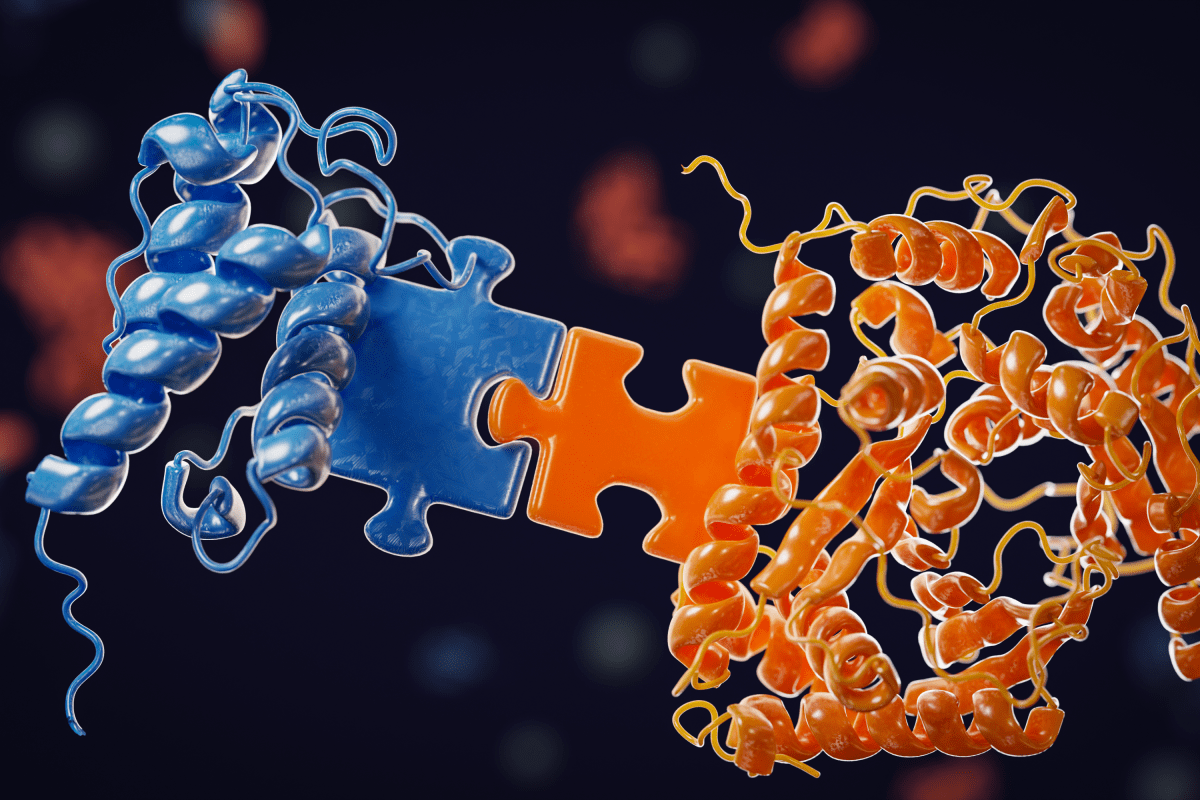
Scientists have discovered how bacteria create cancer-fighting drugs by connecting enzyme systems that build these compounds step by step. This finding could help speed up the production and development of new cancer treatments by mixing and matching parts of the drug-making process.
Key Facts
The study was published in the journal Nature Communications.
Bacteria use enzyme complexes called polyketide synthases (PKSs) and nonribosomal peptide synthetases (NRPSs) to build complex molecules.
These enzyme systems physically connect using a structure called the β-hairpin docking (βHD) domain.
This connection allows bacteria to produce varied versions of HDAC inhibitors, drugs that stop cancer cells from growing.
Romidepsin, a drug for some blood cancers, is part of this HDAC inhibitor family.
The discovery explains how bacteria combine parts to create different drug molecules through a "mix-and-match" process called combinatorial biosynthesis.
Using this knowledge, scientists may create new drugs that work against cancers not helped by current treatments.
Any new drugs made will still need many years of testing before doctors can use them.
Read the Original
Want the full story? Tap a source to open the original
article.
The United Nations released a report warning that the fast growth of artificial intelligence (AI) could increase global inequality because many poorer countries lack the tools and infrastructure to use AI well. The report suggests ways for countries to develop AI safely and fairly, such as building local infrastructure, improving education, and monitoring AI systems after release.
Key Facts
The UN report says AI development is uneven, with richer countries like the US and China leading.
Using AI tools alone does not guarantee equal benefits for all countries.
Some countries depend on foreign AI systems, losing control over important safety and usage standards.
The report urges investment in AI computing infrastructure like data centers and energy supply.
AI often works best in a few major languages, leaving many languages underserved and causing risks, especially in healthcare translation.
More than 1 billion people use AI weekly, but many in poorer regions have limited access due to weak internet and infrastructure.
The report highlights environmental concerns linked to data centers, such as high energy and water use.
It warns that AI power concentrated in a few firms or countries may threaten democratic accountability.
Read the Original
Want the full story? Tap a source to open the original
article.
Signet City is an upcoming role-playing game set to launch in 2027. In it, players control a parasite that inhabits different people’s minds while exploring a dystopian city inspired by 1980s social photography and sci-fi themes.
Key Facts
Signet City is created by Gareth Damian Martin, known for previous sci-fi indie games.
The game presents a first-person view through hosts’ minds, with players shifting between multiple hosts.
Players complete daily actions influenced by a dice-based system, combining storytelling and gameplay mechanics.
The city setting faces various crises, and characters each have their own emotional storylines.
The visual style uses black-and-white hand-drawn characters with photographic backgrounds inspired by 1980s British social photography, especially Tish Murtha’s work.
The game blends elements of 1980s northern English city life and science fiction.
Signet City aims to integrate narrative and game mechanics tightly rather than treating them separately.
This marks a break from the norm by announcing the game many years before its release.
Read the Original
Want the full story? Tap a source to open the original
article.
Researchers have found dangerous flesh-eating bacteria called Vibrio vulnificus in coastal waters in New York and other states, posing risks to people with open wounds or who eat contaminated seafood. Experts say that cuts to government health monitoring programs during President Trump's administration have reduced the ability to track and respond to such disease threats.
Key Facts
Vibrio vulnificus is a bacteria that can cause serious illness or death, entering through open wounds or contaminated seafood.
Cases of Vibrio infections have been found in New York, Florida, and Mississippi in 2025.
About 20% of people infected with Vibrio vulnificus die, sometimes very quickly.
Climate change is increasing the areas where these bacteria can thrive.
The Trump administration cut funding and reduced the staff for agencies that monitor and prevent health threats.
Removal of ocean monitoring devices under the Trump administration reduced data that helps predict bacterial outbreaks.
A federal food illness tracking program was reduced to require less reporting from states, limiting disease data available to the CDC.
Officials say disease monitoring continues through other systems, but some health experts warn that cuts have weakened U.S. defenses against infectious diseases.
Read the Original
Want the full story? Tap a source to open the original
article.
A recent poll finds that most Americans think the United States has moved away from its original founding ideas. This survey was done as the country gets ready to celebrate its 250th anniversary.
Key Facts
The poll was conducted by PBS News, NPR, and Marist.
83% of U.S. adults say America has strayed from its founding principles.
The founding principles refer to the ideas the country was built on over 250 years ago.
The poll reflects public opinion before the 250th anniversary of the U.S.
The survey highlights concerns about the direction of the country.
Read the Original
Want the full story? Tap a source to open the original
article.
The United Nations has started a new group called the AI for Good Global Commission to create worldwide rules for artificial intelligence (AI). This group includes leaders from technology companies and governments and will meet for the first time in July in Geneva to work on AI issues like health, education, and safety.
Key Facts
The AI for Good Global Commission is backed by the United Nations and the International Telecommunication Union (ITU).
The first meeting is scheduled for July 8 in Geneva, Switzerland.
Salesforce CEO Marc Benioff and Rwandan President Paul Kagame are co-chairs of the commission.
Members include leaders from several countries and tech companies such as Amazon, Microsoft, Nvidia, Anthropic, and Cohere.
The commission aims to strengthen AI infrastructure and use AI for health, education, food security, and disaster response.
Governments have different views on AI regulation, making it hard to create universal rules.
The commission also hopes to improve internet access for the 2.2 billion people who currently lack it.
The group’s first meeting will happen right after a related UN global discussion on AI governance.
Read the Original
Want the full story? Tap a source to open the original
article.
Vice President Kamala Harris has been meeting privately with progressive Democrats, including pro-Palestinian activists and New York City Mayor Zohran Mamdani, as she prepares for a possible 2028 presidential run. These meetings aim to improve her relationships with left-wing Democrats and address issues like Palestinian rights.
Key Facts
Harris called NYC Mayor Zohran Mamdani last week to discuss the future of the Democratic Party.
Mamdani’s handpicked candidates recently won three congressional races in NYC, unseating incumbents.
Harris has met with pro-Palestinian activists, including Abbas Alawieh, a co-founder of the Uncommitted Movement and a 2024 Harris voter.
The Uncommitted Movement opposes some policies of President Biden regarding Gaza and felt politically unrepresented in 2024.
Harris also spoke with James Zogby, a longtime Democratic National Committee member who supports Palestinian rights.
Harris and her team have held talks about other issues like China, AI, and Venezuela with Democrats and former aides.
Some pro-Palestinian activists remain skeptical about Harris’s ability to win their trust without major changes.
Harris has previously expressed frustration with pro-Palestinian protests but privately urged President Biden to show more empathy for Palestinian civilians.
Read the Original
Want the full story? Tap a source to open the original
article.
The UK government plans to spend £15 billion over four years to improve the country’s defense. However, there is a £4.7 billion shortfall that the next chancellor must cover in the autumn Budget. The plan aims to increase defense spending to meet NATO targets without borrowing more money.
Key Facts
The government announced a £15 billion investment in defense over the next four years.
Only £10.3 billion of this amount has been found so far, leaving a £4.7 billion gap.
The next chancellor, expected to be Andy Burnham, will need to find the extra funds in the autumn Budget.
Defense spending is planned to rise from 2.6% to 2.7% of the UK’s national income by 2030.
The goal is to meet NATO’s 3.5% defense spending target by 2035.
Funding will come from cuts to other government department budgets, not from borrowing.
The Department for Transport and the Department for Energy Security and Net Zero are making savings to help cover costs.
This defense plan was one of the last announcements by outgoing Prime Minister Sir Keir Starmer.
Read the Original
Want the full story? Tap a source to open the original
article.
Immigration has been a continuous and important part of American history from the 1600s to today. Different groups have arrived in waves, each changing the country’s culture, economy, and population in unique ways.
Key Facts
The first settlers included English, Dutch, French, German, and Scots-Irish people arriving in the 1600s.
Millions of Africans were brought to America as slaves during the colonial period.
After 1776, immigration grew modestly and helped settle new territories as the U.S. expanded westward.
The mid-1800s saw the first large wave of immigrants from Ireland, Germany, and China.
These immigrants helped build railroads, factories, and cities during America’s early industrial growth.
Anti-immigrant attitudes began in this period, including the Chinese Exclusion Act of 1882, which restricted Chinese immigration.
From the 1880s to 1924, many immigrants came from Southern and Eastern Europe through places like Ellis Island.
Immigration shaped debates about citizenship, religion, and national identity throughout American history.
Read the Original
Want the full story? Tap a source to open the original
article.
During and after World War II, many African American and minority soldiers who showed great bravery were not immediately awarded the Medal of Honor, the highest U.S. military honor. Over the decades, the U.S. government has worked to recognize these overlooked veterans by reviewing their records and awarding medals to those previously ignored because of racial bias.
Key Facts
In 1945, President Truman awarded the Medal of Honor to 28 white servicemen, excluding African American soldiers despite their large participation in World War II.
Racism and segregation in the military affected Black, Hispanic, Asian, and Native American soldiers, limiting their recognition and promotion.
President Truman signed an executive order in 1948 to desegregate the U.S. military and promote equality regardless of race or background.
In 1993, President Clinton commissioned a study that led to the Medal of Honor being awarded to seven African American World War II veterans decades after the war.
Further reviews in the 1990s led to Medal of Honor awards for Asian American, Jewish, and Hispanic veterans who had been initially overlooked.
Efforts to correct past omissions highlight ongoing issues of racial inequality in military honors and recognition.
These posthumous awards help acknowledge the sacrifices and bravery of minority soldiers who fought both abroad and against discrimination at home.
Read the Original
Want the full story? Tap a source to open the original
article.
Many Hollywood movies about war heroes are based on true stories of Medal of Honor winners. These stories show real people who performed brave acts during battles, inspiring films from the 1920s to today.
Key Facts
The Medal of Honor is the highest U.S. military award for bravery.
The first recipients were Andrews’ Raiders, whose mission was shown in the 1956 movie The Great Locomotive Chase.
Audie Murphy, a Medal of Honor winner, acted as himself in the 1955 film To Hell and Back and appeared in many other movies.
The 2001 film Black Hawk Down features Medal of Honor recipients Gary Gordon and Randy Shughart defending a helicopter pilot in Somalia.
Hacksaw Ridge (2016) tells the story of Desmond Doss, a combat medic who saved 75 soldiers without carrying a weapon.
Hollywood uses real Medal of Honor stories because they show true heroism, not just action scenes.
Over decades, many films and documentaries have depicted Medal of Honor awardees and their courageous acts.
Read the Original
Want the full story? Tap a source to open the original
article.
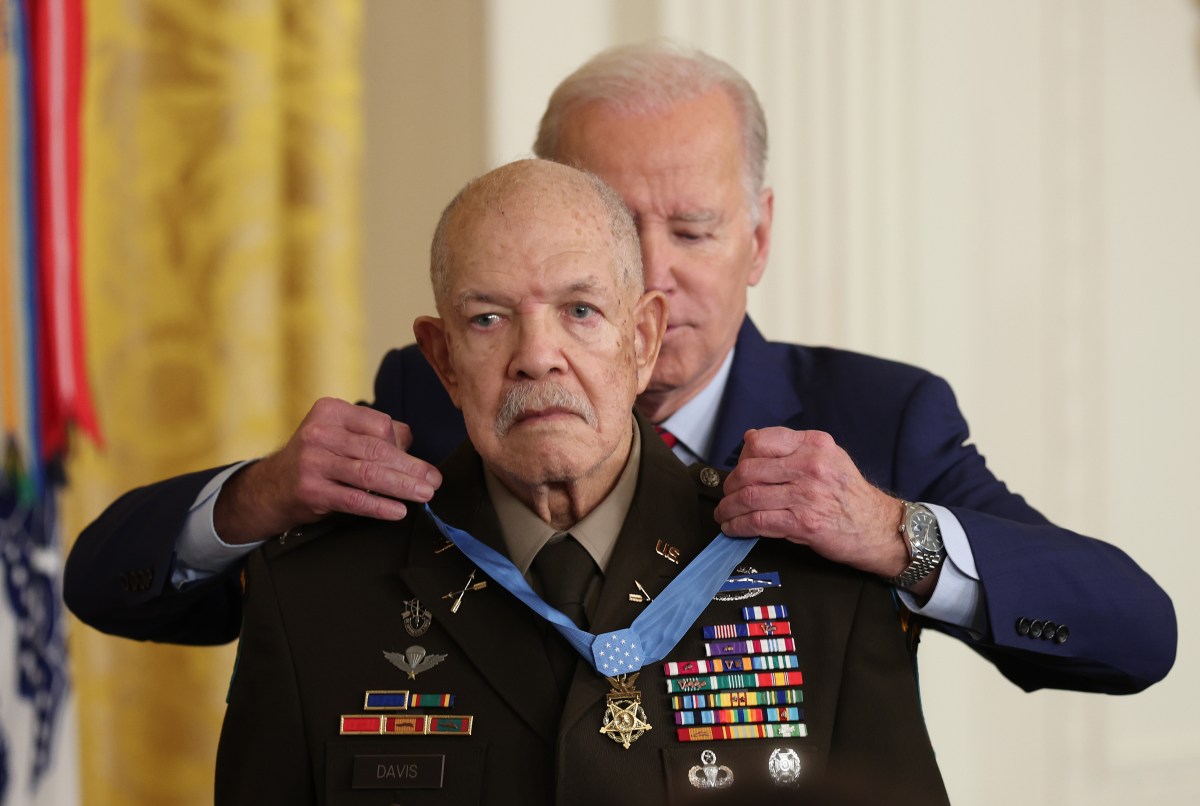
The Medal of Honor is the highest military award in the United States. It honors acts of extraordinary bravery by service members who risk their lives to save others during combat, requiring a strict review process and presidential approval.
Key Facts
The Medal of Honor is awarded for extreme acts of bravery in direct combat situations.
Over 40 million Americans have served in the military, but only 3,536 have received this medal.
The award process includes eyewitness reports, documentation checks, and approval by the chain of command and the president.
Only one woman has ever received the Medal of Honor, due to the combat-related criteria.
The medal highlights a core American value: putting others’ lives before your own under great danger.
It reflects the tension between individual freedom and collective commitment in American history.
The article connects the Medal of Honor to the nation’s 250th anniversary, emphasizing shared sacrifice.
American founders like Benjamin Franklin and Thomas Jefferson recognized the importance of unity alongside personal liberty.
Read the Original
Want the full story? Tap a source to open the original
article.
A new film called Young Washington shows the early life of President George Washington, focusing on his struggles and growth before he became the first U.S. president. The movie aims to reveal the human side of Washington and explain how his early experiences shaped his values and ambitions.
Key Facts
The film Young Washington highlights George Washington’s youth and early challenges.
Director Jon Erwin was inspired by Washington’s story and the American Revolution.
Actor William Franklyn-Miller, a British newcomer, plays young Washington to bring fresh perspective.
Franklyn-Miller studied a book Washington read called Rules of Civility and Decent Behavior to understand his mindset.
The movie shows both Washington’s successes and his failures to make him relatable.
Famous actors Ben Kingsley and Kelsey Grammer also appear in the film.
The film was created to celebrate the 250th anniversary of the United States.
It aims to inspire appreciation for Washington’s role and American history.
Read the Original
Want the full story? Tap a source to open the original
article.
President Donald Trump is working hard to get the SAVE America Act passed, even though he has said he doubts it will become law. The act focuses on voter eligibility rules and has faced challenges in gaining wide support.
Key Facts
The SAVE America Act deals with rules about who can vote.
President Trump wants the act passed despite doubts about its success.
Trump and his supporters say passing the act is very important.
The act has not gained strong support in Congress.
President Trump is using political effort to promote this legislation.
The article suggests Trump is facing difficulty in getting the act through lawmakers.
The SAVE America Act relates to election and voting processes.
Read the Original
Want the full story? Tap a source to open the original
article.
A dietitian named Caroline Thomason Bunn explains how to keep your gut healthy by eating a variety of plant foods, including fiber-rich prebiotics, and managing meal timing to give the gut a rest. She also emphasizes the importance of balanced meals with protein and reducing stress to support good digestion.
Key Facts
Gut health involves the stomach, intestines, and the microbiome, which helps digest food and remove waste.
Prebiotic fibers feed the good bacteria in your gut; foods like garlic, onions, bananas, and avocados contain prebiotic fiber.
Waiting about 12 hours between dinner and breakfast helps the gut clean itself overnight.
Eating many different plant foods, aiming for about 30 types per week, promotes a healthy gut microbiome.
Including protein in meals supports smooth digestion and helps prevent late-night cravings.
Snacking is normal but should be intentional and healthy, such as fruit with nuts or yogurt with seeds.
Managing stress is important because chronic stress can harm gut bacteria and cause inflammation.
Read the Original
Want the full story? Tap a source to open the original
article.
The article discusses the experiences of living Medal of Honor recipients, highlighting their courage in combat and their continued dedication to serving the public after military service. These recipients come from various wars and now work to share the values that earned them the medal while supporting veterans and communities.
Key Facts
There are currently 65 living Medal of Honor recipients from wars including Korea, Vietnam, Iraq, Afghanistan, and Operation Absolute Resolve in Venezuela.
Colonel Jack Jacobs recalls being advised by General Jimmy Doolittle to live up to the responsibilities of being a Medal of Honor recipient.
Recipients see the medal as representing not only their own actions but also honoring those who sacrificed their lives and those who were not recognized.
Most living recipients are now elderly, with many Vietnam-era recipients entering their 80s.
James Livingston said his Medal of Honor is part of his life but does not define him; he respects being recognized for all his service.
Medal recipients often engage in public service after the military, including veteran advocacy, memorial events, talks, and education.
Jim McCloughan, a Vietnam Medal of Honor recipient, returned to teaching and coaching after his service.
Read the Original
Want the full story? Tap a source to open the original
article.
Two popular movies loved by millennials, Austin Powers and How the Grinch Stole Christmas, will have new sequels. Mike Myers will return as Austin Powers, and Jim Carrey will play the Grinch again in a follow-up film.
Key Facts
Mike Myers confirmed a fourth Austin Powers movie during a livestream on June 16.
Jim Carrey and director Ron Howard are working on a sequel to How the Grinch Stole Christmas.
Both movies were very popular with millennials.
Hollywood is making more movies like these because people enjoy seeing familiar stories again.
Other successful examples of this trend include new films in the Scream series and The Super Mario Bros. Movie.
These films are considered important for the humor and culture of the millennial generation.
The new movies are seen as a way to bring joy to fans, not just make money.
Read the Original
Want the full story? Tap a source to open the original
article.