Neutral summaries of your favorite news sources — just the facts.
Your favorite news sources, one neutral feed — we distill their reporting into fact-first
summaries and always link to the original story. How it works
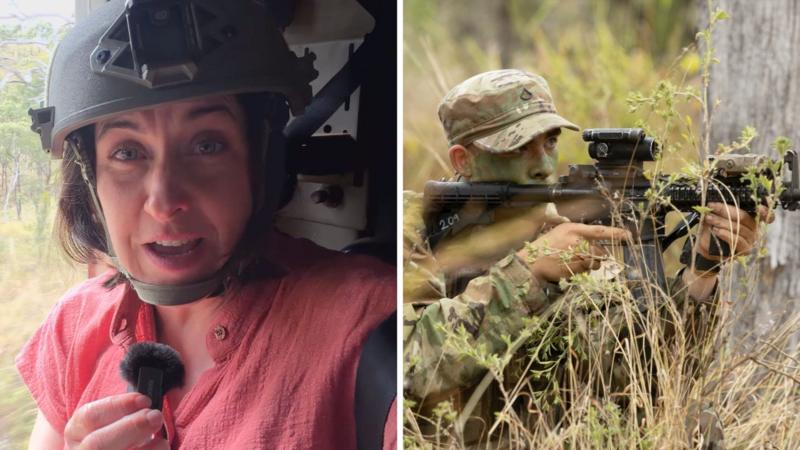
US, Japanese, and Australian soldiers are training together in a remote and rugged area of North Queensland, Australia. These military exercises help the countries practice working together, even though Australia is not involved in any current wars.
Key Facts
Soldiers from the US, Japan, and Australia are conducting joint training in Australia’s tough bush environment.
The training is happening far from any active conflict zones.
The location is in North Queensland, a remote part of Australia.
The purpose is to improve cooperation and readiness among the three countries' militaries.
Australia is not currently involved in any war or conflict.
This joint exercise shows a partnership between the US, Japan, and Australia.
The BBC accompanied the soldiers to report on the training activities.
These types of exercises help prepare soldiers for possible future challenges.
Read the Original
Want the full story? Tap a source to open the original
article.
Police in Monaco and France are looking for a suspect after a bomb exploded in Monaco, injuring three people. The attack targeted a Ukrainian-born oligarch, and the suspect is thought to have escaped on foot into France.
Key Facts
A bomb exploded in Monaco, causing injuries to three people.
Police believe the attack was aimed at a Ukrainian-born wealthy businessman (oligarch).
The bomb was in a parcel that exploded on Monday evening.
The suspect is believed to have run away on foot toward France.
Monaco and French authorities are involved in the search.
Monaco prosecutor Stephane Thibault provided information about the suspect’s escape.
The incident led to a manhunt across the France-Monaco border.
Read the Original
Want the full story? Tap a source to open the original
article.
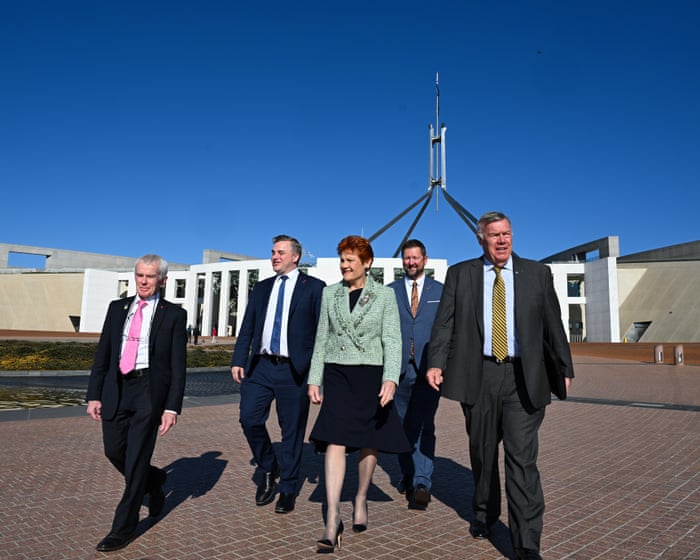
A recent Guardian Essential poll shows many Australians disagree with key policies of the One Nation party, such as closing SBS and ending multiculturalism. Although One Nation’s support has slightly dropped, over half of the voters surveyed said they might still vote for the party in the upcoming election.
Key Facts
One Nation’s primary vote fell from 28% to 26% in the latest poll.
Labor’s vote rose from 29% to 30%, and the Coalition remained at 23%.
Only 15% support privatizing the ABC, and 11% want to shut down SBS.
Just 20% back ending multiculturalism in Australia.
18% favor withdrawing from the United Nations and giving employers more power.
52% of voters said they would definitely or might vote for One Nation.
Immigration was the main issue for One Nation supporters.
Opinions on abortion legality showed a slight decrease in full legal support, with 72% supporting legality in some or all cases.
Read the Original
Want the full story? Tap a source to open the original
article.
Google DeepMind has introduced a new AI image model called Nano Banana 2 Lite that is faster and cheaper than its previous models. This model creates images quickly, making it useful for rapid idea testing, although the image quality may be lower than other higher-end models.
Key Facts
Nano Banana 2 Lite is part of Google’s Gemini 3.1 family of AI image models.
It can generate images in about 4 seconds, compared to 20 seconds for the standard Nano Banana model.
The model is designed for fast, low-cost image generation, costing about $0.034 per 1,000 images.
Nano Banana 2 Lite handles text and detailed graphics less accurately than other models.
The images produced have SynthID watermarks to label them as AI-generated, even after editing.
It is available through Google AI Studio, the Gemini API, and across Google’s ecosystem.
Google is also expanding access to Gemini Omni Flash, a video generation tool, through its API and AI Studio.
The model is useful for quick design prototypes but less suited for creating photorealistic or detailed images.
Read the Original
Want the full story? Tap a source to open the original
article.
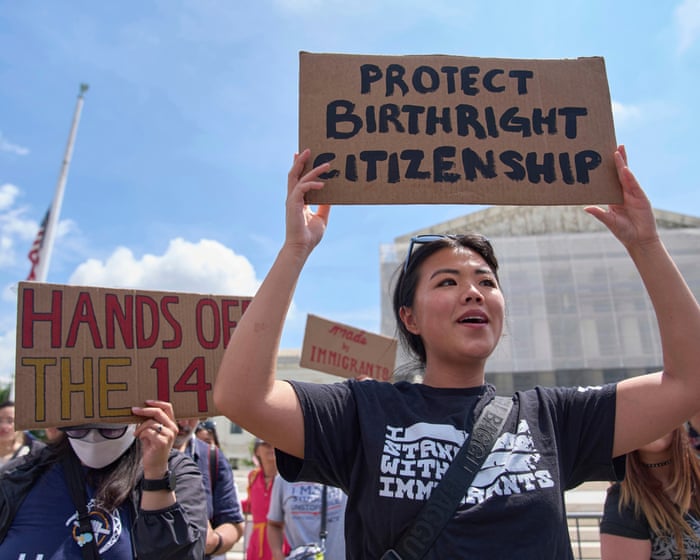
Some Republican leaders with legal experience disagreed with President Trump about the Supreme Court’s decision on birthright citizenship. They said that only a change to the Constitution could stop children born in the U.S. from automatically becoming citizens. The Supreme Court ruled 6-3 that the 14th Amendment grants citizenship to almost all children born in the country.
Key Facts
Several Republican officials with law backgrounds spoke against President Trump’s view on birthright citizenship.
The Supreme Court made a 6-3 decision supporting birthright citizenship.
The court said the 14th Amendment guarantees citizenship for nearly all children born in the United States.
These Republicans said it would take a constitutional amendment to change this rule.
Birthright citizenship means children born in the U.S. automatically get citizenship, regardless of their parents' status.
The disagreement shows different opinions within the Republican Party about immigration and citizenship rules.
Read the Original
Want the full story? Tap a source to open the original
article.
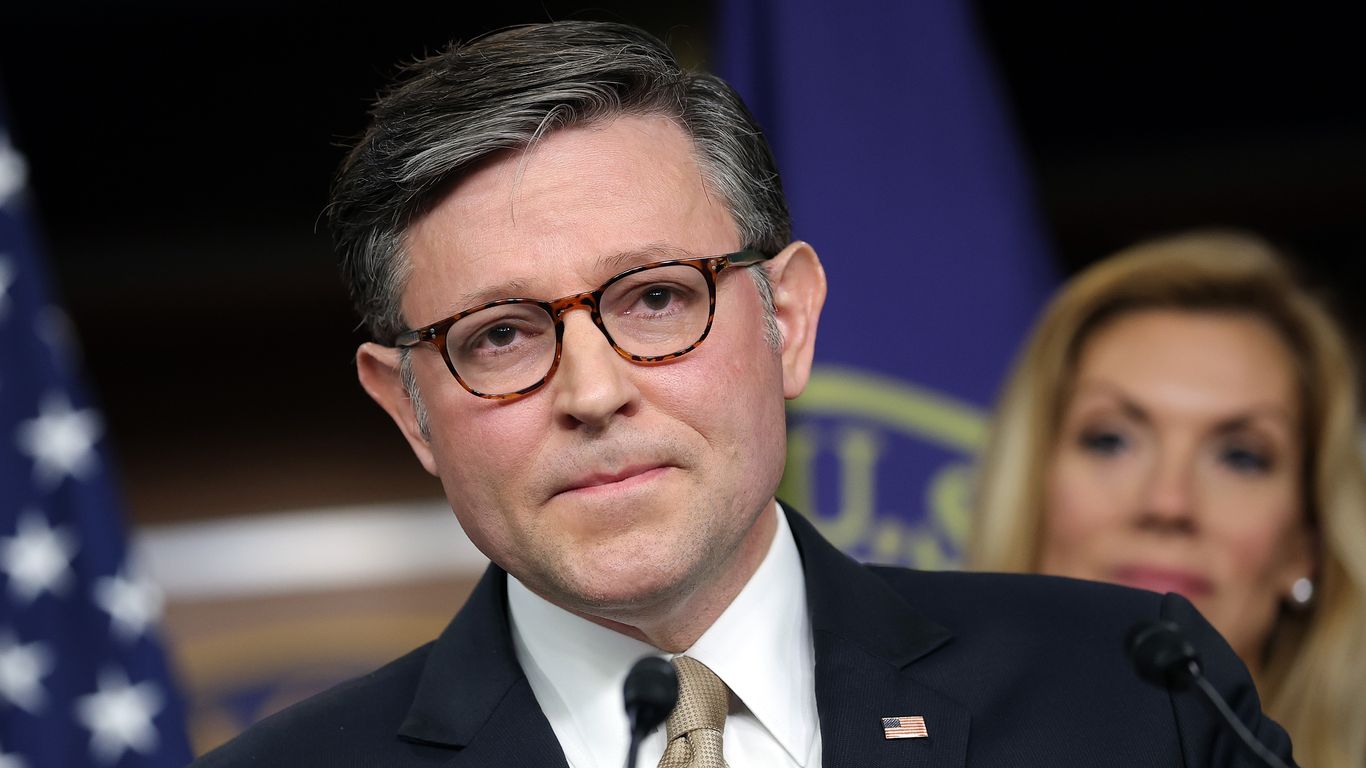
House Republicans blocked a procedural vote on the defense bill because it did not include the SAVE Act, a key election law they support. This disagreement has repeatedly delayed the defense bill and other legislation, and the Senate still needs to approve the SAVE Act for it to become law.
Key Facts
More than a dozen House Republicans voted against a procedural rule for the National Defense Authorization Act (NDAA) because it did not include the SAVE Act.
The SAVE Act is a signature GOP election bill that has passed the House three times but lacks enough Senate votes, needing Democratic support.
House conservatives want Senate Republicans to remove the filibuster, a rule that requires 60 votes to pass most bills, to pass the SAVE Act.
Fourteen Republicans, including Majority Leader Steve Scalise, voted no on the procedural rule, causing the vote to fail 198-224.
Speaker Mike Johnson agreed to combine the SAVE Act with the defense bill before sending it to the Senate, but the Senate could remove the SAVE Act.
Johnson also suggested including parts of the SAVE Act in a third reconciliation bill, but House conservatives oppose this option.
President Trump urged House Republicans to stop blocking procedural votes, but conservatives have continued to do so.
It is unclear how the defense bill and other planned legislation will move forward before the July 4 recess.
Read the Original
Want the full story? Tap a source to open the original
article.
The U.S. House of Representatives voted against a resolution that would have required President Trump to withdraw American troops from military actions in Lebanon. The resolution, supported mostly by Democrats, failed with 189 votes in favor and 235 against.
Key Facts
The House voted 189 in favor and 235 against the resolution.
The resolution sought to direct President Trump to remove U.S. troops from Lebanon.
Most Democrats supported the resolution, but 22 Democrats voted against it.
Two Republicans voted in favor of the resolution.
The resolution was introduced by Representative Rashida Tlaib from Michigan.
The resolution involved concerns about war powers and military engagement in Lebanon.
The vote happened in the House of Representatives, the lower chamber of Congress.
Read the Original
Want the full story? Tap a source to open the original
article.
The U.S. House of Representatives voted against a measure that would limit President Donald Trump's power to use U.S. military forces in Lebanon without Congress's approval. The resolution, introduced by Representative Rashida Tlaib, aimed to have U.S. forces withdrawn from hostilities in Lebanon but failed despite revisions and Democratic support.
Key Facts
The House voted 235 to 189 against restricting the president's military authority in Lebanon.
Rep. Rashida Tlaib of Michigan introduced the resolution to remove U.S. forces from hostilities in Lebanon within seven days.
The updated resolution allowed ongoing security cooperation with Lebanese forces and protection of U.S. diplomatic sites.
There are currently no U.S. troops engaged in combat or hostilities in Lebanon.
Tensions remain high in southern Lebanon involving Israel, Hezbollah, and Iran.
The Israeli and Lebanese governments recently signed an agreement linking Israel’s troop withdrawal to Hezbollah’s disarmament, which Hezbollah has refused.
Some Democrats supported the resolution to avoid further U.S. involvement in conflict, while some Republicans opposed it, calling it supportive of Hezbollah.
The vote reflects ongoing debates about U.S. military involvement and peace efforts related to Lebanon, Israel, and Iran.
Read the Original
Want the full story? Tap a source to open the original
article.
The U.S. Department of Justice and several states have reached a settlement with three major egg producers accused of working together to raise egg prices unfairly. The companies will provide 53 million eggs to food banks and pay $3.3 million to the states as part of the agreement, which aims to keep egg prices fair for consumers.
Key Facts
The Justice Department and more than a dozen states investigated Cal-Maine Food, Versova/Centrum, and Hickman's Egg Ranch for alleged price-fixing.
The companies were accused of coordinating to artificially inflate daily egg price quotes from June 2022 to March 2025.
Daily price quotes from Urner Barry influence what retailers pay for eggs across the U.S.
The companies will provide 53 million eggs to food banks and pay $3.3 million to the states involved.
Cal-Maine denied any wrongdoing and called the allegations baseless.
Versova said the investigation ended without any finding of wrongdoing.
The settlement must be approved by a court before taking effect.
Egg prices have been volatile due to factors like bird flu outbreaks and the COVID-19 pandemic.
Read the Original
Want the full story? Tap a source to open the original
article.
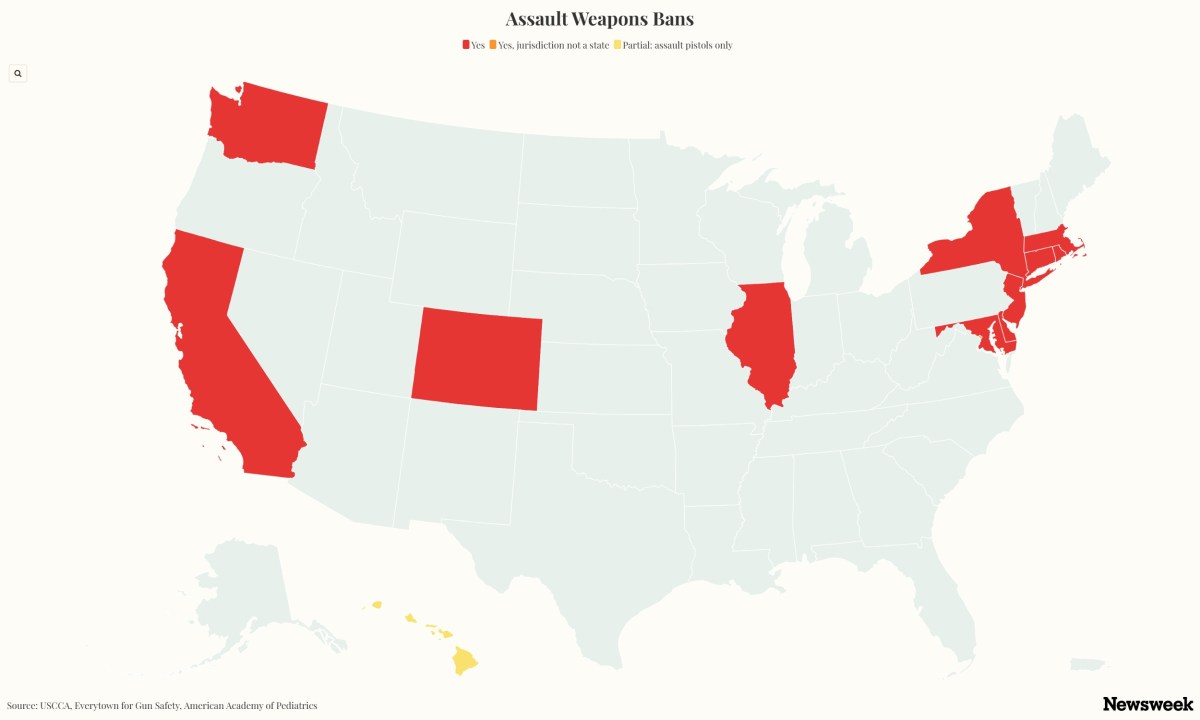
The U.S. Supreme Court will hear cases this fall about whether bans on AR-15-style rifles and similar guns violate the Second Amendment, which protects the right to own guns. These cases come from Chicago and Connecticut, where local laws restrict these semi-automatic weapons due to safety concerns.
Key Facts
The Supreme Court agreed to review cases challenging assault-weapon bans in Illinois (Cook County) and Connecticut.
Illinois bans certain semi-automatic rifles, including AR-15-style guns, citing public safety and the goal of reducing mass shootings.
Plaintiffs claim these guns are commonly used lawfully and protected by the Second Amendment.
Connecticut’s law restricts possession of certain semi-automatic rifles unless owned and registered before 2013.
The court’s decision follows mixed rulings in lower courts after a 2022 Supreme Court case on gun rights.
About a dozen states and Washington D.C. have assault-weapons bans that could be affected.
The Court’s ruling may clarify or change nationwide rules on assault-weapon restrictions.
Oral arguments will happen in the fall, with a major impact expected on gun laws.
Read the Original
Want the full story? Tap a source to open the original
article.
Over one million undocumented migrants in Spain applied for legal status under a government program that ended on June 30, 2026. The program, launched in April, aimed to regularize around 500,000 people, mainly from Latin America, and continues despite Europe’s efforts to reduce illegal immigration.
Key Facts
More than 1 million undocumented migrants in Spain applied for legal status.
The government program to regularize migrants started in April 2026.
The plan was originally expected to benefit about 500,000 people.
Most applicants come from Latin American countries.
The application deadline was June 30, 2026.
The program operates despite a broader European crackdown on irregular immigration.
Spain has a left-wing government that launched this mass regularization.
Read the Original
Want the full story? Tap a source to open the original
article.
Two strong earthquakes struck Venezuela last week, causing major destruction and killing at least 1,943 people. Satellite data shows that over 58,000 buildings may have been damaged or destroyed, a much higher number than official counts. The disaster has created urgent needs for shelter, health care, and relief, with many people still missing.
Key Facts
Two earthquakes hit Venezuela last Wednesday, measuring magnitudes 7.2 and 7.5.
At least 1,943 people were killed, over 10,571 injured, and many remain missing.
Initial official reports counted 855 damaged buildings; satellite analysis estimates about 58,870 damaged or destroyed buildings.
Up to 6.8 million people could be affected and need help including shelter, water, and healthcare.
Health facilities are overwhelmed, increasing risks for disease outbreaks like measles, diphtheria, malaria, and others.
The government has restricted access to the hardest-hit area, La Guaira, militarizing the city and controlling entry.
Around 40 international search and rescue teams with 2,000+ personnel and 160+ dogs are helping the response.
The UN plans to provide 10,000 body bags to manage the high number of casualties.
Read the Original
Want the full story? Tap a source to open the original
article.
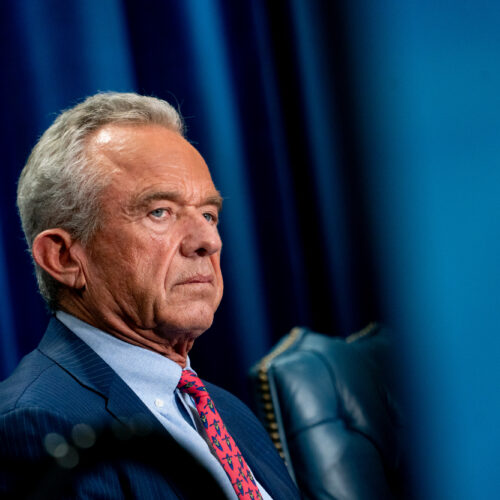
Robert F. Kennedy Jr., the Health Secretary, has appointed several supporters of injectable peptide drugs to a federal advisory panel that will review the FDA’s restrictions on these drugs. Despite FDA scientists saying these peptides lack proof of safety and effectiveness, the panel’s new members mostly promote peptide use or have financial connections to clinics offering these treatments. The panel will meet soon to discuss if compounding pharmacies should be allowed to make these peptides for people.
Key Facts
Robert F. Kennedy Jr. added nine new members to the FDA advisory panel reviewing peptide drugs.
Most new members promote peptides or have ties to clinics selling peptide treatments.
FDA scientists found in 2023 that the peptides lack evidence of benefits and may be unsafe.
The advisory panel will meet in July 2024 to discuss seven peptides for conditions like wound healing, obesity, and insomnia.
Another meeting is planned before February 2027 to discuss five more peptides.
The FDA currently bans compounding pharmacies from making these peptides for human use but allows them for research.
The panel involved is the Pharmacy Compounding Advisory Committee, which heavily influences FDA decisions.
Some new panel members are doctors or clinic directors who offer peptide therapies and have publicly supported relaxing FDA rules.
Read the Original
Want the full story? Tap a source to open the original
article.
Tidal, a music streaming service, has started a new rule to mark songs made entirely by artificial intelligence (AI). The company will also stop paying royalties for songs that are fully generated by AI.
Key Facts
Tidal is a music streaming platform.
It will label music that is completely created by AI.
AI-generated songs will be identified clearly on the platform.
Tidal will not give royalty payments for streams of fully AI-made songs.
This policy aims to distinguish human-made music from AI-produced music.
Tony Gervino is the executive vice president and editor-in-chief of Tidal.
Tidal announced the policy during a discussion with CBS News.
Read the Original
Want the full story? Tap a source to open the original
article.
The US Supreme Court has removed limits on how much money political parties can spend together with candidates during campaigns. The court said these limits break the free speech rights guaranteed by the Constitution, and the decision could affect the upcoming midterm elections in November.
Key Facts
The Supreme Court ruled 6-3 to lift spending limits on political parties coordinating with candidates.
The ruling is based on the First Amendment, which protects free speech.
The decision applies to spending during election campaigns.
This change may influence the 2026 midterm elections in November.
The court has a conservative majority, which made this ruling.
The case focused on how political money can be used jointly by parties and candidates.
The decision removes previous restrictions meant to limit coordinated campaign spending.
Read the Original
Want the full story? Tap a source to open the original
article.
Musician Peter Gabriel released a new song called "I Belong to the Sky" to coincide with the strawberry moon on June 30. This song is part of his upcoming album "o/i," which follows his 2023 album "i/o," and he releases new songs with each full moon until the album’s full release in 2026.
Key Facts
A strawberry moon is the full moon that appears in June each year.
Peter Gabriel released "I Belong to the Sky" to honor the June 30 strawberry moon.
The song is from his upcoming album "o/i," a follow-up to 2023’s album "i/o."
Gabriel releases a new track with each full moon until the full "o/i" album is out by the end of 2026.
Gabriel describes the song as exploring the idea of making dreams come true by visualizing them.
This track features musicians performing freely, led by drummer Manu Katché.
"I Belong to the Sky (Bright-Side Mix)" is now available on music streaming platforms.
Read the Original
Want the full story? Tap a source to open the original
article.
House conservatives stopped a procedural rule that would allow debate and voting on a group of laws related to the National Defense Authorization Act (NDAA) and the SAVE America Act. This defeat was a setback for Speaker Mike Johnson, who wanted to move forward with many issues during the week.
Key Facts
A group of conservative Republicans in the House blocked a procedural rule.
The rule would have started debate and final votes on several pieces of legislation.
The vote to reject the rule was 198 against and 224 in favor.
14 Republicans joined Democrats in voting against the rule.
The blocked rule included the NDAA, a key defense policy bill.
The SAVE America Act is another law included in the group.
Speaker Mike Johnson aimed to pass many bills this week.
The defeat slows down his legislative plans.
Read the Original
Want the full story? Tap a source to open the original
article.
The US Supreme Court ruled against President Donald Trump’s attempt to end birthright citizenship for children born in the United States to parents who are unlawfully or temporarily in the country. The court confirmed that the 14th Amendment grants citizenship to almost all children born on US soil.
Key Facts
The Supreme Court rejected President Trump’s effort to stop birthright citizenship.
The ruling confirms the 14th Amendment’s Citizenship Clause applies to children born in the US, regardless of their parents' immigration status.
President Trump issued an executive order early in his second term trying to end birthright citizenship, which led to lawsuits.
The American Civil Liberties Union (ACLU) and several states challenged Trump’s order in court.
The court relied on the precedent set by the 1898 case United States v. Wong Kim Ark, which protected citizenship rights even for children of immigrants who could not become citizens.
Birthright citizenship in the US is based on jus soli, meaning citizenship by place of birth.
The 14th Amendment was adopted in 1868 to ensure citizenship rights for Black Americans after the Civil War.
Very few exceptions exist where a child born in the US is not granted citizenship, such as children of foreign diplomats.
Read the Original
Want the full story? Tap a source to open the original
article.
Ukraine has started using longer-range missiles and drones to strike Russian fuel and power facilities in Crimea, the peninsula Russia took control of in 2014. These attacks have caused shortages at gas stations in Crimea and raised questions about Russia’s ability to hold the area and possible future negotiations.
Key Facts
Ukraine is targeting fuel and power supplies in Crimea with longer-range missiles and drones.
Crimea has been under Russian control since 2014 after Russia annexed it.
The attacks have led to gas shortages at many stations in Crimea.
Russia is continuing military actions on other fronts but Crimea shows signs of vulnerability.
There is debate about whether Ukraine will launch a full offensive to retake Crimea.
Some people in Crimea voted to join Russia in a past referendum.
The strikes affect not just Crimea but also the wider Black Sea region important for trade.
An upcoming NATO summit in Turkey will discuss security issues related to the Black Sea.
Read the Original
Want the full story? Tap a source to open the original
article.
The US Supreme Court decided not to change the rule that grants citizenship to almost everyone born in the United States. This ruling ended President Donald Trump’s attempt to limit birthright citizenship.
Key Facts
The Supreme Court made the decision on June 30, 2026.
The vote was 6 to 3 in favor of keeping birthright citizenship as it is.
Birthright citizenship means that most people born on US soil are automatically US citizens.
President Donald Trump wanted to change this policy to reduce immigration.
The court’s decision is one of the last major rulings of its current term.
This ruling blocks a significant part of President Trump’s immigration plan.
The decision was widely anticipated and closely watched by the public.
Read the Original
Want the full story? Tap a source to open the original
article.