Neutral summaries of your favorite news sources — just the facts.
Your favorite news sources, one neutral feed — we distill their reporting into fact-first
summaries and always link to the original story. How it works
More than 1,700 people have died after two strong earthquakes hit Venezuela last week. Many people in the affected areas are upset because the government, led by President Delcy Rodríguez, has not provided enough help or support.
Key Facts
Two powerful earthquakes struck Venezuela last week.
The death toll has passed 1,700 as of Monday.
Rescue efforts are becoming less successful over time.
People in the disaster zones feel frustrated about the slow government response.
President Delcy Rodríguez is facing criticism for how she handled the crisis.
Many buildings have collapsed due to the earthquakes.
The disaster has caused widespread shock and anger across the country.
Emergency rescue efforts are now in critical stages.
Read the Original
Want the full story? Tap a source to open the original
article.
Advocacy groups have filed a complaint against Ghana at the top human rights court for West Africa, accusing Ghana of helping the United States deport people to countries where they may face danger. The complaint focuses on 27 deportees sent to Ghana under a U.S. policy that removes people who U.S. judges say cannot be sent directly to their home countries.
Key Facts
The complaint was filed at the Economic Community of West African States (ECOWAS) Court of Justice in Abuja.
It concerns at least 27 deportees who arrived in Ghana since September under the U.S. “third-country” removal policy.
This U.S. policy targets people who cannot be sent back to their home countries due to risks like torture or persecution.
Most deportees were quickly sent from Ghana to other countries, some becoming stranded with no way to continue their journey.
Ghana has not shared details about its agreement with the U.S. regarding these deportations.
The lawsuit seeks to force Ghana to reveal the terms of its deal with the U.S. and to stop accepting deportees under this arrangement.
The complaint also demands at least $100,000 in compensation for each deportee and other reparations.
A similar lawsuit was filed earlier against Equatorial Guinea for accepting deportees from the U.S. under similar circumstances.
Read the Original
Want the full story? Tap a source to open the original
article.
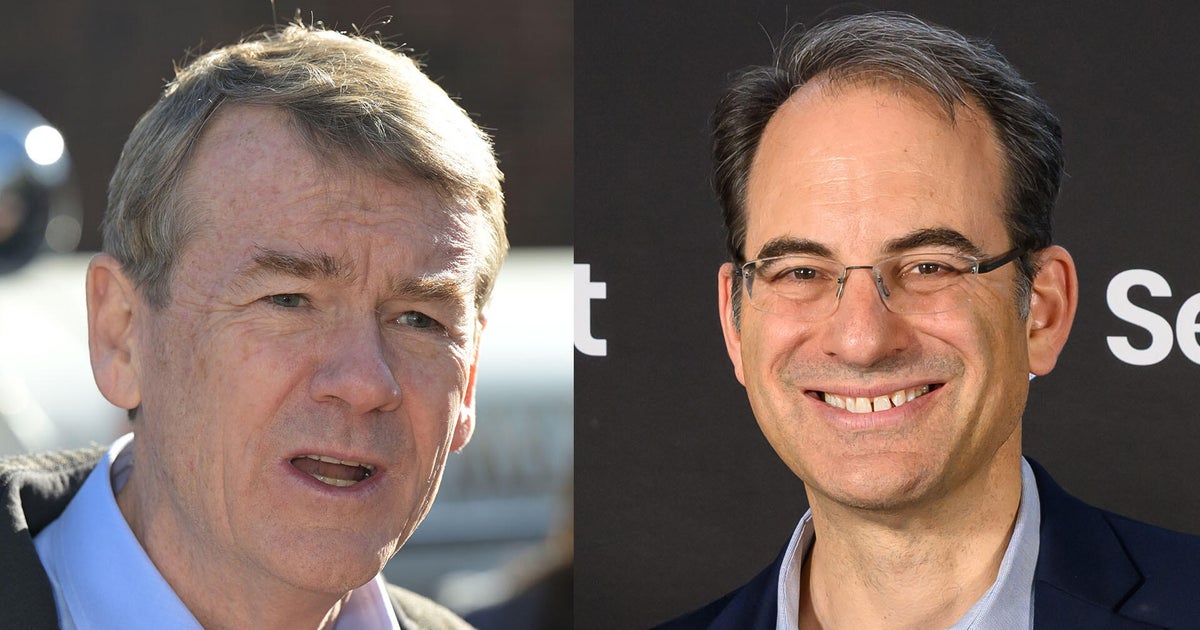
In Colorado, several Democratic primary races are seeing challenges to party establishment candidates, including Senators Michael Bennet and John Hickenlooper and Representative Diana DeGette. These challenges come from more progressive or outsider candidates who want to change the party's direction, following a similar trend seen in other states.
Key Facts
Senator Michael Bennet, a moderate, is running for governor but is being challenged by state Attorney General Phil Weiser.
Weiser criticizes Bennet as a Washington insider and highlights his lawsuits against President Trump's administration.
In Colorado’s 1st Congressional District, 29-year-old Melat Kiros, a democratic socialist, is challenging 15-term incumbent Diana DeGette.
Kiros accuses DeGette of being influenced by corporate donors, while DeGette points to Kiros’s lack of experience.
Senator John Hickenlooper faces a primary challenge from state Senator Julie Gonzales, who seeks new leadership and opposes the party establishment.
Colorado generally favors Democrats, with strong chances for primary winners in the November general election.
This trend reflects a wider shift within the Democratic Party, where progressive and anti-establishment candidates are gaining ground.
House Minority Leader Hakeem Jeffries acknowledged competitive primaries will continue while President Trump is in office.
Read the Original
Want the full story? Tap a source to open the original
article.
Republican Representative Tom Kean Jr. of New Jersey plans to return to Congress after several months away due to an undisclosed medical issue. House leaders and his family say the illness is serious but temporary, and Kean expects a full recovery and a return to work soon.
Key Facts
Tom Kean Jr. has missed more than 140 votes in the House since March 5.
He is running for a third term in a competitive district.
House Speaker Mike Johnson spoke with Kean on April 24 and said Kean was handling a personal health matter.
Kean has not publicly revealed details about his illness.
Kean’s father described the illness as serious but expected to be temporary.
Kean has continued some official activities online during his absence, like introducing bills and signing documents.
Kean said in May he was on the road to full recovery and would soon return to Congress.
House leadership respects Kean’s privacy and said the health issue is uncommon but not severe.
Read the Original
Want the full story? Tap a source to open the original
article.
Progressive candidates backed by the Democratic Socialists of America (DSA) have recently won several elections in New York City, showing growing influence in urban areas. However, progressives still struggle to win support in rural parts of the United States, where voters often have more conservative views but show openness to some economic policies like raising the minimum wage.
Key Facts
The DSA has grown from a small group in 2007 to having at least 15 elected candidates in New York state by 2024.
Socialist candidates recently won important seats in New York City, including Darializa Avila Chevalier and Claire Valdez.
Left-wing candidates tend to win over 50% in urban areas but have about a 30% support ceiling in swing or rural districts.
Only one member of the Congressional Progressive Caucus in 2024 represents a mostly rural district.
Rural voters are generally whiter, older, more likely to own guns, and have conservative views on immigration.
Despite this, many rural voters support economic policies such as a $15 minimum wage, Medicare for All, and background checks on gun sales.
About 29% of rural voters who supported President Trump also support certain progressive economic policies and oppose abortion bans.
Progressive populist candidates like Dan Osborn are making unexpected gains in conservative rural areas by focusing on economic issues important to working-class voters.
Read the Original
Want the full story? Tap a source to open the original
article.
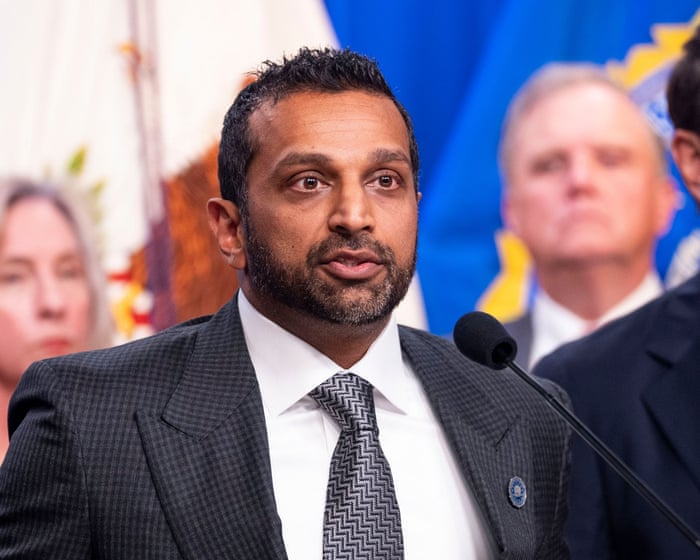
Kash Patel, the FBI director, shared details on social media about arrests in a plot to attack a White House UFC event before the investigation was complete and before a court allowed the information to be public. FBI agents and the Secret Service criticized Patel for revealing case details prematurely, saying it could harm the investigation and cooperation between agencies.
Key Facts
FBI Director Kash Patel posted on social media about five arrests in a plot to attack a UFC event at the White House.
The case was under a court sealing order, which generally prevents public disclosure without permission.
Law enforcement officials said the investigation was still active and more suspects were being searched for when Patel posted.
The Secret Service, which led the investigation, chose not to share information publicly to protect the case.
Patel praised the FBI, partners, and Department of Justice for the operation in his social media post.
Other FBI agents said Patel focused on sharing investigation details to gain attention rather than on the work itself.
Experts warned Patel’s early disclosure might break legal rules and FBI ethical guidelines.
The Justice Department announced arrests publicly several hours after Patel’s post.
Two more men were arrested later in connection with the alleged attack plot.
Read the Original
Want the full story? Tap a source to open the original
article.
A South Carolina state representative urges Congress to pass the Kids Online Safety Act (KOSA) to protect children on social media. The law would require tech companies to take steps to prevent harm to minors, such as online exploitation and exposure to dangerous content.
Key Facts
The author’s son died because of an online sextortion scheme linked to social media.
Social media companies design platforms to increase user engagement but often ignore child safety risks.
Congress has debated online child safety laws for years but has not passed strong federal protections.
Many states are passing their own online safety laws because there is no federal law.
The Kids Online Safety Act (KOSA) would require platforms to take reasonable actions to reduce harm to minors.
KOSA would address problems like sexual exploitation, predatory behavior, and promotion of self-harm.
The law does not ban social media or limit free speech but sets clear safety expectations for companies.
Parents cannot fully monitor their children’s online activity, so legislative action is necessary.
Read the Original
Want the full story? Tap a source to open the original
article.
The article compares two recent movies, Supergirl and Citizen Vigilante, showing how both deal with themes of justice and revenge but from very different perspectives. Supergirl is a feminist story about rescuing kidnapped girls, while Citizen Vigilante features a man taking violent action against criminals outside the law.
Key Facts
Supergirl is a Warner Bros. movie that earned $38 million in the U.S. but needs about $375 million to break even.
Citizen Vigilante was banned in Germany and only released in a few U.S. theaters before streaming on Elon Musk’s platform X.
Citizen Vigilante gained over 15 million views in 48 hours on X and rose in popularity on Amazon Prime and Apple TV.
Supergirl’s story centers on a woman, Kara (Supergirl), helping a girl named Ruthye whose family was killed by a male gang led by Krem.
Citizen Vigilante follows Sanders, a wealthy man who kills violent criminals, seeing the legal system as ineffective.
Both movies focus on individuals using force because public justice is seen as failing.
Supergirl appeals more to a progressive, feminist audience, while Citizen Vigilante appeals to a conservative viewpoint.
The movies reflect a divided cultural view on justice and revenge, highlighting tensions in society regarding law and morality.
Read the Original
Want the full story? Tap a source to open the original
article.
The article explains that for the U.S. to keep its lead in artificial intelligence (AI), it needs strong infrastructure like data centers and energy systems. It warns that foreign rivals, particularly China, may be trying to slow down U.S. progress by funding opposition to building these facilities. This could limit America’s ability to use its AI innovations fully.
Key Facts
Strong infrastructure, including data centers and energy grids, is needed to support AI development.
The U.S. leads in AI technology but must also build the infrastructure to use it at scale.
China invests heavily not only in AI but also in the infrastructure that supports it.
Reports suggest foreign donors, possibly linked to Beijing, fund groups opposing U.S. data center construction.
This opposition to infrastructure may be coordinated, not just local disagreements.
Foreign influence can turn local disputes over construction into obstacles for national AI progress.
Congress needs to update permitting processes and defenses against foreign interference.
Infrastructure delays can limit the U.S.’s ability to turn AI innovations into real power.
Read the Original
Want the full story? Tap a source to open the original
article.
President Donald Trump is focusing on recent victories by far-left Democrats in primary elections. He is using these wins to warn voters that the Democratic Party supports communism as the November midterm elections approach.
Key Facts
President Trump is linking Democratic primary wins to far-left or progressive ideas.
He calls the Democrats “communists” to highlight their political views.
This messaging comes about four months before the midterm elections.
The goal is to motivate Republican voters using concerns about Democratic progressivism.
Trump has previously described Democrats as far left, but this campaign is more intense.
The strategy aims to influence voters by focusing on ideological differences.
Midterm elections will determine control of Congress.
Read the Original
Want the full story? Tap a source to open the original
article.
The Supreme Court ruled to remove deportation protections for people from Haiti and Syria who have Temporary Protected Status (TPS). This decision affects all TPS holders, a program that allows people from certain countries to stay in the U.S. when it is unsafe to return home.
Key Facts
The Supreme Court ended deportation protections for Haitians and Syrians with TPS.
TPS is a status given to people from 17 countries deemed unsafe to deport to.
The Trump administration has been reducing TPS protections.
This ruling could affect all TPS recipients, not just those from Haiti or Syria.
TPS was created to protect people when their home countries face dangers like natural disasters or conflict.
Ending TPS protections may lead to deportations of many people currently living in the U.S. under this program.
The ruling signals a shift in how the U.S. handles immigration protections for vulnerable groups.
Read the Original
Want the full story? Tap a source to open the original
article.
Democratic socialists in Colorado are competing in a primary election for a House seat. Melat Kiros, a far-left candidate, is running against incumbent Representative Diana DeGette and Wanda James for Colorado’s 1st Congressional District.
Key Facts
The election is a primary for Colorado’s 1st Congressional District House seat.
Melat Kiros is a far-left candidate and a former attorney.
Diana DeGette is the current representative and considered more progressive but part of the establishment.
Wanda James, a University of Colorado Regent, is also running in the primary.
The race highlights a struggle between the established Democratic leaders and the more progressive, activist wing.
The primary election is scheduled for Tuesday in Colorado.
Democratic socialists hope to achieve a significant political win with this race.
Read the Original
Want the full story? Tap a source to open the original
article.
In the 2026 Democratic primaries, four current House members have lost their races so far, which is double the number from a similar point in 2018. This shows a possible change in influence within the Democratic Party as new candidates challenge established members.
Key Facts
Four Democratic incumbents in the House have been defeated in 2026 primaries.
This number is twice as many as in 2018 at the same stage.
The 2018 primaries gave rise to a group called “the squad.”
The 2026 results could indicate shifts in party dynamics and power.
The primary calendar is more than half completed.
These challenges come within the Democratic Party’s elections.
Outcome may affect the party’s direction and leadership in the House.
Read the Original
Want the full story? Tap a source to open the original
article.
Republican senators believe the conflict with Iran and peace talks led by Vice President Vance will play a big role in the 2028 presidential primary. Vice President Vance and Secretary of State Marco Rubio are seen as leading candidates in that race.
Key Facts
Republican senators view the Iran conflict as a key issue for the 2028 presidential race.
Vice President Vance is leading efforts on peace talks with Iran.
The peace deal involves reopening the Strait of Hormuz, an important waterway.
Some Republicans criticize the deal because of defense concerns.
Vice President Vance and Secretary of State Marco Rubio are early favorites to run in 2028.
The Iran issue could affect voters’ opinions during the primary elections.
Read the Original
Want the full story? Tap a source to open the original
article.
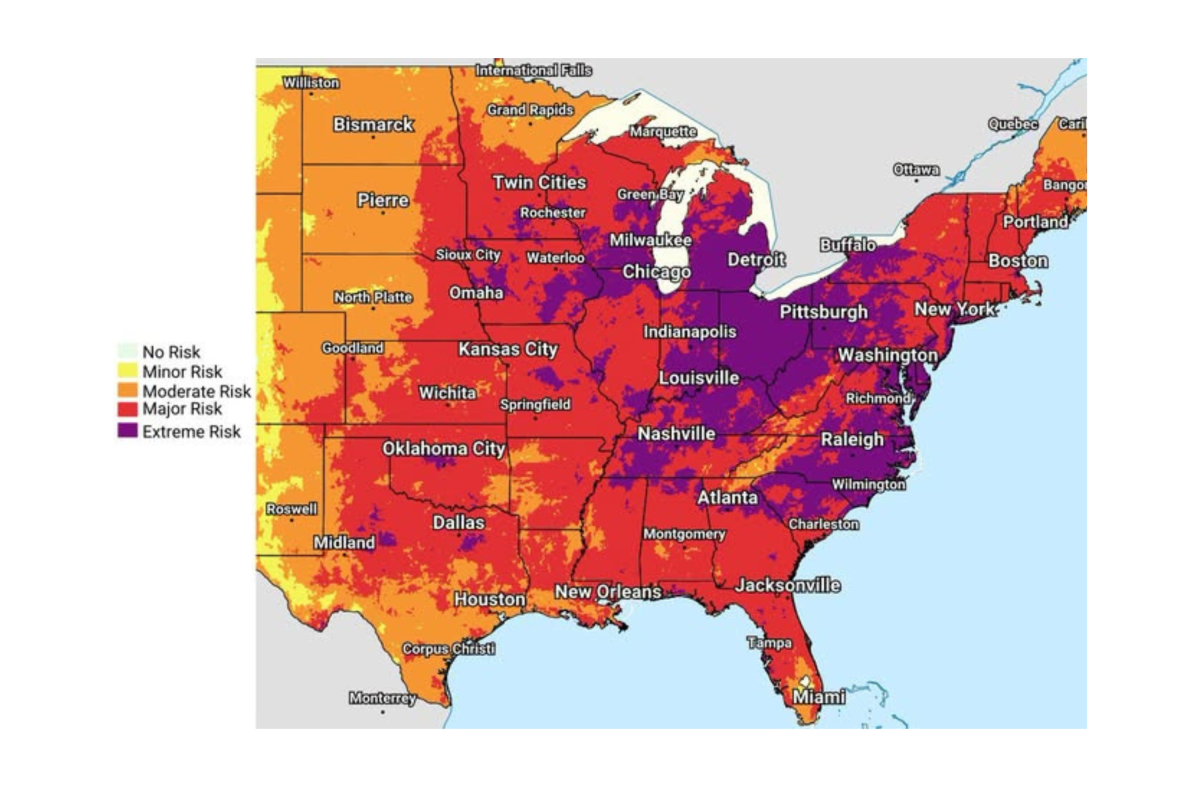
More than 100 million people in the United States are under heat alerts due to a strong heat wave affecting much of the eastern two-thirds of the country. This heat wave is caused by a weather pattern called a heat dome that traps hot, humid air and creates dangerously high temperatures ahead of the July 4 holiday.
Key Facts
The heat wave affects regions including the Midwest, Great Lakes, Ohio Valley, Mid-Atlantic, Northeast, Southeast, and Gulf Coast.
Temperatures are expected to reach the 90s and low 100s Fahrenheit, with heat indexes (which include humidity) between 100 and 110 degrees, and isolated areas nearing 115 degrees.
Overnight temperatures will remain high, in the 70s or 80s, giving little relief from the heat.
Connecticut and New York states have activated special protocols and extended pool hours to help residents cope.
Major events like the America 250 celebrations in Washington, D.C., will coincide with this heat, posing risks for large crowds outdoors.
Officials advise people at public events to stay hydrated, wear light clothing, seek shade, and use cooling stations.
The 2026 FIFA World Cup organizers in Philadelphia are adjusting fan events by adding cooling areas and changing operating hours to reduce heat risks.
Public health experts warn that extreme heat increases chances of heat exhaustion and heat stroke, especially for older adults, children, and those with health issues.
Read the Original
Want the full story? Tap a source to open the original
article.
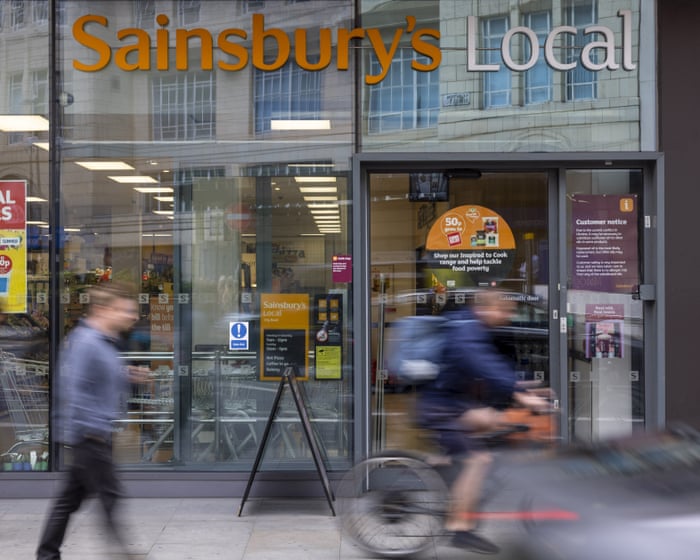
The head of Sainsbury’s says grocery price rises in the UK are not as bad as expected so far, though uncertainty remains. The supermarket chain has seen a rise in sales and market share as customers look for ways to save money amid worries about the Middle East conflict and inflation.
Key Facts
Grocery inflation in the UK has been lower than feared, with prices steady in June compared to the previous year.
Sainsbury’s sales rose by 2.7% to £9.1 billion in the three months ending June 20.
Grocery sales increased by 3.6% as Sainsbury’s matched prices with cheaper rival Aldi on many items.
Sainsbury’s Argos store sales dropped slightly due to discounts and customers choosing cheaper goods.
Customers are cautious about buying non-food items, with more promotions and subdued spending.
Hot weather and World Cup games boosted sales of fresh foods, ice cream, pizza, and salads.
Sainsbury’s is investing hundreds of millions in refrigeration upgrades at about 100 stores.
The company is expanding the use of facial recognition technology to reduce shoplifting, after a successful trial.
Read the Original
Want the full story? Tap a source to open the original
article.
Lily Allen is on tour performing her album West End Girl in full, inspired by her divorce. Some fans said the shows felt too short and lacked interaction, but Allen explained the format was planned to focus on storytelling and said the tour was advertised as the full album performance.
Key Facts
The tour features Lily Allen playing the entire West End Girl album live.
Some fans complained the shows were short and ticket prices were high.
Allen says the length and minimal audience talk are artistic choices to tell a story.
The tour started at smaller venues but expanded to bigger ones due to strong ticket sales.
Shows include a trio playing orchestral versions of Allen’s earlier songs before she performs.
Critics have described the show as more like art or theater than a typical concert.
Allen responded to fan criticism on social media, emphasizing pride and hard work on the tour.
The tour will continue with dates in the US, Australia, and New Zealand.
Read the Original
Want the full story? Tap a source to open the original
article.
A jury is deciding how 14-year-old Noah Donohoe died after he went missing in June 2020 in north Belfast. Noah’s body was found in a water tunnel near where he was last seen, and the inquest has looked at his disappearance, the police investigation, and tunnel safety.
Key Facts
Noah Donohoe disappeared in north Belfast in June 2020 at age 14.
His body was found six days later in an underground water tunnel near the M2 motorway.
The tunnel entrance is close to Northwood Road, where Noah was last seen.
The inquest is led by High Court judge Mr Justice Rooney with a jury of 8 men and 2 women.
The jury has 10 questions to answer, including how Noah died and if police errors contributed.
The safety and maintenance of the tunnel by Northern Ireland’s Department for Infrastructure was examined.
Noah’s mother and a family member attended the court as the jury retired to decide.
The inquest started in January and lasted five months before the jury began deliberations.
Read the Original
Want the full story? Tap a source to open the original
article.
South Africa saw heavy police deployment on June 30 as anti-immigrant protests took place, with many foreigners fleeing the country ahead of an unofficial deadline set by protest groups. The protests targeted undocumented migrants, leading to violence, evictions, and efforts by some African countries to repatriate their citizens.
Key Facts
Anti-immigrant protests were planned for June 30, calling for all undocumented migrants to leave South Africa.
Police were deployed in large numbers to prevent violence and looting during the protests.
Thousands of foreign nationals fled South Africa before the deadline, fearing attacks.
Past weeks of violence have resulted in the deaths of at least four migrants from Mozambique, Ethiopia, and Malawi.
Landlords in major cities like Johannesburg and Durban evicted foreign tenants out of fear of vandalism.
Some African governments, including Uganda, arranged transport to bring their citizens back home.
The protests are organized by minor political parties and citizen groups, and social media spreads related misinformation.
South Africa faces high unemployment and service problems, with experts saying the protests are linked to local political issues rather than just immigration.
Read the Original
Want the full story? Tap a source to open the original
article.
Spain’s government has launched the largest migrant amnesty in European history, allowing over one million people to apply for legal status. This program ends on Tuesday, marking the final chance for irregular migrants to regularize their position despite increasing immigration controls across Europe.
Key Facts
Spain’s leftist government began a large migrant regularisation program.
Over one million people have applied for legal status under this amnesty.
The program is the biggest of its kind in Europe.
The amnesty ends on Tuesday, the final day for applications.
This move goes against the trend of stricter immigration policies in Europe.
The effort aims to provide legal security to many migrants living in Spain without official papers.
Spain’s program has attracted wide attention due to its size and timing.
The government hopes to reduce the number of undocumented migrants through this process.
Read the Original
Want the full story? Tap a source to open the original
article.