Neutral summaries of your favorite news sources — just the facts.
Your favorite news sources, one neutral feed — we distill their reporting into fact-first
summaries and always link to the original story. How it works
Germany experienced a new high temperature record of 41.7°C (107.1°F) during a heatwave, according to early data from the German weather service. This extreme heat event affected the country on Sunday, June 28, 2026.
Key Facts
Germany set a new temperature record at 41.7°C.
The measurement is based on preliminary data from the German weather service.
The record was reached during a heatwave described as "brutal."
The heatwave is causing temperature records to be broken as it moves eastward.
Extreme heat events like this can have widespread effects on health, environment, and infrastructure.
The news was reported from Berlin by France 24’s correspondent.
Heatwaves are part of a larger pattern of changing weather conditions around the world.
Read the Original
Want the full story? Tap a source to open the original
article.
Many large U.S. companies now treat disaster relief as a regular part of their work, not just occasional charity. Businesses like Walmart, Amazon, and FedEx use their resources to help communities quickly after natural disasters, which benefits both the community and the companies themselves.
Key Facts
Nearly half of the companies recognized in a recent survey helped during at least one major U.S. natural disaster in the past four years.
Eight companies, including Amazon, FedEx, Ford, Humana, JPMorgan Chase, Lockheed Martin, Molson Coors, and Walmart, supported all seven disasters examined.
Companies are expected by consumers and other stakeholders to actively support the communities they serve during crises.
Disaster relief is viewed as an investment in resilience and long-term success, not just philanthropy.
Large companies use their logistics, financial, manufacturing, and healthcare resources to respond faster than many government agencies.
Walmart recently invested $10.8 million to expand emergency response vehicle fleets to reach most of the U.S. within eight hours.
Strong disaster response is linked with higher rankings in corporate social responsibility and public perception.
Corporate leaders emphasize the importance of showing commitment to communities beyond just financial performance.
Read the Original
Want the full story? Tap a source to open the original
article.
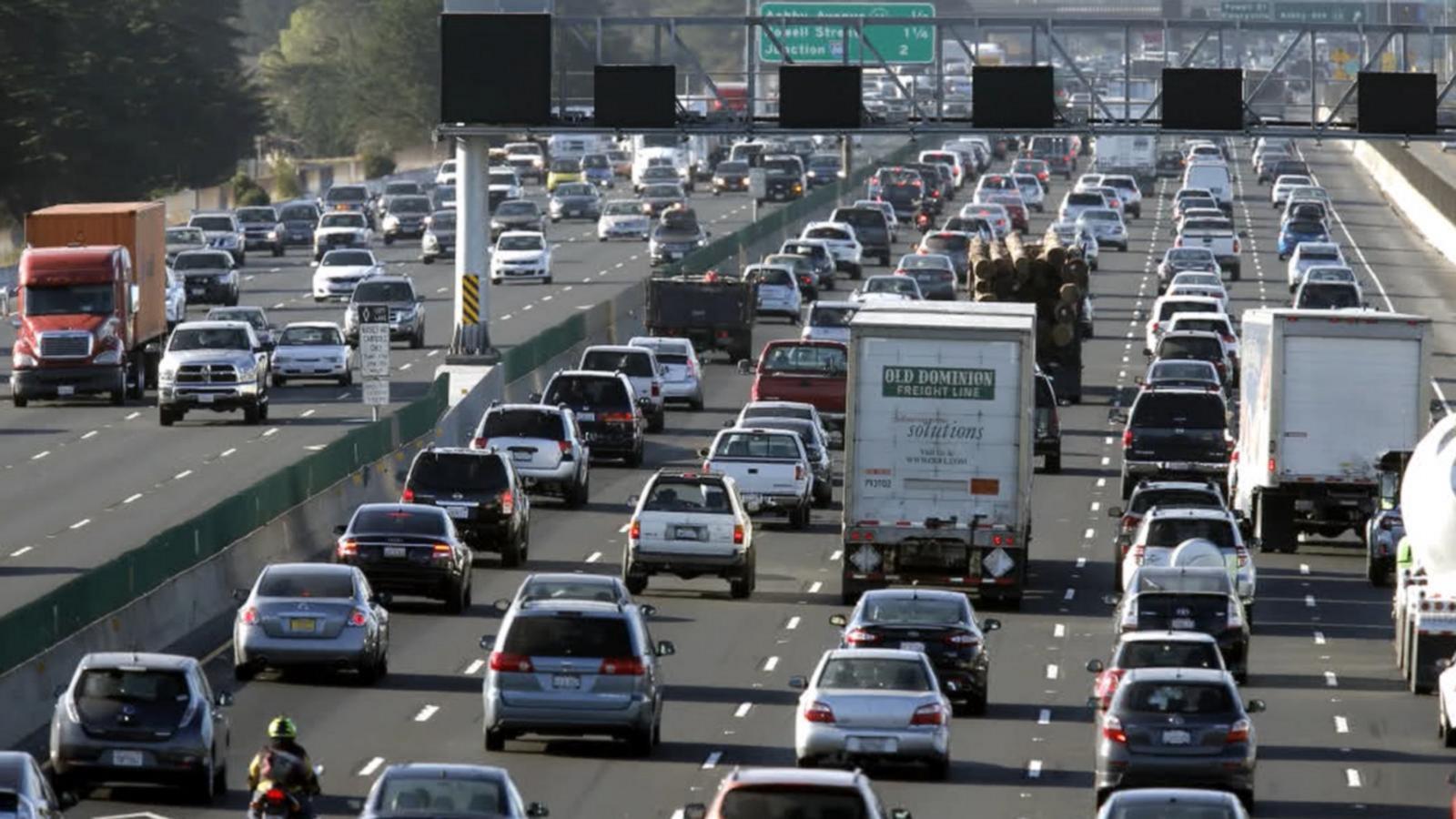
About 72 million Americans are expected to travel at least 50 miles during the holiday weekend. Most will drive, while about 6 million people will travel by plane, making this one of the busiest travel times of the year.
Key Facts
A record 72 million Americans will travel for the holiday weekend.
Travelers will go at least 50 miles from home.
Approximately 61 million people will travel by car.
Around 6 million people will travel by airplane.
This holiday weekend is one of the busiest travel periods of the year.
The travel data was reported on June 28, 2026.
Both road and air travel will see high volumes over the holiday.
This information was shared by ABC News.
Read the Original
Want the full story? Tap a source to open the original
article.
Film archivists from Europe are working to complete Orson Welles’s unfinished movie based on Don Quixote, more than 70 years after it was started. They are combining about 30 hours of footage from France, Spain, Italy, and Germany to create a coherent film.
Key Facts
Orson Welles began filming Don Quixote in 1957, initially as a TV project backed by Frank Sinatra, but it was never finished.
Filming took place over about 20 years in Mexico, Italy, and Spain, with Welles working on it until his death in 1985.
The footage is scattered across several European archives, including France, Spain, Italy, and the Munich film museum in Germany.
The reconstructing team has 30 hours of footage and plans to create the film without adding new scenes or special effects.
There is no complete script, but enough alternative versions exist to guide the editing process.
Some scenes are in black and white, while others were shot in color; the soundtrack is incomplete, and Welles himself voiced major roles in parts.
The story is a loose adaptation of Cervantes’s novel, with some scenes changed, such as one moved from a puppet theater to a cinema.
Esteve Riambau, leader of the project, compares Welles’s work to that of Michelangelo and sees this film as an important addition to Welles’s legacy.
Read the Original
Want the full story? Tap a source to open the original
article.
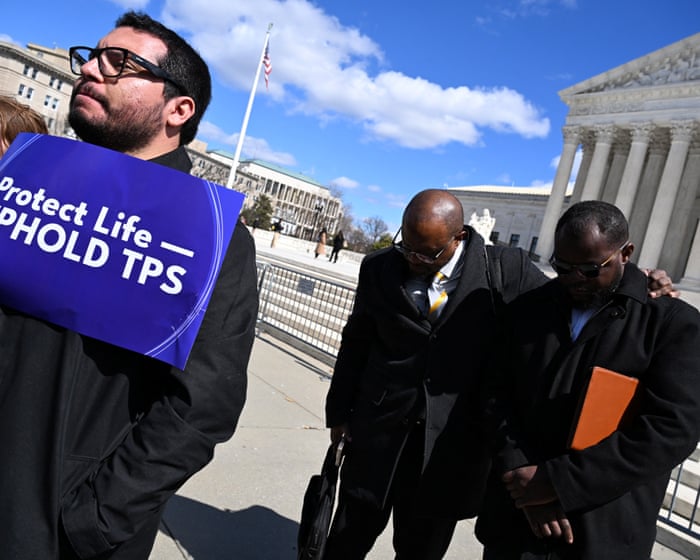
The US Supreme Court ruled that the Trump administration can end Temporary Protected Status (TPS) for immigrants from certain countries, potentially affecting over 1.3 million people. TPS allowed people from dangerous countries to stay and work legally in the US, but the court said the president has wide authority to cancel this protection.
Key Facts
TPS was created in 1990 to protect immigrants from countries with ongoing conflicts or disasters.
It offers protection from deportation and work permits but does not lead to citizenship or residency.
The court case focused on TPS for 350,000 Haitians and 6,000 Syrians but could impact more than 1.3 million people in total.
Some countries with long-running TPS include Haiti (15 years), El Salvador (25 years), and Somalia (over 35 years).
Lower courts blocked attempts to end TPS, citing risks to immigrants’ safety and evidence of racial bias in the Trump administration.
The Supreme Court, in a 6-3 decision, ruled that the president can end TPS protections without judicial interference.
Justice Alito said negative statements by President Trump about immigrants were policy opinions, not racial discrimination.
TPS holders contribute billions to the US economy and pay taxes but cannot access many public benefits.
Read the Original
Want the full story? Tap a source to open the original
article.
New York State Legislature passed a bill to replace the words "mother" and "father" with gender-neutral terms like "gestating" and "non-gestating" parents in state law. The article discusses concerns that this change might overlook the important roles of fathers and adoptive parents.
Key Facts
New York passed a bill to use gender-neutral terms instead of "mother" and "father" in laws.
The terms "gestating" (carrying the pregnancy) and "non-gestating" parents will be used.
Some people worry this change might reduce recognition of fathers and adoptive parents.
Research shows different types of parents: genetic (biological), gestational (carry pregnancy), and intended (raise the child).
Fathers’ involvement before and after birth benefits children’s health, education, and emotional development.
About 60% of American men have at least one biological child, but many also serve as stepfathers or adoptive fathers.
Studies show adoptive parents care deeply and invest a lot in raising their children.
Experts say fathers play a unique role in children’s speech, social, and academic skills development.
Read the Original
Want the full story? Tap a source to open the original
article.
Some Republican lawmakers worry that President Trump’s views on the economy do not match their own or many voters’ opinions. His decision not to support a housing bill has raised concerns among GOP senators ahead of the 2026 midterm elections.
Key Facts
GOP lawmakers are concerned President Trump is not aligned with their economic views.
Many Republican senators believe the economy is the top issue for voters in the 2026 midterms.
President Trump refused to sign the 21st Century ROAD to Housing Act.
GOP senators have asked President Trump for weeks to take more action on economic matters.
The disagreement over this housing bill is seen as a sign of tension inside the Republican Party.
The issue highlights a possible gap between President Trump’s position and the priorities of voters and lawmakers.
The 21st Century ROAD to Housing Act aims to address housing issues but lacks support from the President.
This conflict may affect Republican unity leading into the midterm elections.
Read the Original
Want the full story? Tap a source to open the original
article.
President Donald Trump and Republicans want to lower inflation before the November midterm elections to improve their chances of winning. Recent data show inflation remains above 4 percent, making this goal difficult.
Key Facts
Inflation is measured using personal consumption expenditures (PCE), which tracks price changes.
Recent PCE data show inflation above 4 percent.
Republicans believe lowering inflation will help them in the midterm elections.
The midterm elections are scheduled for November.
Inflation affects the cost of goods and services for people.
Time is running short for political leaders to influence inflation before voters decide.
Read the Original
Want the full story? Tap a source to open the original
article.
Speaker Mike Johnson wants to pass important laws this week in the House of Representatives. However, some conservative members are insisting on quick action on the SAVE America Act, causing uncertainty about whether the House can act together.
Key Facts
Speaker Mike Johnson is leading the House with an active plan for new laws.
Some conservative Republicans are pushing hard for the SAVE America Act.
The SAVE America Act focuses on protecting voter eligibility rules.
President Donald Trump has asked House Republicans to unite and support party goals.
There is tension between party leaders and conservative rebels over legislative priorities.
The outcome of this disagreement could affect which bills get passed soon.
The situation shows divisions within the Republican Party in the House.
Read the Original
Want the full story? Tap a source to open the original
article.
Recent military clashes between the United States and Iran seem to have stopped. Qatar and Pakistan helped both countries return to diplomatic talks, which will focus on safe navigation through the Strait of Hormuz.
Key Facts
Former US Ambassador to Oman Richard Schmierer commented on the US-Iran situation.
Military exchanges between the US and Iran have reportedly ended.
Qatar and Pakistan played a role in bringing the two sides back to diplomacy.
Talks are planned to take place in Doha on Tuesday.
The discussions will focus on ensuring safe passage through the Strait of Hormuz.
The Strait of Hormuz is a key waterway for international shipping, especially oil transport.
Read the Original
Want the full story? Tap a source to open the original
article.
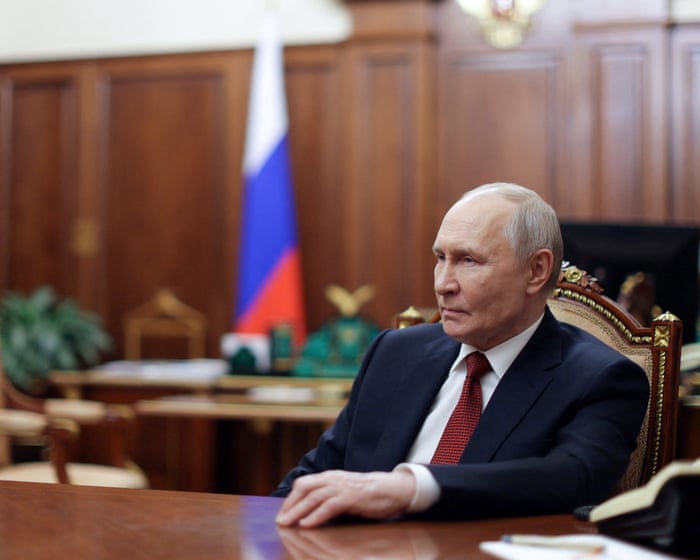
Russian President Vladimir Putin said Russia will keep fighting in Ukraine and refused to limit the use of long-range missiles, despite what he said was a proposal from Ukraine to stop such attacks. Ukraine has been increasing its drone attacks on Russian energy sites, causing damage and casualties in Russia.
Key Facts
Putin said Russia will continue its war against Ukraine and rejected Ukraine’s proposal to limit long-range missile strikes.
Putin claimed Ukraine made the proposal because its forces are under pressure along the long front line.
Ukraine has used long-range drones to attack Russian oil refineries and electricity plants far from the front lines.
Ukrainian strikes damaged oil refineries in Slavyansk and Yaroslavl regions of Russia, causing fires and casualties.
Russia reported shooting down over 100 Ukrainian drones and said some drones dropped explosives on Russian territory.
Russian attacks on Ukraine killed at least four people on the same day Putin spoke.
Putin acknowledged Russia had to increase air defenses to protect against Ukrainian drone attacks on its energy sector.
Ukrainian President Zelenskyy said these attacks weaken Russia’s ability to continue the war.
Read the Original
Want the full story? Tap a source to open the original
article.
The new Michael Jackson movie has become the highest-earning biographical film worldwide, making $977 million at the box office. It beat previous top biopics, including the movie Oppenheimer, and performed strongly despite mixed reviews.
Key Facts
Michael Jackson’s movie made $977 million worldwide, surpassing Oppenheimer’s record.
It already was the top musical biopic, overtaking Bohemian Rhapsody.
The movie tells Michael Jackson’s story, from child star to King of Pop.
Jaafar Jackson, Michael’s nephew, plays him in the film.
The movie earned $217 million in its first week globally.
Critics gave mixed reviews, but fans rated it highly.
The film does not cover the sexual abuse allegations against Michael Jackson.
After the movie’s release, Michael Jackson’s songs saw a big increase in streaming.
Read the Original
Want the full story? Tap a source to open the original
article.
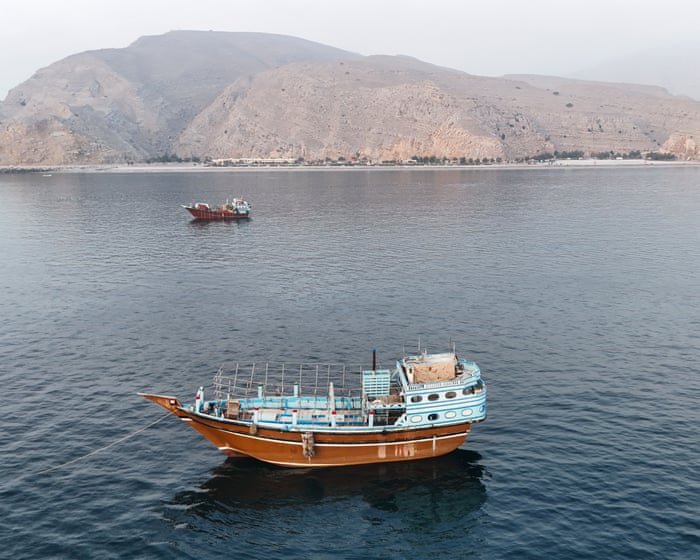
Tensions between the US and Iran have increased due to attacks and missile strikes around the Strait of Hormuz, a key waterway for global oil shipping. President Trump warned that the US might use military force, while both sides agreed to pause hostilities and resume talks to reopen the strait.
Key Facts
Iran launched drone and missile attacks on Bahrain and Kuwait after US strikes on southern Iran.
President Donald Trump warned that the US might "militarily finish the job," threatening Iran’s existence.
Kuwait intercepted two ballistic missiles without injuries or damage reported.
Bahrain reported damage to a residential building after Iranian drone strikes, with no fatalities.
A Qatari national died and another was injured from shrapnel related to military activities in the area.
Iran insists it should have sole control over the Strait of Hormuz, a vital route for oil and gas shipping.
The US promotes a southern shipping lane along Oman’s coast, while Iran wants ships to use the northern route under its control.
Both sides agreed to halt recent attacks and continue technical talks to allow free movement of vessels through the strait.
Read the Original
Want the full story? Tap a source to open the original
article.
In August 1918, tens of thousands of people in Toronto attacked Greek-owned businesses, driven by anger and social tensions after World War I. This event is considered the largest anti-Greek riot in history and highlights the dangers of rising xenophobia, or fear and dislike of foreigners, in society.
Key Facts
The riot took place in Toronto in August 1918 during a heatwave.
20,000 to 25,000 people destroyed almost every Greek business in the city.
Greek immigrants made up less than 1% of Toronto’s population but owned over one-third of cheap local eateries.
Many Canadian veterans returning from World War I were unhappy with the government’s poor support and blamed Greek immigrants, who had mostly not served in the war.
Rumors spread that a Greek immigrant had harmed a Canadian veteran, leading to the violence.
The Greek community was seen as “slackers” because they usually did not serve in the military during the war.
Historian Thomas Gallant calls the riot a warning about the risks of unchecked anti-immigrant feelings.
The riot was sparked by an incident at the White City Cafe, a Greek-owned restaurant.
Read the Original
Want the full story? Tap a source to open the original
article.
Australia and Vanuatu have signed an agreement that stops foreign military bases from being built on Vanuatu’s islands. The deal also includes economic support from Australia and requires Vanuatu to discuss any important infrastructure deals with Australia first.
Key Facts
The Nakamal Agreement was signed by Australian Prime Minister Anthony Albanese and Vanuatu’s Prime Minister Jotham Napat in Canberra.
Vanuatu agreed to block any foreign military bases or military infrastructure on its islands.
Australia will provide more economic support to Vanuatu under this deal.
Vanuatu will consult with Australia about any third-party investment in critical infrastructure but does not have to give Australia veto power.
China expressed concern that the agreement may be aimed at limiting its influence in the Pacific region.
Vanuatu has separate economic agreements with China, which has funded infrastructure projects and supplied equipment to Vanuatu’s police.
Australia and Vanuatu will deepen cooperation on police training, maritime security, cybersecurity, and intelligence.
Australia is working with other Pacific island nations to reduce China’s growing influence in the area.
Read the Original
Want the full story? Tap a source to open the original
article.
A six-year-old nonverbal boy named Ramon "RJ" Jett is missing in Clayton County, Georgia. Police are urgently searching for him using multiple resources and are asking the public to help by checking their property and calling 911 if they see him.
Key Facts
Ramon Jett is a 6-year-old boy who cannot speak and has a mental health condition.
He was last seen between 11:30 a.m. and 12 p.m. on Sunday near Webb Road in Riverdale, Georgia.
Police are using K-9 teams, drones, patrol officers, and detectives in their search.
Ramon is about 3 feet 5 inches tall, weighs around 40 pounds, has black hair, and brown eyes.
He was last wearing a light green shirt, camouflage shorts, and white socks.
His mother said he was staying with his older sister and was missing after waking from a nap with the door open.
Ramon is drawn to numbers, letters, and nursery rhymes and responds better if called by his nickname, RJ.
Authorities ask anyone who sees him to call 911 immediately and not assume someone else has already reported it.
Read the Original
Want the full story? Tap a source to open the original
article.
Bill Maher received the Mark Twain Prize for American Humor at the Kennedy Center. The event attracted many celebrities and lawmakers from both political parties despite ongoing debates about the Kennedy Center’s name and future.
Key Facts
Bill Maher was honored with the Mark Twain Prize for American Humor.
The ceremony took place at the Kennedy Center.
There is current controversy about the Kennedy Center’s name and what will happen to it.
Many well-known performers attended the event.
Lawmakers from both Democrats and Republicans showed support.
The event focused on celebrating comedy.
Discussions about the Kennedy Center did not stop people from attending.
Read the Original
Want the full story? Tap a source to open the original
article.
Russian President Vladimir Putin said that Ukraine’s drone attacks on oil refineries are causing fuel shortages in Russia. The strikes have forced some regions to limit petrol sales, but Putin said the shortage is not critical and Russia is working to fix the problem.
Key Facts
Ukraine is using long-range drones to attack Russian oil refineries.
These attacks have damaged about a quarter of Russia’s oil refining capacity.
Fuel shortages have led to rationing in at least 56 Russian regions, including Moscow.
Crimea has declared a state of emergency due to disruptions caused by strikes.
Putin said Russia will increase fuel imports and protect refineries to ease shortages.
Ukrainian President Zelenskyy confirmed strikes in Krasnodar Krai and Yaroslavl oblast.
The shortages have caused long petrol queues, which is unusual in Russia.
Experts say the impact depends on how long Ukraine continues its attacks.
Read the Original
Want the full story? Tap a source to open the original
article.
China has imposed export controls on several Japanese organizations, accusing Japan of militarism and targeting entities connected to military technology. This move is part of ongoing tensions between China and Japan, especially over Taiwan and Japan’s increasing military activities.
Key Facts
China added 20 Japanese groups to a blacklist, stopping them from receiving items that could be used for military purposes.
Another 20 Japanese organizations were put on a watch list, requiring them to prove their exports won’t support Japan’s military.
Blacklisted groups include research centers and companies like Mitsubishi Precision and Hitachi Advanced Systems.
China said the controls are lawful and don’t affect normal trade but criticized Japan’s military build-up.
Japan’s government called the actions unacceptable and asked China to reverse them.
Tensions rose after Japanese Prime Minister Sanae Takaichi suggested Japan might defend Taiwan militarily.
China views Taiwan as part of its territory and opposes any foreign military support for Taiwan.
Experts say China uses economic pressure to punish Japan and warn other countries about challenging China’s position on Taiwan.
Read the Original
Want the full story? Tap a source to open the original
article.
The article shares three important points about President Donald Trump's way of thinking and leading, based on insights from reporters Maggie Haberman and Jonathan Swan. It explains how Trump focuses on his personal legacy, works closely with a small, trusted group for planning, and may pursue bold, unpredictable actions.
Key Facts
President Trump is mainly focused on being remembered as a great historical leader, rather than current political wins like midterms.
He prefers attention on how others can help him build his legacy, which he sees as creating lasting monuments or achievements.
Trump operates with a small group of close advisors who plan in secret, sometimes using the Situation Room.
This core group includes Vice President Vance, Secretary of State Marco Rubio, Defense Secretary Pete Hegseth, Stephen Miller, and Chief of Staff Susie Wiles.
Trump’s leadership style is more discreet behind the scenes, despite his public outbursts.
He may pursue bold actions, such as making deals with China or expanding U.S. influence in new areas.
People who want Trump’s attention often call him late at night when he takes private calls.
Having direct contact with Trump, or connections through close allies, is often seen as a way to influence him.
Read the Original
Want the full story? Tap a source to open the original
article.