The article argues that political parties overestimate the influence of online creators on young voters. It cites surveys suggesting young people are more likely to seek political information from family, friends, and organizations, while campaigns and allied groups increasingly pay creators to promote political messages.
Key Facts
In Michigan’s 2024 presidential election, Donald Trump won by about 1.4 percentage points, and the article says young voters split evenly between Trump and Kamala Harris.
The article estimates that young voters’ shift toward Trump could have amounted to roughly 3.6 percentage points in Michigan, assuming they made up 15% of the electorate.
A Media Insight Project survey found that 63% of people aged 18 to 34 get news from influencers at least sometimes, but 9% of those who receive such news have great confidence in it.
A YouGov survey of young voters in eight battleground states found that half sought political advice from family members, 30% from friends, and 6% from influencers.
A Tufts civic-engagement research center survey found that 45% of young respondents got political information from political, advocacy, or community organizations; 9% cited influencer and celebrity social media posts.
The article reports that the Democratic National Committee has worked with more than 500 online personalities and that the National Republican Congressional Committee paid more than $120,000 to a network of conservative influencers.
The article gives examples of campaign-related payments to creators, including at least 17 influencers paid $5,000 or more by Tom Steyer in California’s governor’s race and a $25,000 payment from Katie Porter’s campaign to a lifestyle creator.
Read the Original
Want the full story? Tap a source to open the original
article.
Daylight saving time ends at 2 a.m. local time on Sunday, Nov. 1, 2026, when most Americans will set clocks back one hour. A bill to make daylight saving time permanent passed the House in July but remains before the Senate.
Key Facts
Most of the United States will return to standard time on Nov. 1.
Daylight saving time shifts clocks one hour ahead from March to early November, moving more daylight into the evening.
The United States first adopted daylight saving time in 1918 during World War I, partly to conserve fuel.
Congress set uniform start and end dates for daylight saving time in 1966; the current first-Sunday-in-November end date took effect in 2007.
The Sunshine Protection Act would make daylight saving time permanent and allow states to opt out before it takes effect.
The Senate has not acted on the bill, which is set to expire in early January if it is not approved.
President Donald Trump supports the bill and criticized Sen. Tom Cotton for holding it up; Cotton cited concerns about late winter sunrises.
Read the Original
Want the full story? Tap a source to open the original
article.
A Newsweek analysis found no consistent Republican polling gains across eight Senate races where President Donald Trump campaigned in October. Four races shifted toward Republicans and four toward Democrats, while prediction-market prices for Republican candidates fell in six states on at least one platform.
Key Facts
The analysis covered Senate races in Texas, Ohio, Alaska, Kansas, Iowa, Michigan, Georgia and North Carolina.
Newsweek compared Silver Bulletin polling averages from October 1, each state’s first October rally date and October 28.
Across the eight races, no polling margin shifted by more than 2 points.
Kansas had the sharpest prediction-market move: Republican Roger Marshall’s displayed price fell by more than 14 percentage points on both Kalshi and Polymarket as Democrat Adam Hamilton took the polling lead.
In Texas, Ohio and Iowa, Republican candidates gained modestly in polling margins while traders became less confident in them.
In Alaska, Republican Dan Sullivan gained on both prediction markets, while Democrat Mary Peltola extended her polling advantage by 1 point.
The article says six of the eight races were rated tossups by Cook Political Report.
Kyle Kondik said Trump’s influence as a campaigner was probably waning; the article also reported that experts and Republican campaign officials viewed rallies as potentially more effective at mobilizing existing supporters than persuading undecided voters.
Read the Original
Want the full story? Tap a source to open the original
article.
Pro-AI groups have spent more than $29 million in independent expenditures supporting candidates in the 2026 midterms, according to the article’s review of federal filings. Republican Senator Darline Graham of South Carolina has received $4.5 million from AI booster groups, the most of any candidate cited, while criticism of data centers has become a campaign issue in her race.
Key Facts
Pro-AI groups spent more than $29 million on independent expenditures supporting candidates this cycle, excluding spending by 501(c)(4) groups.
AI booster groups spent $18.5 million supporting Republicans and $11 million supporting Democrats, according to the article.
Graham received $4.5 million from AI booster groups, more than three times the amount received by any other candidate cited.
Democratic Representative Ritchie Torres of New York was the only Democrat to receive more than $1 million from pro-AI groups; his AI Policy Score was 3.4, described as leaning booster.
AI-skeptic groups spent $9 million attacking Republicans and less than $1 million attacking Democrats.
Democratic Representative Valerie Foushee and Republican candidate Carlos De La Cruz Jr. were the only candidates cited as receiving more than $1 million in support from skeptic groups.
Graham said in an August debate, “We need to build data centers,” and her opponent, Amy Andrews, has used the issue in her campaign.
The article cites polling that found more than 75 percent of Americans had concerns about AI’s growth and that seven in 10 opposed building data centers in their community.
Read the Original
Want the full story? Tap a source to open the original
article.
Michigan’s 2026 Senate campaign between Republican Mike Rogers and Democrat Abdul El-Sayed has focused on tariffs and the state’s auto industry, as well as Israel, Gaza, antisemitism and anti-Muslim prejudice. The article describes these as overlapping concerns among voters and cites polling that shows opposition to tariffs on Canadian goods and concern about their effect on the auto industry.
Key Facts
Rogers, a Republican, is campaigning for the U.S. Senate against Democrat Abdul El-Sayed.
Rogers has called for an end to President Donald Trump’s tariffs on Canada.
At a rally with Trump, Rogers appeared when Trump called El-Sayed a jihadist and questioned his loyalty to the United States.
A Detroit Regional Chamber poll found that 60.3 percent of Michigan voters said tariffs were hurting the auto industry.
A September 2026 New York Times/Siena survey found that 67 percent of respondents opposed tariffs on Canadian goods.
Dearborn voted for Trump in 2024 amid anger among some voters over the Biden administration’s support for Israel.
Jewish community leaders have raised concerns with El-Sayed about antisemitism and Jewish safety.
Arab American Trump supporter Bishara Bahbah criticized Trump’s remarks about El-Sayed as racist.
Read the Original
Want the full story? Tap a source to open the original
article.
Ohio Senate candidates Jon Husted and Sherrod Brown have presented different approaches to Social Security and Medicare, issues affecting millions of Ohio residents. Brown supports raising the Social Security payroll tax cap and opposes privatization; Husted says he will protect earned benefits and supports bipartisan changes to strengthen the program.
Key Facts
More than 2.6 million Ohioans received Social Security benefits as of December 2025, according to government data.
More than 2 million Ohio residents are 65 or older, according to Census data.
Brown was the lead sponsor of the Social Security Fairness Act, which ended two rules that reduced benefits for some public-sector workers.
Brown has called for raising the Social Security tax cap so higher earners pay more into the program.
Husted described Social Security as a promise to seniors and said he supports protecting benefits people have earned.
Husted said he supported a $6,000 tax deduction for families receiving Social Security under the Working Family Tax Cut Act.
The article says the Ohio Senate race is a toss-up contest that could affect control of the Senate.
Read the Original
Want the full story? Tap a source to open the original
article.
The opinion article argues that violence surrounding protests in France could threaten public order and says authorities should investigate groups and funding linked to the unrest. It draws parallels to U.S. activism against ICE, but the article does not establish that the named organizations directed the French violence.
Key Facts
The article says more than 500,000 people marched in France on October 17 over living costs and schools.
It reports that about 2,400 people were arrested, roughly 1,000 police officers and firefighters were injured, and at least 3,000 businesses were looted or damaged.
French Prime Minister Sébastien Lecornu said far-left groups had pursued what he called an “insurrectionary plan.”
The article says reporting identified 54 organizations involved in the demonstrations, including student groups, political parties, and advocacy organizations.
The article discusses allegations concerning tech investor Neville Roy Singham’s political network and its links to organizations that supported or publicized the protests; it says these links do not prove involvement in the violence.
The article says the Sunrise Movement has described using financial pressure on hotels that house ICE agents.
Author Chad Wolf argues that authorities should investigate the financing and coordination of groups involved in protest-related violence.
Read the Original
Want the full story? Tap a source to open the original
article.
The article says the end of Daylight Saving Time two days before the midterm elections could make voting harder for some people, though its effect on turnout is uncertain. A University of Virginia researcher says earlier darkness may pose a greater barrier than the extra hour of sleep helps, especially for infrequent voters and people in rural areas.
Key Facts
Clocks are scheduled to fall back at 2 a.m. Eastern on Sunday, November 1, to 1 a.m.
Hawaii and most of Arizona do not observe Daylight Saving Time; the Navajo Nation in Arizona does.
Researcher John Holbein said earlier darkness may reduce voting, while the extra hour of sleep may not benefit everyone because body clocks do not reset overnight.
New Hampshire and Maine are cited as states where sunset occurs before 5 p.m., potentially making the change more consequential for voters.
Rural voters may face longer trips to polling places and fewer early-voting options.
The article identifies tight Senate contests in Iowa and Ohio, and Ohio's governor's race, as races involving influential rural voter bases.
Holbein said the research describes conditions that may make voting more vulnerable to the time change but does not predict which races will be affected.
Seasonal clock changes can disrupt sleep and affect alertness, concentration, and decision-making for up to seven days.
Read the Original
Want the full story? Tap a source to open the original
article.
Spanish investigators are examining Wednesday’s train crash in Toledo province, which killed 69 people and injured many others. An interim report says a high-speed Ave train was traveling between 160 and 200 km/h when it hit a stationary train; investigators say the full inquiry could take weeks or months.
Key Facts
The crash happened in Toledo province on Wednesday.
The crash killed 69 people and injured many others.
An interim report by Spain’s independent investigating body says the Ave train was traveling between 160 and 200 km/h at the time of the collision.
The Ave train struck a stationary train ahead of it.
Investigators have not yet spoken to some key witnesses, according to the interim report.
The investigation is expected to take weeks or possibly months.
The article says the crash could affect Spain’s political debate ahead of parliamentary elections next month.
Read the Original
Want the full story? Tap a source to open the original
article.
Binance estimated that a security breach caused about $6.3 billion in financial losses. The exchange said an attacker may have gained access through a DevOps engineer’s compromised laptop, and that it would cover losses with its SAFU fund and company funds.
Key Facts
Binance said its initial investigation points to a DevOps engineer’s compromised laptop as a possible entry point.
The exchange said unauthorized withdrawal transactions caused an estimated $6.3 billion in losses.
Binance reported no evidence that wallet private keys had been leaked.
The company said blockchain partners helped freeze about $3 billion in affected assets on-chain.
Binance temporarily suspended deposits and withdrawals while it conducted security checks.
The exchange revoked authorization for the affected address and contacted law enforcement and blockchain intelligence partners.
Binance said user funds were safe and it would cover losses with SAFU and company funds.
The company said it would publish a technical post-mortem and an updated Proof of Reserves after remediation.
Read the Original
Want the full story? Tap a source to open the original
article.
Cybersecurity teams face a sustained rise in attacks, software vulnerabilities and false alarms, adding to long-running burnout across the industry. Companies are using AI and automation to help sort threats and investigate incidents, but some workers worry that these tools could replace them.
Key Facts
Justin Timothy, a threat intelligence consultant at GuidePoint Security, said ransomware groups had returned after a seasonal summer slowdown.
Palo Alto Networks reported that demand for its incident response services rose by double digits over six weeks.
Palo Alto Networks is moving employees from other projects to incident response as it prepares for attacks exploiting recently disclosed PHP vulnerabilities.
Palo Alto Networks' Troy Bettencourt said investigations that once took one consultant can now require teams of five to 20 people.
Armadin's threat intelligence team spent days reviewing hundreds of purported exploits, many of which did not work.
Security firms are adopting AI and automation to identify software weaknesses and speed up investigations.
Cybersecurity workers face heavy workloads as well as concerns that AI tools designed to help them could replace their jobs.
Read the Original
Want the full story? Tap a source to open the original
article.
Russian newspaper Novaya Gazeta announced it will close, saying pressure from Russian authorities forced its staff to stop working. The newspaper plans to shut down its servers and office on November 9, as Russia continues to restrict independent media following its 2022 invasion of Ukraine.
Key Facts
Editor-in-chief Sergei Sokolov announced the closure in a statement posted on YouTube.
Sokolov said authorities searched his home and questioned him earlier this month.
The search related to a criminal case involving colleague Oleg Roldugin, who was arrested in April.
Roldugin faces a charge of unlawful access to computerised information, has pleaded not guilty, and is awaiting trial under house arrest.
Russian authorities classify Novaya Gazeta as a foreign agent and revoked its media license in 2022.
The newspaper reduced its operations in Russia after Russia launched its offensive in Ukraine in February 2022.
Former editor-in-chief Dmitry Muratov shared the 2021 Nobel Peace Prize for efforts to safeguard freedom of expression.
Read the Original
Want the full story? Tap a source to open the original
article.
A three-judge panel of the 9th U.S. Circuit Court of Appeals temporarily blocked an order requiring the Trump administration to open registration for the fiscal year 2027 Diversity Visa lottery. The stay lets the government keep registration paused while it appeals; the court did not decide the underlying case.
Key Facts
The court granted the government’s emergency request to pause a preliminary injunction.
The injunction would have required the State Department to open registration by November 1.
Red Eagle Law sued Secretary of State Marco Rubio in August over the lack of registration for the fiscal year 2027 program.
The appeals court said the State Department had not explained why it failed to open registration and that this effectively canceled the program.
The court said Red Eagle had not shown it was likely to succeed because it lacked a cause of action and was outside the statute’s zone of interests.
The Diversity Visa Program makes up to 55,000 visas available each year to people from countries with low rates of immigration to the United States.
Read the Original
Want the full story? Tap a source to open the original
article.
Gulf crude exports rose to above their pre-war average in the week ending October 18, but Brent prices remain more than 60 percent above pre-war levels. Market analysts cite fears of renewed fighting, lower oil stocks, and sharply higher shipping costs, while producers use ship-to-ship transfers and pipelines to keep oil moving.
Key Facts
Kpler data put Gulf crude exports at an average of 24.6 million barrels per day in the week ending October 18.
Brent crude reached its highest price since April and briefly rose above $117 a barrel on Friday.
Analysts said the risk of renewed hostilities and dwindling oil stocks are supporting prices.
Oil shipments use ship-to-ship transfers off Oman and the United Arab Emirates to limit time in dangerous waters.
More than 70 percent of crude that crossed the Strait of Hormuz in August used ship-to-ship transfers, according to Kpler.
By September, 40 percent of Gulf exports bypassed the Strait of Hormuz, up from 17 percent before the war.
Freight costs reached as much as $40 per barrel in recent weeks, about 10 times the usual rate, according to London Stock Exchange Group data.
UKMTO recorded 32 attacks on commercial vessels in October as of Friday, making it the deadliest month for such attacks since the war began.
Read the Original
Want the full story? Tap a source to open the original
article.
The UK government says foreign companies awarded defence contracts worth more than £50m will have to invest an equal amount in British factories, jobs and training. The rules are due to take effect in April 2027 and come as ministers face pressure to explain how the UK will meet its defence-spending targets.
Key Facts
The government calls the policy an “offset strategy” intended to increase economic benefits from overseas defence purchases.
The Ministry of Defence will apply the investment rules on a case-by-case basis.
The policy applies to foreign firms receiving defence contracts worth more than £50m.
Defence Secretary Wes Streeting said the government wants the contracts to benefit British workers and businesses.
The government has a target of spending 3% of GDP on defence by 2030.
The government plans to set out more detail on reaching the 3% target in next year’s spending review.
Labour MP Tan Dhesi criticized delays to key defence decisions, while Conservative leader Kemi Badenoch said the Budget lacked a plan for reaching the target.
Read the Original
Want the full story? Tap a source to open the original
article.
A Centre for Information Resilience investigation identified 25 commanders from the Rapid Support Forces, Sudanese Armed Forces and allied groups who appeared in areas and periods linked to reported sexual violence during Sudan’s war. The investigation matched verified footage and other evidence with reports from survivors and organizations, but said it did not establish that every identified commander personally committed or ordered rape.
Key Facts
The investigation examined five locations and periods of reported sexual abuse.
It included Khademallah Khashmin Herika, an RSF major whose video appeared to encourage rape; the investigation could not establish where the video was filmed.
The UN fact-finding mission documented mass and gang rape during the RSF takeover of el-Fasher, including at the Saudi Hospital and el-Fasher University.
A survivor cited in the report said soldiers held and raped girls for two nights at quarters near Garni.
CIR verified RSF deputy commander Abdul Rahim Hamdan Dagalo at the former 6th Infantry Division base and the Saudi Hospital in el-Fasher.
The investigation also tracked Gedo Hamdan Ahmed, known as Ibn Shouk, from the RSF assault on Zamzam camp to the takeover of el-Fasher.
Investigators checked identities, locations and, where possible, filming dates, and had two analysts independently verify commander sightings.
Read the Original
Want the full story? Tap a source to open the original
article.
A report by the Centre for Research on Energy and Clean Air estimated that air pollution caused 5,310 deaths in Indonesia in September, including 3,560 linked to smoke from forest and land fires. The report said 58 million people faced unhealthy to hazardous air quality, while Indonesia’s government said it had deployed emergency workers, activated health staff and distributed masks.
Key Facts
CREA said total air pollution-related deaths rose from an estimated 3,740 in August to 5,310 in September.
The report attributed 3,560 deaths to smoke from forest and land fires and 1,750 to urban and industrial pollution.
Fire smoke accounted for 94–99 percent of air pollution-related deaths in Kalimantan and more than 80 percent in Sumatra, according to the report.
An estimated 58 million people experienced unhealthy to hazardous air quality in September, a record peak, the report said.
The number of people exposed to hazardous-level air in Kalimantan nearly tripled from 2.8 million to 6.4 million during the worst days.
The report linked the fires to severe drought amid an El Niño weather pattern and said smoke also raised pollution in neighboring countries.
Indonesia’s government said it deployed more than 72,000 people for firefighting and cloud-seeding, activated over 2,100 doctors and health workers, and distributed 5.3 million masks.
Read the Original
Want the full story? Tap a source to open the original
article.
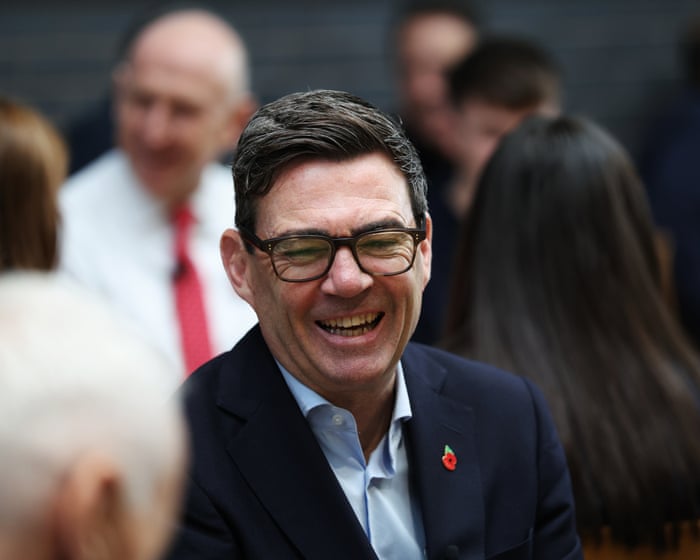
Prime Minister Andy Burnham said economic uncertainty and the Iran war limited the measures in his first budget, though he would have preferred to offer more support, including higher energy payments. He said he plans welfare reforms aimed at reducing benefit claims among young people, while ruling out cuts that would push people into crisis.
Key Facts
Chancellor John Healey announced a £100 winter energy payment for most households.
Burnham said the Iran war had raised borrowing costs and reduced the government’s room to act.
The budget has faced criticism over defence spending, welfare and cost-of-living support.
Burnham said he wants most people in their 20s not to need benefits, except when disability or other reasons prevent them from working.
He plans to set out welfare reforms in the coming months, following reports by Alan Milburn and Stephen Timms.
Burnham said Labour’s 2024 manifesto constrained his options by ruling out major policy changes such as increases to income tax, national insurance or VAT.
Burnham said he would seek his own mandate and would not have written the current Labour manifesto exactly as it stands.
Read the Original
Want the full story? Tap a source to open the original
article.
BP reported third-quarter underlying replacement cost profit of $8.46 billion, up from $2.2 billion a year earlier and above analysts’ $7.33 billion estimate. The company attributed the increase mainly to higher refining margins and stronger gas and marketing trading, amid disruptions to energy supplies linked to the Middle East conflict.
Key Facts
BP’s third-quarter underlying replacement cost profit was $8.46 billion, compared with $2.2 billion a year earlier.
Analysts had expected BP’s profit to reach $7.33 billion.
BP said higher refining margins and gas and marketing trading results mainly drove the increase.
The article reports that refinery disruptions in the Gulf region and Russia contributed to higher fuel prices in the UK, Europe and the US.
BP said it would use excess cash flow to address its remaining Deepwater Horizon spill liabilities in full.
BP’s Deepwater Horizon payables and provisions stood at $5.94 billion, according to company data.
BP is expected to announce its first major strategy update under CEO Meg O’Neill on December 15.
Read the Original
Want the full story? Tap a source to open the original
article.
Binance, the world’s largest cryptocurrency exchange, said hackers stole $6.3 billion in assets. The company said it froze about half of the assets, while the rest remained with the hackers; two analytics firms linked the attack to a North Korean hacking unit, but no one has claimed responsibility.
Key Facts
Binance reported a hack involving $6.3 billion in assets.
The stolen amount was also reported as £4.7 billion.
Binance said it froze about half of the assets.
The company said many of the assets remained in the hackers’ hands.
Two analytics firms attributed the incident to a North Korean hacking unit.
No one has claimed responsibility for the hack.
Binance did not directly answer questions about possible links to North Korea.
Read the Original
Want the full story? Tap a source to open the original
article.