Neutral summaries of your favorite news sources — just the facts.
Your favorite news sources, one neutral feed — we distill their reporting into fact-first
summaries and always link to the original story. How it works
About 40 hospital staff at Cambridge University Hospitals looked at the medical records of a three-year-old boy who was hurt in a crocodile attack. The hospital is investigating if they had a good reason to see the boy’s information and has reported the matter to the Information Commissioner’s Office.
Key Facts
The boy was injured after ending up in a crocodile enclosure at Johnsons of Old Hurst zoo.
He was taken to Addenbrooke’s hospital and is now in stable condition.
Around 40 staff members accessed the boy’s medical records, prompting an investigation.
Cambridge University Hospitals has reported itself to the Information Commissioner’s Office.
Staff who improperly access patient information face serious consequences, including possible dismissal.
A 30-year-old man from Norfolk was arrested on suspicion of attempted murder related to the attack but was later bailed.
The man has learning difficulties and was on a trip with carers at the time.
Zoo staff and the owner’s wife helped rescue the boy from the crocodile enclosure.
Read the Original
Want the full story? Tap a source to open the original
article.
Russian defense forces said they stopped 660 Ukrainian drones during a large nighttime attack on several Russian regions and the Crimea peninsula. The attack followed Ukrainian President Zelenskyy’s plan to increase pressure on Russia to end the war after peace efforts failed. Both sides reported damage and casualties from ongoing fighting.
Key Facts
Russia intercepted 660 Ukrainian drones targeting 12 Russian regions and Crimea.
This was one of the biggest drone attacks on Russian soil since the war began over four years ago.
Ukrainian drones have been attacking fuel and energy sites inside Russia to disrupt supplies.
Ukrainian President Zelenskyy ordered a 40-day campaign to push Russia to end the war.
A chemical plant and a hydroelectric plant in Novomoskovsk, Russia, were reportedly hit and caught fire.
A woman was injured, and a private home was damaged near Moscow in the Tula region.
Moscow authorities downed 47 Ukrainian drones, with no reported casualties or damage.
Ukrainian forces stopped most Russian drones and missiles, but some missiles struck targets in Ukraine, causing injuries and deaths.
Read the Original
Want the full story? Tap a source to open the original
article.
Australia plans to make its laws stronger to stop children under 16 from using social media platforms like Facebook and Instagram. The current law, in effect since December 2024, has not worked well because many children are still using these platforms.
Key Facts
Australia was the first country to pass a law banning children under 16 from social media.
The law started on December 10, 2024.
Many children under 16 still have accounts on social media platforms despite the ban.
The Australian government is reviewing if the ban’s rules and powers are strong enough.
The eSafety Commissioner, Julie Inman Grant, may take legal action against social media companies for not doing enough to enforce the ban.
If companies fail to remove accounts of young children, they can face fines up to 49.5 million Australian dollars (about 34 million USD).
Other countries like Britain, Canada, Brazil, and France are also working on similar age restrictions for social media.
Studies show a large number of Australian teenagers still use social media platforms meant to be restricted.
Read the Original
Want the full story? Tap a source to open the original
article.
The Australian government has approved a plan that allows New South Wales (NSW) to earn carbon credits for protecting forests instead of logging them, enabling the creation of a large koala national park. This park will protect over 12,000 koalas and other species while generating jobs and new income for regional communities.
Key Facts
The NSW government will receive hundreds of millions of dollars in carbon credits for preserving native forests rather than logging them.
Carbon credits represent one kilogram of carbon dioxide emissions prevented or absorbed by trees or land.
There are concerns that companies can buy unlimited carbon credits to offset their emissions without actually reducing pollution.
The new koala park will cover 176,000 hectares near Coffs Harbour and protect old-growth forests and at least 12,000 koalas.
The carbon credit system includes limits on logging to prevent shifting deforestation to other areas.
The project is expected to create about 100 new jobs in the national park region.
Some conservation groups welcome the plan as a major opportunity to reduce emissions and protect forests, while others criticize carbon credit schemes as unreliable.
Critics question whether the park depends on carbon credit money or would have been created anyway.
Read the Original
Want the full story? Tap a source to open the original
article.
Asian stock markets fell sharply, mainly because technology company shares dropped. The decline happened after some big tech firms raised prices on products due to higher costs for computer parts, causing investors to worry about the future value of tech stocks.
Key Facts
South Korea’s main stock index, the Kospi, fell sharply, triggering a temporary trading halt when it lost 8% before closing down 5.8%.
Apple’s shares dropped 6% in the US after it announced price increases for iPads and MacBooks due to higher chip costs.
Technology companies in Asia, including Japan’s SoftBank, saw large share price drops; SoftBank shares fell 12.5%.
Investors are concerned about the large money tech firms are spending on building artificial intelligence (AI) systems and whether the stock prices reflect true value.
Microsoft raised prices for its Xbox gaming consoles, also due to higher component costs, leading to falling share prices.
The rising cost of parts affects device sales, which may reduce demand for computer chips.
South Korea has seen volatile stock trading; the Kospi’s trading halt this week was the third circuit breaker event, and the fifth this year.
Analysts question how fast consumer demand for AI tools will grow compared to the money being invested in the area.
Read the Original
Want the full story? Tap a source to open the original
article.
A traditionalist Catholic group called the Society of St. Pius X (SSPX) announced the symbols (coats of arms) for four new bishops they plan to make without the Pope's permission. The Vatican says this act breaks church rules and will lead to the bishops being automatically excommunicated.
Key Facts
SSPX is a group that opposes some Vatican decisions since starting in 1970.
They shared coats of arms for four future bishops on their website.
Coats of arms are unique symbols that bishops use to show their role and personal meaning.
The Vatican warned that consecrating bishops without the Pope’s approval is a serious violation.
This violation is called a “schismatic act,” meaning it causes division in the Church.
The four bishops are Father Michael Goldade (USA), Father Pascal Schreiber (Switzerland), and Fathers Michel Poinsinet de Sivry and Marc Hanappier (France).
Father Goldade's coat of arms includes wheat to represent his Kansas upbringing and North Dakota origins.
Consecrating these bishops without permission will lead to automatic excommunication, which means being officially excluded from the Church.
Read the Original
Want the full story? Tap a source to open the original
article.
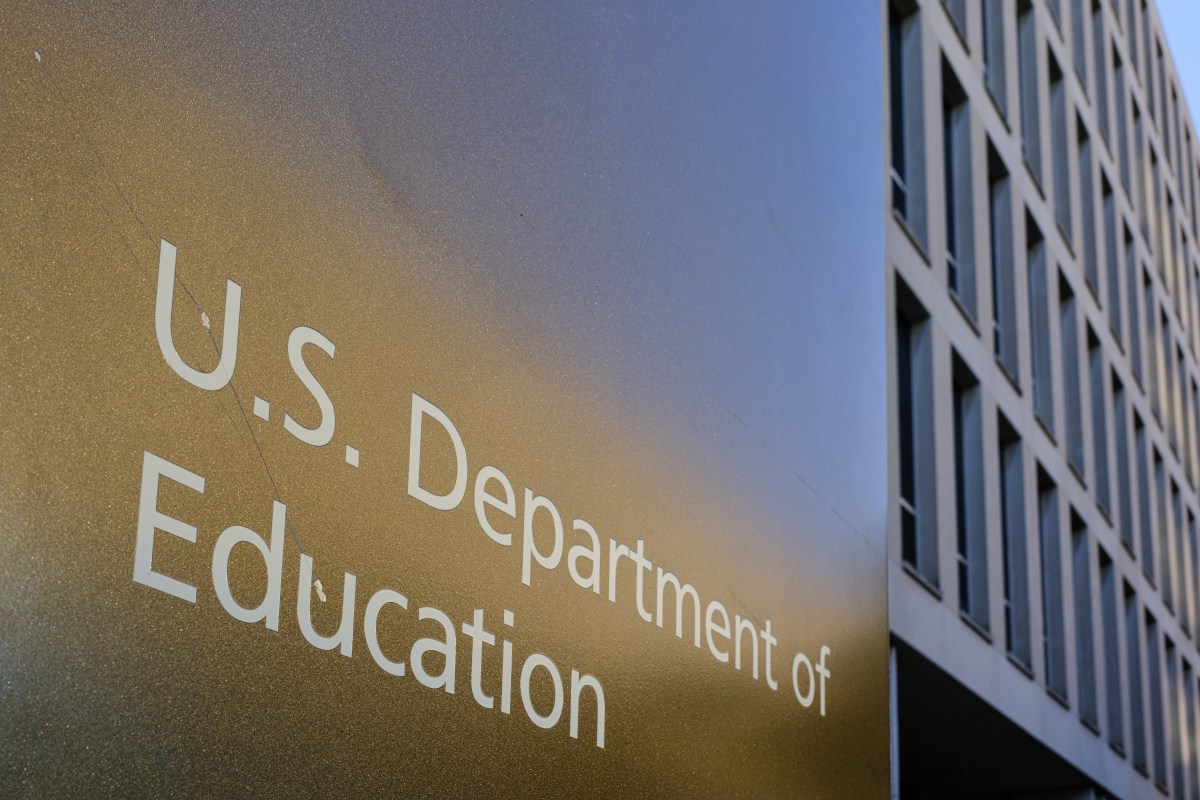
A federal judge stopped the Education Department from changing the definition of a "professional degree" in a way that would limit student loans for nursing and some other fields. The judge said the Education Department did not have permission from Congress to make this change and worried it could hurt students and communities that need more healthcare workers.
Key Facts
The Trump administration planned to lower federal student loan limits for some graduate nursing programs.
The Education Department wanted to change the "professional degree" definition to include stricter rules, like working without supervision.
U.S. District Judge Beryl Howell blocked this change, saying the department lacked authority from Congress.
The judge expressed concern about the impact on underserved communities needing healthcare professionals.
The new student loan rules would cap borrowing at $100,000 for graduate programs and $200,000 for professional degrees.
The ruling stops the updated definition from taking effect but does not stop the loan limits themselves.
The American Association of Nurse Practitioners supports the ruling and says it helps future healthcare workers.
The issue comes from changes in student loan limits included in the One Big Beautiful Bill Act.
Read the Original
Want the full story? Tap a source to open the original
article.
Israel continues military attacks in southern Lebanon and holds onto some occupied areas amid ongoing conflict. Meanwhile, the US and Iran are making progress on a temporary peace deal that would allow international nuclear inspectors back into Iran, and tensions remain high around shipping routes near Iran.
Key Facts
Israel is attacking southern Lebanon and controls about one-fifth of the country’s land.
Israeli Prime Minister Netanyahu says the military will not leave occupied areas.
The US and Iran have an interim agreement to allow International Atomic Energy Agency (IAEA) inspectors access to Iran.
IAEA chief Rafael Grossi said inspectors will return to Iran soon despite some sites remaining restricted until a full deal is reached.
The UN stopped escorting ships through the Strait of Hormuz after a cargo ship was hit near Oman, increasing concerns about safety in this key shipping lane.
Iran’s Revolutionary Guard warned ships not to pass through the strait without its permission.
Two people were killed in an Israeli air raid in southern Lebanon.
Indian commercial gas restrictions have ended, and Saudi Aramco resumed oil shipments after months of disruption.
Read the Original
Want the full story? Tap a source to open the original
article.
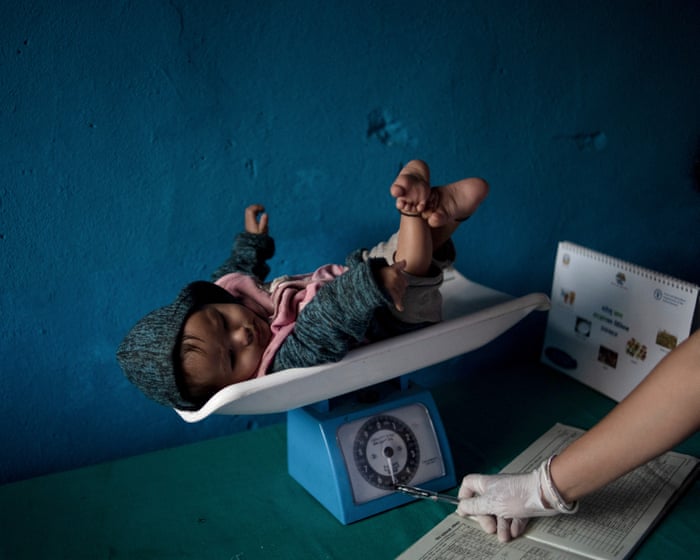
A large survey in Nepal found that child malnutrition has reached very serious levels since major U.S. aid stopped in 2025. The survey showed that many young children are underweight or too thin for their height, which increases their risk of illness and death.
Key Facts
The survey covered over one million children aged 6 months to 5 years across Nepal in May.
Rates of malnutrition were especially high in Madhesh province, with 12.3% of children wasted and 24.2% underweight.
Overall in Nepal, 7.8% of children were wasted and 17.4% were underweight.
USAID ended funding for nutrition programs in Nepal in 2025 after being closed by President Trump’s administration.
Nutrition programs supported by USAID could only partly be replaced by other donors, reaching fewer children and districts.
Nepal’s government still buys therapeutic food for malnourished children, but outreach services have dropped due to aid cuts.
Malnutrition increase threatens to reverse gains made in reducing child deaths over the past 20 years.
Rising food prices are making it harder for families to provide nutritious meals for their children.
Read the Original
Want the full story? Tap a source to open the original
article.
Slough, near London, hosts one of Europe’s largest datacentre hubs with 30 to 40 huge facilities serving major tech companies like Amazon and Google. Studies suggest these datacentres raise local temperatures by about 2°C because their cooling systems release heat, adding to the area's already hot summer weather.
Key Facts
Slough is one of the biggest datacentre hubs in Europe, with facilities from firms like Equinix and Digital Realty.
These datacentres support big tech companies including Amazon, Google, Oracle, and Microsoft.
Research shows datacentres create a "heat island" effect, increasing nearby temperatures by an average of 2°C, sometimes up to 9°C.
Cooling systems that keep computers and AI chips from overheating release large amounts of heat into the environment.
Slough’s datacentres have a power use close to one gigawatt, much larger than typical datacentres studied before.
Scientists say Slough’s datacentre cluster is unique and may have a bigger local temperature impact than smaller sites.
The UK government has suggested using datacentre waste heat to warm homes.
Residents notice the datacentres' heat and noise and debate their effects on the town’s environment.
Read the Original
Want the full story? Tap a source to open the original
article.
Dr. Julie Elie from the University of California, Berkeley, won a $100,000 prize for decoding key parts of the zebra finch bird's language. Her research used machine learning to identify and understand 11 main calls the birds use to communicate with each other.
Key Facts
Dr. Julie Elie received the 2026 Coller-Dolittle prize for studying bird communication.
She identified 11 core calls in zebra finch vocabulary and their meanings.
The birds use calls to say who they are, what they are doing, and recognize each other.
Elie used machine learning to analyze thousands of bird calls and test their meanings.
Zebra finches learned to respond differently to calls that predicted a reward or not.
Birds sometimes confused calls with similar meanings, showing they understand the calls' ideas.
The prize is awarded by the Jeremy Coller Foundation and Tel Aviv University to promote animal communication research.
Other shortlisted research includes work on African striped mice, bonobos, and chimpanzees.
Read the Original
Want the full story? Tap a source to open the original
article.
The UK Met Office has issued red heat warnings for three days in a row in south-east England, including London and surrounding areas. Scotland and other parts of the UK face thunderstorms and flood alerts, while France and several European countries prepare for continued hot weather and related health issues.
Key Facts
South-east England has a red heat alert until 9pm Friday, covering London, Oxfordshire, Bedfordshire, Hampshire, and Kent.
Amber heat warnings cover wider areas in east and south-east England through Saturday.
Scotland faces yellow warnings for thunderstorms and flood alerts, except Shetland.
Temperatures hit 31.2°C in parts of Scotland on Thursday.
France has banned public drinking of alcohol at certain times in Paris to ease pressure on hospitals during the heatwave.
At least 48 people have drowned in France since the heatwave began.
The London Ambulance Service saw a 50% rise in life-threatening emergency calls, including a 30% increase in cardiac arrests.
Other European countries like Germany, Austria, Italy, and Czechia expect more high temperatures and have reported heat-related deaths.
Read the Original
Want the full story? Tap a source to open the original
article.
NATO’s deputy commander said the upcoming summit in Turkey aims to encourage member countries to spend more on defense, support Ukraine, and show alliance unity. There are current tensions in NATO due to mixed signals from the U.S. and debates over military spending among European members.
Key Facts
NATO’s deputy supreme allied commander, Air Chief Marshal Sir John Stringer, spoke before the NATO summit in Ankara on July 7-8, 2026.
The summit’s goals include increasing defense budgets, supporting Ukraine against Russia, and showing NATO’s unity.
President Donald Trump has sent mixed messages about U.S. military presence in Europe, causing concern among NATO allies.
U.S. Defense Secretary Pete Hegseth started a six-month review of American forces in Europe, causing further uncertainty.
Some European officials criticized their countries’ military spending, with UK ministers resigning over concerns about defense funding.
European NATO members, except Spain, have increased military spending recently in response to Russian threats.
European countries are boosting weapons production, including artillery shells, to strengthen their forces.
The summit will discuss increasing production of military supplies, something not done on this scale for decades.
Read the Original
Want the full story? Tap a source to open the original
article.
A historic heat wave in Paris caused problems during Paris Fashion Week Men’s, with guests and models struggling in the heat despite efforts to cool them. Fashion shows featured heavy materials like leather and wool, which did not fit the very warm weather, highlighting a misalignment between fashion schedules and climate realities.
Key Facts
Paris experienced a record-breaking heat wave during Paris Fashion Week Men’s in June 2026.
Fashion houses used ice packs, mist machines, and cold water to help guests stay cool.
Some venues had poor or no air conditioning, causing discomfort for guests and models.
Models wore heavy fabrics like leather, neoprene, wool, and knits, which are usually not meant for hot weather.
Big fashion brands like Dior and Saint Laurent adjusted show times but still faced challenges from the heat.
Designers see heat more as a problem for event hospitality and scheduling than for clothing design.
The fashion calendar for spring-summer collections often does not match real weather or shopping habits.
Some experts suggest moving fashion events to cooler times due to climate change increasing heat waves.
Read the Original
Want the full story? Tap a source to open the original
article.
The Texas State Board of Education will vote on a required reading list for public school students that includes Bible passages along with classic books. If approved, this list will start in 2030 and would apply to over 5 million students in Texas. The decision is part of a broader effort by conservatives to include more Christian teachings in schools.
Key Facts
The Texas education board’s vote is scheduled for Friday.
The required reading list includes both Bible passages and classic literature like Charles Dickens’ "Great Expectations."
The list would apply to more than 5 million public school students in Texas.
Texas schools already allow hiring chaplains, require displaying the Ten Commandments, and offer an optional Bible-infused curriculum.
Critics say the list favors Christianity and may blur the separation of church and state.
Supporters argue the list reflects America’s Christian heritage and values.
Teachers can still assign additional books beyond the mandated list.
The board will also vote on a social studies curriculum that connects Bible stories with American history.
Read the Original
Want the full story? Tap a source to open the original
article.
A new scientific study shows that the record-breaking heat wave in Europe would not have happened without climate change. The heat this June is much hotter than similar events in 1976 and 2003, and it is now far more likely due to global warming caused by burning fossil fuels.
Key Facts
Europe's extreme heat this June reached over 40°C (104°F) in many places.
Nighttime temperatures stayed high, making it harder for people to cool down.
The heat wave would have been about 3.5°C cooler during the day in 1976.
Nighttime temperatures were about 2.4°C cooler in 1976 than this year.
The heat wave is 200 times more likely today than 20 years ago.
About 45% of 850 cities in 30 European countries have broken or will break heat stress records.
The study was done by World Weather Attribution, a group that links extreme weather to climate change.
Climate change is caused mainly by burning coal, oil, and gas, which warms the planet.
Read the Original
Want the full story? Tap a source to open the original
article.
California voters will decide in November whether to approve a temporary tax that would charge billionaires 5% on their wealth above $1 billion. The tax aims to raise $100 billion to help fund the state’s Medicaid program after federal funding cuts, but faces opposition from Governor Gavin Newsom and other groups who say it could drive wealthy residents out of the state.
Key Facts
The proposed tax would be a one-time 5% charge on individuals with a net worth over $1 billion living in California as of January 1, 2026.
The tax is supported by the healthcare workers’ union, SEIU Healthcare Workers West.
The money raised is intended mainly to support California’s Medicaid system, which helps provide healthcare for low-income residents.
Governor Gavin Newsom and some allied groups oppose the tax, fearing it will encourage billionaires to leave California and reduce overall tax revenue.
A coalition of healthcare, education, and housing organizations also oppose the proposal, citing concerns about funding for public services and infrastructure.
The Legislative Analyst’s Office says the tax would raise billions initially but could reduce state income tax revenue by hundreds of millions annually afterward.
Some wealthy individuals have already moved assets out of California or threatened to do so to avoid the tax.
Google co-founder Sergey Brin has donated $82 million to a group opposing the billionaire tax.
Read the Original
Want the full story? Tap a source to open the original
article.
Asian stock markets, especially in Japan and South Korea, fell sharply as investors sold shares to take profits after recent rises fueled by interest in artificial intelligence (AI). U.S. stock futures and oil prices also dropped amid this market volatility.
Key Facts
Japan’s Nikkei 225 index fell 4.5% to 69,127.10.
South Korea’s Kospi index dropped 6.8% to 8,323.52.
Hong Kong’s Hang Seng declined 1.7%, and Shanghai’s Composite index slipped 1.4%.
Australia’s S&P/ASX 200 was an exception, growing 0.2%.
Taiwan’s Taiex index lost 3.6%.
Shares in key tech companies dropped, including Samsung (down 7%), SK Hynix (down 6.6%), and SoftBank Group (down 13.4%).
Recent market ups and downs are linked to investor reactions to AI technology investments and chipmakers’ earnings reports.
U.S. markets showed mixed results, with the S&P 500 nearly unchanged, the Dow Jones up slightly, and the Nasdaq down, while Micron Technology shares rose after strong earnings.
Read the Original
Want the full story? Tap a source to open the original
article.
Two strong earthquakes hit northern Venezuela, killing over 230 people and injuring more than 4,300. Residents and rescue teams are searching through damaged buildings to find survivors and help those trapped in the rubble.
Key Facts
Two earthquakes with magnitudes of 7.2 and 7.5 struck northern Venezuela on Wednesday evening.
At least 235 people died and about 4,300 were injured according to Venezuela's Health Minister.
Many people remain missing, and rescue efforts are ongoing.
The coastal city of La Guaira, near the capital Caracas, was heavily damaged.
The main airport in La Guaira was closed because of earthquake damage.
Neighbors helped each other dig through rubble before official rescue teams arrived.
The earthquakes were some of the strongest in Venezuela in over 100 years.
Buildings collapsed, trapping people beneath, and emergency services are working to save survivors.
Read the Original
Want the full story? Tap a source to open the original
article.
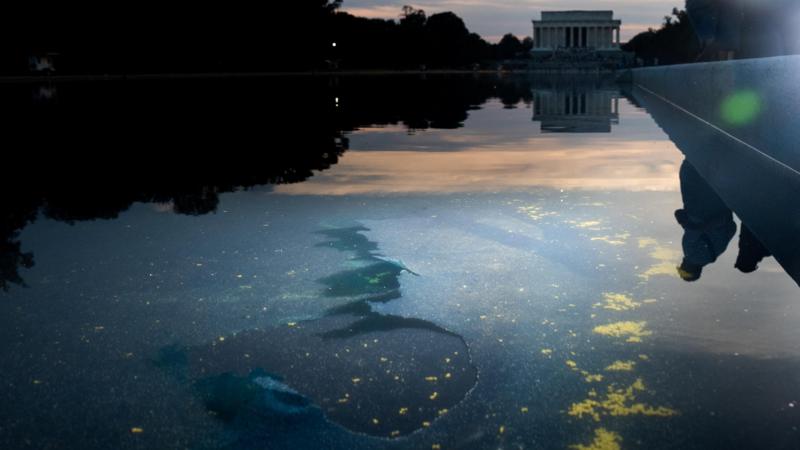
A liner at the bottom of the Reflecting Pool in Washington DC was cut with a sharp knife or razor earlier this month, causing damage to recent repair work. The National Park Service reported vandalism, including fence posts thrown into the pool, but no suspects have been named. The pool will be drained again after July 4 to fix the damage.
Key Facts
The Reflecting Pool’s liner was cut with a sharp knife or razor on June 9.
Damage affected foam sealant from a recent multi-million dollar renovation ordered by President Trump.
About 70 fence post tops were thrown into the pool during the incident.
Five people have been arrested and five received citations related to vandalism at the pool.
The pool had problems with algae growth and paint issues after reopening.
The National Park Service will drain the pool after Independence Day to repair the liner and check for damage.
The pool is 2,030 feet long and was built in the 1920s, with a history of leaks and structural problems.
The damage report does not specify when the vandalism occurred or identify suspects.
Read the Original
Want the full story? Tap a source to open the original
article.