Neutral summaries of your favorite news sources — just the facts.
Your favorite news sources, one neutral feed — we distill their reporting into fact-first
summaries and always link to the original story. How it works
Venezuela experienced deadly earthquakes recently. Humanitarian aid efforts have become more difficult because President Donald Trump closed the US development agency USAID, which used to manage such relief work efficiently.
Key Facts
Venezuela suffered deadly earthquakes on June 25, 2026.
The US development agency USAID was closed by President Donald Trump.
USAID previously coordinated humanitarian aid efficiently.
Now, the Trump administration must organize aid through multiple agencies.
This multi-agency coordination makes relief efforts slower and harder.
Christopher Sabatini, a Latin America expert at Chatham House, commented on this issue.
The closure of USAID is affecting the delivery of help in Venezuela after the quakes.
Read the Original
Want the full story? Tap a source to open the original
article.
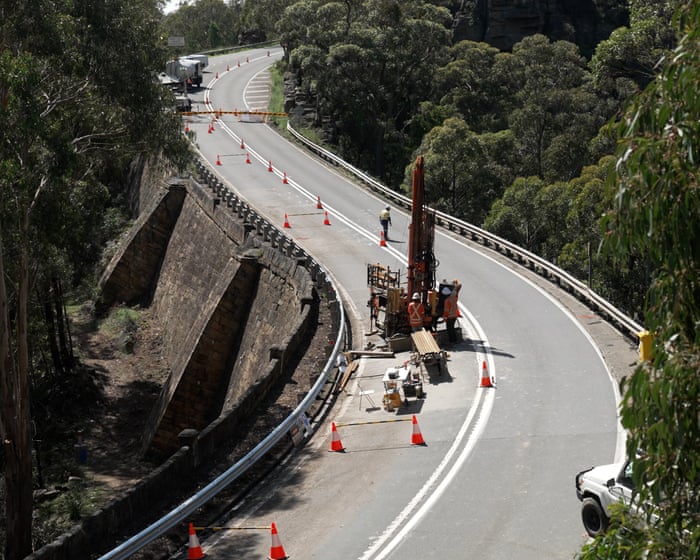
A key part of the Great Western Highway near Sydney, called Victoria Pass, will stay closed for at least another year. The closure is because of serious cracks found in a 194-year-old bridge, and the government plans to build a new bridge above it. This will cause longer travel times and detours for many people in the Blue Mountains and Central Tablelands areas.
Key Facts
The Victoria Pass section of the Great Western Highway was closed in March due to serious cracks in Mitchells Causeway, also called “Convict Bridge.”
The bridge is 194 years old and was built by convicts.
The road closure affects about 12,000 vehicles that used the bridge daily.
The NSW government will build a new bridge above the old one, with construction starting soon.
The road is expected to reopen between April and June next year.
The new bridge could have an extra lane in the future, which the old bridge could not support.
The government added $20 million in financial help for small businesses affected and will provide free coach services and spend $50 million to improve detour routes.
Local leaders and experts explained that the area’s steep and difficult terrain makes expansion work hard, and the plan to build a new independent bridge is the best solution now.
Read the Original
Want the full story? Tap a source to open the original
article.
A three-year-old boy was seriously injured after being attacked by a crocodile at a zoo in Cambridgeshire. Up to 40 hospital staff accessed the boy’s medical records without clear reasons, leading to an investigation by the hospital and a report to the Information Commissioner’s Office.
Key Facts
The boy was attacked in a crocodile enclosure at Johnsons of Old Hurst zoo near Huntingdon.
He was treated at the scene and then taken to Addenbrooke’s Hospital in Cambridge, where his condition is now stable.
Police arrested a 30-year-old man on suspicion of attempted murder related to the incident.
Up to 40 hospital staff looked at the boy’s medical records, which had restricted access to protect privacy.
The hospital is investigating whether these staff had legitimate reasons for viewing the records.
The hospital reported the issue to the Information Commissioner’s Office, which oversees data protection.
The hospital stressed it has strict rules around patient confidentiality and will discipline staff who access records improperly.
The boy’s family has been informed about the investigation into the data access breach.
Read the Original
Want the full story? Tap a source to open the original
article.
Scientists have found that Europe’s record heatwave in June 2026 would have been nearly impossible 50 years ago without human-caused climate change. The study shows that temperatures now are much higher due to global warming, which makes extreme heat events more frequent and severe.
Key Facts
The June 2026 heatwave in Europe was about 3.5°C hotter than a similar event would have been in 1976.
Human-caused climate change is the clear reason for the increased intensity of this heatwave.
The planet’s average temperature has risen about 1.4°C since pre-industrial times because of burning coal, oil, and gas.
The chance of heatwaves like this one has grown greatly in recent decades.
Compared to the deadly 2003 heatwave, current heatwaves are still about 2°C hotter during the day.
Nearly half of the 850 European cities studied reached or broke their all-time heat stress records in June 2026.
Scientists say the heatwave was not caused by natural climate patterns like El Nino.
Heat stress from high heat and humidity can cause serious health problems, including organ failure and death.
Read the Original
Want the full story? Tap a source to open the original
article.
Hayley Pearce, a TV personality diagnosed with ADHD, is pregnant and preparing for motherhood while managing the challenges of ADHD. She shares her experience and seeks advice from another mother with ADHD on strategies to stay organized and cope with motherhood demands.
Key Facts
Hayley Pearce became known from the BBC show The Call Centre and was diagnosed with ADHD at age 20.
ADHD symptoms include difficulty with time management, organization, and staying focused.
Her midwife warned she might have a higher risk of postnatal depression due to ADHD.
Hayley uses notes and reminders to help manage daily tasks.
She met Rhiannan Morgan, a mother of four with ADHD, who shares tips and hacks for managing family life.
Rhiannan’s strategies include asking children to help, meal planning, using alarms, and setting routines like regular grocery deliveries.
Both women describe ADHD as bringing creativity but also challenges like trouble with memory and staying on task.
Sharing their experiences aims to raise awareness and support for mothers with ADHD.
Read the Original
Want the full story? Tap a source to open the original
article.
The US Supreme Court agreed with President Trump's decision to end Temporary Protected Status (TPS) for Haitians and Syrians. This ruling lets the government stop the protections before courts fully decide if the policy change is legal.
Key Facts
The Supreme Court supported the Trump administration's plan to end TPS for Haitians and Syrians.
Temporary Protected Status is a program that protects certain people from deportation due to problems in their home countries.
The ruling allows the government to end TPS protections immediately.
Courts have not yet made a final decision on whether ending TPS is lawful.
TPS had been protecting Haitians and Syrians from being sent back to their countries.
This decision affects immigrants currently under TPS from Haiti and Syria.
The ruling could lead to deportation of these TPS holders if no other protections are granted.
Read the Original
Want the full story? Tap a source to open the original
article.
The Sheffield Family Holiday Fund is a charity that has been giving holidays to families facing hard times for 50 years. It helps families dealing with problems like illness, disability, homelessness, and bereavement by providing short breaks and trips to places like beaches and theatre shows.
Key Facts
The charity started in 1976 and is run by volunteers.
It supports families referred by community groups, including those facing homelessness, domestic abuse, and illness.
In 2025, the charity helped 57 families (221 people), including 113 children, to take holidays.
Many families supported had never been on holiday before.
Holidays are proven to help improve children’s confidence, mental health, and family relationships.
The charity partners with the national Family Holiday Charity and local organizations in Sheffield.
Examples include families who enjoyed trips to seaside towns like Skegness and theatre pantomimes at Christmas.
One family improved school behavior and family well-being after their holiday.
Read the Original
Want the full story? Tap a source to open the original
article.
Magnavale near Grantham is one of the UK’s largest cold storage facilities, keeping frozen food at -18°C to meet legal rules. It operates 24/7, supplies major supermarkets, and employs about 160 people who work in the cold even during summer heatwaves.
Key Facts
Magnavale stores frozen food at -18°C, the temperature required by UK law.
The facility has space for 145,000 pallets of frozen goods.
About 200 lorries collect products from Magnavale every day.
The site operates 24 hours a day, 7 days a week.
Around 160 people work at Magnavale, many wearing thermal clothing while inside.
Staff say working in the cold is a relief during UK heatwaves that reach over 34°C.
Some employees have worked there for many years and prefer the cold environment.
The facility is a key part of food supply for UK supermarkets.
Read the Original
Want the full story? Tap a source to open the original
article.
Two strong earthquakes struck near the coast of Venezuela, causing damage in the city of La Guaira north of the capital, Caracas. Videos from the air show collapsed buildings and destruction in the area.
Key Facts
Two major earthquakes hit Venezuela on Wednesday.
The coastal city of La Guaira was heavily damaged.
Multi-storey buildings in La Guaira collapsed.
La Guaira is located north of Caracas, Venezuela’s capital.
The destruction was captured in aerial footage.
The earthquakes caused significant impact along the coast.
Read the Original
Want the full story? Tap a source to open the original
article.
New police bodycam footage has been released showing the arrest of Vickrum Digwa, who was jailed for life for the murder of 18-year-old Henry Nowak. The video reveals Digwa repeatedly lied to police about the events, including false claims that he was racially attacked and that Henry was drunk, while the footage also highlights differences in how each man was treated by police.
Key Facts
Vickrum Digwa was sentenced to life in prison with a minimum of 21 years for killing Henry Nowak last December.
Police bodycam video from the night of the murder was released after a BBC request.
Digwa repeatedly claimed he was attacked and acted in self-defense, but these claims were proven false during the trial.
Henry Nowak was handcuffed while dying, but Digwa was never handcuffed during his custody or arrest.
Henry’s blood alcohol level was low enough to pass a breathalyzer test, contradicting Digwa’s claim that Henry was drunk.
The footage shows Digwa’s hair was tied up before the stabbing but loose when police arrived, disproving his story.
Digwa made false statements over several days to police to support his version of events.
The release of the footage follows previous public anger over Henry being shown handcuffed while injured, which sparked unrest in Southampton.
Read the Original
Want the full story? Tap a source to open the original
article.
Apple has raised prices on MacBooks and iPads in Australia by at least 20%, citing increased costs for computer parts driven by demand for artificial intelligence (AI). Microsoft also increased Xbox prices due to rising memory and storage costs. Retailers have not yet fully passed on these price hikes.
Key Facts
Apple increased MacBook Air 13-inch price from $1,799 to $2,099 and MacBook Pro 14-inch from $2,799 to $3,199 in Australia.
iPad prices also rose, for example, the standard iPad from $599 to $749 and iPad Pro from $1,699 to $1,999.
Apple’s smaller MacBook Neo, launched in March at $899, now costs $1,049.
Apple said it absorbed rising component costs until now, but the sharp increase forced price hikes.
Microsoft raised Xbox console prices by US$100 to US$150 due to rising storage and memory costs.
The shortage of computer chips and memory, driven by AI demand and data center growth, is leading to higher product costs.
Experts say the chip and memory shortage may permanently increase prices for affordable consumer devices.
Retailers like JB Hi-Fi still offer lower prices temporarily, but price increases are expected to spread.
Read the Original
Want the full story? Tap a source to open the original
article.
A study shows that migratory swifts return every year to the same nests in buildings, highlighting the need to provide them with special hollow bricks for nesting when their usual sites are lost. The swift, which has declined by 70% in Britain since 1995 due to loss of nesting sites, is now protected by laws in Scotland but not in England.
Key Facts
Swifts return to the same nest about 94% of the time each year.
The swift population in Britain has dropped 70% since 1995 because old buildings where they nest are renovated.
Scotland requires new buildings to have hollow swift bricks for nesting, but England does not.
The RSPB studied 190 swifts over 15 years in a village on Dartmoor.
Only about 59% of swifts return with the same partner each year.
Some nesting boxes see fights between swifts competing for use.
Local groups help protect swifts and care for babies that fall to the ground.
A heatwave this year may cause more baby swifts to fall from nests and need rescue.
Read the Original
Want the full story? Tap a source to open the original
article.
Wolfgang Porsche, owner of a historic villa near Salzburg, has decided to sell the property after facing strong local opposition to his plan for a private car tunnel. The villa is now on the market with approved permission to build the tunnel, but the city cannot afford to buy it or turn it into a museum.
Key Facts
Wolfgang Porsche bought a 17th-century villa near Salzburg in 2020 for €8.4 million.
He planned to build a €10 million, 500-meter private tunnel connecting a city car park to an underground garage by the villa.
The villa was once home to Jewish writer Stefan Zweig, who lived there before fleeing in 1934.
Locals protested the tunnel plan, seeing it as a symbol of inequality amid housing struggles in Salzburg.
Following backlash, Porsche decided to sell the 12-room estate, called Paschinger Schlössl.
The planning permission for the tunnel is valid until the end of 2028 and can be used by a future owner.
The Salzburg city government cannot afford to buy the villa to create a museum dedicated to Stefan Zweig.
The villa is now listed for sale at €12.7 million, with the tunnel permission highlighted as a special feature.
Read the Original
Want the full story? Tap a source to open the original
article.
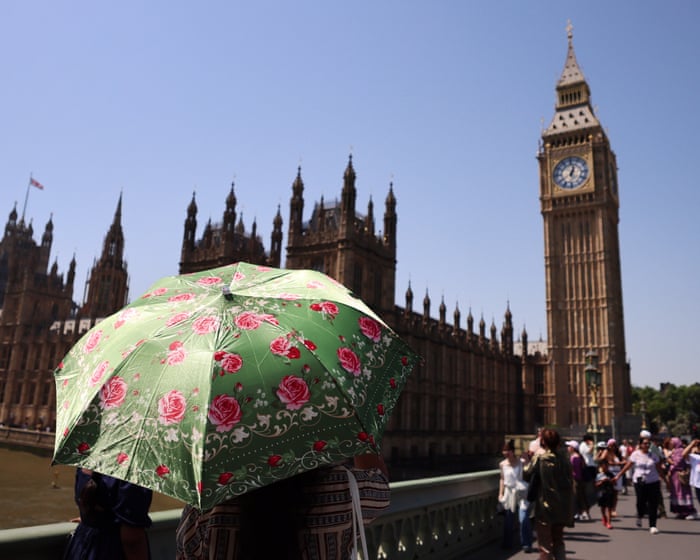
A recent heatwave across western Europe and the UK has caused difficult working conditions and lowered productivity, especially in sectors like construction and agriculture. Experts warn that as extreme heat becomes more common, it will significantly reduce economic growth unless countries improve buildings and infrastructure to handle higher temperatures.
Key Facts
June’s heatwave brought temperatures in the high 30s Celsius, making work tough in many industries.
Heat affects about 27% of the UK economy and 35% of western Europe’s economy, including construction, agriculture, manufacturing, retail, and hospitality.
A four-day heatwave can reduce quarterly productivity growth by up to 2 percentage points in parts of Europe.
Agriculture and construction are expected to lose the most working hours due to heat by 2030.
Research from Allianz found France, Spain, and Italy face the largest economic losses due to heat stress, with France potentially losing $240 billion by 2030.
Economic losses rise sharply when temperatures pass 30°C because cooling costs increase and productivity drops.
UK workplace laws require minimum office temperatures but have no maximum limit, relying on employers to keep workers at “reasonable” temperatures.
Experts say extreme heat should be treated as a long-term economic and policy challenge, not just a summer issue.
Read the Original
Want the full story? Tap a source to open the original
article.
A 14-year-old boy has been charged with the murder of a missing 14-year-old girl named Lilly in Wales. Her body was found in Duffryn Park, Blaina, and the boy is set to appear in court.
Key Facts
Lilly, a 14-year-old girl, was reported missing and last seen on June 20 in Blaina, Wales.
Her body was discovered on June 22 in Duffryn Park, Blaina.
A 14-year-old boy from the Blaenau Gwent area was arrested and charged with her murder.
The boy is described as white British and cannot be named for legal reasons.
He will appear at Newport magistrates court on Friday.
Police confirmed they released Lilly’s name with her family’s permission.
Parts of Pilgrims Park near the discovery site were cordoned off by police.
Police continue to investigate and ask the public to be mindful in discussions to avoid affecting the case.
Read the Original
Want the full story? Tap a source to open the original
article.
Apple and Microsoft have raised prices on some popular products because memory chip costs are going up fast due to demand from artificial intelligence (AI). Apple increased prices on Macs and iPads by about 20% or more, while Microsoft raised the cost of certain Xbox consoles.
Key Facts
Apple raised prices on many Mac and iPad models by 20% or more.
The base MacBook Air price rose from $1,099 to $1,299 in the U.S.
The Mac Studio M3 Ultra desktop increased from $3,999 to $5,299.
Apple said they delayed raising prices until now despite rising chip costs.
AI data centers are driving higher demand and prices for memory chips.
Apple’s stock dropped over 6% after the price increases were announced.
Microsoft increased prices on Xbox consoles by $100 to $150 for bigger storage models.
Microsoft expects memory and storage chip prices to double again by 2027.
Read the Original
Want the full story? Tap a source to open the original
article.
Europe experienced a strong heat wave in June, breaking temperature records in countries like the U.K., France, and Spain. Scientists say human-caused climate change made this extreme heat much more likely than in the past.
Key Facts
New June temperature records were set in the U.K. and France this week.
Spain reported at least 212 deaths linked to the heat wave.
France set new daily high and overnight temperature records, with some areas reaching nearly 44°C (111°F).
The U.K. recorded its highest June temperature two days in a row, hitting 36.7°C (98.1°F).
About 45% of cities in 30 European countries have or will break their highest heat stress levels.
Researchers found this week’s heat would have been about 3.5°C cooler without climate change.
The heat wave is causing increased risks of wildfires and health problems.
Climate scientists say human-made emissions are the main cause of these hotter and more frequent heat waves.
Read the Original
Want the full story? Tap a source to open the original
article.
This article refers to a discussion on a podcast about President Donald Trump and an event involving the White House reflecting pool. The content mentions media sources and programs that cover political topics and the World Cup. There is no detailed explanation of the reflecting pool incident in the provided text.
Key Facts
The article is connected to a podcast discussing President Donald Trump.
It mentions coverage from news agencies like AP and Reuters.
The podcast and related media cover political topics and the World Cup soccer tournament.
References are made to journalists Arwa Mahdawi, David Smith, and Jonathan Freedland.
The reflecting pool, a water feature near the White House, is part of the discussion.
Contact information is given for sending questions or feedback about the political podcast.
The Guardian is promoting its political podcasts and YouTube channels.
A photo credit is given to Kent Nishimura from AFP/Getty Images.
Read the Original
Want the full story? Tap a source to open the original
article.
NATO members Latvia and Poland have warned that Russia may be planning military provocations in the Baltic states or Poland to test NATO’s unity. This warning comes as Russia faces pressure from Ukraine’s attacks near Moscow and St Petersburg, raising concerns about possible escalations or new tactics from Russia.
Key Facts
Latvian intelligence reported signs of Russian plans for military provocations in the Baltic states or Poland.
Another NATO member also noted intelligence suggesting Russian President Vladimir Putin might test support for small NATO countries like Estonia, Latvia, and Lithuania.
The planned provocations would likely be smaller actions such as missile or drone attacks, not a full-scale war.
Russia’s invasion of Ukraine has stalled, which may lead Moscow to consider other ways to shift the conflict’s course.
Ukraine has increased its ability to strike deep inside Russia, recently hitting targets near Moscow with nearly 200 drones.
Belarus, a Russian ally, shut down drone relay stations under threat from Ukraine, signaling increasing tensions near NATO’s eastern border.
NATO is holding a summit amid uncertainty about U.S. commitment, with President Donald Trump expressing frustration over European allies’ reluctance to support U.S. military actions against Iran.
Past incidents include Russian sabotage like planting firebombs in parcels and drone intrusions into Polish airspace, prompting NATO defenses.
Read the Original
Want the full story? Tap a source to open the original
article.
Western Europe is experiencing its worst heatwave ever, made much worse by climate change caused by burning fossil fuels. This extreme heat is affecting millions of people, increasing health risks, and disrupting daily life across the region.
Key Facts
The heatwave in western Europe is the most severe and widespread recorded.
Nearly half of Europe’s largest cities are seeing their worst heat stress, combining high temperature and humidity.
The UK recorded its hottest June temperature ever at 36.4°C (97.5°F) in Somerset.
The heatwave has led to increased medical emergencies and some deaths, similar to the deadly 2022 heatwave that caused over 60,000 deaths in Europe.
Scientists say this heatwave would not have been possible without human-caused climate change.
Compared to past heatwaves in 2003 and 1976, current heat levels are 2°C to 3.5°C higher due to global warming.
Over 100 million people in Europe faced temperatures above 35°C during the recent heat peak.
Experts warn that if no action is taken to cut carbon pollution and switch to clean energy, future summers will be even hotter and more dangerous.
Read the Original
Want the full story? Tap a source to open the original
article.