Neutral summaries of your favorite news sources — just the facts.
Your favorite news sources, one neutral feed — we distill their reporting into fact-first
summaries and always link to the original story. How it works
At the VivaTech event in Europe, the rise of AI companions like chatbots and robots is raising new questions about human connection and loneliness. While many people use AI for companionship, some experts worry that these AI relationships may replace or harm real human bonds.
Key Facts
One in six people worldwide experience persistent loneliness, according to the World Health Organization.
The AI companion market, including chatbots and companion robots, is expected to be worth over $400 billion by 2034.
Some users prefer talking to AI because it listens without judging and says what they want to hear.
Experts warn that AI companions might encourage self-centered relationships and reduce real human interaction.
Companion robots at VivaTech focus on friendly, non-threatening designs, like animated faces, to make users feel comfortable.
French companies like Enchanted Tools and Maxtronics develop robots aimed at environments like care homes and hospitals, emphasizing that robots should not replace human contact.
There is ongoing debate about whether AI companionship can truly support deep, meaningful relationships.
Read the Original
Want the full story? Tap a source to open the original
article.
U.S. Vice President JD Vance is meeting with top Iranian officials in Switzerland to continue talks on an interim deal aimed at ending the conflict involving Iran. The discussions include Iran's parliamentary speaker and foreign minister, with mediators from Pakistan and Qatar also present.
Key Facts
Vice President JD Vance is in Switzerland for talks with Iranian leaders.
He is meeting Mohammad Bagher Qalibaf, Iran’s parliamentary speaker, and Abbas Araghchi, the foreign minister.
The talks aim to build on an interim deal reached last week to end the war involving Iran.
The meeting takes place near Lake Lucerne, at a mountainside resort.
Pakistan and Qatar are serving as mediators in the negotiations.
The focus is on improving relations and progressing the peace process with Iran.
Read the Original
Want the full story? Tap a source to open the original
article.
U.S. Vice President JD Vance met with top Iranian officials in Switzerland to discuss expanding a recent temporary deal aimed at ending the war in Iran. The talks included mediators from Pakistan and Qatar and lasted about 80 minutes.
Key Facts
The meeting took place near Lake Lucerne, Switzerland.
U.S. Vice President JD Vance met with Iran's parliamentary speaker, Mohammad Bagher Qalibaf, and Foreign Minister Abbas Araghchi.
The discussions focused on building out an interim deal made last week to stop the war in Iran.
Mediators from Pakistan and Qatar were present during the talks.
The U.S. and Iran also held separate private talks with Pakistani and Qatari officials.
The direct negotiations lasted approximately 80 minutes.
Vice President Vance expressed hope for Iran to "turn over a new leaf," indicating a chance for improved relations.
This meeting is part of ongoing efforts to reduce conflict and improve diplomacy between the two countries.
Read the Original
Want the full story? Tap a source to open the original
article.
U.S. Vice President JD Vance met with top Iranian officials in Switzerland to discuss expanding a recent deal aimed at ending conflict involving Iran. At the same time, President Donald Trump warned Iran against supporting Hezbollah militants or closing a key waterway, the Strait of Hormuz, with threats of military strikes.
Key Facts
JD Vance, U.S. Vice President, held talks with Iranian officials in Switzerland.
The talks focused on building on a recent interim deal to stop the war involving Iran.
Vance expressed hope to improve relations and "turn over a new leaf" with Iran.
President Donald Trump issued threats to restart strikes on Iran if it supports Hezbollah in Lebanon.
Trump also threatened action if Iran tries to close the Strait of Hormuz, a vital shipping route.
The interim deal between the U.S. and Iran was made just last week.
The Strait of Hormuz is a strategic waterway important for global oil transport.
Read the Original
Want the full story? Tap a source to open the original
article.
Energy Secretary Chris Wright reported that oil shipments through the Strait of Hormuz are returning to normal after concerns about a possible closure by Iran. This statement came one day after Iranian officials warned they might close the waterway due to Israeli attacks in Lebanon.
Key Facts
The Strait of Hormuz is an important and busy route for global oil shipments.
Iranian officials suggested closing the strait because of Israeli strikes in Lebanon.
Energy Secretary Chris Wright said on Sunday that oil flow is moving back toward normal levels.
On Saturday, 67 ships passed through the strait, showing continued activity.
The information was shared by an official from the Trump administration.
The concern about closure affected global energy market attention and security.
Strait of Hormuz closure could disrupt worldwide oil supply.
Read the Original
Want the full story? Tap a source to open the original
article.
President Donald Trump said that British Prime Minister Keir Starmer will resign soon. Trump said Starmer did not do well on immigration and energy issues, including the decision not to drill for oil in the North Sea.
Key Facts
President Trump said British Prime Minister Keir Starmer will resign.
Trump criticized Starmer’s handling of immigration policies.
Trump also mentioned Starmer’s approach to energy, especially stopping North Sea oil drilling.
The statement was made by President Trump on a Sunday morning.
Trump expressed good wishes to Starmer despite his criticism.
The article does not provide confirmation or details about Starmer’s resignation plans.
Keir Starmer is the current Prime Minister of the United Kingdom.
Read the Original
Want the full story? Tap a source to open the original
article.
The Dutch prime minister, Rob Jetten, apologized for the harsh treatment of Moluccan soldiers who fought for the Dutch during Indonesia's independence struggle and were later moved to the Netherlands in 1951. These soldiers and their families were not treated well, faced discrimination, and never got the independence they hoped for. A monument in Rotterdam honors their history.
Key Facts
About 12,500 Moluccan soldiers who served in the Dutch colonial army moved to the Netherlands with their families in 1951.
They believed this move was temporary after Indonesia gained independence.
The soldiers were discharged against their will, banned from working and voting, and housed in poor conditions like a former Nazi transit camp.
The Moluccan group hoped to form their own republic, but this never happened.
Descendants of the Moluccan soldiers now number about 70,000 in the Netherlands.
In the 1970s, some descendants took part in protests including hostage-taking and a train hijack, which ended in a police raid.
The 1986 government agreement included cultural funding and jobs, but formal recognition of the past injustices was lacking until now.
A national monument was unveiled in Rotterdam, with an official apology from the Dutch prime minister to acknowledge the wrongs done.
Read the Original
Want the full story? Tap a source to open the original
article.
U.S. Ambassador Mike Waltz said that while Iranian officials are not considered trustworthy, the Trump administration is focused on practical efforts to limit Iran’s nuclear weapons. Talks between the U.S. and Iran have started in Switzerland to discuss a possible agreement on nuclear weapons.
Key Facts
Mike Waltz is the U.S. Ambassador to the United Nations.
The Trump administration is involved in negotiations with Iran.
These talks are happening in Switzerland.
The main goal is to reach an agreement about Iran’s nuclear weapons program.
Waltz described Iranian officials as not being "good guys."
The U.S. approach is described as "pragmatic," meaning practical and realistic.
President Donald Trump is deeply focused on preventing Iran from advancing its nuclear weapons.
The discussions are considered delicate and sensitive.
Read the Original
Want the full story? Tap a source to open the original
article.
The United States and Iran began talks in Switzerland to discuss ways to reduce tensions and improve their relationship. Qatar and Pakistan, acting as mediators, called the meeting an important chance to bring stability to the region.
Key Facts
The talks started in Switzerland between the US and Iran.
Qatar and Pakistan are serving as mediators in the discussions.
The goal is to build on recent efforts to reduce conflict.
The talks aim to put an interim agreement into action.
The discussions focus on promoting diplomacy and regional stability.
Mediators described the talks as a "historic" opportunity.
The meeting reflects ongoing attempts to improve US-Iran relations.
Read the Original
Want the full story? Tap a source to open the original
article.
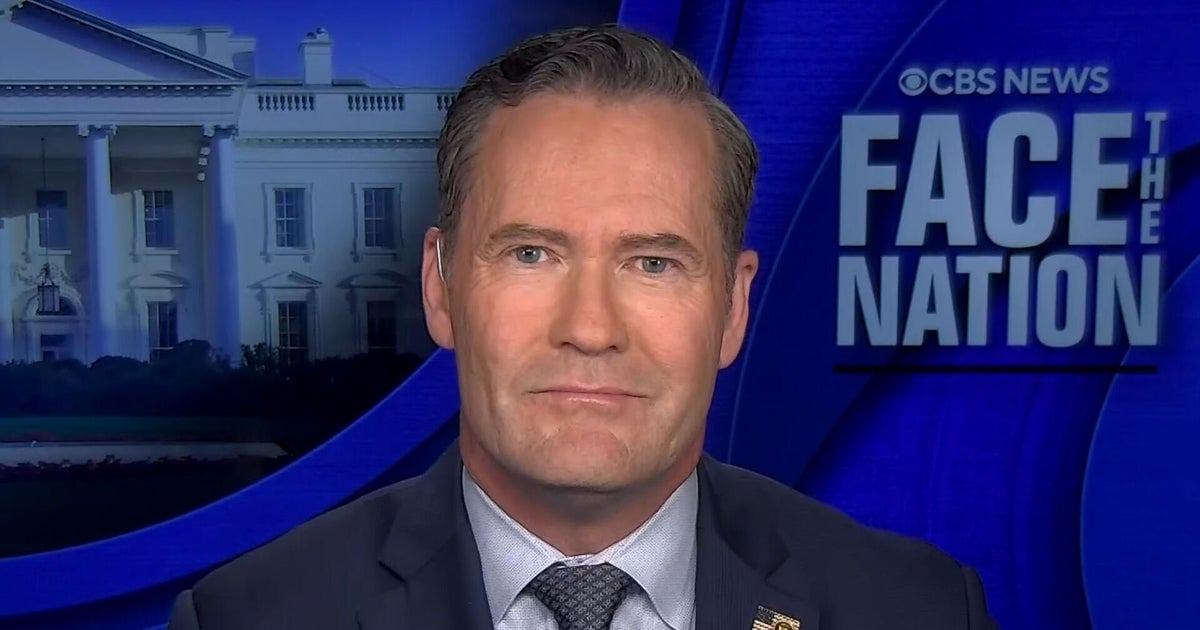
U.S.-Iran talks have started amid tensions around the Strait of Hormuz and conflicts involving Israel and Hezbollah. Key U.S. political figures, including U.N. Ambassador Mike Waltz, Senator Lindsey Graham, and Representative Jason Crow, discuss the situation on the program "Face the Nation with Margaret Brennan."
Key Facts
The talks between the U.S. and Iran are described as difficult or complex.
The Strait of Hormuz is an important passage threatened by ongoing conflicts.
There are continuing strikes between Israel and the group Hezbollah.
U.N. Ambassador Mike Waltz participated in the discussion.
Senator Lindsey Graham from the Republican Party also joined the talk.
Democratic Representative Jason Crow was part of the conversation.
The discussion took place on the CBS News program "Face the Nation with Margaret Brennan."
The date of the program was June 21, 2026.
Read the Original
Want the full story? Tap a source to open the original
article.
British Prime Minister Keir Starmer is reported to be planning to resign on Monday and announce a schedule for leaving his position. Although Starmer has said he will stay as leader, many members of his Labour Party are pushing for him to step down.
Key Facts
Keir Starmer is the Prime Minister of the UK.
Reports say he will resign on Monday.
He will also share a timetable for his departure.
Starmer has publicly said he intends to remain in his role.
Pressure is increasing from Labour Party colleagues for him to resign.
The news comes amid internal party disagreements.
This report was made by the Observer newspaper.
The situation is seen as a Labour leadership crisis.
Read the Original
Want the full story? Tap a source to open the original
article.
Israeli strikes and Hezbollah attacks have resumed in Lebanon after a short break, despite a recent ceasefire agreement. The conflict continues as the United States and Iran hold talks in Switzerland, with Iran closing the Strait of Hormuz in response to the fighting.
Key Facts
Israel and Hezbollah exchanged fire in Lebanon following a ceasefire reached a few days ago.
The fighting stopped briefly for almost 24 hours before starting again.
The US and Iran are conducting peace talks in Switzerland.
Iran responded to the conflict by closing the Strait of Hormuz, a key shipping route.
The clashes have caused casualties and damage in Lebanon.
The ceasefire has not held, with attacks continuing on both sides.
Lebanon is a key subject in the US-Iran negotiations.
The situation remains tense with no clear end to the violence yet.
Read the Original
Want the full story? Tap a source to open the original
article.
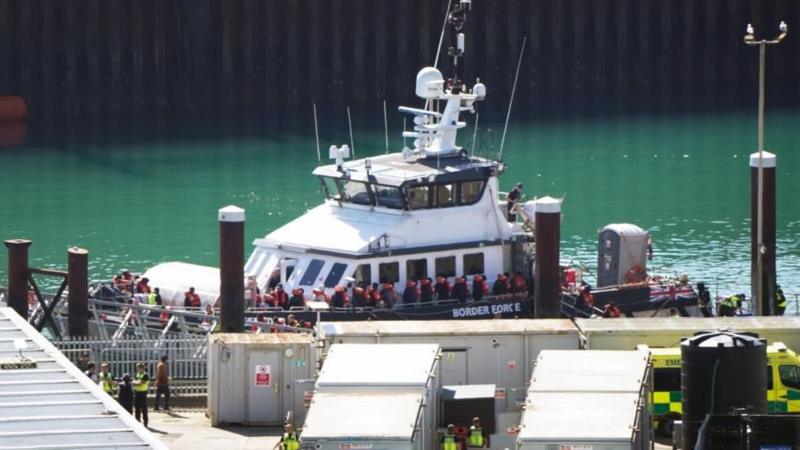
A 32-year-old Syrian man was arrested on suspicion of manslaughter after a woman died on a small boat trying to cross the English Channel to the UK. The woman was found unresponsive and later died despite medical help, while authorities continue efforts to prevent dangerous crossings.
Key Facts
A woman died on a small boat crossing the English Channel and a 32-year-old Syrian man was arrested for manslaughter.
The woman was found unresponsive on the boat and declared dead at Dover’s Western Docks.
Police are working to identify the woman and notify her family.
The UK government emphasizes the dangers of small boat crossings and works with France to stop them.
Over 9,800 people crossed the Channel in small boats in 2026, 40% fewer than the same time last year.
On one recent day, 710 people crossed on 11 boats, the highest daily number so far this year.
The UK and France signed a £662 million deal to prevent crossings, using drones, helicopters, cameras, and riot-trained police on French beaches.
The deal aims to catch people smugglers and stop illegal crossings before they reach the UK.
Read the Original
Want the full story? Tap a source to open the original
article.
A puppy named Boris and a cat named Jenkins were found abandoned outside a shelter in Indiana. Boris kept his paw on Jenkins to comfort him while they waited to be rescued. Both animals were taken inside safely and later found new homes.
Key Facts
Boris is a 6-month-old puppy, and Jenkins is a 2-year-old cat.
They were left outside the Humane Society for Hamilton County in Indiana during hot weather.
The temperature was climbing into the upper 80s Fahrenheit without shade or water.
Boris gently rested his paw on Jenkins, showing a protective behavior.
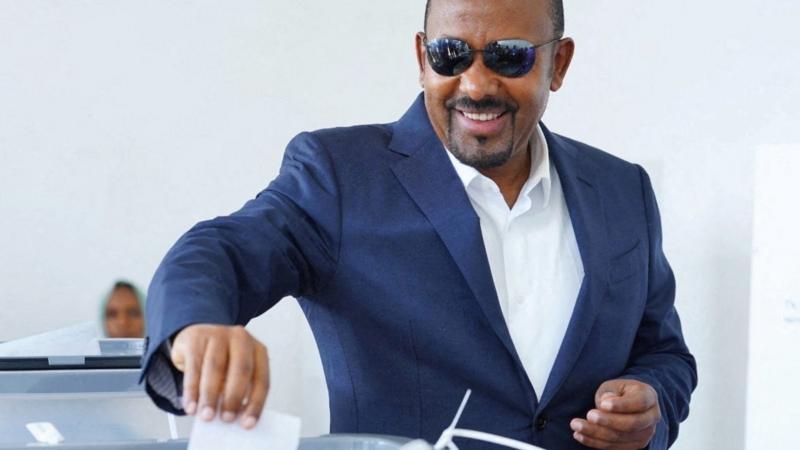
Ethiopian Prime Minister Abiy Ahmed’s Prosperity Party won most seats in the recent election, securing another term for him. However, many areas faced violence and boycotts, and ongoing conflicts in the country raise concerns about future stability.
Key Facts
Abiy Ahmed’s Prosperity Party won 438 out of 501 seats in Ethiopia’s general election.
Abiy will begin a new term as Prime Minister in early October.
Many voting stations did not open due to violence from armed groups in Amhara and Oromia regions.
The Tigray region, recovering from a civil war that ended in 2022, was completely excluded from the election.
Eritrea, Ethiopia’s neighbor, has shifted alliances and now supports Tigrayan forces, while Ethiopia wants access to a Red Sea port lost in 1993.
Reports claim Ethiopia may have supported one side in the Sudanese civil war, a claim Ethiopia denies.
The peace deal between Abiy’s government and the Tigrayan People's Liberation Front has been fragile, with both sides accusing each other of breaking the agreement.
The civil war in Tigray caused an estimated 600,000 deaths, making it one of the deadliest conflicts of this century.
Read the Original
Want the full story? Tap a source to open the original
article.
Ethiopian Prime Minister Abiy Ahmed's Prosperity Party won a large majority in recent elections, securing 438 out of 501 seats. However, concerns remain about ongoing conflicts and political tensions in regions like Tigray, Amhara, and Oromia, which could lead to further violence.
Key Facts
The Prosperity Party won a big majority in Ethiopia’s parliamentary elections.
Prime Minister Abiy Ahmed will start a new term as leader in October 2026.
Many polling stations in Amhara and Oromia regions did not open due to security issues.
Armed groups like the Fano militias in Amhara and the Oromo Liberation Army in Oromia rejected the election results.
The Tigray region was excluded from the election because of ongoing unrest after a civil war that ended in 2022.
Eritrea has allied with Tigray forces, raising fears of renewed conflict.
Ethiopia has faced accusations of supporting one side in Sudan’s civil war, which it denies.
The peace deal between Abiy’s government and the Tigrayan leaders from 2022 is under strain, with both sides accusing each other of breaking it.
Read the Original
Want the full story? Tap a source to open the original
article.
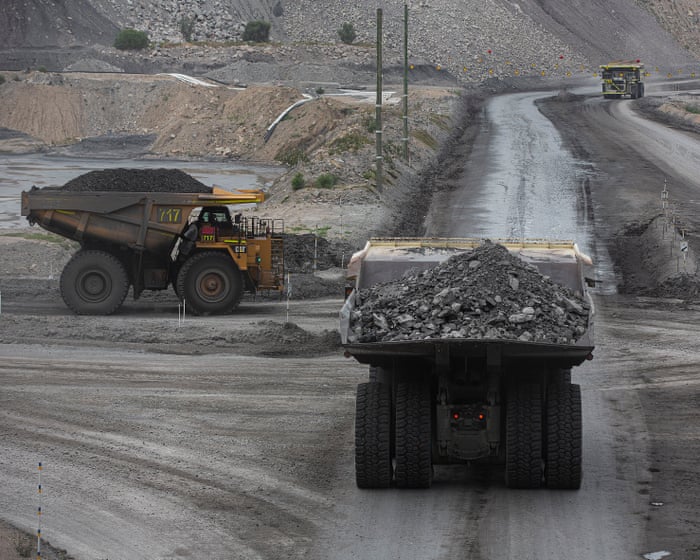
Coal companies in Australia could receive an extra $6.2 billion in taxpayer refunds for diesel fuel used at mines if new projects are approved by the Albanese government. The fuel tax credit scheme refunds part of the diesel excise tax, and critics say it encourages coal mining while supporters say it helps businesses that use fuel off public roads.
Key Facts
The fuel tax credit scheme refunds 52.6 cents per liter of diesel and petrol used for mining and farming.
Treasury estimates the scheme will cost taxpayers $47 billion over four years, rising to $12.8 billion in 2029-2030.
Over $1 billion a year from the scheme goes to coal mine operators.
An analysis found that 11 proposed coal mine developments could receive $6.2 billion in diesel subsidies over their operational lives.
One large project, Hunter Valley expansion by Glencore and Yancoal, could get $1.7 billion in refunds.
Mining vehicles use around 35% of Australia's diesel, with coal mines accounting for about 15%.
Supporters say the tax credit prevents businesses from paying a tax meant for public roads on fuel used elsewhere.
Critics argue the scheme subsidizes fossil fuel use and reduces incentives to switch to cleaner technology.
Read the Original
Want the full story? Tap a source to open the original
article.
New Mexico's governor issued a rule requiring child welfare to seek custody of all newborns exposed to drugs or alcohol before birth. This rule faces criticism from Native American tribes and advocates who say it conflicts with laws protecting tribal rights and can harm families by separating children from their communities unnecessarily.
Key Facts
New Mexico’s governor Michelle Lujan Grisham directed child welfare to take custody of drug or alcohol-exposed newborns.
The rule raised concerns about what counts as drug exposure, including medications for addiction treatment and medical use like fentanyl.
The directive appears to conflict with tribal sovereignty laws requiring tribes be notified about child welfare cases involving Native children.
Nine Native tribes filed a lawsuit against the rule, arguing it ignores state and federal protections for Native families.
The state supreme court allowed the case to proceed but did not pause the rule.
A law passed earlier in New Mexico gave healthcare, not child welfare, authority to develop rules for treating drug use in pregnancy, which the new directive contradicts.
Medical experts recommend keeping families together and providing support for newborns exposed to substances rather than immediate removal.
The Indian Child Welfare Act requires efforts to keep Native children in their communities, but many states struggle to comply fully, including New Mexico.
Read the Original
Want the full story? Tap a source to open the original
article.
Australia is experiencing a large increase in datacentre construction, with many new facilities planned to support growing digital services and artificial intelligence. However, there are concerns about the high use of electricity and water, the impact on local communities, and whether the economic benefits justify the costs.
Key Facts
A large datacentre is planned on Mamre Road in western Sydney, with six big buildings and many cooling and backup power units.
The total investment planned in Australian datacentres over the next decade is about $155 billion.
Currently, there are around 160 datacentres in Australia, with 90 more proposed.
Datacentres use a lot of electricity; on Australia’s east coast, they now use 2.8% of power, expected to rise to over 10% by the mid-2030s.
The Mamre Road datacentre would use more electricity than a large aluminium smelter nearby.
Datacentres also need significant water for cooling servers and take up large areas near cities.
These facilities create many jobs during construction but only a few once they are operating.
Some experts say clear rules on energy, water, and location can help Australia gain benefits while avoiding problems seen in other countries.
Read the Original
Want the full story? Tap a source to open the original
article.
Australia’s book publishing industry is rushing to get books printed and sold quickly, which is causing problems for authors and readers. Rising costs and competition from online sellers are making it hard for small publishers and bookstores to survive.
Key Facts
An Australian author experienced problems like important chapters being cut and mistakes in the first print of her book.
Publishers often push books out fast to meet sales deadlines or take advantage of current events.
Some books, like The Mushroom Tapes about a recent murder trial, were published very quickly to stay relevant.
Many authors struggle to get their books noticed because the market is crowded with many releases.
Bookstores receive more books than they can stock and must choose carefully which to support.
The printing costs are rising, but book prices have stayed mostly the same.
Australia has lost many independent publishers and bookstores due to financial challenges and competition from Amazon and large discount stores.
Industry leaders are asking the government to help support the local book industry.
Read the Original
Want the full story? Tap a source to open the original
article.