Neutral summaries of your favorite news sources — just the facts.
Your favorite news sources, one neutral feed — we distill their reporting into fact-first
summaries and always link to the original story. How it works
A young woman was diagnosed with a rare cancer in her jaw at age 22 and underwent several treatments. Despite surgery, chemotherapy, and radiation, the cancer spread to her lungs and other parts of her body, leading to a stage four diagnosis with a low chance of survival.
Key Facts
The woman first noticed a small lump on her jaw in May 2024.
She was diagnosed with Spindle Cell Rhabdomyosarcoma after a biopsy.
Initial treatments included chemotherapy, radiation, and surgery.
The cancer spread to her lungs and caused about 16 tumors.
Doctors told her she had about three to six months to live after the lung metastasis.
Later, a tumor was found in her lower back muscle.
A full body scan in 2026 revealed over 28 new tumors in various body parts.
All four cancer occurrences are linked and related to the original tumor’s genetic code.
Read the Original
Want the full story? Tap a source to open the original
article.
Construction has restarted on the Trans-Saharan Gas Pipeline, a major project to transport natural gas from Nigeria through Niger to Algeria for export to Europe. The pipeline will be over 4,000 kilometers long and aims to connect major African gas producers to European markets, potentially changing global energy supply routes.
Key Facts
The Trans-Saharan Gas Pipeline links Nigeria, Niger, and Algeria.
Nigeria and Algeria together hold more than half of Africa’s natural gas reserves.
The pipeline will be about 4,128 kilometers long, passing through Nigeria, Niger, and Algeria.
Construction restarted in early June 2026 after many years of delays.
The project began with initial work in Algeria's Adrar region in April 2026.
A deal was first signed in 2009, with initial gas delivery planned for 2015, but delays pushed this back.
Diplomatic tensions and financial challenges slowed progress, but improved relations in 2026 helped revive the project.
The pipeline will allow gas exports to Europe, mainly to Italy and Spain, via the Mediterranean Sea.
Read the Original
Want the full story? Tap a source to open the original
article.
Australia confirmed its first mainland case of the H5N1 bird flu in a seabird found in Western Australia. The virus has now spread to every continent, and the government plans to take action to prevent its spread.
Key Facts
A migratory brown skua bird tested positive for H5N1 bird flu in Cape Le Grand National Park, Western Australia.
A giant petrel found nearby is also suspected of carrying the virus.
This is the first confirmed mainland case of H5N1 in Australia; previously, it was only found on Heard Island, a sub-Antarctic territory.
Prime Minister Anthony Albanese said the government will do everything possible to stop the virus from spreading.
The virus has not been detected in Australian poultry or farms yet.
H5N1 bird flu has caused the killing of hundreds of millions of birds worldwide.
Human infections with this bird flu are still rare.
The outbreak has affected food supplies and increased prices in many places.
Read the Original
Want the full story? Tap a source to open the original
article.
US envoys, including Steve Witkoff and Jared Kushner, are traveling to Switzerland for talks with Iran to support a peace agreement. Meanwhile, Israeli strikes in southern Lebanon have killed at least five people and could hurt the peace process between the US and Iran.
Key Facts
Special envoy Steve Witkoff and Jared Kushner are heading to Switzerland for talks with Iran.
Iran’s Foreign Minister Abbas Araghchi is also expected to travel to Switzerland for negotiations.
Initial US-Iran talks were postponed but efforts are underway to restart them.
Israel and Hezbollah agreed on a ceasefire in Lebanon, but Israeli air strikes continued, killing at least five people.
The peace deal includes ending the war in Lebanon as a key part of a broader ceasefire.
Lebanon and Israel held direct talks earlier this year, the first since 1993, but these talks excluded Hezbollah.
The Lebanese government wants to disarm Hezbollah and push Israel to withdraw from southern Lebanon, with mixed progress on these goals.
Violence in Lebanon threatens the success of the US-Iran memorandum of understanding on peace.
Read the Original
Want the full story? Tap a source to open the original
article.
Spain expects to welcome nearly 100 million foreign tourists this year, continuing steady growth in the tourism sector. The government aims to promote less crowded regions and manage tourism in a way that balances economic benefits with environmental and social concerns.
Key Facts
Spain could reach 100 million foreign visitors in 2024, up from 96.8 million last year.
Tourist spending increased by nearly 7% in both 2023 and early 2024.
Tourism makes up over 12% of Spain’s economy.
The country is shifting focus from beach tourism to less-known regions to reduce overcrowding.
Overtourism has caused protests and increased housing costs in some Spanish cities.
Local governments are encouraged to regulate and tax tourist activities to better manage growth.
Barcelona plans to ban tourist flats by 2028 to combat housing pressures.
Different political groups in Spain have varying views on tourism regulation, with left-leaning groups supporting more control.
Read the Original
Want the full story? Tap a source to open the original
article.
Paris is preparing for a large street music festival called the Fête de la Musique, expecting over 2 million people to attend. The event is facing challenges due to previous reports of violence, a heatwave, and the need to manage large crowds and litter.
Key Facts
Fête de la Musique is a free annual street music festival started in Paris in 1982 and now celebrated worldwide on June 21.
Over 2 million people are expected to attend in Paris this year, many coming from the UK and nearby countries.
Last year, the event faced problems like sexual violence, syringe attacks, and a large amount of litter.
Authorities will have special safe spaces for women and disabled people, staffed by teams trained to handle sexual violence complaints.
Additional bins, recycling points, and 600 public toilets will be available to manage waste and hygiene.
About 1,400 water fountains will be provided to help people stay hydrated during the heatwave.
City officials warned visitors about the dangers of canals and rivers after recent deaths in the Seine river.
Paris city officials aim to keep the event safe, friendly, and responsible while handling the large crowds.
Read the Original
Want the full story? Tap a source to open the original
article.
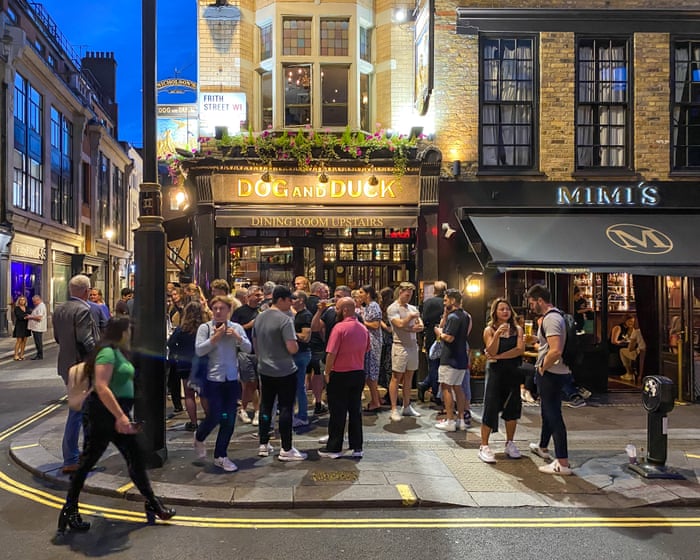
London has the strictest rules in the UK for bars and restaurants opening late at night. Many parts of London have limits around 11pm to midnight for new venues, while other cities like Manchester and Birmingham allow places to stay open much later.
Key Facts
London councils often refuse new bar or restaurant licenses if they want to open after 11pm on weeknights and midnight on weekends.
Areas like Hackney, Westminster, Islington, and Camden have specific curfews and policies limiting nightlife hours.
Westminster has a "cumulative impact zone" that blocks most new bar licenses unless there are exceptional reasons.
Other UK cities such as Manchester, Birmingham, and Leeds have far more flexible rules allowing late-night openings until 2am or later.
Birmingham’s Digbeth neighborhood allows venues to open until 5am with little opposition from authorities.
Business owners in cities with lenient rules report good relationships with local councils and few noise or crime problems.
London’s tight restrictions have led experts to say its nightlife is shrinking, while nightlife is growing in cities with looser rules.
Read the Original
Want the full story? Tap a source to open the original
article.
Hundreds of Nigerian migrants have returned from South Africa amid rising attacks and anti-immigrant protests there. Many of these migrants, like Iniebong James, face tough economic problems at home, including high unemployment and a struggling economy.
Key Facts
Nigerian migrants fled South Africa due to violence and protests targeting immigrants.
Iniebong James, one returned migrant, was attacked and injured in South Africa.
Many migrants overstayed their visas in South Africa and faced challenges living there legally.
South Africa has experienced spikes in anti-immigrant sentiment, blaming foreigners for problems like unemployment.
Before moving, James worked as a truck driver in Nigeria, but his company closed during an economic downturn.
He now worries about finding work in Nigeria, where economic conditions have worsened.
Some migrants paid bribes to community and immigration officers to keep working in South Africa.
The Nigerian government is expected to help returning migrants find jobs.
Read the Original
Want the full story? Tap a source to open the original
article.
A 6-month-old girl who had Ebola was buried in eastern Congo, marking the third child to die at an orphanage during the current outbreak. The Ebola outbreak is centered in the Ituri region, with over 900 cases and 245 deaths reported as health workers try to control the virus despite limited protective gear and no approved treatments or vaccines for this strain.
Key Facts
The 6-month-old girl died of Ebola and was buried in Bunia, Congo.
She was the third child to die at an orphanage during this outbreak.
Ituri region has more than 90% of the Ebola cases in the current outbreak.
There are 933 confirmed Ebola cases and 245 deaths so far.
This outbreak involves the Bundibugyo strain of Ebola, which has no approved treatment or vaccine.
Health workers often lack enough masks, gloves, and protective equipment.
Health centers in Ituri will now provide free care, and healthcare worker bonuses will be doubled.
Safe burial practices are used to prevent the virus from spreading, requiring health workers to wear protective clothing during funerals.
Read the Original
Want the full story? Tap a source to open the original
article.
A large fire destroyed most of a luxury resort in the Dominican Republic, forcing nearly 1,700 tourists to evacuate. One Italian tourist died and several others needed medical help. The cause of the fire is still being investigated.
Key Facts
The fire happened on Friday at the Viva Dominicus Beach by Wyndham resort in Bayahibe, a popular tourist area.
About 1,690 tourists were evacuated to other hotels and nearby places.
One Italian tourist died in the fire.
Several tourists received medical treatment after the fire.
The fire spread quickly, partly because of wind and the resort’s roof made of thatch (a type of dry plant material).
Another nearby resort owned by Viva Wyndham, the Dominicus Palace, was not damaged and stayed open.
Authorities are still investigating how the fire started.
Read the Original
Want the full story? Tap a source to open the original
article.
President Donald Trump revealed the new Air Force One, a jumbo jet previously owned by Qatar that has been remodeled to serve as the official U.S. presidential plane. The new aircraft features a bold navy blue and red design, upgraded luxury, and will be used for upcoming international trips including the NATO summit in Turkey and a future visit to China.
Key Facts
The new Air Force One was formerly a Qatari-owned jumbo jet converted for presidential use.
The plane’s colors are navy blue with a red stripe, replacing the old robin’s egg blue.
The presidential seal is displayed on the left side where the president boards, and a large American flag is on the tail.
President Trump described the plane as a "flying White House" with unmatched luxury.
The unveiling took place at Joint Base Andrews, Maryland.
President Trump plans to use the new jet for upcoming trips to the NATO summit in Turkey and later to China.
His return from the recent Group of 7 summit in France was the last trip on the old Air Force One.
Air Force personnel were present during the President’s tour and remarks about the new plane.
Read the Original
Want the full story? Tap a source to open the original
article.
A judge rejected President Biden’s effort to stop the release of transcripts and recordings linked to a special counsel investigation. The materials were gathered during a probe into Biden’s handling of classified documents, and the judge allowed the release while Biden can appeal the decision.
Key Facts
A federal judge ruled against President Biden’s attempt to block releasing his recorded interviews with a ghostwriter.
The recordings were collected by special counsel Robert Hur during an investigation into Biden’s handling of classified documents as senator and vice president.
Republicans wanted the recordings after Hur decided not to charge Biden with any crime.
Biden’s administration had refused to release the recordings, causing Congress to hold Attorney General Merrick Garland in contempt.
The Justice Department under President Trump approved releasing the materials to a conservative group, the Heritage Foundation.
The judge said the recordings had no sensitive private information after redactions.
Biden plans to appeal the ruling and asked to delay the release during the appeal.
The special counsel’s report discussed Biden’s age and mental state but found insufficient evidence to prosecute him.
Read the Original
Want the full story? Tap a source to open the original
article.
The city of Tyre in southern Lebanon is observing the Islamic holy month of Muharram amid the damage caused by the recent Israel-Hezbollah war. The war ended with a ceasefire as residents held mourning ceremonies to remember religious figures and loved ones lost in the conflict.
Key Facts
Tyre is Lebanon’s fourth largest city and has been heavily damaged by Israeli airstrikes during the Israel-Hezbollah war.
A ceasefire was reported on the day of the Muharram ceremony.
Muharram is a sacred month for Shiite Muslims commemorating the death of Imam Hussein, the Prophet Muhammad’s grandson.
Hundreds gathered in Tyre wearing black and holding portraits of relatives killed in the conflict.
The mourning ceremony included images of Hezbollah’s leader and Iran’s Supreme Leader.
Residents placed banners with Hussein’s name on ruined homes.
The mourning reaches its peak on Ashoura, the 10th day of Muharram, observed by millions worldwide.
The recent conflict began after Hezbollah fired rockets into northern Israel in March, leading to Israeli airstrikes in Beirut and southern Lebanon.
Read the Original
Want the full story? Tap a source to open the original
article.
Israeli strikes hit southern Lebanon on June 20, 2026, killing five people, even though Israel and Hezbollah had announced a ceasefire the day before. The situation remains tense amid ongoing conflicts in the region and paused talks between the United States and Iran.
Key Facts
On June 20, 2026, Israeli airstrikes targeted southern Lebanon.
Five people were killed in these strikes, according to Lebanese official media.
The strikes happened despite a ceasefire between Israel and Hezbollah announced on June 19, 2026.
Hezbollah is a group in Lebanon supported by Iran.
Fighting continues in Lebanon amid political tensions in the Middle East.
US-Iran peace talks were postponed around this time.
The conflict is connected to wider regional issues including Iran’s role and US foreign policy.
There is ongoing concern about the impact of these events on regional stability.
Read the Original
Want the full story? Tap a source to open the original
article.
Bolivian President Rodrigo Paz declared a state of emergency to allow the military to clear road blockades after nearly 50 days of protests that stopped much of the country's economy. The protests began after fuel subsidies were cut but grew to include demands for wage increases and President Paz's resignation.
Key Facts
President Paz declared a state of emergency in Bolivia on June 20, 2026.
The emergency grants the military broader power to remove road blockades.
Protests have lasted nearly 50 days and disrupted the economy.
The unrest started after Paz ended long-standing fuel subsidies to reduce the budget deficit.
Protesters demand higher wages, an end to fuel and dollar shortages, and President Paz’s resignation.
Many protest groups are linked to former President Evo Morales.
Key roads are blocked, cutting off supplies of food, fuel, and medicine to cities like La Paz.
The government made a recent agreement with the main workers' union to help ease tensions before declaring the emergency.
Read the Original
Want the full story? Tap a source to open the original
article.
At least 117.8 million people worldwide are forcibly displaced, including refugees, asylum seekers, and internally displaced persons. For the first time in a decade, the number of displaced people has slightly decreased due to many refugees and displaced people returning home.
Key Facts
117.8 million people are forcibly displaced worldwide.
This number includes refugees, asylum seekers, internally displaced people, and others needing protection.
68.6 million people are displaced within their own countries.
28.5 million are refugees under the United Nations High Commissioner for Refugees (UNHCR).
9 million people are asylum seekers waiting for decisions on their protection claims.
6 million are Palestinian refugees supported by the UN agency UNRWA.
Nearly half of the refugees come from Venezuela, Palestine, Ukraine, and Syria.
A few countries, including Jordan, Colombia, Germany, and Turkiye, host the largest refugee populations.
Read the Original
Want the full story? Tap a source to open the original
article.
Western Europe is experiencing a strong heatwave with temperatures expected to rise further and possibly break records. Countries like France, Spain, Germany, Switzerland, and the UK have issued warnings and taken measures to handle the extreme heat.
Key Facts
Western Europe is facing a severe heatwave with temperatures climbing higher in the coming days.
France had to change school schedules due to the heat, with Paris possibly exceeding 40°C in June for the first time.
Germany is warning about thunderstorms, hail, and heavy rain during the weekend.
England and Wales recorded their hottest spring ever, though their heat is less intense than on the continent.
Climate change is causing more frequent and stronger heatwaves, droughts, and floods.
Spain, including the Balearic Islands, is warned about a long period of extreme heat lasting into next week.
Switzerland recorded its hottest June day ever in Schaffhouse at 35.7°C.
Many Western European countries are raising alert levels and preparing for continued extreme weather.
Read the Original
Want the full story? Tap a source to open the original
article.
The European Commission plans to speed up mining projects for critical minerals needed in technology and green energy by changing water protection laws. Many of these mines are in parts of Europe with limited water, raising concerns about water shortages and environmental impacts.
Key Facts
Mining requires a lot of water for processing ore, controlling dust, managing waste, and removing water from mines.
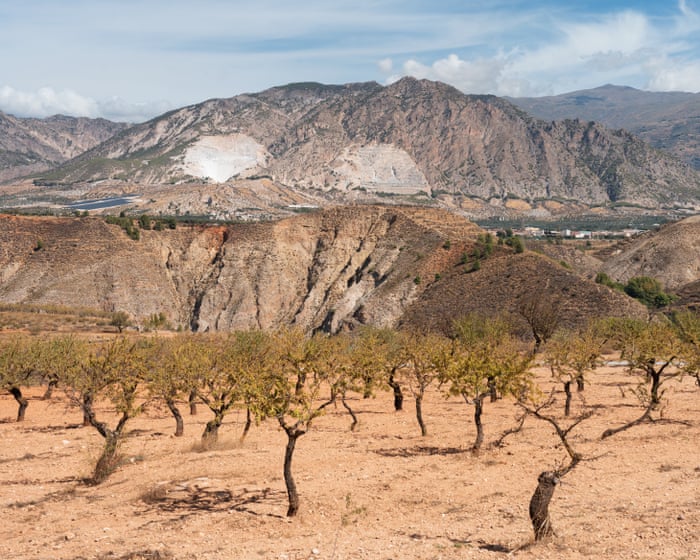
Over half of the 33 new or expanded critical mineral mines in the EU are in areas that have been drying in the last 20 years.
Nearly half of these mines are in drought-affected zones, and a quarter are in water-stressed regions.
Spain, Portugal, and Greece, where several mines are planned, face severe water scarcity.
Environmental groups worry these mine projects may harm water resources and natural habitats.
The EU wants to reduce reliance on imports by developing its own critical mineral sources.
The EU aims to revise its water protection law to help mining projects move faster through approval processes.
The mining industry supports changes that provide clearer rules and more time to meet water quality goals, while the EU Commission says projects must still follow environmental laws.
Read the Original
Want the full story? Tap a source to open the original
article.
A study in the UK found that warning people about the risks SUVs pose to pedestrians and cyclists has very little effect on whether they choose to buy an SUV. The researchers suggest that financial penalties might be needed to reduce the number of these large vehicles on the road.
Key Facts
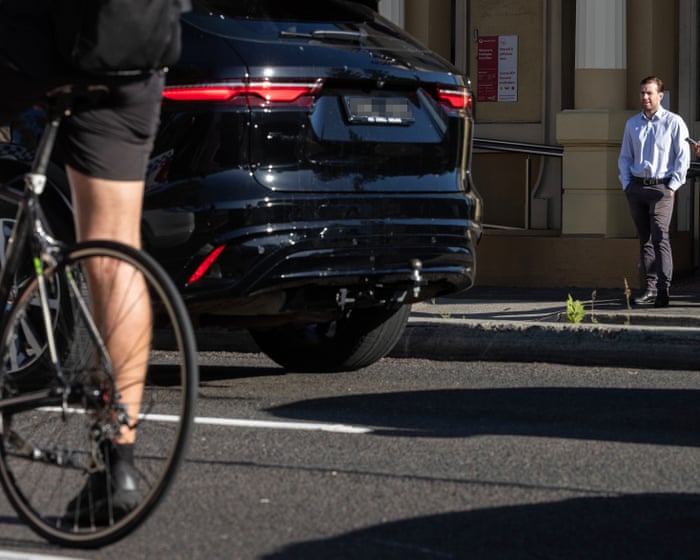
SUVs are more dangerous to pedestrians and cyclists because of their higher and blunter front ends.
Pedestrians hit by SUVs are 44% more likely to die than if hit by smaller cars; this risk rises to 82% for children.
Over 2,000 people in the UK were shown SUV ads, some with safety warnings and some without.
Safety awareness rose from 35% to 54% among those who saw the warnings.
Despite this, 95% of people who wanted to buy an SUV still planned to do so after seeing the warnings.
Even people who care about road user safety mostly still chose SUVs.
Researchers say social habits around car use make it hard to change behavior without strong measures.
Some cities, like Paris, have started charging more for parking SUVs to discourage their use due to safety and pollution concerns.
Read the Original
Want the full story? Tap a source to open the original
article.
Iran says it is willing to continue diplomatic talks with the United States but demands that Washington ensure Israel stops attacking Lebanon as part of a ceasefire agreement. Meanwhile, Israeli strikes in southern Lebanon have continued despite reports of a ceasefire, creating uncertainty about the truce’s success.
Key Facts
Iran views Lebanon as a test of whether the US can control Israel in support of a ceasefire.
Iranian Foreign Minister Abbas Araghchi says the US must ensure Israel follows the ceasefire terms.
A US official confirmed Israel and Hezbollah agreed to a ceasefire in Lebanon, but attacks are still reported.
Some experts warn Iran’s linking of Lebanon’s ceasefire to the US talks may cause problems.
The Trump administration seeks a full ceasefire on all fronts, including Lebanon and Hezbollah.
New peace talks between Israel and Lebanon are planned in Washington in late June.
Hezbollah rejects the peace talks, and disputes remain over disarming the group.
Despite the ceasefire agreement, Israeli strikes in Lebanon have continued after the deadline.
Read the Original
Want the full story? Tap a source to open the original
article.