Neutral summaries of your favorite news sources — just the facts.
Your favorite news sources, one neutral feed — we distill their reporting into fact-first
summaries and always link to the original story. How it works
Israeli strikes hit southern Lebanon on June 20, 2026, killing five people, even though Israel and Hezbollah had announced a ceasefire the day before. The situation remains tense amid ongoing conflicts in the region and paused talks between the United States and Iran.
Key Facts
On June 20, 2026, Israeli airstrikes targeted southern Lebanon.
Five people were killed in these strikes, according to Lebanese official media.
The strikes happened despite a ceasefire between Israel and Hezbollah announced on June 19, 2026.
Hezbollah is a group in Lebanon supported by Iran.
Fighting continues in Lebanon amid political tensions in the Middle East.
US-Iran peace talks were postponed around this time.
The conflict is connected to wider regional issues including Iran’s role and US foreign policy.
There is ongoing concern about the impact of these events on regional stability.
Read the Original
Want the full story? Tap a source to open the original
article.
Bolivian President Rodrigo Paz declared a state of emergency to allow the military to clear road blockades after nearly 50 days of protests that stopped much of the country's economy. The protests began after fuel subsidies were cut but grew to include demands for wage increases and President Paz's resignation.
Key Facts
President Paz declared a state of emergency in Bolivia on June 20, 2026.
The emergency grants the military broader power to remove road blockades.
Protests have lasted nearly 50 days and disrupted the economy.
The unrest started after Paz ended long-standing fuel subsidies to reduce the budget deficit.
Protesters demand higher wages, an end to fuel and dollar shortages, and President Paz’s resignation.
Many protest groups are linked to former President Evo Morales.
Key roads are blocked, cutting off supplies of food, fuel, and medicine to cities like La Paz.
The government made a recent agreement with the main workers' union to help ease tensions before declaring the emergency.
Read the Original
Want the full story? Tap a source to open the original
article.
At least 117.8 million people worldwide are forcibly displaced, including refugees, asylum seekers, and internally displaced persons. For the first time in a decade, the number of displaced people has slightly decreased due to many refugees and displaced people returning home.
Key Facts
117.8 million people are forcibly displaced worldwide.
This number includes refugees, asylum seekers, internally displaced people, and others needing protection.
68.6 million people are displaced within their own countries.
28.5 million are refugees under the United Nations High Commissioner for Refugees (UNHCR).
9 million people are asylum seekers waiting for decisions on their protection claims.
6 million are Palestinian refugees supported by the UN agency UNRWA.
Nearly half of the refugees come from Venezuela, Palestine, Ukraine, and Syria.
A few countries, including Jordan, Colombia, Germany, and Turkiye, host the largest refugee populations.
Read the Original
Want the full story? Tap a source to open the original
article.
Western Europe is experiencing a strong heatwave with temperatures expected to rise further and possibly break records. Countries like France, Spain, Germany, Switzerland, and the UK have issued warnings and taken measures to handle the extreme heat.
Key Facts
Western Europe is facing a severe heatwave with temperatures climbing higher in the coming days.
France had to change school schedules due to the heat, with Paris possibly exceeding 40°C in June for the first time.
Germany is warning about thunderstorms, hail, and heavy rain during the weekend.
England and Wales recorded their hottest spring ever, though their heat is less intense than on the continent.
Climate change is causing more frequent and stronger heatwaves, droughts, and floods.
Spain, including the Balearic Islands, is warned about a long period of extreme heat lasting into next week.
Switzerland recorded its hottest June day ever in Schaffhouse at 35.7°C.
Many Western European countries are raising alert levels and preparing for continued extreme weather.
Read the Original
Want the full story? Tap a source to open the original
article.
The European Commission plans to speed up mining projects for critical minerals needed in technology and green energy by changing water protection laws. Many of these mines are in parts of Europe with limited water, raising concerns about water shortages and environmental impacts.
Key Facts
Mining requires a lot of water for processing ore, controlling dust, managing waste, and removing water from mines.
Over half of the 33 new or expanded critical mineral mines in the EU are in areas that have been drying in the last 20 years.
Nearly half of these mines are in drought-affected zones, and a quarter are in water-stressed regions.
Spain, Portugal, and Greece, where several mines are planned, face severe water scarcity.
Environmental groups worry these mine projects may harm water resources and natural habitats.
The EU wants to reduce reliance on imports by developing its own critical mineral sources.
The EU aims to revise its water protection law to help mining projects move faster through approval processes.
The mining industry supports changes that provide clearer rules and more time to meet water quality goals, while the EU Commission says projects must still follow environmental laws.
Read the Original
Want the full story? Tap a source to open the original
article.
A study in the UK found that warning people about the risks SUVs pose to pedestrians and cyclists has very little effect on whether they choose to buy an SUV. The researchers suggest that financial penalties might be needed to reduce the number of these large vehicles on the road.
Key Facts
SUVs are more dangerous to pedestrians and cyclists because of their higher and blunter front ends.
Pedestrians hit by SUVs are 44% more likely to die than if hit by smaller cars; this risk rises to 82% for children.
Over 2,000 people in the UK were shown SUV ads, some with safety warnings and some without.
Safety awareness rose from 35% to 54% among those who saw the warnings.
Despite this, 95% of people who wanted to buy an SUV still planned to do so after seeing the warnings.
Even people who care about road user safety mostly still chose SUVs.
Researchers say social habits around car use make it hard to change behavior without strong measures.
Some cities, like Paris, have started charging more for parking SUVs to discourage their use due to safety and pollution concerns.
Read the Original
Want the full story? Tap a source to open the original
article.
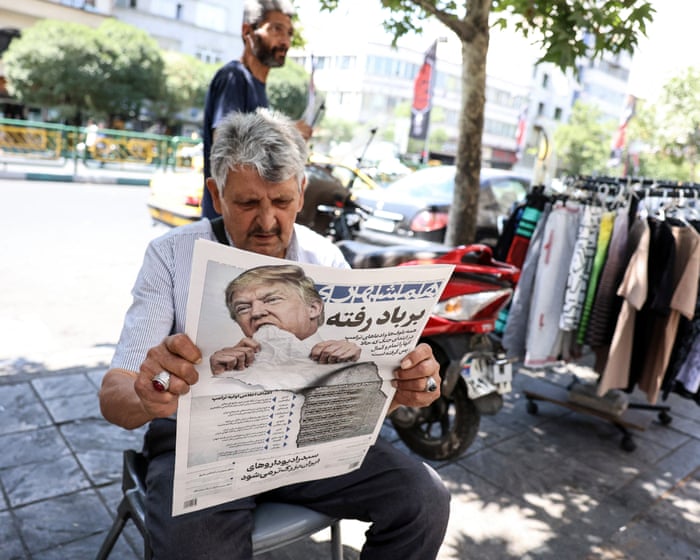
Iran says it is willing to continue diplomatic talks with the United States but demands that Washington ensure Israel stops attacking Lebanon as part of a ceasefire agreement. Meanwhile, Israeli strikes in southern Lebanon have continued despite reports of a ceasefire, creating uncertainty about the truce’s success.
Key Facts
Iran views Lebanon as a test of whether the US can control Israel in support of a ceasefire.
Iranian Foreign Minister Abbas Araghchi says the US must ensure Israel follows the ceasefire terms.
A US official confirmed Israel and Hezbollah agreed to a ceasefire in Lebanon, but attacks are still reported.
Some experts warn Iran’s linking of Lebanon’s ceasefire to the US talks may cause problems.
The Trump administration seeks a full ceasefire on all fronts, including Lebanon and Hezbollah.
New peace talks between Israel and Lebanon are planned in Washington in late June.
Hezbollah rejects the peace talks, and disputes remain over disarming the group.
Despite the ceasefire agreement, Israeli strikes in Lebanon have continued after the deadline.
Read the Original
Want the full story? Tap a source to open the original
article.
At least five people were killed by Israeli air strikes in southern Lebanon despite a ceasefire agreement made the day before between Israel and Hezbollah. The attacks occurred as US and Iranian officials met in Switzerland for talks.
Key Facts
At least five people died in Israeli air strikes in the Lebanese town of Arabsalim.
The air strikes happened even though Israel and Hezbollah agreed to a ceasefire one day earlier.
Israeli warplanes, drones, and artillery targeted areas around Nabatieh, damaging homes.
The ceasefire followed earlier Israeli air raids on southern Lebanon.
US envoy Steve Witkoff and Iranian Foreign Minister Abbas Araqchi were holding talks in Switzerland at the same time.
The next round of Lebanon-Israel talks is planned for June 23–25 in Washington.
The US State Department announced these upcoming talks after a call between US Secretary of State Marco Rubio and Lebanon’s President Joseph Aoun.
Shipping in the Strait of Hormuz increased following a deal that eased tensions between the US and Iran.
Read the Original
Want the full story? Tap a source to open the original
article.
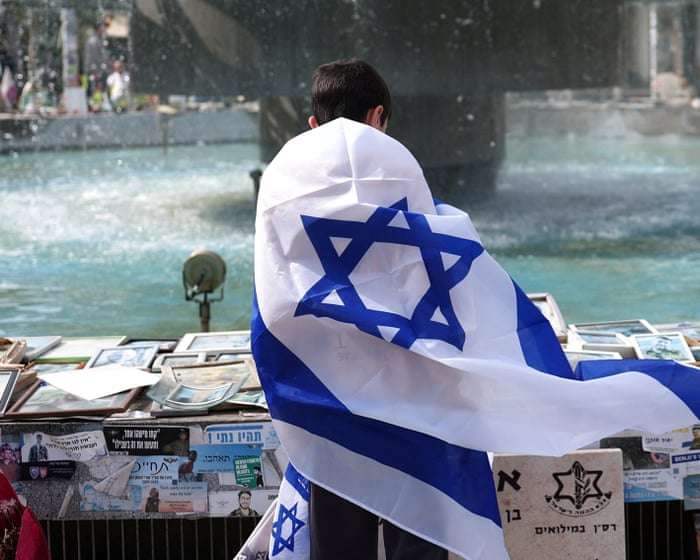
Many Israelis feel upset and betrayed after a recent peace deal between Iran and the US, which they believe harms Israel's security. The deal followed fighting in Lebanon, where Israel and Hezbollah, an Iran-linked group, clashed with casualties on both sides.
Key Facts
Israel is angry about a peace deal made between Iran and the US that they see as bad for their country.
Fighting in Lebanon involved Israeli airstrikes and attacks by Hezbollah, which is connected to Iran.
Some Israelis feel abandoned by President Trump and the US after initially being allies in the conflict.
The deal may limit Israel’s ability to fight Hezbollah near its northern border.
Israeli leaders like Prime Minister Netanyahu face criticism for how the conflict was handled.
Over 3,900 people have died in Lebanon during the recent fighting.
Israelis are preparing for national elections expected in October, with security being a key issue.
Public trust in Netanyahu's leadership has been weakened by the crisis and its outcomes.
Read the Original
Want the full story? Tap a source to open the original
article.
A woman looks back at a video she and her friends made in 2006 that went somewhat viral on YouTube. She compares her experience with more recent teenage internet stars who faced serious bullying and harassment, showing how the internet and social media have changed over time.
Key Facts
In 2006, the author and her friends made a funny video singing a song and uploaded it to YouTube.
The video got about 48,500 views and many negative comments, including hateful messages.
Unlike today, her video was not widely shared at school or saved forever, so she could remove it.
Later teenage internet stars, like Rebecca Black in 2011, faced much heavier bullying and threats, sometimes causing serious harm.
Social media has changed a lot, making it harder for young people to escape unwanted attention or forget embarrassing moments online.
The UK government is considering banning children under 16 from social media platforms because of these risks.
Many young people today avoid expressing themselves online due to fear of embarrassment or hate.
The author reflects on the freedom and limits of being young online then versus now.
Read the Original
Want the full story? Tap a source to open the original
article.
Two passenger trains collided near Bedford, north of London, killing one train driver and injuring many passengers. Emergency crews responded quickly, and train services to and from London St. Pancras station were suspended.
Key Facts
The collision happened on Friday evening around 5:15 pm near Bedford.
Both trains were heading south to London St. Pancras station.
One train driver died as a result of the crash.
Eleven people were very seriously injured, 22 seriously injured, and 56 had minor injuries.
Emergency services included air ambulances and a hazardous incident team.
Passengers reported being thrown forward and seeing severe injuries among fellow travelers.
Rail services to and from London St. Pancras were canceled for the rest of the day.
The investigation and emergency response involved Bedfordshire Police, fire, and ambulance services.
Read the Original
Want the full story? Tap a source to open the original
article.
A large fire broke out at a beach resort in the Dominican Republic, killing one tourist and causing nearly 1,700 guests to evacuate. Officials are looking into the cause and say the fire spread fast because of strong winds and flammable roofing materials.
Key Facts
A fire destroyed part of a beach resort in the Dominican Republic.
One tourist died in the fire.
About 1,700 guests had to leave the resort quickly.
Authorities are investigating what started the fire.
The fire spread quickly due to high winds.
The resort’s roof, made of palm leaves, caught fire easily.
Emergency crews responded to the scene to control the blaze.
Read the Original
Want the full story? Tap a source to open the original
article.
A three-year-old boy was seriously injured after entering a crocodile enclosure at Johnsons of Old Hurst zoo in Cambridgeshire. He remains in critical but stable condition two days after the attack. A 30-year-old man has been arrested on suspicion of attempted murder in connection with the incident.
Key Facts
The incident happened at Johnsons of Old Hurst near Huntingdon, Cambridgeshire.
The boy was attacked by at least one crocodile and taken to Addenbrooke's Hospital.
The boy remains in critical but stable condition two days after the attack.
A 30-year-old man from Norfolk was arrested on suspicion of attempted murder and later released on bail.
The arrested man has learning disabilities, was on a trip to the zoo with carers, and is not believed to know the child.
Zoo staff member Tracey Johnson rescued the boy by jumping into the crocodile enclosure.
The crocodile enclosure has high fences and steel mesh fencing around elevated walkways.
Police are reviewing CCTV footage and interviewing staff to understand what happened.
The crocodiles have not been removed or harmed.
The zoo’s Tropical House, containing the crocodile enclosure, was closed after the incident.
Read the Original
Want the full story? Tap a source to open the original
article.
Israel gave a special state welcome to Somaliland’s president in Jerusalem, marking the first visit by a leader of this region. Israel was the first country to recognize Somaliland’s independence from Somalia, and the visit included signing agreements to boost cooperation in security, trade, and regional strategy.
Key Facts
President Abdirahman Mohamed Abdullahi of Somaliland visited Israel for the first time on a state visit.
Israel officially recognized Somaliland as independent from Somalia six months before the visit.
The two sides signed a strategic cooperation agreement covering security, trade, and regional issues.
Somaliland controls a key coastline near the Bab al-Mandab Strait, an important global shipping route.
Israel sees Somaliland as strategically important because of regional conflicts and shipping disruptions near Yemen.
Somaliland opened its embassy in West Jerusalem, a rare move since most embassies stay in Tel Aviv due to Jerusalem’s disputed status.
The embassy opening was criticized by Palestine, the Organisation of Islamic Cooperation, and the Arab League.
Somaliland’s president met Israeli leaders including President Isaac Herzog and Prime Minister Benjamin Netanyahu during the visit.
Read the Original
Want the full story? Tap a source to open the original
article.
A United Nations meeting became tense after Israel’s ambassador said the UN was treating Israel unfairly regarding accusations of sexual violence by its soldiers. Israel was recently put on a UN list for sexual violence linked to conflicts.
Key Facts
Israel’s ambassador spoke at a UN meeting about allegations against Israeli soldiers and security forces.
The ambassador accused the UN of unfairly focusing on Israel.
Israel was added to a UN blacklist for sexual violence related to conflict.
The meeting included heated exchanges and interruptions.
The blacklist is used by the UN to identify parties involved in sexual violence during conflicts.
Read the Original
Want the full story? Tap a source to open the original
article.
The article discusses ongoing international conflicts involving Russia, Ukraine, the US, Israel, Iran, and Lebanon, showing that despite violations of international law, weaker actors can resist stronger powers. It highlights European efforts to support international law and manage tensions, especially around the strategic Strait of Hormuz, although political challenges remain.
Key Facts
Russia invaded Ukraine, violating international law, but Ukraine continues to resist despite Russia’s greater military strength.
The US and Israel have attacked Iran twice, also breaking international law, aiming to weaken Iran.
A memorandum of understanding was signed between the US and Iran reopening the Strait of Hormuz for shipping and easing some sanctions.
The deal shows that even the strongest countries do not always achieve their goals in conflicts.
Europe, led by France and the UK, created a coalition of about 40 countries to clear mines and secure the Strait of Hormuz for shipping, showing support for international law.
This European coalition effort might not happen because the US is not interested and Iran rejects foreign military presence in the strait.
Norway is quietly working on another European initiative to help manage the tensions in the Middle East.
The article questions whether Europe will reaffirm its support for international law after these conflicts.
Read the Original
Want the full story? Tap a source to open the original
article.
The push to use more electricity instead of fossil fuels has become a key topic in recent UN climate talks ahead of the Cop31 summit. Countries debated energy goals and the role of science in climate policy, with some disagreements causing delays.
Key Facts
Using electricity for vehicles, heating, and industry can greatly reduce fossil fuel use and cut global energy demand in half.
Turkey and Australia propose that 35% of energy should come from electricity by 2035 to reduce emissions.
The recent talks in Bonn focused heavily on electrification but faced delays and conflicts over climate science and goals.
Some countries, including Saudi Arabia and India, opposed confirming climate science in agreements.
Many Pacific Island nations criticized attempts to weaken scientific references, highlighting the urgent impact of climate change on vulnerable people.
The goal to limit global warming to 1.5°C was challenged but defended by many participants.
The UN climate chief called for cooperation instead of disputes during the negotiations.
The concept of a "just transition," ensuring fair changes to jobs and communities, saw more agreement among countries.
Read the Original
Want the full story? Tap a source to open the original
article.
Australia’s health regulator, Ahpra, has adopted the International Holocaust Remembrance Alliance’s (IHRA) definition of antisemitism to guide its work. Some groups, like the peak Jewish body, support the move, while others, including the Australia Palestine Advocacy Network, worry it might stop health workers from speaking out about Israel’s actions.
Key Facts
Ahpra adopted the IHRA definition of antisemitism to guide its regulatory work.
The IHRA definition includes examples that some say could mix criticism of Israel with antisemitism.
The move is supported by the Australian government’s special envoy to combat antisemitism and the Executive Council of Australian Jewry (ECAJ).
The Australia Palestine Advocacy Network (Apan) fears the definition may lead to silencing health workers critical of Israel.
Since October 2023, some health workers have reported fear of professional consequences for speaking about Gaza and Palestine.
Ahpra is reviewing its process to handle complaints about health workers to avoid misuse of the system.
The antisemitism royal commission was set up after a December 2022 terrorist attack in Bondi where 15 people died.
Media outlets ABC and SBS chose not to adopt the IHRA definition, citing the need for editorial independence.
Read the Original
Want the full story? Tap a source to open the original
article.
Prince Harry and Meghan, the Duke and Duchess of Sussex, have been offered a royal place to stay during their visit to the UK next month with their two children. The family has not yet responded, and details about security and which royal residence is offered are not clear.
Key Facts
Prince Harry and Meghan will visit the UK next month with their children, Archie (7) and Lilibet (5).
They have been offered accommodation on a royal estate but have not said if they will accept it.
Harry has previously declined to stay at Buckingham Palace due to security concerns.
The last time the King saw his grandchildren was in 2022 during Queen Elizabeth II’s Jubilee celebrations.
Prince Harry has planned events related to the Invictus Games, which help injured military personnel, next year.
Buckingham Palace has said it will not comment on whether the King will meet the family, calling it a private matter.
Security details for the visit are unclear, and no extra security from Buckingham Palace has been announced.
Any additional security would be managed by the UK Home Office.
Read the Original
Want the full story? Tap a source to open the original
article.
Mexico City plans to limit alcohol sales in public after over 700,000 people celebrated the national soccer team’s win during the World Cup. Officials want to reduce street drinking and control crowd size by adding more screens and staff.
Key Facts
More than 700,000 people gathered downtown to celebrate Mexico’s win against South Korea in the World Cup.
Fans wore national jerseys or colorful wrestling masks while celebrating in the streets.
The celebration left streets dirty with 40 tons of trash collected the next day.
The city government wants to stop people from taking alcoholic drinks out of bars and restaurants.
Convenience stores near the celebration area may be asked to stop selling alcohol before big games.
Officials plan to add seven extra big screens to spread out crowds from the current 12 screens.
More staff will be deployed to limit beer sales by street vendors.
Mexico will play against the Czech Republic in their next World Cup match.
Read the Original
Want the full story? Tap a source to open the original
article.