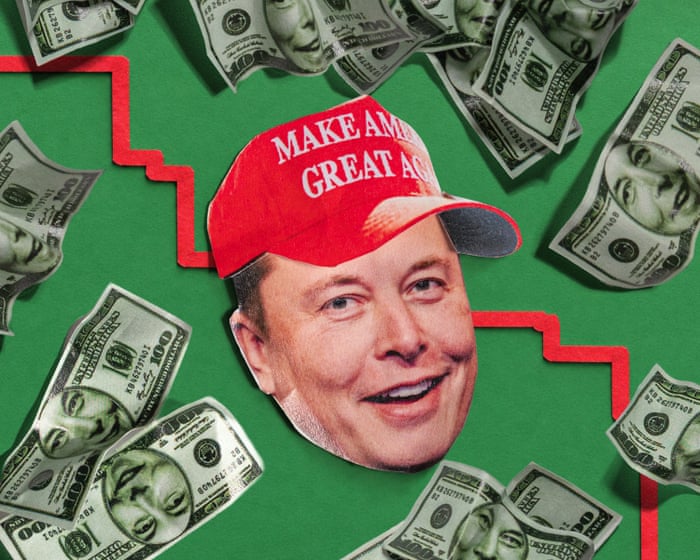
Elon Musk gave at least $445.77 million to Republican-aligned political action committees and groups for the U.S. midterm election cycle, according to Federal Election Commission data through October 29. His largest contribution was $216 million to his America PAC, which has spent money in House and Senate races across 17 states, including more than $33 million to support Texas Republican Senate candidate Ken Paxton.
Key Facts
Musk's reported contributions total at least $445.77 million since last year.
The article describes Musk as the largest single-cycle political donor in modern U.S. history.
Musk gave $216 million to his America PAC, his largest contribution to a single group.
America PAC made 839 independent expenditures in House races and 623 in Senate races across 17 states.
America PAC spent more than $33 million to support Ken Paxton's Texas Senate campaign.
The PAC spent $28 million on content opposing Democratic candidate James Talarico, including ads about transgender rights.
Musk also gave $168 million to the Senate Leadership Fund, which supports Paxton's campaign.
The article says Musk's political spending rose by about $200 million in the final two months of campaigning.
Read the Original
Want the full story? Tap a source to open the original
article.
Israeli strikes and gunfire have killed and wounded students and teachers in Gaza as children return to makeshift schools, the article reports. The account describes the death of 14-year-old Mohammed Hamad and the shooting of fourth-grade student Suad Abd Rabbo, as well as continuing dangers near the Yellow Line.
Key Facts
Mohammed Hamad, 14, was killed in an Israeli strike on October 17 while walking home from a makeshift school in Deir el-Balah; his 10-year-old brother survived.
Mohammed’s father said the boy’s death has left his brother Abdullah afraid to go to school alone.
Gaza’s academic year resumed on September 19 after nearly three years of disruption caused by the war, according to the article.
The article says 10 children aged six to 16 and one teacher were killed between October 18 and 24.
Gaza’s Ministry of Education said two girls were wounded during morning assembly at Muradiya School on October 21.
The ministry also said five students were injured, some critically, in an attack on the Islamic University campus in Gaza City.
The article says at least 66 Palestinian children have been killed near the Yellow Line, which the United Nations says now leaves Israel controlling more than 65 percent of Gaza.
Fourth-grade student Suad Abd Rabbo was shot while standing in a school queue on October 21, according to her family.
Read the Original
Want the full story? Tap a source to open the original
article.
Michelle Arellano Martin, 47, describes how a complimentary full-body MRI led to follow-up tests that showed a small breast lesion highly likely to be cancer. She says the scan gave her peace of mind about other parts of her body, while acknowledging that elective scans can be costly and lead to unnecessary tests.
Key Facts
Martin sought a full-body MRI after experiencing memory problems, hair loss and weight gain, which she had attributed to perimenopause.
The scan took less than an hour and identified a 1.5-centimeter breast lesion with some irregular edges.
A doctor advised Martin to get the lesion checked after reviewing the MRI results.
Follow-up mammography and ultrasound led a radiologist to assign the lesion a BI-RADS 5 score, indicating a 95% or greater chance of cancer.
The radiologist said a biopsy was needed for confirmation and told Martin the lesion appeared small and early, with no suspicious lymph-node findings.
Martin says she was told she had breast cancer by the Tuesday after receiving the MRI results the previous week.
Martin says she was grateful for the scan, while noting that preventive full-body MRIs can be expensive and may prompt unnecessary tests.
Read the Original
Want the full story? Tap a source to open the original
article.
Daylight saving time ends at 2 a.m. on November 1, 2026, when clocks in most of the country move back to 1 a.m. The repeated hour may give people more time in bed or out at Halloween events, but alcohol service rules vary by state and local area, and the time change can disrupt sleep.
Key Facts
The clock change repeats the hour from 1 a.m. to 2 a.m. on November 1.
The article says clocks in 48 states will turn back one hour.
Whether bars may serve alcohol during the repeated hour depends on state and local rules and the venue’s license.
In New York, establishments allowed to serve until 2 a.m. may remain open through the repeated 1 a.m. hour, according to a state alcohol regulator spokesperson.
Sleep physician John Saito said the time change can affect energy, mood, and the ability to fall asleep or wake up.
Saito recommends getting at least seven hours of sleep before and after the change and keeping children’s bedtime routines steady.
Phones and other internet-connected devices generally update automatically, while traditional clocks and some appliances may need manual adjustment.
Read the Original
Want the full story? Tap a source to open the original
article.
A study by researchers at NYU Grossman School of Medicine and Kaiser Permanente School of Medicine found associations between some maternal health conditions during pregnancy and autism diagnoses. The findings covered multiple racial and ethnic groups but do not establish that those conditions cause autism.
Key Facts
The study was recently published.
Researchers came from NYU Grossman School of Medicine and Kaiser Permanente School of Medicine.
The study examined maternal health conditions during pregnancy.
Researchers reported associations between certain conditions and autism diagnoses.
The reported associations appeared across racial and ethnic groups.
The article says much remains unknown about autism’s causes.
The Trump administration is searching for a cause of autism.
Read the Original
Want the full story? Tap a source to open the original
article.
Sen. Marsha Blackburn’s campaign for Tennessee governor could open the state’s Senate seat. Defense Secretary Pete Hegseth is interested in the seat and could face congressional oversight if House Democrats win a majority.
Key Facts
Marsha Blackburn is a Republican senator from Tennessee.
Blackburn is running to become Tennessee’s next governor.
Her campaign could leave an open Senate seat in Tennessee.
Defense Secretary Pete Hegseth is interested in the open seat.
Hegseth is viewed as a potential oversight target if House Democrats take the majority in the next Congress.
Hegseth is a former Army National Guard major.
Read the Original
Want the full story? Tap a source to open the original
article.
The article says President Donald Trump has sought to influence the 2026 midterm election process, despite states’ constitutional role in running elections. It focuses on his push for the SAVE Act, which would require documentary proof of citizenship to vote, and reports concerns that the effort has increased fear and uncertainty among voters and election officials.
Key Facts
The article says Americans are scheduled to vote in the midterm elections on November 3, 2026.
Jonathan Diaz of the Campaign Legal Center said the administration had tried to insert the federal government into many parts of the election process.
An AP-NORC poll found that 55 percent of Democrats and 38 percent of Republicans were confident the final midterm count would be accurate.
Trump has urged lawmakers to pass the SAVE Act, which would require documentary proof of U.S. citizenship to vote.
The article says a driver’s license would not meet the SAVE Act’s requirements unless it showed the holder’s place of birth.
The Campaign Legal Center estimates that more than 21 million Americans lack access to documentary proof of citizenship.
The article cites a New York Times report that the Heritage Foundation database recorded 100 cases of noncitizens voting from 1982 to 2025.
Read the Original
Want the full story? Tap a source to open the original
article.
The UN Security Council failed to renew the mandate of MINURSO, the peacekeeping mission in Western Sahara, after Russia vetoed a US-backed draft and a rival Russian draft fell short of the votes needed. The US proposal would have extended the mission for a year and made Morocco’s autonomy plan the sole basis for further talks; the mandate was due to expire on Saturday.
Key Facts
Russia vetoed the US-backed resolution, which had support from 11 of the council’s 15 members.
The Russian draft to renew MINURSO without changes failed to win the nine votes required for adoption.
The United Nations established MINURSO in 1991 to monitor a ceasefire and prepare a referendum on Western Sahara’s future.
Disagreement over who could vote has prevented the planned referendum from taking place.
Morocco claims Western Sahara, while the Algeria-backed Polisario Front seeks an independent Sahrawi Republic.
Morocco’s autonomy proposal would leave the territory under Moroccan sovereignty while allowing it to manage internal affairs.
Morocco’s royal palace said UN personnel and equipment should leave the territory; the Polisario representative welcomed Russia’s veto.
Low-level fighting has continued since the Polisario Front said it was resuming armed struggle in 2020.
Read the Original
Want the full story? Tap a source to open the original
article.
Dozens of protesters gathered Friday at Poland’s Constitutional Tribunal to oppose the government’s suspension of the tribunal president. The protesters said the suspension was unlawful, and police increased security around the court.
Key Facts
The gathering took place at Poland’s Constitutional Tribunal.
Dozens of protesters opposed the government’s suspension of the tribunal president.
Protesters said the suspension was unlawful.
Police stepped up security around the tribunal.
Police said several people were detained.
Some demonstrators breached the court’s perimeter fence.
Read the Original
Want the full story? Tap a source to open the original
article.
G20 foreign ministers ended two days of talks in the United States without agreement on several major global security issues. The meeting was marked by European ministers’ confrontation with Russia’s Sergei Lavrov over the war in Ukraine, while U.S. Secretary of State Marco Rubio announced two diplomatic initiatives on the sidelines.
Key Facts
The G20 foreign ministers’ meeting took place in the United States.
The two-day talks ended without agreement on several key global security issues.
European ministers confronted Russian Foreign Minister Sergei Lavrov over the war in Ukraine.
European ministers refused to join Lavrov for the traditional group photo.
U.S. Secretary of State Marco Rubio signed an Arctic cooperation deal with Japan and South Korea.
Rubio confirmed that the United States will take part in Riyadh’s World Expo in 2030.
Read the Original
Want the full story? Tap a source to open the original
article.
France planned another nationwide day of demonstrations over the cost of living and conditions in schools on Saturday, October 31. Authorities deployed 70,000 security personnel and imposed curfews in some areas, while the interior minister warned that covering one’s face at a demonstration is illegal.
Key Facts
The protests, called “Act Three,” brought together Yellow Vest activists and student demonstrators.
France’s highest administrative court upheld a ban on the planned route for the Paris march.
Protesters were required to remain on the eastern outskirts of Paris.
Authorities deployed 70,000 security personnel.
Some areas faced curfews, repeating measures used the previous weekend.
The interior minister issued a Halloween-themed warning that face coverings at demonstrations remain illegal.
Read the Original
Want the full story? Tap a source to open the original
article.
The article title refers to two rallies against racism near Paris, but the text focuses on planned protests over the rising cost of living across France. It says a court ruling restricted a march in Paris to the capital’s eastern outskirts.
Key Facts
The article was issued on October 31, 2026.
Protests over the rising cost of living were planned across France for a third consecutive weekend.
The article said nearly 500,000 people were expected to demonstrate.
The government planned to deploy 70,000 police officers to maintain order.
A last-minute court ruling restricted a march in Paris to the city’s eastern outskirts.
The article title describes two rallies against racism near Paris, but the text does not provide details about those rallies.
Read the Original
Want the full story? Tap a source to open the original
article.
A Lebanese military court charged 13 people it says are linked to Hezbollah over a shipment of explosives seized at a checkpoint. Hezbollah said the explosives belonged to it and were intended for use against Israel; investigators have not established that the shipment was meant for an attack on the group’s opponents.
Key Facts
The charges include possessing weapons, undermining state security and forming illegal associations, according to Lebanese state media.
Authorities seized a truck carrying 780kg of explosives at the Dahr al-Baydar checkpoint earlier this month.
The shipment included 250kg of TNT and 250kg of C-4, judicial officials said.
Two people were arrested during the seizure; the other 11 people charged remain at large.
Five of those charged have been identified only by nicknames because their real names are unknown.
Hezbollah acknowledged owning the explosives and asked authorities to return them and release the two detainees.
A June framework agreement between Lebanon and Israel tied Israel’s gradual withdrawal from occupied areas in southern Lebanon to Hezbollah’s disarmament and the deployment of the Lebanese army in the south.
Hezbollah has rejected calls to disarm, while Lebanese Prime Minister Nawaf Salam said state authorities would act firmly against weapons outside the legal framework.
Read the Original
Want the full story? Tap a source to open the original
article.
BBC Verify visited an election centre in Maryland to show how officials process and count mail-in ballots ahead of the November 3 U.S. midterm elections. The article notes that voting rules differ by state, but every state allows some form of postal voting.
Key Facts
The U.S. midterm elections are scheduled for November 3.
Maryland election officials demonstrated mail-in ballot processing and counting to BBC Verify.
States set different rules and procedures for voting.
Every U.S. state allows some form of postal voting.
President Donald Trump has made unsubstantiated claims that mail-in voting leads to widespread fraud.
Trump has said he has used mail-in voting in the past.
Read the Original
Want the full story? Tap a source to open the original
article.
Meg Martin, 41, said doctors diagnosed her with chromophobe renal cell carcinoma, a type of kidney cancer, after severe back pain and fatigue sent her to an emergency room. Earlier symptoms included fatigue, brain fog, back pain and unexplained weight loss, but she attributed them to stress, parenting, diet and perimenopause, and her May blood tests had been normal. Doctors quoted in the article said early kidney cancer often causes no symptoms and may be found during scans done for other reasons.
Key Facts
Martin said her diagnosis came in June.
Emergency-room imaging revealed a large mass on her left kidney.
Martin reported back pain, fatigue, brain fog, night sweats, cold spells, itchy legs, unexplained weight loss and discomfort after eating.
Martin said her blood work in May was normal, including her white blood cell count and kidney function.
Urologic surgeon Eric Singer said early-stage kidney cancer typically causes no symptoms.
Doctors interviewed said kidney masses are often discovered incidentally during imaging for another reason.
Singer listed blood in the urine, lower back pain, unexplained weight loss and fatigue among symptoms that can occur.
Read the Original
Want the full story? Tap a source to open the original
article.
Flávio Bolsonaro said he would continue defending his father’s political agenda. He urged supporters to remain strong and backed Rogério Marinho to lead Brazil’s Federal Senate.
Key Facts
Flávio Bolsonaro pledged to continue his father’s political fight.
He said he would keep defending his father’s political agenda.
He urged supporters to remain strong.
He backed Rogério Marinho for president of Brazil’s Federal Senate.
The article identifies the Senate presidency as the role Marinho is seeking.
Read the Original
Want the full story? Tap a source to open the original
article.
The article describes record political spending by wealthy donors ahead of the U.S. midterms and growing public concern about billionaires’ influence. Elon Musk and Democratic donors including George Soros, Michael Bloomberg and Reid Hoffman are backing candidates and political groups on opposing sides.
Key Facts
A Politico poll cited in the article found that 72 percent of Americans think there is too much money in politics.
In the same poll, 61 percent said billionaires have too much influence, including 75 percent of Kamala Harris voters and 55 percent of Donald Trump voters.
The article says political ad spending is projected to reach $11.6 billion this cycle, above the $11.2 billion spent in the 2024 presidential race.
Elon Musk has contributed $446 million of his own money to the midterms, with most of it supporting Texas Attorney General Ken Paxton's Senate campaign, according to the article.
The article reports that George Soros has given about $102 million this cycle and Michael Bloomberg contributed roughly $80 million in September and October.
The article says Reid Hoffman's money has gone to super PACs supporting candidates in Texas and Kentucky who oppose billionaire influence.
Federal law limits individual donations directly to a candidate to $3,500 per election, while super PACs can accept unlimited sums.
Read the Original
Want the full story? Tap a source to open the original
article.
The Old Farmer’s Almanac forecast calls for varied November weather across the United States, including periods of rain, snow, and changing temperatures. Its editor warned that a snowstorm could affect the northern Atlantic Corridor after Thanksgiving, while heavy rain may fall in the Pacific Northwest during Thanksgiving week.
Key Facts
The Almanac’s outlook describes broad regional trends, not day-by-day forecasts.
The Almanac says it draws on solar science, climatology, meteorology, climate data, and large-scale signals such as El Niño.
The Northeast forecast includes cold weather and snow early in the month, a milder rainy spell from November 8–14, and rain or snow later in the month.
The northern Atlantic Corridor could see a snowstorm in the final days of November; the south is forecast to remain sunny.
The Pacific Northwest may experience heavy rain at times during Thanksgiving week.
The Southeast forecast includes showers and cool weather early in November, warmer conditions later, and sunshine near the end of the month.
Florida is forecast to have warm, rainy weather November 1–4, followed by cooler, sunnier periods.
Read the Original
Want the full story? Tap a source to open the original
article.
Daniella Gray developed severe symptoms on her wedding day and married Connor in a small ceremony before going to the hospital. Doctors diagnosed a stroke caused by a tear in an artery in her neck; after about a week in hospital, she began rehabilitation.
Key Facts
Gray began feeling dizzy and lightheaded around noon on her wedding day.
By about 1 p.m., she could not move her legs or speak, and her vision and balance had worsened.
Gray and Connor held a small ceremony with close family and wedding party members, then went to the emergency room.
A CT scan and MRI led doctors to diagnose a stroke caused by a vertebral artery dissection, a tear in an artery in the neck.
Doctors later found that a blood clot near her brainstem had grown, and Gray lost movement in her left arm.
She received an injected blood thinner and is taking an oral blood thinner; doctors considered but ruled out placing a stent.
After about a week in hospital, Gray began physical and occupational therapy, spending three hours a day on rehabilitation.
Read the Original
Want the full story? Tap a source to open the original
article.
A Council on Criminal Justice panel of about four dozen researchers assessed 48 possible explanations for the U.S. homicide decline from 2022 through 2026. The panel gave support to several approaches, including community violence intervention, focused deterrence and proactive policing, while finding little support for some explanations commonly cited in political debate.
Key Facts
The article says the U.S. homicide rate fell to its lowest level since 1900.
Researchers from criminology, economics, public health and other fields reviewed evidence and anonymously rated 48 possible factors.
Community violence intervention, which engages people at high risk of shootings, received broad support from the panel.
Focused deterrence, which combines targeted law enforcement with offers of support and services, ranked among the leading explanations.
Researchers also identified proactive policing, easing pandemic-era disruption, greater local government capacity and more concentrated public safety resources as possible contributors.
The panel found almost no support for increased incarceration, pretrial detention, the immigration crackdown or National Guard deployments as drivers of the decline.
Researchers were divided on federal gun policy: 43 percent saw at least a limited contribution, while 55 percent saw little or none.
Read the Original
Want the full story? Tap a source to open the original
article.