A Reuters/Ipsos poll conducted October 22–26 found Democrats ahead of Republicans nationally, while Senate races in Texas, Michigan and Kansas were close. President Donald Trump campaigned for Republicans in Texas, and Barack Obama and Kamala Harris campaigned for Democrats in Georgia.
Key Facts
The poll found 47 percent of voters supported Democrats and 36 percent supported Republicans.
After accounting for undecided voters’ leanings, Democrats led 50 percent to 41 percent.
Trump’s approval rating rose one percentage point to 32 percent, while 73 percent of U.S. adults said the cost of living was going in the wrong direction.
In Texas, Democrat James Talarico and Republican Ken Paxton were virtually tied in the Senate race.
In Michigan, Democrat Abdul El-Sayed and Republican Mike Rogers were competing in a closely contested Senate race.
In Kansas, Republican incumbent Roger Marshall faced Democrat Adam Hamilton in a close Senate contest.
The Associated Press reported that parties and allied groups had committed about $71 million to advertising in the Kansas race.
At a Texas rally, Trump said a tanker was carrying one million barrels of Venezuelan oil and announced plans to roll back Biden-era methane-emissions restrictions.
Read the Original
Want the full story? Tap a source to open the original
article.
Two trains traveling in opposite directions collided in southern Spain on the route between Madrid and Seville. Local authorities confirmed at least 10 deaths; the cause of the crash remains unknown.
Key Facts
The collision happened in southern Spain.
The trains were traveling in opposite directions on the route between Madrid and Seville.
Local authorities confirmed at least 10 deaths.
Some media reports put the death toll as high as 39.
The cause of the collision was not known at the time of the report.
The article refers to a deadly train accident in Córdoba in January.
Read the Original
Want the full story? Tap a source to open the original
article.
Analilia Mejia argues that if Democrats gain power, they should respond to economic concerns with concrete action rather than return to the status quo. She calls for measures to lower household costs, raise wages, and address health care, drug prices, credit card interest, and housing affordability.
Key Facts
Mejia says voters she encountered raised economic anxiety and the cost of housing as major concerns.
She says about 90 million people did not vote in the 2024 election and argues that disengagement affected its outcome.
Mejia proposes raising the federal minimum wage to $25 an hour; the current federal minimum is $7.25.
The article cites polling that found 66 percent support a national health plan and 76 percent say health care should be guaranteed as a right.
The article reports that 75 percent of respondents worry about food affordability and 83 percent say tariffs raise prices.
Mejia cites a September Wall Street Journal poll as finding bipartisan support for caps on drug prices and credit card interest rates, and limits on institutional investors buying single-family homes.
Mejia says 136,000 people voted in her special election, which was held on a Thursday in April.
Read the Original
Want the full story? Tap a source to open the original
article.
A High Court judge is due to rule on a Portadown Orangeman’s challenge to Northern Ireland Secretary Sir Chris Bryant’s decision to ban the Drumcree parade. Bryant acted on security advice from PSNI Chief Constable Jon Boutcher, after police said facilitating the procession would require a disproportionate intervention and pose risks of serious injury and disorder.
Key Facts
The challenge names Sir Chris Bryant and PSNI Chief Constable Jon Boutcher as respondents.
Mr Justice Scoffield said he would deliver his ruling on Wednesday morning.
The chief constable told Bryant that lawful and proportionate options to facilitate the procession had been exhausted.
The court heard that dissidents may have mounted gun attacks on police if officers had cleared a route for the parade.
The Parades Commission initially barred the march, then allowed it to proceed on 27 September with restrictions after a court overturned its original decision.
Up to 1,000 people blocked the Garvaghy Road on 27 September, preventing the march from proceeding.
The ensuing stand-off between protesters and the Orange Order and its supporters lasted almost two weeks.
Read the Original
Want the full story? Tap a source to open the original
article.
A CBS News segment explains how People magazine selects its Sexiest Man Alive. Editor-in-chief Charlotte Triggs discusses the award’s history and past winners, while the hosts consider what Noah Wyle’s selection says about changing ideas of masculinity in 2026.
Key Facts
The award began in 1985, with Mel Gibson as its first winner.
People magazine Editor-in-Chief Charlotte Triggs describes how the magazine chooses the winner.
The segment discusses stories about past winners.
The hosts compare the award’s winners to James Bond, saying they reflect their eras.
The discussion considers what Noah Wyle’s selection may suggest about ideas of masculinity in 2026.
Read the Original
Want the full story? Tap a source to open the original
article.
Israeli exit polls show a tight election with no clear majority, while Arab parties are projected to win a record 18 to 19 seats. Press coverage described both pro- and anti-Netanyahu camps as facing a possible political deadlock, with government formation likely to require rival politicians to reach agreements.
Key Facts
Israeli media reported record-breaking voter turnout.
Exit polls from Kan11, Channel 13 and N12 showed no bloc with a majority.
The exit polls projected Arab parties would win 18 to 19 seats, a record.
Israel Hayom described the result as a political deadlock and said it differed from opinion polls in recent months.
The Times of Israel said forming a government could require politicians to set aside longstanding divisions.
The article also reported that Gaza residents were focused on daily survival rather than the Israeli election.
Macklemore’s Paris concert was scheduled for Thursday, with profits to go to 12 charities supporting Palestinians.
The article said scientists do not have a clear explanation for how antidepressants relieve mental health problems. One hypothesis is that they change how the brain processes negative emotional information.
Read the Original
Want the full story? Tap a source to open the original
article.
Finland’s president and Norway’s prime minister held a 90-minute call with Russian President Vladimir Putin to discuss ending the war in Ukraine. The leaders said they wanted to open a channel for dialogue and influence peace efforts, while stressing their support for Ukraine; the Kremlin’s account said peace would require Russia’s interests to be fully considered.
Key Facts
Finnish President Alexander Stubb and Norwegian Prime Minister Jonas Gahr Støre spoke with Putin on Tuesday.
The leaders said the call was prepared in consultation with Ukraine and the United States.
Stubb said the call followed an October 20 meeting in Oslo between U.S. envoy Steve Witkoff and Ukrainian President Volodymyr Zelenskyy.
Stubb said the leaders spoke as representatives of their own countries, not on behalf of Europe.
Støre said talking to Russia did not mean easing pressure on it.
The leaders called Zelenskyy after speaking with Putin.
The article said U.S.-brokered talks were planned for Abu Dhabi next month.
The Kremlin said a lasting peace required Russia’s interests to be fully and unconditionally taken into account.
Read the Original
Want the full story? Tap a source to open the original
article.
President Donald Trump and several allies have criticized Fox News for its midterm coverage, including its interviews with Democratic candidates and limited airtime for his rallies. The attacks come as polls show Republicans facing a difficult contest ahead of next week’s midterm elections, while Trump continues to receive positive coverage and maintain personal ties with some Fox hosts.
Key Facts
Trump said Fox News should help Republican candidates and criticized its coverage of Democrats in Truth Social posts.
Trump objected to Fox News interviewing Abdul El-Sayed, the Democratic Senate nominee in Michigan.
Trump urged supporters to watch a rally on Right Side Broadcasting Network, a conservative media outlet.
Laura Loomer criticized Fox News for interviewing El-Sayed.
Peter Navarro urged Trump supporters to stop watching Fox, citing the network’s criticism of Trump’s tariff plan and its reported decision to part ways with Maria Bartiromo.
Steve Bannon criticized Fox in July for not emphasizing Trump’s election-fraud claims.
The article says Trump’s criticism of Fox exists alongside personal relationships with some of its hosts and positive coverage from them.
Read the Original
Want the full story? Tap a source to open the original
article.
Authorities in Arizona said a woman found in Tijuana, Mexico, is not Shayna Feinman, who disappeared in rural Arizona in March 2024. The Yavapai County Sheriff’s Office said U.S. authorities confirmed the woman’s identity using physical evidence, contradicting an earlier announcement by Tijuana officials that Feinman had been found alive.
Key Facts
Shayna Feinman, 38, was reported missing in Yavapai County, Arizona, in March 2024.
Investigators believe Feinman was walking to an acquaintance’s home when she was last seen.
A search found her car abandoned, with her wallet and identification inside; her phone was later recovered nearby.
Authorities charged Cavett Richards and William DalCerro in connection with Feinman’s disappearance, but the charges were dismissed.
Tijuana officials said on Saturday that they had found Feinman in the city’s Encino neighborhood and placed her in protective custody.
Feinman’s sister, Kara, said she was waiting for Arizona authorities to verify the identification.
On Tuesday, the Yavapai County Sheriff’s Office said U.S. authorities confirmed through physical evidence that the woman in Tijuana was not Feinman.
Read the Original
Want the full story? Tap a source to open the original
article.
Oil from a damaged tanker in the Strait of Hormuz has reached beaches in Ras Al Khaimah, United Arab Emirates. Authorities closed the affected beaches until further notice amid environmental concerns.
Key Facts
A damaged tanker in the Strait of Hormuz caused an oil spill.
The spill reached beaches in Ras Al Khaimah, UAE.
Authorities closed the affected beaches until further notice.
The spill has raised environmental concerns.
Read the Original
Want the full story? Tap a source to open the original
article.
Argentina’s government said on October 28 that Brazilian senator Flavio Bolsonaro was traveling to Ecuador after leaving Brazil. Bolsonaro, a defeated right-wing presidential candidate, and his family received U.S. visas from the Trump administration the previous day.
Key Facts
Argentina’s government said Flavio Bolsonaro was on his way to Ecuador from Argentina.
Bolsonaro had left Brazil, according to the report.
The article describes Bolsonaro as a defeated right-wing presidential candidate.
Bolsonaro is a 45-year-old senator.
Bolsonaro and his family received U.S. visas on October 27.
The visas were granted by the Trump administration.
Read the Original
Want the full story? Tap a source to open the original
article.
Writer Jeanette Winterson argues that artificial intelligence could reshape society and should be guided by a clear understanding of human needs and values. She sees the future as a choice, while warning that unfairly shared gains and the environmental costs of data centres could deepen existing problems.
Key Facts
Winterson published the essay collection 12 Bytes in 2021, exploring how artificial intelligence could affect people’s lives.
Her 2007 novel The Stone Gods depicts a post-climate-catastrophe world with robots and humans who do not age.
Winterson says she prefers the term “alternative intelligence” to artificial intelligence and views it as more than a tool.
She imagines using AI to examine areas such as transport, utilities, employment and working hours to improve people’s lives.
Winterson compares the current moment to the Industrial Revolution and asks what kind of future society should build.
She warns that AI’s benefits could be distributed unfairly, leaving many people and regions behind.
The article also raises the environmental impact of data centres as a concern.
Read the Original
Want the full story? Tap a source to open the original
article.
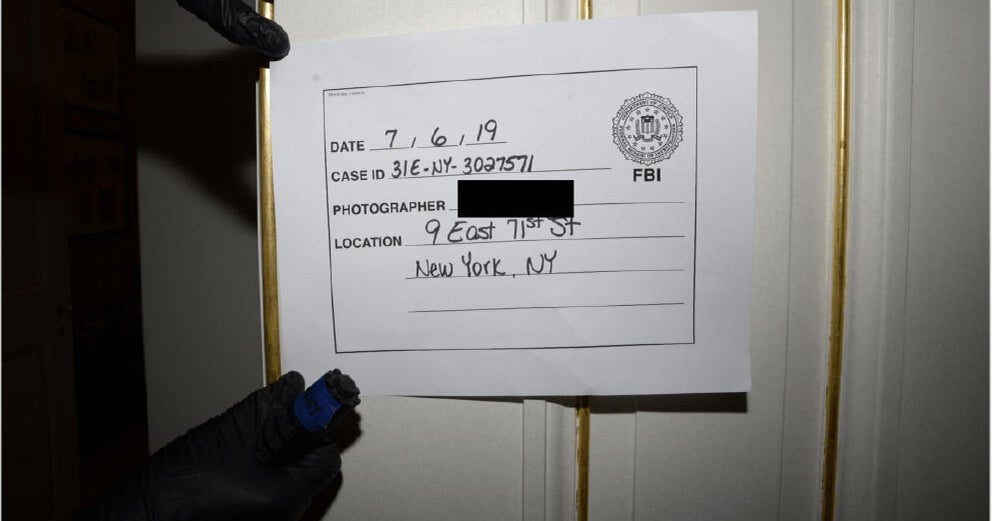
Documents in the Justice Department’s Epstein files indicate that classified material related to Jeffrey Epstein was handled by the department in March 2025, despite Attorney General Todd Blanche’s earlier statements that no files were withheld on national-security grounds. The documents do not show what the material contained or whether it was among files withheld from public release. A coding system used to organize the records also reveals gaps, including missing pages from Epstein’s financial records.
Key Facts
The Justice Department said it collected 6 million pages of Epstein-related material and released more than 3 million after reviewing the records.
Blanche said no Epstein files were being withheld or redacted on national-security grounds.
A document dated March 25, 2025, lists 16 Epstein-related items delivered to the Office of the Deputy Attorney General.
Two items on the delivery list are described as an “Epstein Transparency Project - Classified Material” and two CDs containing classified material.
An email from the FBI’s National Security Classification Operations Unit said three documents remained classified.
The email describes one document as an FBI document that is classified “when see-through”; redactions hide details about the other two and the recipient.
The records do not establish whether the email and delivery list refer to the same classified material.
A CBS News analysis of the files’ numbering system found gaps that include missing pages from Epstein’s financial records collected as evidence in a federal prosecution.
Read the Original
Want the full story? Tap a source to open the original
article.
In this opinion essay, V (formerly Eve Ensler) uses the term “psychopatriarchy” for what she describes as an authoritarian backlash against gains in women’s, civil, immigrant, workers’ and trans rights. She links the term to misogyny, concentrated wealth and power, violence, and policies and rhetoric under President Donald Trump, and cites examples ranging from abortion restrictions to military culture and conflicts abroad.
Key Facts
The author coins “psychopatriarchy” to describe what she sees as an intensified, violent form of patriarchy and a backlash against social progress.
The essay argues that a small group of wealthy men has gained influence over government, communications, artificial intelligence and policing.
The author criticizes Trump’s response to sexual-violence allegations and describes his administration’s climate as hostile to women.
The essay cites online communities that promote sexual abuse and nonconsensual deepfake pornography as examples of misogyny.
The author argues that limits on abortion care can lead to preventable deaths and points to a proposed North Carolina bill as an example of extreme policy.
The essay criticizes Defense Secretary Pete Hegseth’s emphasis on testosterone and physical readiness in the military.
The article also refers to violence in Gaza and a U.S. bombing of a girls’ school in Iran; its final sentence is cut off.
Read the Original
Want the full story? Tap a source to open the original
article.
Final results from Israel’s election were still pending on October 28, 2026, and no clear winner had emerged. Arab-led parties appeared to make a historic showing, but it remained uncertain whether other parties opposed to Benjamin Netanyahu would join them to form a parliamentary majority.
Key Facts
Final election results had not been reported as of October 28, 2026.
The election had no clear winner, according to the article.
Arab-led parties appeared to make a historic showing.
It was unclear whether other opponents of Netanyahu would form a coalition with Arab-led parties.
A coalition is an agreement among parties to govern together.
Debate over Palestinians and their descendants remains highly sensitive in Israel.
Netanyahu and Gadi Eisenkot had both pledged to form a government, according to a related report listed in the article.
Read the Original
Want the full story? Tap a source to open the original
article.
Israel’s October 27 election produced no clear winner, and neither Benjamin Netanyahu’s nor Gadi Eisenkot’s bloc has the 61 seats needed for a parliamentary majority. Coalition talks will determine who can form the next government; official results are due November 4.
Key Facts
The Knesset has 120 seats, and a government needs support from at least 61 members.
Initial counting put Likud first among individual parties, with 27 seats; Netanyahu’s bloc was projected to have 54.
Four election-night polls gave Netanyahu’s bloc 51 to 55 seats and Eisenkot’s bloc 49 to 51 seats.
Arab-led parties Ra’am and the Joint List were projected to hold a combined 16 to 19 seats, but major political figures have ruled out joining them in a coalition.
Netanyahu’s bloc includes Likud, Shas, United Torah Judaism, Religious Zionism and Otzma Yehudit.
Eisenkot’s opposition bloc includes Yashar, the Together list, Yisrael Beytenu and the Democrats.
After results are certified, the president gives a lawmaker considered likely to form a majority 28 days to assemble a government, with a possible 14-day extension.
Netanyahu remains caretaker prime minister during coalition negotiations and is standing trial on corruption charges, which he denies.
Read the Original
Want the full story? Tap a source to open the original
article.
The Federal Reserve is expected to keep interest rates unchanged at its final rate-setting meeting before the midterm elections, after raising them last month for the first time since 2023. Inflation remains above the Fed’s 2% target, with September’s annual rate reported at 3.7%; officials have indicated they may pause before considering another increase later this year.
Key Facts
The article says the Fed is expected to leave rates unchanged at its Wednesday meeting.
The Fed raised rates last month for the first time since 2023, citing rising inflation.
Inflation has remained above the Fed’s 2% target for years, according to the article.
The annual inflation rate rose from 3.4% in August to 3.7% in September.
Fed governor Christopher Waller said rate increases need not happen at consecutive meetings.
The article attributes much of this year’s price increases to the war in the Middle East and the closure of the Strait of Hormuz.
Oil prices briefly rose above $117 a barrel earlier this week, the article reports.
The economy is expected to be a major issue in the upcoming midterm elections.
Read the Original
Want the full story? Tap a source to open the original
article.
President Donald Trump faces possible clashes with Democrats and some Republicans after Election Day over Defense Secretary Pete Hegseth, the Iran war and the Russia-Ukraine war. Democrats are urging Trump to remove Hegseth and say they may oppose funding, though the article excerpt provides no further details.
Key Facts
The article anticipates disputes between Trump, Democrats and members of his party after Election Day.
The disputes concern Pete Hegseth’s leadership of the Pentagon, the Iran war and the Russia-Ukraine war.
Democrats are pressing Trump to fire Hegseth after the midterm elections.
Democrats have warned they may not support funding.
The provided article excerpt ends before specifying what funding Democrats oppose.
Read the Original
Want the full story? Tap a source to open the original
article.
Federal Reserve officials are set to decide Wednesday whether to raise interest rates. Inflation remained elevated: the consumer price index rose 3.7% over the year through September, up from 3.4% in August.
Key Facts
The Federal Reserve will consider interest rates on Wednesday.
The article says officials will decide whether to raise rates again.
Annual inflation measured by the consumer price index was 3.7% in September.
The September inflation rate was up from 3.4% in August.
The article says persistent inflation is straining Americans ahead of the midterm elections.
Read the Original
Want the full story? Tap a source to open the original
article.
At least 10 people died when two high-speed trains crashed in central Spain on Wednesday morning. The crash occurred in Toledo province, and rail service was suspended between Madrid, Ciudad Real and Andalusia.
Key Facts
At least 10 people died in the crash.
Two high-speed trains were involved.
The crash happened Wednesday morning.
The crash occurred in Toledo province, central Spain.
Rail service was suspended between Madrid, Ciudad Real and Andalusia.
France 24 published the report on October 28, 2026.
Read the Original
Want the full story? Tap a source to open the original
article.