A temporary U.S.-brokered ceasefire has brought two days of quiet to Kherson, where residents have briefly returned to streets, shops and public squares after years of Russian attacks. The pause is scheduled to end Sunday, and Ukrainian sources say Russian forces may be using it to strengthen positions near the city ahead of renewed fighting.
Key Facts
Residents described unusual quiet in Kherson since the ceasefire began Tuesday.
Social media videos showed people walking in streets and gathering in squares beneath anti-drone nets.
The ceasefire is linked to efforts by U.S. First Lady Melania Trump to arrange safe passage for civilians leaving Russian-occupied Oleshky, across the Dnipro River from Kherson.
Russian forces have been clearing mines on a road ahead of a planned Friday evacuation from Oleshky.
A local government source told the BBC that Russian forces may be bringing in supplies, weapons, ammunition and drones during the pause.
Ukraine's Center for Studying the Occupation said residents reported a Russian military build-up near Radensk, about 20 kilometers from Oleshky.
The article reported no ceasefire violations by either side since Tuesday.
Dozens of people used the pause to reach homes and belongings in Kherson's highly exposed red zone.
Read the Original
Want the full story? Tap a source to open the original
article.
Alaska’s Senate race has drawn new scrutiny after a New York Times report said Democratic operatives with ties to Mary Peltola’s campaign helped recruit a second candidate named Dan Sullivan. Peltola’s campaign and the Democratic Senatorial Campaign Committee denied recruiting him, and the report did not establish that any laws were broken. President Trump called for prosecutions, while state and House officials announced investigations and the Justice Department’s lawsuit over the race remains in court.
Key Facts
The ballot lists Republican incumbent Dan S. Sullivan and unaffiliated candidate Daniel J. Sullivan Jr., along with Mary Peltola and Republican Gerald Heikes.
Daniel J. Sullivan initially filed as a Republican and later changed his registration to undeclared.
An Alaska election official ruled in June that Daniel J. Sullivan could not run in the primary, citing concerns that his candidacy could confuse voters.
The Alaska Supreme Court ruled that election officials lacked authority to disqualify him based on concerns about his motives; it did not decide whether he intended to mislead voters.
A New York Times report cited texts, interviews and documents that it said showed Peltola-linked aides worked with Democratic operatives to recruit candidates who could draw votes from the incumbent.
Peltola’s campaign and the Democratic Senatorial Campaign Committee denied recruiting Daniel J. Sullivan.
The Justice Department sued Alaska, seeking to block certification of the Senate election if the incumbent loses by a margin potentially attributable to voter confusion between the candidates.
Alaska Gov. Mike Dunleavy ordered a state investigation on Oct. 28, and House Oversight Chair James Comer launched a congressional probe on Oct. 29.
Read the Original
Want the full story? Tap a source to open the original
article.
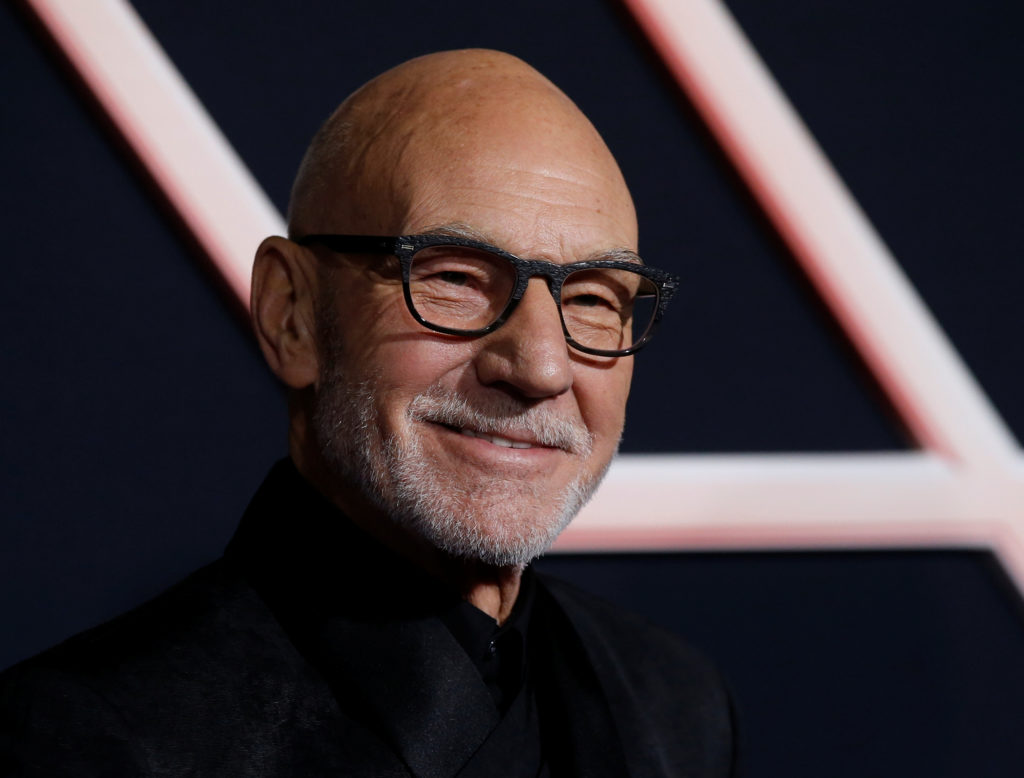
Actor Patrick Stewart died Wednesday in Los Angeles at age 86. His spokesperson said he had lived with Alzheimer’s disease and Lewy body dementia. Stewart was known for stage performances and for playing Jean-Luc Picard in “Star Trek” and Charles Xavier in the “X-Men” films.
Key Facts
Stewart was 86 when he died.
He died Wednesday in Los Angeles.
His spokesperson said he had experienced Alzheimer’s disease and Lewy body dementia.
Stewart played Captain Jean-Luc Picard in “Star Trek: The Next Generation” and related films.
He played Professor Charles Xavier in the “X-Men” films.
His stage roles included Claudius and Macbeth.
He performed in “No Man’s Land” and “Waiting for Godot” alongside Ian McKellen.
Read the Original
Want the full story? Tap a source to open the original
article.
Chancellor John Healey said he had not set a timetable for reducing welfare spending, despite earlier remarks that the benefits bill would fall. The Institute for Fiscal Studies estimated that the government needs an additional £28bn a year to account for inflation and meet its defence spending target, warning that current plans could lead to tight departmental budgets and possible real-term cuts.
Key Facts
The IFS said the government needs to set aside an additional £28bn a year to account for inflation and reach defence spending of 3% of GDP by 2030.
IFS director Helen Miller warned that some departments could face real-term budget cuts under a future spending review.
Healey said the government must bring down the benefits bill but later clarified that it had set no timetable for doing so.
The spending review will focus on departmental budgets and will not include the welfare bill.
Reviews led by Alan Milburn and Stephen Timms will examine employment support for young people and disability benefits.
The Office for Budget Responsibility forecast welfare spending would rise from £334bn last year to £431bn by 2030.
The OBR's overall welfare spending forecast has increased by £8bn since March.
Healey said Brexit had reduced UK growth and trade, but said he did not expect to see the UK rejoin the European Union in his lifetime.
Read the Original
Want the full story? Tap a source to open the original
article.
French prosecutors say a 39-year-old man charged with murder and attempted murder admitted targeting people he believed appeared Muslim, African or North African. One person was killed and seven were injured in shootings in Trappes and La Verrière, west of Paris.
Key Facts
The suspect, identified as Kevin T, was formally charged in connection with a terrorist enterprise.
Prosecutor Olivier Christen said Kevin chose the location because he considered it a “hotbed for Islamists.”
The shooting took place last Friday as the attacker fired from a car in Trappes and La Verrière.
Pengo Bossio Wangi, a 26-year-old French citizen of Congolese heritage, was killed; seven other people were injured, including a child.
Kevin said he felt no regret but did not intend to kill children, according to the prosecutor.
Authorities found weapon components, brass knuckles, a bayonet and a silencer during a search of Kevin’s home.
Police also found copies of Mein Kampf, the Quran and the Bible, as well as stickers celebrating the far-right National Rally party.
Prosecutors said Kevin acquired weapon components, a police armband and handcuffs in September and had prepared extensively.
Read the Original
Want the full story? Tap a source to open the original
article.
Social Security’s main trust fund is projected to run out in late 2032, after which benefits could be cut by more than 20% without changes. The article says the funding outlook has become an issue in several midterm election races, where candidates have proposed options including eliminating the cap on income subject to Social Security payroll taxes.
Key Facts
The latest trustees’ report projects depletion of Social Security’s main trust fund by late 2032.
Without action, beneficiaries could face benefit cuts of more than 20% after the fund is depleted.
The article attributes the funding pressure largely to an aging population, with more people claiming benefits relative to the number of workers paying into the program.
The Social Security payroll tax rate is 12.4%, split equally between workers and employers.
In 2026, the article says the payroll tax applies to earnings up to $184,500; earnings above that limit are exempt.
In a Michigan Senate debate, Republican Mike Rogers emphasized eliminating fraud, while Democrat Abdul El-Sayed supported removing the income cap.
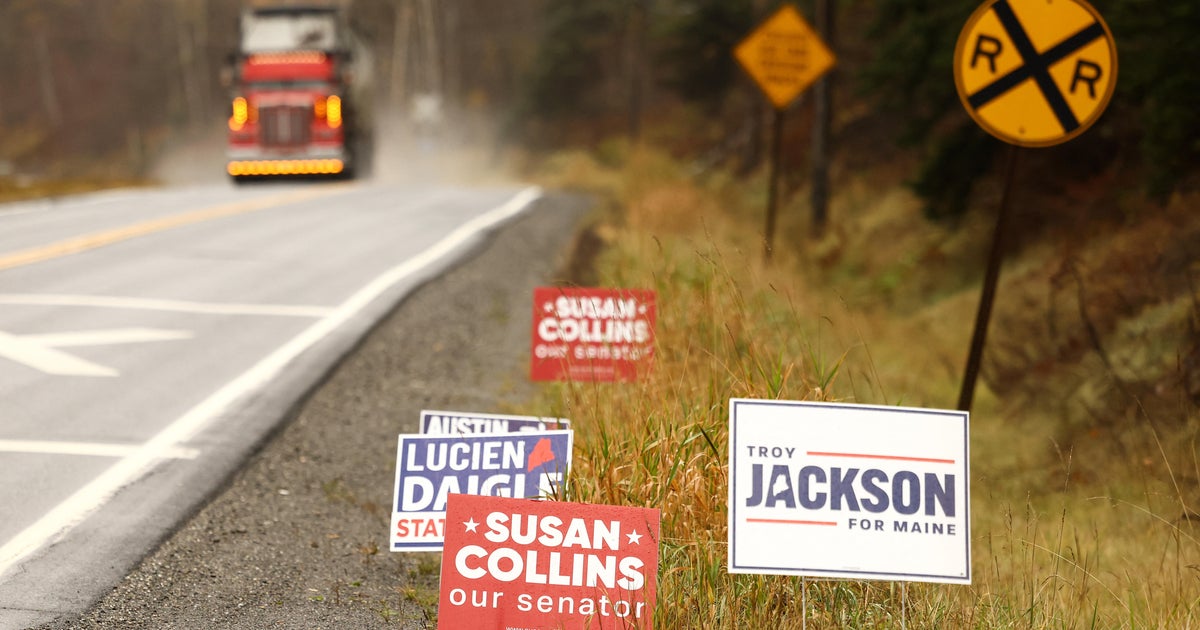
Maine Senate candidates Susan Collins and Troy Jackson have each proposed ways to stabilize Social Security; Jackson supports eliminating the income cap.
A September AARP poll found that 81% of surveyed likely Maine voters aged 50 and older said Social Security would factor into their vote.
Read the Original
Want the full story? Tap a source to open the original
article.
Actor Patrick Stewart, known for “Star Trek” and the “X-Men” films, has died at 86, his family announced Thursday. A statement shared on his social media said he had experienced a “brief and poignant journey” with Alzheimer’s disease and Lewy body dementia.
Key Facts
Stewart was 86 when he died.
His family announced his death on Thursday, October 29, 2026.
Stewart was known for roles in “Star Trek” and the “X-Men” film franchise.
A statement shared on his social media said he had Alzheimer’s disease and Lewy body dementia.
The statement described his illness as a “brief and poignant journey.”
Read the Original
Want the full story? Tap a source to open the original
article.
Actor Patrick Stewart, known for playing Jean-Luc Picard in Star Trek and Professor Charles Xavier in the X-Men films, has died at 86. His spokesperson said he died at his Los Angeles home on Wednesday after living with Alzheimer’s disease and Lewy body dementia.
Key Facts
Stewart’s spokesperson, Kelly Bush Novak, described his illness as a brief journey with Alzheimer’s disease and Lewy body dementia.
Stewart’s family asked people to donate to the Johns Hopkins Alzheimer’s Disease Research Center Fund or the Alzheimer’s Foundation of America Caregiver Resources in his memory.
Before his screen fame, Stewart performed Shakespeare and was a member of the Royal Shakespeare Company.
He played Captain Jean-Luc Picard for seven seasons of Star Trek: The Next Generation, in four films, and in Star Trek: Picard.
Stewart also played Professor Charles Xavier across the X-Men film franchise.
His other credits included Excalibur, Dune, Logan, The Lion in Winter, Blunt Talk, and American Dad!.
Stewart is set to reprise Professor X in Avengers: Doomsday, scheduled for release on December 18.
Read the Original
Want the full story? Tap a source to open the original
article.
Actor Patrick Stewart, known for his roles in the “Star Trek” and “X-Men” franchises and his stage career, has died at 86. A post on his social media channels said he died at home Wednesday with his wife, Sunny, at his side, after living with Alzheimer’s disease and Lewy body dementia.
Key Facts
Stewart was 86.
His spokesperson confirmed his death.
He died at home on Wednesday with his wife, Sunny, beside him.
A social media post said he had been living with Alzheimer’s disease and Lewy body dementia.
Stewart was known for roles in the “Star Trek” and “X-Men” franchises.
He also had a prolific stage career.
Read the Original
Want the full story? Tap a source to open the original
article.
A federal judge in Boston blocked a Trump administration Medicaid rule that required some chronically ill people to prove their conditions significantly impaired their ability to meet work requirements to qualify as medically frail. The judge’s partial ruling came in a lawsuit filed by 25 states and the District of Columbia, which argued the rule went beyond a 2025 law.
Key Facts
U.S. District Judge Richard Stearns issued the ruling Thursday.
The lawsuit challenges guidance from the Centers for Medicare and Medicaid Services.
The 2025 law includes blind or disabled people, people with substance use or disabling mental disorders, and people with certain serious conditions in the definition of medically frail.
The administration’s guidance required those people to show their condition also significantly impaired their ability to comply with work requirements.
The coalition of 25 states and the District of Columbia sued the Trump administration in June.
The states argued the stricter requirement could keep eligible Americans from getting needed care and exceeded the law’s wording.
Read the Original
Want the full story? Tap a source to open the original
article.
More than 43 million people have voted early in the U.S. midterm elections, with daily voting reaching four to five million ballots. Early voting is especially high in Texas and among Hispanic voters in some states, though the available data covers only states that collect party or race information from voters.
Key Facts
University of Florida Election Lab data shows more than 43 million ballots have been cast early.
Voters have cast about four to five million early ballots per day, a faster pace than in most previous elections.
Texas has recorded more than 5.8 million early votes, about 1.75 million more than its total at the same point in 2022.
Early voting has increased among Democrats and voters without a party affiliation in states that track party registration; Republican totals are generally similar to 2022.
Among early ballots in states that track party affiliation, 44% came from Democrats, 31.2% from Republicans and 24.7% from unaffiliated voters.
North Carolina, Georgia and Florida data show higher early voting among Hispanic and Black voters than in 2022, while white voter numbers are similar.
In the 2020 election, more than two-thirds of ballots were cast early, and half of those early ballots were mailed.
States will end early voting at different times before Election Day, which is Tuesday, November 3.
Read the Original
Want the full story? Tap a source to open the original
article.
Ohio’s U.S. Senate race between Republican Jon Husted and Democrat Sherrod Brown appears close, and third-party candidates could affect the result. A new PAC is promoting Libertarian William B. Redpath, while political analysts say third-party votes may draw support from either major-party candidate.
Key Facts
Ohio voters are scheduled to vote in the Senate race on November 3.
The ballot also lists Libertarian William B. Redpath and independent Gregory Levy, who is affiliated with the Party for Socialism and Liberation.
Buckeye Freedom PAC formed this month, endorsed Redpath, and posted an ad urging voters to support him.
The article says another super PAC has tried to boost Levy’s candidacy.
University of Akron professor David Cohen said Libertarian candidates tend to draw votes from Republicans, while candidates associated with socialism tend to draw votes from Democrats.
Bowling Green State University professor Robert Alexander said he sees more potential Republican vote leakage and discontent among independent voters.
A Suffolk University poll of 500 likely voters, conducted October 21–26, showed Brown leading Husted 47 percent to 44 percent.
Read the Original
Want the full story? Tap a source to open the original
article.
Experts warn that AI tools make it easier to create realistic fake images, videos and audio, which can be used in scams and political disinformation. They say many people struggle to identify audio deepfakes, while AI-generated political ads have increased sharply ahead of the 2026 midterm elections.
Key Facts
Doppel reported that only 8% of people in one test recognized that an AI agent was calling them; 92% thought they were speaking with a human.
Experts say deepfakes can imitate the voices and likenesses of public figures, friends or relatives.
PolitiFact reported that an AI-manipulated video in Texas falsely depicted a former student accusing Senate candidate James Talarico of sexual misconduct.
The Wesleyan Media Project reported that campaigns had spent more than $137 million on at least 220 AI-generated ads by mid-October.
The Wesleyan Media Project identified less than $50,000 in spending on AI-generated ads during the 2024 election cycle, according to its co-director.
The project’s co-director said most of the AI-generated ads it tracked did not disclose that they used AI.
Veriff reported a 300% increase in deepfake-related fraud attempts against businesses in 2026 compared with 2025.
A Veriff expert advised people who receive suspicious requests to hang up and verify the caller through a known phone number or another channel.
Read the Original
Want the full story? Tap a source to open the original
article.
Former Justice Department officials say the department’s recent public investigative steps involving Democratic politicians and former FBI officials, taken weeks before the midterm elections, depart from long-standing practices meant to avoid influencing elections. The department says it is following facts and law, while some cases have faced setbacks in court or before a grand jury.
Key Facts
The Justice Department searched Rep. Ilhan Omar’s home as part of an investigation involving accusations of immigration fraud.
Virginia state Sen. L. Louise Lucas and her daughter, Lisa Lucas-Burke, were indicted on drug and bribery-related charges tied to an alleged scheme involving Lucas’s cannabis business.
Former FBI officials Nikki Floris and Bradley Benavides were charged with lying to Congress about their roles in the Hunter Biden laptop investigation.
A magistrate judge rejected new charges prosecutors sought to add in the case against Floris and Benavides and criticized the government.
An FBI agent said the probe into Floris and Benavides began at FBI Director Kash Patel’s request after President Trump called for an investigation of former counterintelligence officials.
Prosecutors took steps to bring another case against former FBI Director James Comey, saying the timing was tied to a statute of limitations deadline.
A grand jury rejected proposed charges against former White House aide Cassidy Hutchinson over her testimony to the House committee investigating the Jan. 6 attack on the Capitol.
The Justice Department said it was following the facts and the law, not a political timetable.
Read the Original
Want the full story? Tap a source to open the original
article.
At its National Conference, eClinicalWorks announced a redesigned electronic health record system, new AI tools, and plans to expand into hospital and pharmacy software. CEO Girish Navani projected that the redesign could improve customer efficiency by 30% within about a quarter, while the company plans to include some AI features in standard upgrades at no extra charge.
Key Facts
The upcoming 12.04 release will introduce Canvas for Care, a workspace that combines patient information, AI-generated summaries, and suggested actions.
The AI Workbench lets organizations build automated agents for tasks such as referrals and revenue-cycle management.
The Workbench includes tests for agents before deployment and alerts staff when technical problems require human intervention.
eClinicalWorks is developing an inpatient EHR for community and critical access hospitals; four hospitals are preparing to implement it.
A new pharmacy platform links prescribing and inventory management with pharmacy operations and patient records.
The company says it expects to exceed $1.3 billion in revenue this year and serves more than 180,000 providers.
The article also reports that the Department of Health and Human Services finalized the HTI-5 rule, which aims to reduce regulatory burdens on health IT developers.
Read the Original
Want the full story? Tap a source to open the original
article.
Vice-President JD Vance sent Iran a letter proposing renewed diplomacy, with nuclear commitments from Tehran tied to U.S. sanctions relief and reopening the Strait of Hormuz. Iran has yet to reply and disputes the order of steps, while officials and lawmakers warn that a renewed U.S. attack could trigger wider regional conflict.
Key Facts
Vance sent the letter on Sunday to Mohsen Rezaei, secretary of Iran’s Supreme National Security Council, after mediation led mainly by Qatar.
The proposal calls for Iran to make nuclear commitments at the start of negotiations, with a process to reopen the Strait of Hormuz within seven days in exchange for U.S. sanctions relief.
Iran is reluctant to make irreversible nuclear concessions before receiving U.S. measures, such as relief on oil-export sanctions, that it considers reliable.
Iranian negotiator Mohammad Ghalibaf said progress requires agreement to Iran’s seven conditions, which include lifting sanctions and ending the war on all fronts.
Iran has proposed diluting its highly enriched uranium stockpile so it cannot be used to make a nuclear weapon, and has resisted the return of UN nuclear inspectors.
The article says Iran has plans to retaliate against U.S. interests by targeting Gulf infrastructure, including desalination plants, internet cables and electricity grids.
Senator Chris Murphy said a U.S. military plan for renewed attacks could cause devastating escalation and undermine the U.S. commitment to the rule of law.
Read the Original
Want the full story? Tap a source to open the original
article.
A federal judge blocked a Trump administration rule requiring some chronically ill Medicaid recipients to show that their conditions significantly limit their ability to meet new work requirements before they can qualify as medically frail. The ruling does not overturn the work requirements or two other federal rules on verifying medical frailty.
Key Facts
U.S. District Judge Richard Stearns in Boston issued the ruling on Thursday.
A coalition of 25 states and the District of Columbia sued over guidance from the Centers for Medicare and Medicaid Services.
The 2025 law defines medically frail groups to include people who are blind or disabled, have substance use or disabling mental disorders, or have certain serious medical conditions.
The judge said the states showed that the stricter rule could cause harm through costly changes to their eligibility systems.
The ruling leaves the Medicaid work requirements in place.
Stearns upheld rules requiring states to reject medical-frailty diagnoses more than a year old and allowing only one self-attestation during a continuous enrollment period.
Starting Jan. 1, Medicaid expansion enrollees ages 19 to 64 must document at least 80 monthly hours of work or community service, or attend school at least half time, unless an exception applies.
Read the Original
Want the full story? Tap a source to open the original
article.
Washington Secretary of State Steve Hobbs responded Wednesday to a Department of Justice request involving ballots cast by hundreds of people the federal government identified as alleged non-U.S. citizens. Hobbs said officials should not set aside ballots without individualized proof that a voter is ineligible.
Key Facts
The Department of Justice asked Hobbs to direct Washington election officials to set aside certain ballots.
The request concerns ballots from hundreds of people the federal government identified as alleged non-U.S. citizens.
Hobbs replied to the DOJ on Wednesday.
Hobbs said officials need individualized proof of ineligibility before setting aside ballots.
The article describes the people identified by the federal government as alleged noncitizens.
Read the Original
Want the full story? Tap a source to open the original
article.
A France 24 program examines the Michigan Senate race between Democrat Abdul El-Sayed and Republican Mike Rogers, focusing on attacks on El-Sayed’s Muslim identity and the role of religion in the campaign. It also considers whether voters will focus more on identity or on economic issues such as tariffs and inflation, and how the race reflects shifts within both parties ahead of the midterms.
Key Facts
Donald Trump called El-Sayed a jihadist, according to the article.
El-Sayed is seeking to become the first Muslim elected to the U.S. Senate.
El-Sayed’s Republican opponent is former Congressman Mike Rogers.
El-Sayed campaigned as a Democratic Socialist and won the Democratic primary.
Barack Obama and moderate Democrats have appeared in support of El-Sayed during the closing days of the campaign.
The program discusses whether Michigan voters will prioritize religion and identity or economic concerns such as tariffs and inflation.
Michigan is a swing state and a center of the U.S. auto industry.
Read the Original
Want the full story? Tap a source to open the original
article.
Cornell faculty began a non-binding no-confidence vote on university leadership over its handling of a lawsuit alleging a 2024 gang rape at a fraternity house. The vote is expected to run through November 6, amid calls for President Michael Kotlikoff to resign and scrutiny of the university’s response.
Key Facts
The lawsuit says a female student identified as Jane Doe was drugged and raped by seven male students at a fraternity house in 2024.
Cornell initially shut down the fraternity and suspended the accused students; two were later expelled.
Faculty began the no-confidence vote on Thursday after debating whether to delay it.
Lead faculty sponsor Paul Ortiz said students, staff, faculty and alumni had raised concerns about the case and other possible incidents.
Twenty female faculty members in science and engineering called on Kotlikoff to resign in a letter to university trustees.
Kotlikoff apologized for the harm Jane Doe suffered and said he was appalled that the alleged assault occurred within the Cornell community.
Two accused men have asked a court to remove New York Attorney General Letitia James from oversight of the renewed criminal probe, citing her earlier social media posts supporting the accuser.
A judge appeared skeptical of one of the challenges to James’s role, according to the article.
Read the Original
Want the full story? Tap a source to open the original
article.