A federal judge has ordered the Justice Department (DOJ) to clearly state whether the Trump administration's $1.8 billion "Anti-Weaponization Fund" is still active. The DOJ has not provided a written statement confirming the fund is no longer moving forward, despite Acting Attorney General Todd Blanche’s testimony saying it remains important.
Key Facts
Judge Leonie Brinkema wants the DOJ to formally confirm if the $1.8 billion fund is dead or active.
The DOJ refused to provide a signed declaration about the fund's status.
Acting Attorney General Blanche testified to Congress that the fund remains important.
The fund was announced by the DOJ in May to compensate people allegedly targeted unfairly under the Biden administration.
The fund was proposed as part of a deal for President Trump to drop lawsuits against the IRS and claims related to the Russia investigation and the 2022 Mar-a-Lago search.
The proposal sparked bipartisan concerns over using taxpayer money to pay people connected to the January 6, 2021, Capitol attack.
Judge Brinkema suggested Blanche might need to answer more questions about the fund in a deposition.
Read the Original
Want the full story? Tap a source to open the original
article.
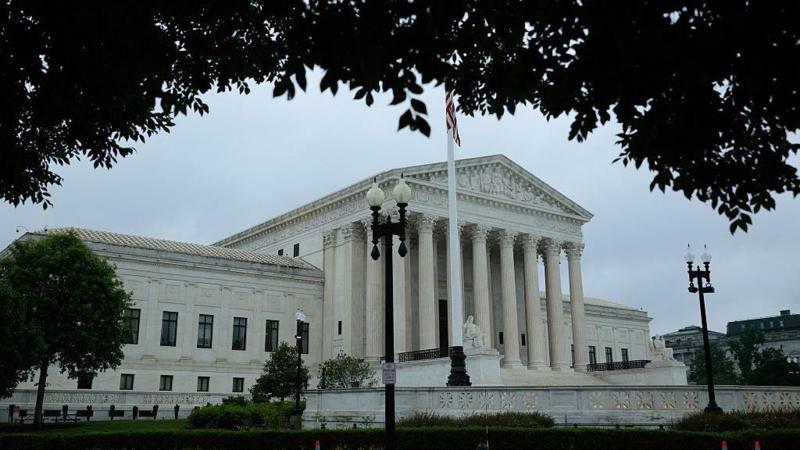
The US Supreme Court ruled 6-3 that Hawaii cannot stop people with gun permits from carrying handguns on private property open to the public without the property owner's permission. The court said this rule goes against the Second Amendment, which protects the right to carry guns for self-defense.
Key Facts
The Supreme Court struck down Hawaii's rule that required gun permit holders to get permission to carry guns in places like restaurants and malls.
The rule was called a "vampire rule" because it limited where people with guns could go.
Carrying a gun without permission in Hawaii was a crime punishable by up to one year in jail.
The ruling affects states with similar laws to Hawaii, including California, New York, New Jersey, and Maryland.
The court said the rule made it hard for permit holders to protect themselves in daily life.
The decision does not change other Hawaii gun rules about bars, beaches, schools, or government buildings.
The case began in 2023 when state residents and a gun group challenged the rule.
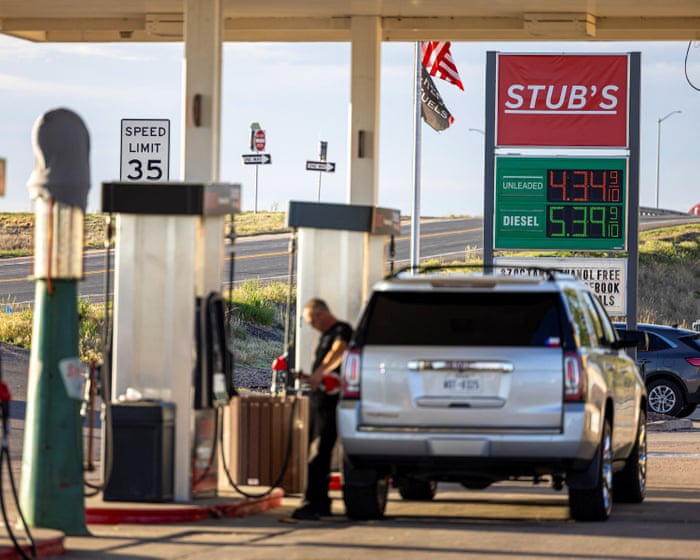
The Trump administration supported the gun owners, saying the rule put them at risk during everyday activities like filling gas.
Read the Original
Want the full story? Tap a source to open the original
article.
Israeli forces killed at least two Palestinians in separate shootings in the occupied West Bank and Gaza Strip. The violence came amid continuing Israeli military raids and settler attacks, despite a ceasefire agreement in Gaza.
Key Facts
Mustafa Taha Mustafa al-Khatib, 32, was shot dead by Israeli forces during a home raid in Salfit, West Bank.
Al-Khatib had returned from Jordan two years ago and had no known ties to armed groups.
Israeli troops delayed ambulance access to al-Khatib for nearly two hours and left his body inside the house.
Another Palestinian, Mohammad Nazem Zayed, was killed by Israeli undercover agents in Yabad, West Bank.
In Gaza, one Palestinian was killed and two injured in Israeli military actions despite a ceasefire since October 10, 2025.
The Palestinian Health Ministry says over 1,000 Palestinians have been killed and more than 3,300 injured in Gaza since the war began in October 2023.
Violence in the West Bank has increased, with 72 Palestinians killed in 2025, including children, women, and elderly people.
Israeli settlers attacked Palestinian homes with stones after removal of an outpost near Hebron.
Read the Original
Want the full story? Tap a source to open the original
article.
Israeli forces arrested Dr. Mazen Al-Rantisi, a 71-year-old Palestinian doctor known for helping poor communities, during a raid on his home in the West Bank. He is being questioned by Israeli authorities, but no reason for his detention has been given. His arrest has caused concern among Palestinians and human rights groups about access to medical care and pressure on Palestinian civil institutions.
Key Facts
Dr. Mazen Al-Rantisi was arrested at his home in the al-Tira area of Ramallah before dawn.
He is known as the “doctor of the poor” for providing free or low-cost medical care to low-income Palestinians.
He leads the Union of Health Work Committees, a Palestinian group running clinics in rural areas.
Israel declared this Palestinian health organization illegal in 2020 and closed its headquarters in 2022.
The Union remains registered with the Palestinian Authority despite Israeli actions.
His arrest has sparked social media support using the hashtag #FreedomForDrMazenAlRantisi.
Human rights groups warn this detention harms medical access and represents pressure on Palestinian civil society.
Israeli authorities have not disclosed the charges or current location of Dr. Al-Rantisi.
Read the Original
Want the full story? Tap a source to open the original
article.
A small study tested immunotherapy to help women with premature menopause due to autoimmune disease. The treatment helped some women’s ovaries start working again, leading to the birth of healthy babies in a few cases.
Key Facts
Premature ovarian insufficiency (POI) causes the ovaries to stop working before age 40 and affects over 3% of women worldwide.
The study involved 12 women with autoimmune-related POI; 10 completed the treatment.
Before treatment, none of the women’s ovaries produced mature eggs.
Researchers used rituximab, a drug that calms immune cells, to try to restore ovarian function.
After treatment, 6 out of 10 women showed ovarian activity, and 5 had mature eggs collected.
Three women had embryos implanted and gave birth to healthy babies.
All women who responded also had Addison’s disease, suggesting the treatment may work best for certain groups.
The study was small and exploratory, and more research is needed before this can become a common treatment.
Read the Original
Want the full story? Tap a source to open the original
article.
Two strong earthquakes, measuring 7.2 and 7.5 in magnitude, hit northern Venezuela near Caracas, causing buildings to collapse and forcing many residents to flee their homes. Emergency teams are searching for survivors, and the death toll has reached at least 164, with many people injured or displaced.
Key Facts
Two earthquakes struck within one minute shortly after 6 pm local time near Caracas on Wednesday.
The quakes measured 7.2 and 7.5 in strength, Venezuela’s strongest since 1900.
Several buildings collapsed in wealthy neighborhoods like Los Palos Grandes and Altamira.
Working-class areas such as Catia were also heavily damaged, with many homes destroyed.
The death toll rose to 164 by Thursday morning, and more deaths are expected.
The international airport in La Guaira sustained major damage and was closed.
Emergency workers, volunteers, and families searched through rubble for survivors.
Many residents spent the night outside due to fear of further building collapses.
Read the Original
Want the full story? Tap a source to open the original
article.
Florida Governor Ron DeSantis announced that the "Alligator Alcatraz" immigration detention center in the Florida Everglades will close after nearly one year of operation. The center was meant to be temporary, and federal officials now have enough resources to manage immigration detention elsewhere.
Key Facts
The detention center is located in the Florida Everglades and is nicknamed “Alligator Alcatraz.”
It was built quickly in 2025 by Governor DeSantis’ administration.
President Donald Trump visited the site during its operation.
The center was intended as a temporary facility for detaining and deporting people in the country illegally.
Governor DeSantis said about 21,000 people were deported through this center.
The center closed temporarily in June due to hurricane season safety concerns, with all detainees moved to other locations.
Immigration advocates criticized the conditions, mentioning problems like poor sanitation, pests, and limited legal access.
DeSantis and President Trump described the center as important for enforcing immigration laws.
Read the Original
Want the full story? Tap a source to open the original
article.
California will ban the use of "sell by" and similar unclear date labels on food starting July 1 under Assembly Bill 660. Instead, food products sold in the state must use only two clear labels: "Best if used by" for quality and "Use by" for safety, aiming to reduce confusion, food waste, and help consumers save money.
Key Facts
The new law starts on July 1 and applies only to food made on or after that date.
Only two date labels are allowed: "Best if used by" (or "BB") for quality, and "Use by" (or "UB") for safety.
"Sell by," "Expires on," and other non-standard phrases will not be permitted.
The law does not require all foods to have date labels, only regulates the wording if they appear.
Certain products like infant formula, eggs, alcohol, and shellfish are excluded because they have separate rules.
The bill was authored by Assemblymember Jacqui Irwin and received bipartisan support.
California residents discard about six million tons of food annually, partly due to label confusion.
Food waste in landfills produces methane gas, a harmful contributor to climate change.
Read the Original
Want the full story? Tap a source to open the original
article.
President Donald Trump has said he will not sign a major housing affordability bill until Congress passes the SAVE America Act, which focuses on voter ID laws. The Senate will not consider the SAVE Act before mid-July due to an agreed recess.
Key Facts
The 21st Century Road to Housing Act passed the Senate 85-5 and the House 358-32, aiming to lower housing costs.
President Trump canceled the bill signing event, demanding the passage of the SAVE America Act first.
The SAVE America Act would add stronger voter ID requirements.
Critics say the SAVE Act could exclude many Americans from voting.
Senate Majority Leader John Thune arranged a recess until July 13, with no votes or debates planned before then.
Some senators, including Senator Mike Lee, are frustrated the SAVE Act is delayed.
Senator Elizabeth Warren called Trump’s veto decision surprising and harmful to families.
Senate Republicans hope President Trump will eventually sign the housing bill.
Read the Original
Want the full story? Tap a source to open the original
article.
Kenya marked the second anniversary of protests that turned deadly in 2024. On June 25, 2024, young people protested against economic problems and corruption, and some stormed the parliament. Each year, people hold marches to remember those who died and to show frustration with President William Ruto.
Key Facts
The protests happened on June 25, 2024, led mainly by young people.
Demonstrators were opposing economic hardship and corruption in Kenya.
Protesters stormed the Kenyan parliament during these events.
People killed during the protests are remembered in annual marches.
The marches also express ongoing frustration with President William Ruto’s leadership.
The protests and their anniversary receive coverage from international news sources like France 24 and AFP.
The issues behind the protests include economic challenges and political concerns.
Police brutality was reported during the protests.
Read the Original
Want the full story? Tap a source to open the original
article.
Homeowners in the U.S. currently have large amounts of home equity they can borrow against. A $100,000 home equity loan now costs between about $900 and $1,160 per month, which is cheaper than earlier this year and generally less expensive than using credit cards or personal loans.
Key Facts
The average home equity loan interest rate is 6.98% as of June 25, 2026.
Monthly payments for a $100,000 loan are about $1,160 for 10 years or $898 for 15 years at this rate.
Earlier in 2026, rates were higher (around 8.1-8.2%), making monthly payments more expensive.
Home equity loans have a fixed interest rate, so monthly payments stay the same during the loan term.
Borrowers must keep at least 20% equity in their home when borrowing.
The home serves as collateral, meaning the lender can take it if the loan is not repaid.
Home equity loans provide a lump sum that can be used for major expenses or to pay off higher-interest debts.
Borrowers can refinance their loans if interest rates decrease in the future.
Read the Original
Want the full story? Tap a source to open the original
article.
The US Supreme Court ruled that government officials can block asylum seekers at the southern border if they have not yet entered the United States. This decision allows the Trump administration to restart a policy called “metering,” which limits the number of people allowed to apply for asylum at the border.
Key Facts
The Supreme Court ruled 6-3 in favor of allowing border agents to turn away asylum seekers outside US soil.
“Metering” is a policy where immigration agents physically block asylum seekers from crossing the border.
Justice Samuel Alito wrote that people waiting in Mexico have not “arrived in the United States” and so cannot legally demand asylum.
The ruling reversed a lower court’s decision that had outlawed “metering.”
The policy existed under President Obama but was formalized and expanded by President Trump during his first term.
President Biden ended the metering practice in 2021.
Justice Sonia Sotomayor dissented, arguing the ruling allows the government to avoid legal asylum protections.
The ruling also followed another decision allowing the Trump administration to revoke Temporary Protected Status from some Haitian and Syrian nationals living in the US.
Read the Original
Want the full story? Tap a source to open the original
article.
Western intelligence agencies warn that advanced artificial intelligence (AI) is speeding up cyberattacks on critical infrastructure like power grids and hospitals. The U.S. government has limited access to some AI models to prevent their misuse in hacking, and allied countries issued a joint warning about growing AI-driven cyber risks.
Key Facts
The U.S. restricted access to advanced AI models from Anthropic due to concerns about misuse in cyberattacks.
The Five Eyes alliance (U.S., UK, Canada, Australia, New Zealand) issued a joint advisory on June 22, 2026, about AI’s increasing role in cyber threats.
AI can identify software weaknesses faster and help attackers plan and launch cyberattacks more quickly than before.
Cyberattacks targeting critical sectors like healthcare, energy, and transportation increased, with AI making attacks easier and more scalable.
Infrastructure like power grids and water systems is more vulnerable as these systems connect to the internet.
AI tools can scan many internet-connected devices at once to find security gaps that hackers can exploit.
Experts say AI shifts the advantage to attackers by reducing the time from finding a weakness to attacking it.
U.S. officials now treat some advanced AI systems as national security issues and apply export controls to them.
Read the Original
Want the full story? Tap a source to open the original
article.
The Federal Reserve’s preferred inflation measure rose to its highest level in three years in May due to higher gas prices and costs for computer parts used in AI technology. Inflation reached 4.1% over the past year, pushing the Fed to keep interest rates steady while some experts think rates might rise later this year.
Key Facts
Inflation increased 4.1% in May compared to one year earlier, the largest rise since April 2023.
Monthly inflation was 0.4% in May, the same as April, down from 0.7% in March.
Rising gas prices and more expensive computer chips helped drive up inflation.
The Federal Reserve has kept interest rates steady this year after planning rate cuts in January.
New Fed chair Kevin Warsh confirmed the goal to reduce inflation to 2% but did not specify new actions.
Some economists predict the Fed might raise interest rates again this year.
Gas prices peaked near $4.50 a gallon in May before falling to about $3.92, still over 20% higher than last year.
Consumer spending and incomes rose slightly after adjusting for inflation in May.
Read the Original
Want the full story? Tap a source to open the original
article.
A new report analyzed about 2,500 Amazon products and found that most Prime Day discounts were not the lowest prices these items had ever reached. Less than 13 percent of products dropped to a new low price during the event, suggesting many deals were similar to or higher than previous discounts.
Key Facts
The report examined Amazon product prices from May 22 to June 23, 2026.
Only 12.5 percent of discounted products hit a new lowest price on Prime Day.
About 44.7 percent matched previous promotional lows, meaning prices were not new discounts.
Around 42.8 percent of deals were actually higher than earlier low prices.
Certain categories, like Movies & TV and Toys & Games, had many deals that weren’t genuine price drops.
Categories such as Health & Personal Care and Beauty showed better-quality discounts.
Experts advise shoppers to compare prices and use price tracking tools to find true bargains.
The data covers only products with usable price history and may not represent all Amazon products.
Read the Original
Want the full story? Tap a source to open the original
article.
Fighting in western Sudan’s Darfur region forced thousands of people to flee to eastern Chad. Many displaced families live without shelter, food, or water while facing harsh conditions and ongoing danger.
Key Facts
On June 15, the Rapid Support Forces (RSF) launched an attack in the Orchi area of North Darfur, Sudan.
The attack destroyed ten villages, including homes, markets, and livestock.
Thousands of people fled across the border into Chad, where they stay in refugee camps with minimal shelter.
Essential resources like food, water, and medicine are scarce or unavailable.
The destruction of the Orchi water reservoir cut off water supplies to the region.
Displaced families survive by eating tree leaves and using contaminated water found in puddles.
Drones patrol the area, continuing to target water sources, livestock, and homes, preventing people from returning.
Many children and mothers suffer from hunger and exhaustion in the refugee camps.
Read the Original
Want the full story? Tap a source to open the original
article.
When someone dies, their unpaid medical bills do not automatically become the responsibility of family members. Instead, these debts are paid from the person’s estate, and family members only pay if they co-signed the bills, live in certain states, or under specific laws.
Key Facts
Unpaid medical bills become claims against the deceased person's estate, not the family directly.
The estate’s executor pays valid debts from the estate before giving money to heirs.
Medical debt is "unsecured," so it is lower priority compared to funeral costs, taxes, and other debts.
If the estate lacks enough money, unpaid medical bills may go unpaid and usually end there.
Family members who co-signed medical bills are responsible for paying them.
In community property states, a surviving spouse may be liable for medical bills incurred during the marriage.
Some states have laws that can require adult children to pay for an elderly parent's medical or long-term care costs.
States may recover Medicaid costs for nursing home or home care through estate recovery, often by claiming property.
Read the Original
Want the full story? Tap a source to open the original
article.
Senator Bill Cassidy of Louisiana changed his vote on a bill that would limit President Trump's authority to take military action in Iran. He decided to change after receiving a briefing from a Middle East envoy during a tense meeting with President Trump.
Key Facts
Senator Bill Cassidy initially supported a measure led by Democrats to restrict President Trump's war powers in Iran.
He changed his vote after getting a briefing from Middle East envoy Steve Witkoff.
Cassidy passed a note during a heated meeting with President Trump asking for the briefing.
Cassidy told this story during an interview on "Face the Nation."
The interview was with moderator Margaret Brennan and aired on CBS News.
The bill aimed to limit the president’s authority to act militarily in Iran without Congress’s approval.
Cassidy’s change shows the impact of receiving more information before making a decision.
Read the Original
Want the full story? Tap a source to open the original
article.
Justice Sonia Sotomayor strongly disagreed with a Supreme Court decision that allowed the Trump administration to bring back a border policy. This policy lets officials block some asylum seekers who do not cross the border physically to enter the United States.
Key Facts
The Supreme Court ruled in favor of reviving a Trump-era immigration policy.
The policy blocks certain asylum seekers if they did not cross the southern border physically.
Justice Sotomayor issued a strong dissent, expressing serious concerns.
She warned that the decision could lead to more deaths among migrants.
Sotomayor is the most senior liberal justice on the Supreme Court.
The policy was originally introduced during President Trump’s time in office.
The court’s decision changes how asylum seekers are processed at the border.
Read the Original
Want the full story? Tap a source to open the original
article.
There is speculation that Taylor Swift and Travis Kelce might hold their wedding at Madison Square Garden (MSG) in New York City during the July Fourth weekend. A permit to close streets near MSG has been filed for that time, and some sources, including city officials, hinted the venue could host the event, but no official confirmation exists.
Key Facts
Taylor Swift and Travis Kelce got engaged last August.
A permit was filed to close streets near Madison Square Garden for an event on July Fourth weekend.
A city official suggested MSG may host their wedding.
New York City Mayor Zohran Mamdani mentioned the wedding might happen during the July 4th holiday weekend.
MSG's design offers privacy with no windows and secluded entrances.
NFL player George Kittle confirmed he was invited but doesn’t know the wedding details.
Fans and some media express doubt about the MSG wedding speculation.
Taylor Swift has strong ties to New York, including owning an apartment downtown.
Read the Original
Want the full story? Tap a source to open the original
article.