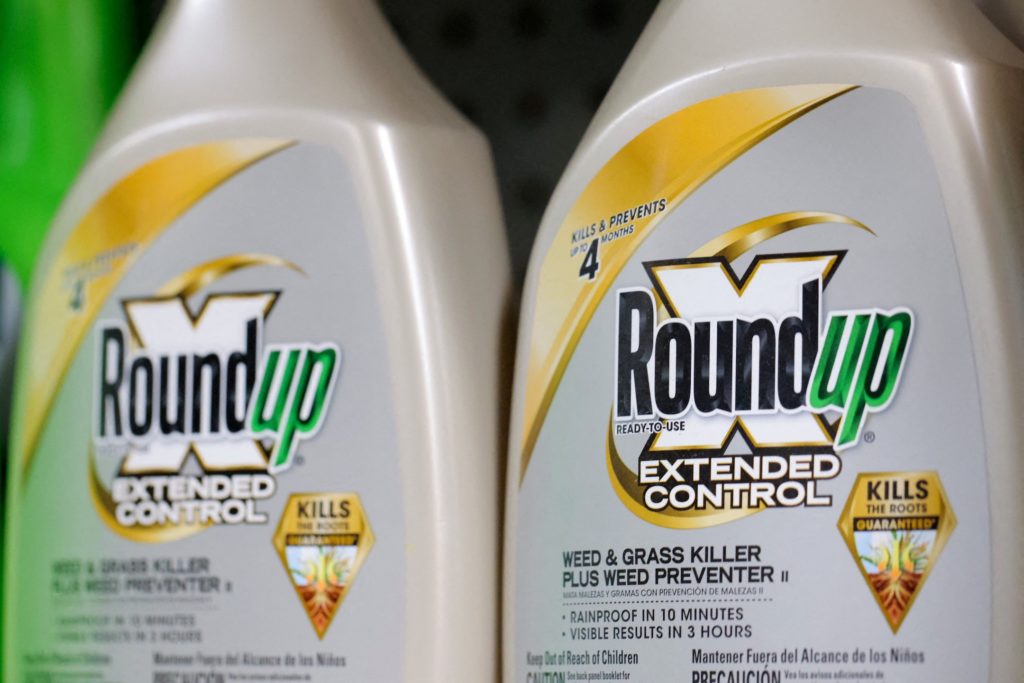
The U.S. Supreme Court ruled 7-2 in favor of the company that makes Roundup, an herbicide. This decision overturned a Missouri court’s award to a man who said Roundup caused his cancer and is likely to stop many similar lawsuits nationwide.
Key Facts
The Supreme Court made a 7-2 decision supporting Roundup’s maker.
The ruling overturned a Missouri jury award for a cancer claim linked to Roundup.
The decision could block thousands of lawsuits across the United States.
Roundup is a widely used weed killer made by Monsanto’s manufacturer.
The case involved questions about whether Roundup’s chemicals cause cancer.
Dr. Chadi Nabhan wrote a book about the trials related to toxic exposure and Monsanto.
The news was discussed on a program hosted by Geoff Bennett.
Read the Original
Want the full story? Tap a source to open the original
article.
The United States is negotiating a deal with Iran to end conflict and ensure safe shipping through the Strait of Hormuz. U.S. Secretary of State Marco Rubio said they will not accept a deal that lets Iran charge fees on shipping, as this could cause chaos in the region. A recent attack on a ship in the strait led the United Nations to pause efforts to evacuate trapped vessels.
Key Facts
U.S. Secretary of State Marco Rubio is visiting Gulf countries to reassure allies amid Middle East tensions.
The U.S. and Iran have a preliminary agreement to address Iran’s nuclear program, sanctions, and safe shipping through the Strait of Hormuz.
Rubio said the U.S. wants a deal but "not at any price," emphasizing regional security and stability.
Iran wants to introduce maritime fees in the strait, but the U.S. opposes this, fearing it could cause widespread disruption.
A cargo ship was recently hit by an unknown projectile near Oman, causing damage but no injuries.
The International Maritime Organization paused the evacuation of about 600 trapped ships in the region for safety reasons.
Gulf Cooperation Council foreign ministers stressed that Iran’s missile program and support for proxy groups must also be addressed.
A new shipping route near Oman was created to help avoid conflict zones but faced opposition from Iran’s Revolutionary Guards.
Read the Original
Want the full story? Tap a source to open the original
article.
The U.S. Supreme Court issued several important 6-3 rulings before its summer break, including decisions on immigration and gun rights. These rulings supported positions favored by President Trump and groups advocating for gun rights, though the justices showed disagreements during the process.
Key Facts
The Supreme Court released multiple decisions with a 6-3 vote split.
The rulings included cases related to immigration and the right to bear arms.
President Trump’s appointed justices played a key role in the majority decisions.
Gun rights advocates welcomed the court’s support in certain gun-related cases.
The justices showed some disagreements during the decision-making process.
These cases were some of the final ones before the court’s summer recess.
Read the Original
Want the full story? Tap a source to open the original
article.
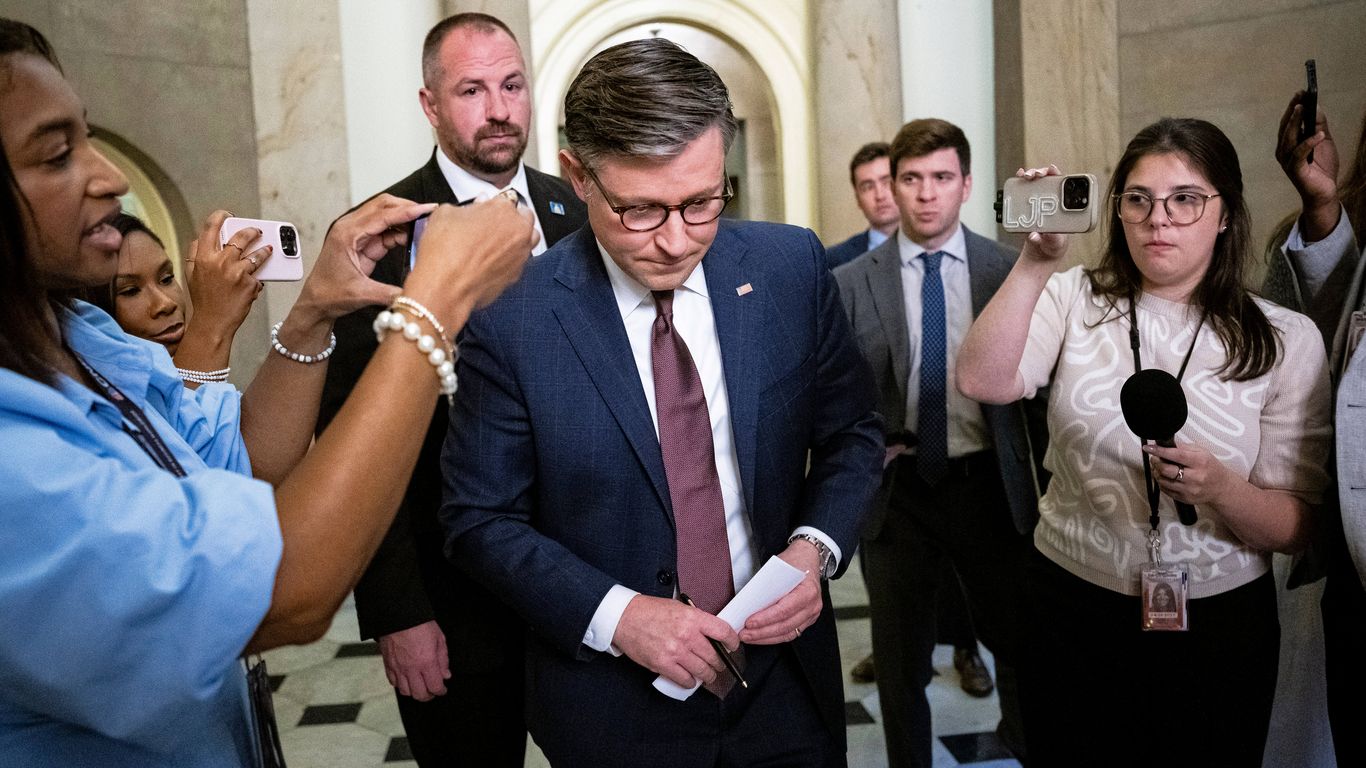
President Donald Trump encouraged House Republicans to stop blocking procedural votes, which may help move the House floor work forward. Speaker Mike Johnson sent a bipartisan housing bill called the SAVE America Act to the White House, signaling progress after Trump had declined to sign it the day before.
Key Facts
Speaker Mike Johnson met at the White House and then officially transmitted the SAVE America Act housing bill to President Trump.
President Trump publicly urged House Republicans not to block procedural votes, aiming to reduce delays in the House.
The SAVE America Act has caused conflict among House Republicans, with some frustrated by repeated delays despite the bill passing three times already.
Some conservative House Republicans blocked votes to pressure the Senate to act on the SAVE Act.
Several Republican members expressed disappointment about halted work and blocked votes, saying it prevents them from representing their constituents.
There is disagreement within the House GOP about the tactics being used around the bill and about how to work with Democrats on a bipartisan solution.
Representative Anna Paulina Luna said she may not support future procedural rules if leadership blocks her attempt to attach the SAVE Act to the defense bill.
The ongoing delays have forced the House to end its workweek early and cancel some votes.
Read the Original
Want the full story? Tap a source to open the original
article.
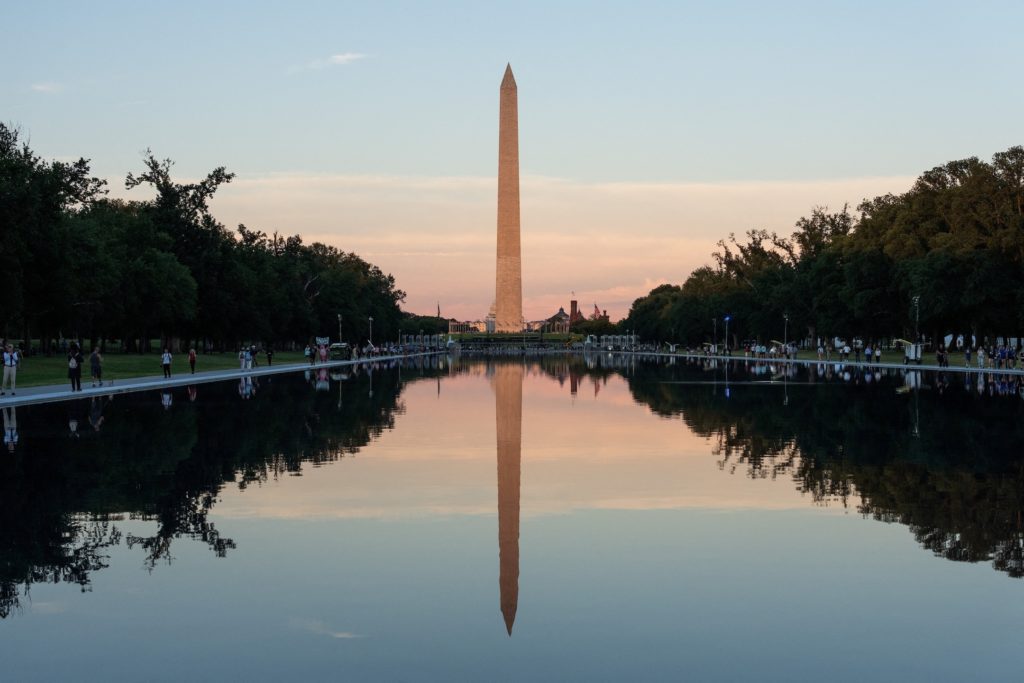
A National Park Service official said the Reflecting Pool liner was cut with a sharp tool like a knife or razor. A federal judge stopped President Trump's order to regulate mail-in voting and make a federal voter list. Florida Governor Ron DeSantis announced the closure of the "Alligator Alcatraz" detention center.
Key Facts
The Reflecting Pool liner was damaged by a cut made with a knife or razor.
A National Park Service official reported the damage.
A federal judge blocked President Trump's executive order on mail-in voting rules.
The blocked order included creating a federal list of voters.
Florida Governor Ron DeSantis declared the "Alligator Alcatraz" detention center would close.
These events were reported together in a news summary on Thursday.
Read the Original
Want the full story? Tap a source to open the original
article.
Two strong earthquakes struck Venezuela one after the other, causing many deaths. Meanwhile, Europe is experiencing very high temperatures due to a heat dome, a weather pattern that traps hot air in one area.
Key Facts
Venezuela was hit by back-to-back earthquakes.
The earthquakes caused hundreds of deaths.
Europe is currently facing a heat dome, leading to extreme heat.
A heat dome is a weather condition that keeps hot air in place.
The events are being reported on CBS Evening News on June 25.
Read the Original
Want the full story? Tap a source to open the original
article.
President Trump asked House Republicans to come together and avoid actions that delay work after a group of conservative members blocked much of the House’s business this week. This followed a meeting between President Trump and House Speaker Mike Johnson, who has been trying to manage the situation.
Key Facts
President Trump called on House Republicans to unify.
He warned against “grandstanding,” which means making political statements that stop progress.
A group of hard-line conservative Republicans caused most House work to stop this week.
They objected to the Safeguard American Voter Eligibility (SAVE America) Act.
Speaker Mike Johnson held a meeting with President Trump on Thursday.
Johnson has been looking for ways to address the conflicts within the House Republicans.
The disagreement happened in the U.S. House of Representatives, the lower chamber of Congress.
The issue centers around voting laws and election rules.
Read the Original
Want the full story? Tap a source to open the original
article.
The Trump administration has asked OpenAI to limit the release of its new AI model, GPT-5.6, to only a few government-approved partners before allowing wider access. This is a security measure as the government creates rules to test and approve advanced AI models before they become widely available.
Key Facts
The White House's cyber and science offices requested the limited rollout of GPT-5.6.
OpenAI CEO Sam Altman shared the plan for a small initial release in an employee memo.
The government wants to ensure AI models like GPT-5.6 have proper safety checks before public release.
AI models with "Mythos-like" capabilities are considered powerful enough to require close government review.
President Trump signed an AI security order directing agencies to set up voluntary AI testing before model launches.
Political disagreements delayed the executive order for several weeks before it was signed.
OpenAI has been working with the government on AI safety since before a Commerce Department directive affected another AI company, Anthropic.
Altman hopes to release GPT-5.6 publicly within a few weeks after the limited rollout.
Read the Original
Want the full story? Tap a source to open the original
article.
A U.S. official said Iran fired a drone that hit a container ship in the Strait of Hormuz, causing most ship traffic to stop there. Secretary of State Marco Rubio visited the Persian Gulf to reassure Arab countries that any deal with Iran would keep them safe.
Key Facts
Iran fired a drone that struck a container ship in the Strait of Hormuz.
The strike caused most ship traffic in the strait to stop.
The Strait of Hormuz is a key waterway for global shipping.
Secretary of State Marco Rubio visited the Persian Gulf region.
Rubio’s visit aimed to reassure Arab allies about their security.
Discussions involved how an agreement with Iran would protect Gulf countries.
Nick Schifrin talked with Hussein Ibish about the situation.
Read the Original
Want the full story? Tap a source to open the original
article.
The United Nations has paused its plan to evacuate ships through the Strait of Hormuz after a British military vessel was hit by a projectile near Oman. The UN will wait until it receives safety guarantees before continuing the evacuation amid rising tensions and ongoing peace talks between the US and Iran.
Key Facts
A British vessel was struck by a projectile off the coast of Oman, but no injuries or environmental damage were reported.
The UN's International Maritime Organization paused its ship evacuation plan through the Strait of Hormuz to ensure safety.
It is unclear who launched the projectile or which type of vessel was targeted.
Iran warned ships not to use routes through the strait without its permission and set up a new authority to control shipping there.
The US and Iran are negotiating a temporary peace deal that includes safe ship passage through the strait.
The Strait of Hormuz is a key waterway for the global oil supply, carrying about one-fifth of the world’s oil and gas.
Recent tensions include fighting in Lebanon between Israel and Hezbollah, supported by Iran.
Oil prices briefly fell below prewar levels, showing some market optimism despite the conflict.
Read the Original
Want the full story? Tap a source to open the original
article.
House Minority Leader Hakeem Jeffries said that after the primary elections, Democrats should focus on opposing President Donald Trump. He discussed the role of Israel in the New York Democratic primary in an interview with Jen Psaki.
Key Facts
Hakeem Jeffries is the House Minority Leader and a Democrat from New York.
Jeffries spoke about the importance of Democrats uniting against President Donald Trump after the primaries.
Jen Psaki from MS NOW interviewed Jeffries.
The conversation included talk about Israel’s involvement in the New York Democratic primary.
Jeffries emphasized that the main political opponent for Democrats is President Trump.
The comments were made after primary elections took place.
The focus was on uniting the party to challenge President Trump in upcoming elections.
Read the Original
Want the full story? Tap a source to open the original
article.
A new nonprofit named RAISE US has been created to help workers and local economies prepare for job changes caused by growing use of artificial intelligence in businesses. The group includes states, big companies, and AI firms and is supported by leaders from both political parties.
Key Facts
RAISE US is a nonprofit organization focused on addressing job displacement from AI adoption.
It brings together states, major businesses, and artificial intelligence companies.
The goal is to prepare workers, companies, and local economies for upcoming changes.
The group is bipartisan, involving leaders from both the Republican and Democratic parties.
It was co-founded by Republican Eric Holcomb and Democrat Gina Raimondo.
The initiative aims to manage the impact of AI on employment as businesses adopt new technology.
Amna Nawaz conducted an interview with Gina Raimondo about this effort.
Read the Original
Want the full story? Tap a source to open the original
article.
The Chinese film Dear You, made mostly in the Teochew dialect, has become very popular in China and sparked discussions about language and identity in Singapore. Singapore screened the movie mainly in Mandarin, which upset some viewers who wanted to see it in Teochew, a dialect many older Chinese Singaporeans speak. The government has responded by allowing more screenings in Teochew.
Key Facts
Dear You is a Chinese movie filmed almost entirely in Teochew, a dialect from China’s Chaoshan region.
The film was a box office success in China this summer.
In Singapore, most screenings were dubbed into Mandarin, one of the country's official languages.
Older Chinese Singaporeans still speak Teochew, and some wanted the film shown in the original dialect.
Tickets for Teochew screenings in Singapore sold out quickly, showing strong interest.
Singapore's government announced it would take a more flexible approach to allowing dialect films.
The movie tells a story about a man seeking his grandfather who had migrated to Thailand during a Chinese civil war.
The film has prompted a wider conversation about the decline of Chinese dialects in Singapore due to government promotion of Mandarin.
Read the Original
Want the full story? Tap a source to open the original
article.
The U.S. Supreme Court ruled that Hawai'i's law banning guns in private businesses open to the public is unconstitutional. This decision means states cannot require such businesses to be gun-free zones, shifting responsibility to business owners. The ruling narrows what gun restrictions states can create under the court's focus on historical traditions of firearm regulation.
Key Facts
The Supreme Court struck down Hawai'i’s law banning guns in private businesses open to the public by a 6-3 vote.
The court said states cannot force all private businesses open to the public to be gun-free; business owners must decide instead.
States can still ban guns on private property that is not open to the public, like homes or offices.
Some states are requiring businesses to post signs about whether guns are allowed or banned.
The court often allows gun bans in "sensitive places" like schools, government buildings, parks, bars, and restaurants serving alcohol.
Illinois’ ban on assault-style weapons and high-capacity magazines was upheld by a federal court based on their military use.
Individuals deemed dangerous, such as convicted felons or those committed for mental health reasons, can be blocked from buying guns, a point the Supreme Court confirmed in 2024.
The court’s approach relies heavily on historical gun laws, which limits modern lawmakers’ ability to create new gun safety rules.
Read the Original
Want the full story? Tap a source to open the original
article.
Pennsylvania Hospital in Philadelphia, the oldest hospital in the United States, has opened a new museum. The museum shows the history of medicine and health care in America, linking the hospital’s past with modern medical practices.
Key Facts
Pennsylvania Hospital is the oldest hospital in the U.S.
The hospital is located in Philadelphia.
A new museum has been opened inside the hospital.
The museum displays the history of medicine and health care.
The hospital building and mission date back to before the United States was founded.
The museum is part of a series that covers health and the arts.
The coverage is done by senior arts correspondent Jeffrey Brown.
The museum aims to connect the hospital’s historical role with today’s medical advances.
Read the Original
Want the full story? Tap a source to open the original
article.
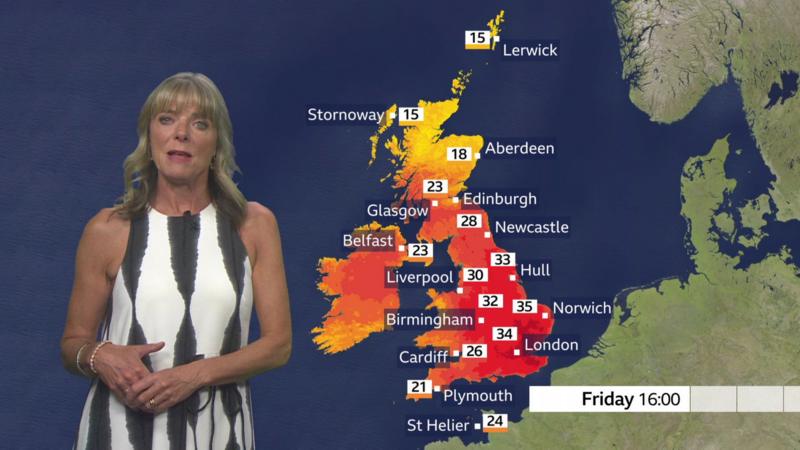
The UK experienced a week of very hot weather with temperatures reaching up to 36.7°C (98°F) in Somerset. On Friday, a red weather warning for extreme heat will be in effect for parts of southern England, including London and surrounding areas.
Key Facts
The highest temperature recorded was 36.7°C (98°F) in Merryfield, Somerset on Thursday.
Wales reached 35.9°C, Scotland 31.2°C, and Northern Ireland 30.8°C on the same day.
A red weather warning, which signals extreme heat, will be active on Friday.
The warning covers London, Oxford, Sussex, and Kent.
This heat event follows a week of record-breaking temperatures across the UK.
The warning aims to alert people about possible risks from the high temperatures.
Weather services are closely monitoring the situation due to the high heat levels.
Read the Original
Want the full story? Tap a source to open the original
article.
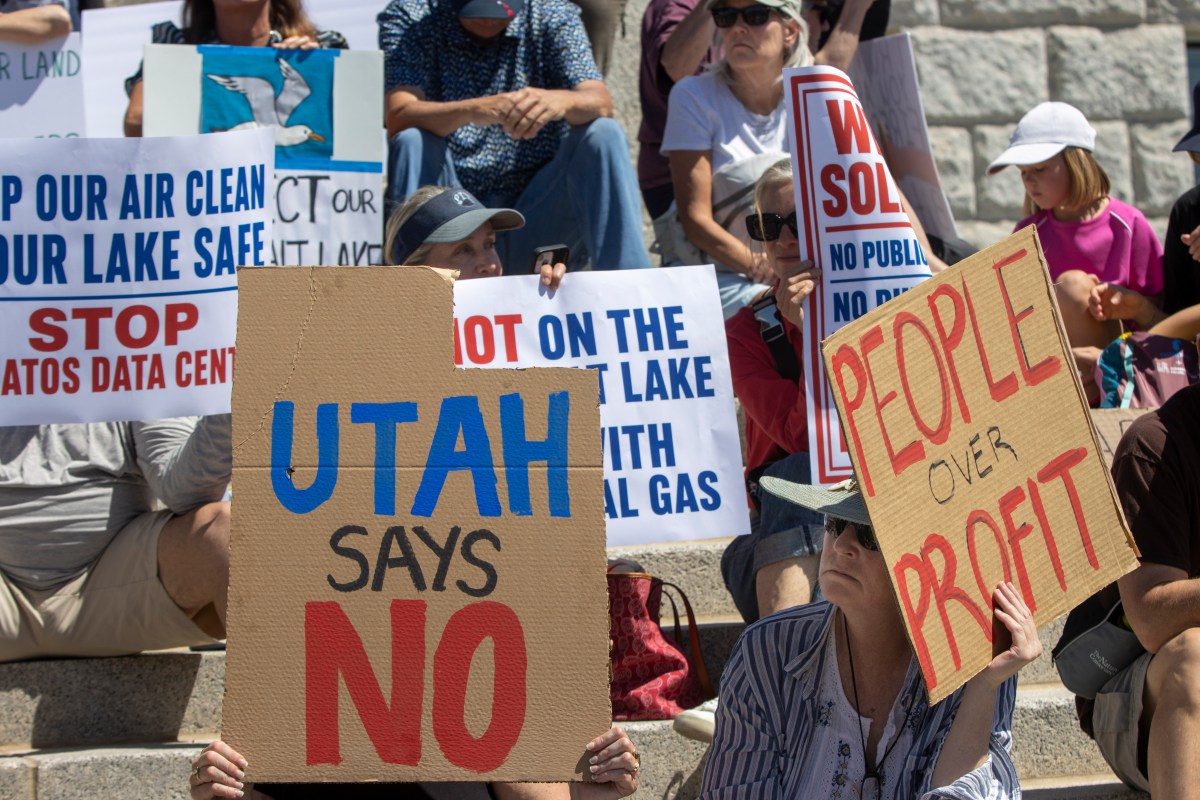
Voter opposition to large data center projects is influencing elections across several U.S. states. Candidates who supported big data center developments have lost seats, and the issue is gaining attention from politicians and the public.
Key Facts
Utah State Senate President J. Stuart Adams lost his primary election after backing a large data center project near the Great Salt Lake.
Similar political losses have occurred in Oregon, Virginia, and Missouri linked to support for data center developments.
A Democrat in Georgia won a Public Service Commission seat by opposing subsidies for data center electricity use.
Virginia state elections in 2025 showed success for candidates opposing data centers, aided by advocacy group campaigns.
Public backlash includes threats to officials and cancellations or pauses of proposed data center projects in states like Michigan and Wisconsin.
New York saw over $26 million spent by pro- and anti-AI political action committees in a Democratic primary focused on AI regulation and data center growth.
Opposition to data centers is becoming a major issue for voters and policymakers in many communities.
Read the Original
Want the full story? Tap a source to open the original
article.
The US Supreme Court ruled in favor of Bayer, blocking thousands of lawsuits claiming the weedkiller Roundup caused cancer due to lack of warning labels. The court decided that federal law prevents states from requiring extra warnings because federal regulators have not found Roundup’s main ingredient likely to cause cancer.
Key Facts
The Supreme Court ruled 7-2 to block failure-to-warn lawsuits against Bayer’s Roundup product.
Bayer bought Monsanto, the original maker of Roundup, in 2018.
The court said federal law limits state requirements for warning labels on pesticides like Roundup.
President Donald Trump’s administration supported Bayer in this case.
Justice Brett Kavanaugh wrote the majority opinion, while Justices Ketanji Brown Jackson and Neil Gorsuch dissented.
Bayer plans to continue a $7.25 billion settlement for some remaining claims despite the ruling.
The lawsuit began with a Missouri man who developed cancer after using Roundup in his community and received an initial $1.25 million jury award.
Environmental groups and cancer victims’ lawyers criticized the ruling, calling it harmful to public health.
Read the Original
Want the full story? Tap a source to open the original
article.
The Supreme Court allowed the Trump administration to end temporary protected status (TPS) for people from Haiti and Syria. TPS is a program that stops some people from certain countries from being deported. This decision could put more than a million people at risk of deportation.
Key Facts
The Supreme Court ruled in favor of the Trump administration’s move to remove TPS protections from some nationalities.
TPS is a government program that temporarily protects people from deportation due to unsafe conditions in their home countries.
The decision focuses on removing Haiti and Syria from the list of countries eligible for TPS.
More than a million people currently have TPS and could lose this protection.
This ruling means the affected individuals might face deportation to their home countries.
TPS is often granted when countries are experiencing natural disasters, war, or other crises.
The Supreme Court’s decision was announced on a Thursday morning session.
Ending TPS could have significant effects on immigrant communities tied to Haiti and Syria.
Read the Original
Want the full story? Tap a source to open the original
article.
Florida Governor Ron DeSantis announced the closure of the "Alligator Alcatraz" immigration detention center less than a year after it opened. The facility faced lawsuits and criticism over poor conditions and was created as a temporary solution to hold detainees while other facilities were prepared.
Key Facts
The detention center opened in July 2025 in the Florida Everglades and was nicknamed "Alligator Alcatraz."
It was built to help with immigration detention during President Donald Trump's administration.
Lawsuits and complaints cited poor living conditions, including lack of medical care, crowded tents, insect infestations, and extreme heat.
Environmental concerns were raised over the damage the facility caused to the Everglades ecosystem.
The center held over 20,000 detainees before closing; detainees have now been moved elsewhere.
The facility cost about $450 million per year to operate, with some costs expected to be reimbursed by the federal government.
Florida officials plan to receive federal reimbursement, and White House Border Czar Tom Homan promised to ensure this happens.
The American Civil Liberties Union (ACLU), which sued over detainees’ access to legal counsel, welcomed the facility’s closure.
Read the Original
Want the full story? Tap a source to open the original
article.