More than one-third of post offices inside TG Jones stores are planned to close by early 2027. This comes after many closures this year and is part of a larger pattern of post office branch reductions affecting several towns and cities in the UK.
Key Facts
TG Jones used to be part of WH Smith and now operates about 180 post offices after restructuring under new ownership by Modella.
So far in 2024, 36 TG Jones post office branches have closed, and 34 more will close by early 2027.
Modella plans to close around 150 of the 450 stores it acquired, including 70 with post offices.
Morrisons is also closing 52 post offices this year within its convenience stores as part of a plan to shut 100 small, unprofitable stores.
Several towns and smaller cities, including Stevenage, Bracknell, Orpington, Hull, York, and Telford, will lose multiple post offices in a short time.
Many of the closed TG Jones sites replaced former large “crown” post offices that offered more services.
Regions such as Essex, West Midlands, Wales, Suffolk, and Hertfordshire are especially affected by post office closures.
The Post Office is trying to open new branches or temporary sites but has had limited success so far.
Post offices remain important for small and medium businesses, with many relying on them weekly or monthly.
The CWU union warns that closures risk turning some areas into “postal deserts,” where people have no local post office access.
Read the Original
Want the full story? Tap a source to open the original
article.
The menú del día is a traditional set-price lunch in Spain that has been part of daily life for over 50 years. It started in the 1960s during the Franco dictatorship to attract tourists but became popular with locals. Today, the menú del día faces challenges because of changing eating habits and economic pressures, though it still serves millions each day.
Key Facts
The menú del día is a fixed-price lunch that includes a starter, main dish, pudding or coffee, bread, and a drink.
It began in the mid-1960s under Franco’s regime to show tourists that Spanish food was good and affordable.
The original menu required three main course options based on eggs, fish, or meat, with sides.
Prices back then ranged from 50 to 250 pesetas, with rules about the quality of wine served.
In the 1970s, the menu was renamed to appeal more to everyday Spanish people, not just tourists.
Today, about 4 million menú del día lunches are served every weekday in Spain.
Challenges include busy lifestyles, more people eating quick meals at work, and higher food and energy costs affecting family-run restaurants.
The menú del día is seen as a cultural tradition, but it is slowly disappearing from everyday life.
Read the Original
Want the full story? Tap a source to open the original
article.
Greg Bovino, former US border patrol chief, said the Trump administration’s withdrawal of agents from Minneapolis was a "surrender" and defended the operation despite two fatal shootings during it. The family of one victim has filed lawsuits claiming wrongful death and civil rights violations, while Bovino criticizes the legal actions and supports tougher immigration enforcement.
Key Facts
Greg Bovino was the US border patrol chief during the Minneapolis deportation operation earlier this year.
Two US citizens, Renee Good and Alex Pretti, were shot and killed during the operation.
Video of the shootings caused protests and backlash from both political parties.
President Trump ordered a reduction of immigration agents in Minneapolis after the shootings.
Renee Good’s family has filed lawsuits against the Trump administration for wrongful death and civil rights violations.
Bovino says the withdrawal from Minneapolis was a “surrender” and regrets not arresting more undocumented immigrants.
Bovino was removed from his role soon after the shootings but has not received an official reason.
The White House calls the lawsuits “baseless” and defends its immigration agents.
Read the Original
Want the full story? Tap a source to open the original
article.
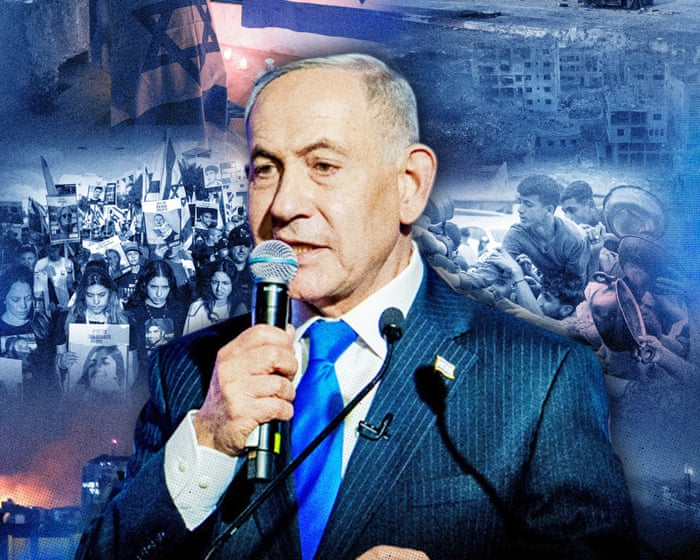
Benjamin Netanyahu is Israel's longest-serving prime minister and has greatly influenced the country's institutions, politics, and society. His leadership pushed Israel to the right, expanded the power of religious courts, and changed laws related to the state's Jewish identity and Palestinian citizens.
Key Facts
Netanyahu has been prime minister of Israel for 19 years on and off, making him the longest-serving leader in the country.
He rose to prominence in the 1990s by opposing peace talks with Palestinians and Syria.
Netanyahu’s rallies in the 1990s were linked to tensions that preceded the assassination of Prime Minister Yitzhak Rabin in 1995.
His political style has strengthened right-wing and religious parties in Israel.
Religious courts gained more power over civil and business matters during his time in office.
In 2018, a law was passed declaring Israel the state of the Jewish people and prioritizing illegal settlements, which some say supports apartheid-like policies.
Netanyahu appointed loyal supporters to top security positions and clashed with security leaders who opposed him.
He faces corruption charges from 2019, which he denies, and has led changes to the judiciary while under investigation.
Read the Original
Want the full story? Tap a source to open the original
article.
France is preparing for new protests by deploying about 70,000 police officers nationwide and closing major museums in Paris on Saturday. The protests began with high school students upset about school conditions but have grown to include anger over rising living costs, leading to looting and violence in recent demonstrations.
Key Facts
About 70,000 police officers will be on duty across France, including helicopters, armored vehicles, and water cannons.
Major Paris museums such as the Louvre, Orsay, Picasso Museum, and Grand Palais will be closed during the protests.
The protests started with high school students but expanded across the country due to dissatisfaction with the cost of living.
Last week’s protests included looting, burned cars, and attacks on public buildings in Paris and other cities.
Around 3,000 shops in France were damaged or looted during recent unrest.
Some cities, including Lyon, Nice, and Montpellier, have banned protests, which trade unions say violates freedom of expression.
President Emmanuel Macron has defended the increased security measures to protect city centers and businesses.
Demonstrations are planned in Paris, Marseille, and Orléans, where groups will also protest against the far-right party ahead of the 2027 presidential election.
Read the Original
Want the full story? Tap a source to open the original
article.
The Republican Hospital in Taiz, Yemen, is close to stopping dialysis treatment because of a shortage of medical supplies and fuel caused by a Houthi group siege. The siege has blocked deliveries and fuel needed to run hospital machines, putting many kidney failure patients at risk.
Key Facts
The hospital in Taiz serves about 270 kidney failure patients needing dialysis.
Dialysis sessions have been cut from four hours to two and a half because of supply shortages.
The latest medical supply delivery was missed due to the Houthi siege that began in early October.
The siege blocks important roads, disrupting fuel and medical supply deliveries to the city.
Over 1,100 patients in the Taiz region depend on dialysis, which requires about 210 sessions daily.
Hospitals rely on diesel generators due to destroyed electricity infrastructure from the war.
Diesel prices have increased five times due to scarcity caused by the siege.
Some hospital departments have already stopped working because of the lack of supplies.
Read the Original
Want the full story? Tap a source to open the original
article.
Brazil's working class is changing from mostly factory workers to many people working in services and gig jobs like food delivery. This shift is affecting the presidential race, with some voters who supported President Lula in 2022 now choosing Flávio Bolsonaro in 2024, hoping for change amid economic struggles and high prices.
Key Facts
The city of Osasco shifted from factories to shopping malls and tech companies, changing the type of jobs available.
Osasco voted for President Lula in 2022 but supported Flávio Bolsonaro in the first round of the 2024 election; the two candidates will compete in a run-off.
Since 1989, the candidate who wins the first round in Brazil’s presidential elections usually wins the presidency.
Many traditional Lula supporters, including union leaders, feel the union movement is outdated and not keeping up with changes in the workforce.
The working class now includes many people in the gig economy, doing jobs like driving for Uber or selling goods informally.
Some voters want change because they feel the economy, crime, and corruption problems remain despite Lula’s social programs.
Flávio Bolsonaro has promised to cut government spending and lower some taxes but keep key welfare programs.
Voting is mandatory in Brazil, but abstention rates were higher this election, showing some voter frustration.
Read the Original
Want the full story? Tap a source to open the original
article.
As Israel’s October 27 election approaches, many people in Lebanon doubt that a new Israeli government will change the situation in southern Lebanon. Israel has occupied parts of southern Lebanon for years, leading to conflict with Hezbollah and displacement of over one million Lebanese civilians.
Key Facts
Israel’s government that occupied southern Lebanon could be replaced in the upcoming October 27 election.
Many Lebanese are doubtful that any change in Israeli leadership will end the occupation or improve relations.
Israel and Hezbollah have been in conflict since October 2023, after a Hamas attack on Israel and Israel’s war on Gaza.
Israel and Lebanon signed a US-brokered agreement aiming for phased Israeli withdrawal, but occupation and destruction continue.
Over one million people have been forced from their homes in southern Lebanon due to Israeli actions.
A 2026 survey found 54% of Lebanese support diplomacy with Israel, while 35% support armed resistance, but 87% see Israel as an enemy.
Benjamin Netanyahu faces a challenge from Gadi Eisenkot, a former Israeli general linked to military strategies causing heavy damage in Lebanon.
Eisenkot supports continuing attacks on Hezbollah targets throughout Lebanon, similar to current Israeli policies.
Read the Original
Want the full story? Tap a source to open the original
article.
AI-generated ads are becoming more common in the US midterm election campaigns happening in November 2024. Both outside political groups and candidates in important races are using these ads.
Key Facts
AI election ads are increasing in the 2024 US midterm campaigns.
Some ads are funded by outside political groups.
Candidates in key races also create their own AI ads.
BBC Verify has tracked many AI ads to study how campaigns use them.
The rise of AI ads shows how technology is changing political campaigns.
Read the Original
Want the full story? Tap a source to open the original
article.
A German teenager was arrested on suspicion of causing the death of a 14-year-old girl from Indiana by manipulating her to harm herself. The FBI worked with local and German authorities to investigate the case, which involves a social media platform called Discord.
Key Facts
The victim was a 14-year-old girl from Fort Wayne, Indiana.
The suspect is an 18-year-old male living in Germany, who was 17 at the time of the alleged crimes.
Authorities say the suspect manipulated the girl through Discord, telling her to hurt herself and take her own life.
The suspect threatened the girl’s friends with publishing private and compromising information.
The death happened on October 2, 2026, and whether it was recorded is still unclear.
Officials believe the suspect wanted to use the footage to join or gain status in an online extremist group called "Nefarious Maniac Kult" (NMK).
The group NMK is linked to other violent online networks like "764," which target vulnerable teenagers.
Discord has stated it actively works to remove harmful groups and protect users from exploitation.
Read the Original
Want the full story? Tap a source to open the original
article.
Israel is holding an important election with two main groups: supporters of Prime Minister Benjamin Netanyahu and those against him. Gadi Eisenkot, a former army chief, leads the opposition and promises a government focused on honesty and responsibility, contrasting himself with Netanyahu's long political career and style.
Key Facts
Benjamin Netanyahu has been Israel's prime minister on and off for 19 of the last 30 years.
Gadi Eisenkot, former chief of staff of Israel’s army, is the main opposition candidate.
Eisenkot’s party is called Yashar, meaning “straight” or “direct,” highlighting contrast with Netanyahu.
Eisenkot calls for honesty in politics and suggests term limits for prime ministers.
Israeli politics are mainly split into Netanyahu supporters and opposition, not traditional left-right lines.
Some right-wing politicians who once worked with Netanyahu are now against him.
Netanyahu is seen as central to the political system, with others positioning themselves in relation to him.
There is debate over Israel's policies towards Palestinians, settlements, and security, with Netanyahu playing a key role.
Read the Original
Want the full story? Tap a source to open the original
article.
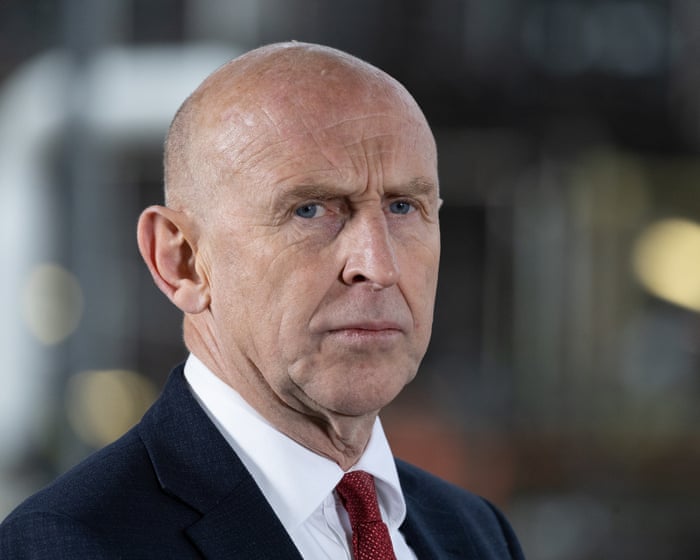
John Healey, the UK chancellor, plans to use the upcoming budget to invest heavily in artificial intelligence (AI) to improve Britain's security and economy. The budget includes funding for AI research, cybersecurity, and supporting British businesses while protecting jobs and national interests.
Key Facts
The budget will include hundreds of millions of pounds for a “distinctively British” AI strategy.
Investments will support the AI Security Institute and other important organizations.
New funding will go toward AI chip design in Edinburgh and an AI Centre of Excellence in Manchester.
The government plans to spend £10 million yearly to study how AI will change jobs and industries.
These moves aim to reduce the UK’s reliance on other countries for AI technology.
The budget arrives amid global economic challenges, including higher energy prices caused by the war in the Middle East.
AI investment has helped the UK have the strongest economic growth in the G7 group during the first half of the year.
Concerns exist about AI risks such as cyberattacks and job losses, prompting protective measures.
Read the Original
Want the full story? Tap a source to open the original
article.
As President Trump enters the last part of his second term, his influence on U.S. domestic politics is weakening due to likely losses in the upcoming midterm elections. However, he remains powerful in foreign policy, with plans that include increasing military involvement in the Middle East, changing U.S. relations with Russia and China, and potentially reshaping global alliances.
Key Facts
President Trump is expected to lose control of the House of Representatives and possibly the Senate in upcoming elections, reducing his power over domestic lawmaking.
Despite weakened domestic control, Trump still holds significant power in foreign affairs during the final years of his term.
The U.S. plans to increase conflict with Iran, including joint military exercises with Israel and pulling diplomats from the region.
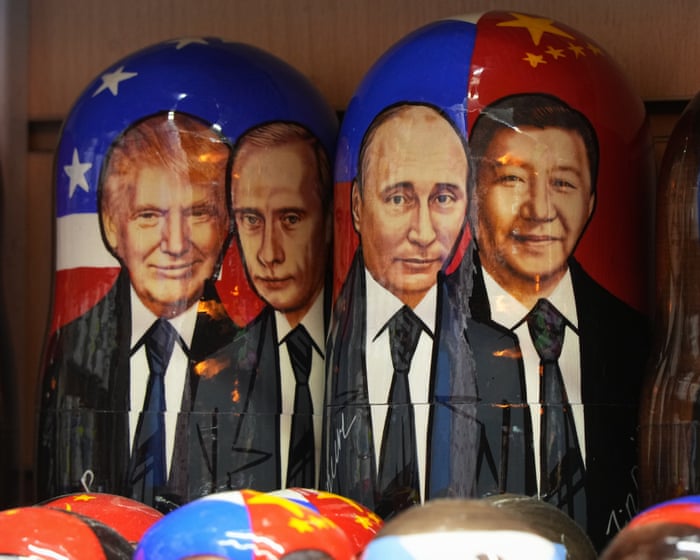
Trump has shown a softer stance towards Russia, praising its leader Vladimir Putin and meeting with him in Moscow.
Putin has suggested a summit with Trump and China’s leader Xi Jinping, which could lead to dividing the world into spheres controlled by these powers.
This new global division could weaken U.S. support for European and Asian allies like Ukraine, Taiwan, South Korea, Japan, and Australia.
The Trump administration’s National Security Strategy avoided criticizing Russia and China strongly, even praising China’s use of power and wealth.
The strategy also downplayed Russia’s invasion of Ukraine and focused on improving U.S.-Russia relations instead of defeating Russia.
Read the Original
Want the full story? Tap a source to open the original
article.
Porridge, a traditional oat-based breakfast, is becoming more popular in the UK as people look for high-fiber foods. New varieties with different grains and toppings are making porridge more appealing, and sales of oats have increased significantly.
Key Facts
Porridge is traditionally made with oats, water, and a little salt or sugar.
Interest in porridge is rising, partly due to a focus on eating more fiber.
Social media shows many creative porridge recipes, including unusual toppings and mixes.
In London, restaurants are offering porridge with diverse ingredients like fig jam, whipped cream, tahini, and pesto.
Sales of organic jumbo oats at the UK online store Ocado have almost doubled in one year.
Porridge blends with added flavors like cinnamon and apple are becoming popular.
The NHS recommends adults eat 30 grams of fiber per day, but most consume much less.
Porridge is seen as good for digestion and cholesterol, making it a healthy breakfast choice.
Read the Original
Want the full story? Tap a source to open the original
article.
Hundreds of protests are planned across France, led by groups like the “Yellow Vests,” labor unions, and students demanding better study conditions and higher purchasing power. The French government has deployed 70,000 police officers and banned protests in major cities like Marseille and Lyon due to fears of violence and looting.
Key Facts
The protests include a mix of “Yellow Vests,” student groups, and labor unions.
Demonstrators want improvements in education and economic conditions.
Authorities are deploying 70,000 police officers nationwide to manage the protests.
Protests have been banned in Marseille and Lyon, two of France’s largest cities.
Police use batons, tear gas, sound grenades, and foam-round launchers to control crowds.
Electric stun guns are not allowed in these crowd-control operations.
There has been criticism of the police’s use of force, with calls to ban some weapons.
The UN advises using less-lethal weapons only when there is an immediate threat and avoiding shots to the head or face to prevent serious injuries.
Read the Original
Want the full story? Tap a source to open the original
article.
An oil spill has appeared off the coast of the United Arab Emirates (UAE) after a crude oil tanker hit a naval mine placed by Iran. The spill has caused beaches to close while authorities work to contain the damage and assess environmental impacts.
Key Facts
A crude oil tanker struck a naval mine near the UAE coast in early October.
The naval mine is reported to have been placed by Iran.
The accident caused an oil spill in the surrounding waters.
Beaches near the spill area have been closed to the public.
The UAE government is conducting efforts to contain the oil spill.
Environmental assessments are ongoing to understand the impact.
The incident has raised concerns about marine safety in the region.
Read the Original
Want the full story? Tap a source to open the original
article.
France is preparing for new protests a week after major riots took place. The government has placed restrictions on demonstrations and increased police presence to keep order, but many protests are still planned across the country.
Key Facts
France experienced some of its worst unrest in decades last week, including riots and looting.
The government has banned some protests and requires others to be organized by official trade unions.
About 70,000 police officers will be deployed to manage protests planned for Saturday.
Interior Minister Laurent Nuñez said authorities will act strongly against violence and vandalism.
Hundreds of people have been arrested recently for crimes related to the unrest.
President Emmanuel Macron met with student representatives before the protests; students plan to keep protesting.
Some cities like Lyon and Nice have banned all gatherings, while others allow certain protests with conditions.
Museums and a major soccer match in Paris have been closed or rescheduled due to safety concerns.
The wide protest includes not only students and unions but also supporters of the yellow-vest movement, calling for Macron’s resignation.
Read the Original
Want the full story? Tap a source to open the original
article.
Ian A. Brinksman, a U.S. government contractor with top-secret clearance, was arrested for allegedly leaking classified national defense information to a journalist. The journalist published the information on an independent Substack site, and Brinksman had a personal relationship with this journalist.
Key Facts
Ian Brinksman is a 42-year-old U.S. contractor from Washington, D.C.
He has held a top-secret security clearance, including access to Sensitive Compartmented Information (SCI).
Brinksman started working for a U.S. government agency in 2020 and became a contractor in 2022.
He is accused of passing classified defense information to a journalist who operates a Substack publication.
The journalist’s publication focuses on Congress, war, and political economy.
Phone records show over 800 contacts between Brinksman and the journalist in 2026.
The DOJ charged Brinksman with unlawfully transmitting national defense information.
FBI and CIA officials stated that leaking classified material threatens U.S. national security.
Read the Original
Want the full story? Tap a source to open the original
article.
Forensic experts in Argentina have identified the remains of at least 38 people who disappeared during the country’s last military dictatorship. These identifications took place near a former secret prison called La Perla.
Key Facts
At least 38 victims from Argentina’s last military dictatorship have been identified.
The victims were forcibly disappeared during the dictatorship.
The identifications were made by forensic anthropologists, who study human remains.
The work was done near La Perla, a former secret detention center.
Argentina’s last military dictatorship lasted from 1976 to 1983.
Thousands of people were disappeared or killed during this period.
This identification effort helps families find answers about missing loved ones.
La Perla is a key site for understanding human rights abuses in Argentina’s past.
Read the Original
Want the full story? Tap a source to open the original
article.
A fire broke out at the Eagle's Nest, Adolf Hitler's former mountain retreat in Bavaria, Germany. Police have arrested a suspect, and an investigation is ongoing to see if the person is linked to the fire. The building, a historic site, was still burning early Saturday but no one was injured.
Key Facts
The fire started on Friday evening around 21:15 local time.
The Eagle's Nest is located above the town of Berchtesgaden in southern Germany.
About 200 emergency workers were involved in fighting the fire.
The area is difficult to reach, making firefighting challenging.
No injuries have been reported from the fire.
A suspect was arrested by Bavarian police soon after the fire began.
The Eagle's Nest was completed in 1938 and served as Hitler’s mountain retreat during World War II.
Today, it is a tourist site and a reminder of Nazi crimes, hosting a mountain inn.
Read the Original
Want the full story? Tap a source to open the original
article.