The Senate Ethics Committee dismissed a complaint against Senator Ruben Gallego from Representative Anna Paulina Luna. The complaint accused Gallego of inappropriate behavior and breaking campaign finance rules, but the committee found no evidence to support these claims.
Key Facts
Senator Ruben Gallego is from Arizona and a member of the Democratic Party.
Representative Anna Paulina Luna is from Florida and a member of the Republican Party.
Luna filed a complaint accusing Gallego of inappropriate advances toward women.
Luna also accused Gallego of violating campaign finance laws.
The Senate Ethics Committee investigated the complaint.
The committee found no evidence that Gallego violated any rules.
The complaint against Gallego was dismissed by the Ethics Committee.
Gallego was informed of the dismissal in a letter on Friday.
Read the Original
Want the full story? Tap a source to open the original
article.
Many people around the world do not have proper housing, and by 2030, trillions of dollars will be needed to build enough affordable homes. Governments in different regions are starting to take steps to address this problem.
Key Facts
Around 3.4 billion people worldwide lack adequate housing.
By 2030, $3 to $4 trillion will be needed for affordable and accessible housing.
The world needs to build about 96,000 new homes every day to meet demand.
The U.S. Senate recently passed a bipartisan housing bill.
The European Commission is introducing new rules to make housing more affordable in Europe.
The UK has passed laws that stop no-fault evictions, protecting renters.
African countries have agreed through the Nairobi Declaration to speed up affordable housing projects.
Read the Original
Want the full story? Tap a source to open the original
article.
A shooting at a youth welfare facility in Stade, northern Germany, killed six people and injured several others. Police arrested a main suspect and detained two more people for questioning, but have not shared the motive.
Key Facts
The shooting happened at a facility serving pregnant women and young mothers with children.
Five people died at the scene; a sixth died later in the hospital.
Among the dead were four women and two men, all adults.
Several others were hurt, some seriously, but exact details were not released.
Police arrested one main suspect and took two others in for investigation.
The facility is located on Dankersstrasse, south of Stade’s town center.
Stade is a town of about 50,000 people, near Hamburg in northern Germany.
Germany has strict gun laws, and mass shootings are rare in the country.
Read the Original
Want the full story? Tap a source to open the original
article.
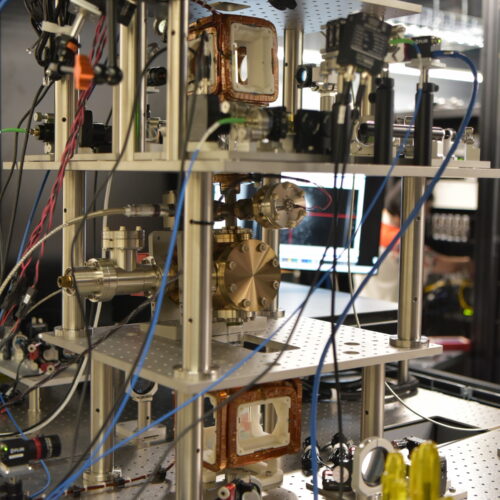
Quantum computing startup QuEra announced plans to build a much more powerful quantum computer by 2028 with over 10,000 qubits, aiming to support 256 error-corrected logical qubits. They also plan a follow-up machine in 2029 that will double the qubits and improve error correction, but significant challenges remain in reducing hardware errors to meet these goals.
Key Facts
QuEra currently has quantum hardware with about 260 qubits that have significant error rates.
By 2028, QuEra plans to deliver a system with over 10,000 physical qubits to Amazon.
This system aims to support 256 error-corrected logical qubits with a 99.9999% error-free operation rate.
In 2029, QuEra promises a successor with twice the hardware qubits and over 1,000 logical qubits, targeting 99.9999999% error-free operation.
QuEra uses neutral atoms held by lasers to form qubits, allowing more qubits by increasing laser capacity.
Two academic labs that helped start QuEra have demonstrated a 3,000-qubit system and techniques to replace lost atoms during operations.
Error correction depends on the number of physical qubits per logical qubit and the error rate of the hardware qubits.
QuEra plans to reduce the number of hardware qubits per logical qubit from 40 in 2028 to 20 in 2029 while improving error rates, but it is not clear how they will achieve these improvements so quickly.
Read the Original
Want the full story? Tap a source to open the original
article.
The Senate Ethics Committee dismissed a complaint against Democratic Senator Ruben Gallego, finding no evidence he broke laws or Senate rules. The complaint, made by Republican Congresswoman Anna Paulina Luna, involved allegations of sexual misconduct and campaign finance violations, which Gallego denies.
Key Facts
The Senate Ethics Committee is bipartisan and investigated the complaint against Sen. Ruben Gallego.
The complaint was filed by GOP Rep. Anna Paulina Luna in April.
Luna accused Gallego of sexual misconduct and campaign finance violations.
The committee found no proof that Gallego violated federal law, Senate rules, or conduct standards.
Gallego fully cooperated with the investigation and denied any wrongdoing.
The committee reviewed testimony, federal election reports, and other documents during its review.
The committee can reopen the investigation if new evidence appears.
Gallego says Luna’s accusations are political conspiracies and calls for an apology.
The complaint came amid other sexual misconduct allegations against former Rep. Eric Swalwell, a former colleague of Gallego.
Swalwell resigned from Congress and stopped his California governor campaign after the allegations.
Gallego said he was unaware of Swalwell’s alleged misconduct and felt deceived by him.
Read the Original
Want the full story? Tap a source to open the original
article.
Washington, D.C., is preparing a large security operation for the 250th anniversary of American independence, with many visitors expected in the city. Thousands of law enforcement officers, National Guard troops, and military equipment will be deployed to protect events, especially those on July 4th, when there will be strict security measures including ID checks and possible flight restrictions.
Key Facts
The 250th anniversary celebration will bring hundreds of thousands of visitors to Washington, D.C.
Around 5,000 National Guard troops will be on duty alongside local and federal law enforcement.
The July 4 fireworks event is classified as a National Security Special Event, requiring the highest level of security coordination.
Visitors will face strict ID checks, security lines, and screening devices like those used at airports.
Snipers and armored vehicles, including SWAT BearCats and Mine-Resistant Ambush Protected (MRAP) vehicles, may be deployed.
Ronald Reagan Washington National Airport will halt flights from noon on July 4 until the next day due to the celebrations.
Security planning has included months of preparation and rehearsals, with roles for military police in crowd and traffic control.
President Donald Trump has attended some events and plans to hold a rally on the National Mall during the celebrations.
Read the Original
Want the full story? Tap a source to open the original
article.
Resident doctors in England have accepted a new government deal on pay and jobs, ending strike actions that started in March 2023. The deal includes a pay increase of 6.6% fully paid by 2027 and 4,500 extra training places, with resident doctor pay set to be 35.2% higher than four years ago.
Key Facts
Resident doctors in England voted 53% in favor of the government's latest pay and job offer.
The deal includes a 6.6% average pay rise to be fully implemented by April 2027.
Resident doctor pay will be 35.2% higher compared to four years ago.
There will be 4,500 new specialty training places created over the next three years.
Strike action by resident doctors has cost the NHS £1 billion since last summer.
Residents had planned a 16th strike this month, which was called off after the deal.
Resident doctors walked out for 21 days in the last year, costing the NHS about £50 million per day.
NHS officials said the deal brings stability but more work to improve conditions will continue.
Read the Original
Want the full story? Tap a source to open the original
article.
Venezuela was hit by two strong earthquakes causing over 1,450 deaths and widespread damage including to hospitals. The country’s weak government response and ongoing political and economic problems have made the situation worse, while the US has offered some aid but faces questions about its commitment and ability to help.
Key Facts
Venezuela experienced two earthquakes of magnitude 7.2 and 7.5, its largest since 1900.
At least 1,450 people died, more than 3,000 were injured, and tens of thousands are missing.
Damage is estimated at $6.7 billion, about 6% of Venezuela’s economic output, including damage to 38 hospitals.
Many Venezuelans criticized the government’s slow and poor response to the crisis.
The government has focused spending more on security forces than on emergency services.
Venezuela faces severe economic challenges, with over 80% of the population living in poverty and inflation above 600%.
The US government, led by President Trump, seized Venezuela’s oil industry interests and pledged $300 million for quake relief.
Aid efforts include 2,400 international search and rescue workers, but long-term recovery aid is uncertain.
Read the Original
Want the full story? Tap a source to open the original
article.
Homeowners can use the value built up in their homes, called home equity, to pay off expensive credit card debt. Two main borrowing options are home equity loans, which have fixed payments, and home equity lines of credit (HELOCs), which work like credit cards with variable rates and flexible borrowing amounts.
Key Facts
Credit card interest rates are high, averaging over 21%, making balances hard to reduce.
Many homeowners have increased their home equity due to rising home prices in recent years.
A home equity loan gives a lump sum with a fixed rate and fixed monthly payments.
This loan is good if you want payment certainty and your debt amount is stable.
A HELOC works like a credit line, letting you borrow as needed with a variable interest rate.
HELOCs offer more borrowing flexibility and are better if your debt repayment plan may change.
Fixed rates from home equity loans protect against rising interest costs if rates go up in the future.
Using home equity borrowing can help consolidate credit card debt potentially at a lower interest rate.
Read the Original
Want the full story? Tap a source to open the original
article.
Kalshi, a large prediction market platform for sports bets, sued the state of Illinois to stop new laws that would tax and regulate it like a regular sports betting company. Kalshi argues that only the federal government, through the Commodity Futures Trading Commission (CFTC), has the authority to regulate its business nationwide.
Key Facts
Illinois passed a law imposing new taxes on sports bets made through prediction markets like Kalshi.
Starting July 1, Kalshi would owe 1.75% tax on the first $5 million in sports wagers annually, then 3.5% on additional wagers.
Illinois requires Kalshi to get a state license costing $15 million for the first four years and $1 million annually after.
Kalshi filed a lawsuit against Illinois officials, saying the regulations and taxes are too costly and burdensome.
Kalshi says Illinois is wrongly treating it like a traditional sports betting company, while it believes the CFTC has sole authority over prediction markets.
The company claims that following Illinois law would force it to restrict users in Illinois, conflicting with federal rules requiring equal access nationwide.
Illinois aims to regulate prediction markets more tightly after a record $1.5 billion in legal sports betting losses in 2025.
Meta is considering launching a similar sports betting platform, which increases Illinois’ urgency on regulation.
Read the Original
Want the full story? Tap a source to open the original
article.
Christopher Harborne, a crypto investor living in Thailand, has given millions of pounds to the UK political party Reform UK and registered to vote in the UK. New rules might limit donations from British voters living abroad, and simply registering to vote in the UK may not let Harborne avoid these restrictions.
Key Facts
Christopher Harborne is a billionaire crypto investor based in Thailand for over five years.
He has donated around £15 million to Reform UK in the past year and gifted £5 million to Nigel Farage, the party leader.
Harborne registered to vote in Hampshire, UK, possibly to continue donating large sums despite new donation limits.
A report recommends a cap of £100,000 to £300,000 a year on donations from British voters living abroad.
Election officials will decide if a voter is considered "normally resident" in the UK, not just based on voter registration.
If Harborne wants to avoid donation caps, he may need to live in the UK and pay taxes on his wealth.
These new rules aim to stop wealthy individuals living abroad from making unlimited political donations while avoiding UK taxes.
Nigel Farage is under investigation for not declaring the £5 million gift as required by parliamentary rules.
Read the Original
Want the full story? Tap a source to open the original
article.
Nancy Pelosi and the University of California, Berkeley, are starting a new institute in January called the Nancy Pelosi Institute for Representative Democracy. The institute will focus on protecting democracy and studying issues like climate change, inequality, and political leadership, with Pelosi helping to teach a course on Congress.
Key Facts
The Nancy Pelosi Institute for Representative Democracy will launch in January at UC Berkeley.
It aims to strengthen American democratic institutions and address social, economic, and environmental challenges.
The institute will focus on four areas: democracy, social and economic issues, human and civil rights, and diverse political leadership.
Pelosi will co-teach a course on Congress as part of the institute’s academic work.
The institute has received over $35 million in donations so far.
It will be part of UC Berkeley’s political science department and includes an exhibit about Pelosi’s career.
Pelosi represented San Francisco for nearly 40 years and served two terms as House Speaker.
The institute aims to prepare students to lead with integrity and engage in civil discourse.
Read the Original
Want the full story? Tap a source to open the original
article.
Thomas Pearce is a 19-year-old from Wales who was born with Pfeiffer Syndrome, a rare condition causing his skull to fuse too early, requiring 44 surgeries. Despite being bullied and facing many health challenges, he is now studying medicine at Cardiff University, inspired by the surgeons who treated him.
Key Facts
Thomas Pearce has Pfeiffer Syndrome Type 2, which affects skull growth from birth.
He underwent 44 specialized surgeries at Alder Hey Children’s Hospital in Liverpool.
He also has hydrocephalus, a condition where fluid builds up in the brain, and uses a shunt to drain it.
Pearce was bullied in primary school because of his condition and hospital absences, which affected his confidence.
Teachers at St David’s College helped him keep up with studies despite many absences.
He had a major 14-hour surgery to fix his underbite, after which he couldn’t chew food for two months and lost weight.
Pearce is now a medical student and recently thanked his teachers for their support.
His head teacher called him an inspirational young man who did not let his health problems limit him.
Read the Original
Want the full story? Tap a source to open the original
article.
A federal judge has delayed Luigi Mangione's trial until January 2027. Mangione is accused of killing Brian Thompson, the CEO of UnitedHealthcare. The article also mentions charges against NBA player Malik Beasley related to gambling.
Key Facts
Luigi Mangione is facing federal charges for the alleged killing of Brian Thompson.
Brian Thompson was the CEO of UnitedHealthcare.
A judge postponed Mangione's trial to January 2027.
Malik Beasley, an NBA player, is under indictment for gambling-related charges.
The details about Beasley's case were mentioned alongside the Mangione case.
The information was reported by CBS News correspondent Anna Schecter.
Read the Original
Want the full story? Tap a source to open the original
article.
A strong aftershock hit northern Venezuela five days after two large earthquakes killed over 1,450 people and caused massive damage. The aftershock scared many residents, especially in Caracas and La Guaira, where rescue teams are still searching for survivors amid a growing humanitarian crisis.
Key Facts
The aftershock occurred early Monday and was measured between magnitude 4.6 (US Geological Survey) and 5.1 (Colombia’s geological survey).
It affected Caracas, the capital, and the port city of La Guaira.
No immediate new damage was reported, but the aftershock caused panic and led some metro lines in Caracas to shut down again.
Around 1,450 people have died, over 3,150 were injured, and nearly 800 buildings were badly damaged from the twin earthquakes.
Many residents are living in makeshift shelters, tents, or parks due to unsafe homes.
Rescue teams continue searching for survivors despite the critical 72-hour window having passed.
The government has faced criticism for responding slowly and lacking preparation for the disaster.
Millions of people in affected areas lack basic services like sanitation following the quakes.
Read the Original
Want the full story? Tap a source to open the original
article.
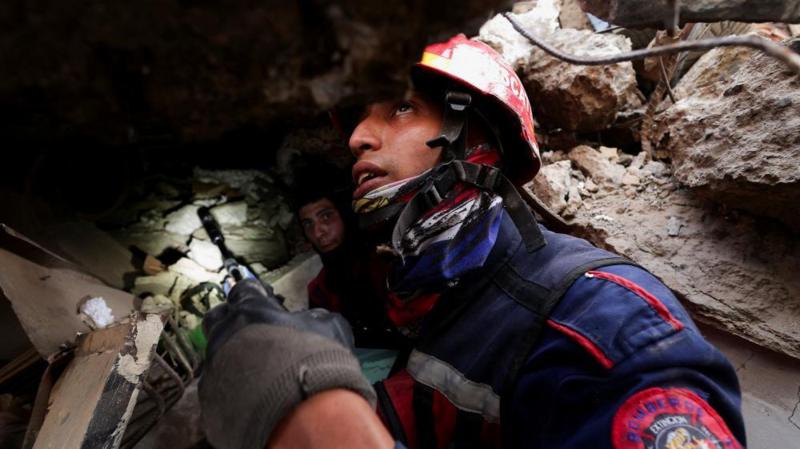
Rescuers are searching for survivors trapped under rubble after powerful earthquakes hit Venezuela, killing at least 1,450 people. They use trained dogs, sound detectors, cameras, drones, and thermal imaging to find and help survivors.
Key Facts
Venezuela experienced strong twin earthquakes with over 1,450 deaths reported so far.
Rescue teams from the UK and other countries are working with local rescuers.
Search dogs can detect human scent even through 10 meters (about 33 feet) of rubble.
Rescuers listen carefully and use sound devices to pick up noises from trapped people.
Cameras on long sticks help rescuers see into small spaces and communicate with survivors.
Small drones, called "cockroach drones," are used to explore difficult areas.
Thermal imaging helps find people who are hidden from direct view.
The critical 96-hour window to find most survivors ended recently, but searches continue.
Read the Original
Want the full story? Tap a source to open the original
article.
A record heat wave in France has caused many deaths, filling mortuaries in Paris beyond capacity. Authorities are still counting the number of heat-related deaths, mostly among older people, while temporary storage solutions are being arranged.
Key Facts
France experienced a record-breaking heat wave, with temperatures above 40°C (104°F).
More than 1,200 deaths occurred on the hottest day, higher than the usual 900 to 1,000 deaths a day.
During three days at the peak of the heat, at least 1,000 additional deaths were registered, mostly people aged 65 and older.
Many deaths happened at home, especially in the Paris region, with a 40% increase in home deaths.
Paris mortuaries are full, requiring bodies to be stored far from the city, including 50 miles away in Chartres.
Temporary refrigerated storage units have been installed, but more space is needed and authorities' approval is awaited.
Past heat waves in France caused thousands of deaths, leading to changes in care for older people.
Funeral directors note that lessons from previous heat waves may not have been fully applied.
Read the Original
Want the full story? Tap a source to open the original
article.
Andy Burnham, who is expected to become the next UK prime minister, promised to bring big changes to the country's politics. He could take office around July 20 and would be the seventh person to hold the job in the last ten years.
Key Facts
Andy Burnham is likely to be the next prime minister of the United Kingdom.
He gave a speech in Manchester on Monday.
Burnham promised to make significant changes in UK politics.
He could become prime minister as soon as July 20.
If confirmed, he will be the seventh prime minister in ten years.
Read the Original
Want the full story? Tap a source to open the original
article.
Israeli forces carried out attacks in southern Syria near the occupied Golan Heights, causing families to flee their homes. The Syrian government and Turkey condemned the attacks, calling them violations of Syria’s sovereignty and international law.
Key Facts
Israeli forces attacked the village of Abdin in western Deraa province on Sunday, firing shells near civilian homes.
Families fled to nearby villages during the night but returned the next morning after Israeli forces withdrew.
Since late 2024, Israel has increased military actions in southern Syria, including nearly 300 operations in June alone in Deraa and Quneitra provinces.
Israel controls the Golan Heights, a territory it captured in 1967 and annexed in 1981, a move largely rejected internationally.
Israeli officials have stated they plan to keep troops in Syrian territory indefinitely, similar to their presence in Lebanon and Gaza.
Syrian and Turkish governments strongly condemned the attacks as violations of Syria’s sovereignty and international law.
Israel describes Syrians resisting its forces as "terrorists," but details or evidence of casualties in the latest strike were not provided.
The situation adds instability to Syria, which is still recovering from years of civil war.
Read the Original
Want the full story? Tap a source to open the original
article.
Mehdi Hasan, a journalist experienced in US and UK politics, shares his views on the current political changes in Britain and upcoming US elections. He explains why independent journalism is very important at this time.
Key Facts
Mehdi Hasan has observed US and UK politics for many years.
Britain is about to have a new prime minister, nearly a decade after Brexit.
The US has midterm elections coming up in November.
Mehdi Hasan is the Editor-in-Chief of Zeteo.
The discussion highlights the role of independent journalism today.
The episode is produced by a team including Sonia Bhagat and Alexandra Locke.
The podcast can be found on multiple social media platforms like X, Instagram, Facebook, and YouTube.
Read the Original
Want the full story? Tap a source to open the original
article.