Rescuers in Kyiv continue searching through rubble after a Russian missile and drone attack that killed at least 30 people. The city held a day of mourning with flags lowered to half-mast to honor those who died.
Key Facts
The attack occurred in Kyiv, the capital of Ukraine.
At least 30 people were killed by Russian missiles and drones.
Rescue teams are still looking for survivors under the rubble.
Kyiv marked a day of mourning with flags at half-mast.
The attack happened on July 2, 2026.
This is part of ongoing conflict involving Russia and Ukraine.
The attack targeted civilian areas in the city.
Read the Original
Want the full story? Tap a source to open the original
article.
The Onion comedy group released a parody of the conspiracy website InfoWars, showing a fake video of its founder Alex Jones dying. This comes as The Onion tries to take control of InfoWars after Jones was ordered to pay over $1 billion to families affected by the Sandy Hook shooting.
Key Facts
The Onion launched a parody called "ALEX JONES IS DEAD—Real InfoWars Livestream."
Comedian Tim Heidecker imitates Alex Jones in the video.
The fake video shows Jones dying violently in a car explosion.
Alex Jones was ordered to pay more than $1 billion to Sandy Hook victims' families for false claims about the shooting.
The Onion has been trying to gain control of InfoWars for over a year.
Alex Jones has not responded publicly to the parody but continues posting his own show online.
Newsweek attempted to contact Jones for comment but had no reply at the time of the report.
The story is ongoing and may have future updates.
Read the Original
Want the full story? Tap a source to open the original
article.
A woman is the main suspect in a bomb attack in Monaco that injured three people. Authorities have issued an arrest warrant for her and reported she was seen in Germany. The attack is believed to have targeted a Ukrainian-born businessman living in Monaco.
Key Facts
A parcel bomb exploded in Monaco, injuring three people including a child.
The suspected attacker is a woman who was seen wearing a black fisher’s hat on CCTV.
She may have tried to disguise herself as a man.
An arrest warrant and an Interpol red notice have been issued for the suspect.
The bombing targeted Vadym Iermolaiev, a wealthy Ukrainian-born businessman now living in Monaco.
Iermolaiev has faced sanctions in Ukraine for business activities in Crimea, a region annexed by Russia.
The injured were taken to hospitals in nearby Nice, France; one adult remains in serious condition.
Monaco’s authorities praised international police cooperation in identifying the suspect quickly.
Read the Original
Want the full story? Tap a source to open the original
article.
A journalist tested 53 reusable water bottles to find the best ones for stopping leaks, looking good, and helping the environment. The testing included checking how well bottles keep liquids cool or warm, how durable they are, and how eco-friendly their brands are. The top bottles were then donated to charity.
Key Facts
The writer tested 53 different water bottles over four months.
Testing included dropping bottles, checking for leaks while hanging in bags, and measuring how well insulated bottles keep drinks cold or warm.
The bottles were also evaluated for weight when empty and full.
The environmental impact of the brands was reviewed, including durability and recyclability.
The top recommended bottles include Owala FreeSip as the best overall and Ion8 as the best budget option.
Kids' bottles were tested by children to simulate school use.
After testing, all bottles were donated to charity for resale.
The testing aimed to find bottles that help people stay hydrated while being kind to the planet.
Read the Original
Want the full story? Tap a source to open the original
article.
The article discusses how views of the United States have changed in China and Mexico. In China, people once admired the US but now see it less favorably due to economic conflicts and social issues. In Mexico, historical conflicts and recent American political attitudes affect their relationship with the US.
Key Facts
Many older Chinese citizens see the US as a troublemaker because of long-standing political tensions.
Chinese elites, including President Xi Jinping, have historically sent their children to study in the US.
Over the past decade, negative views of the US have risen in China due to tariffs and social problems like gun violence and homelessness.
The US imposed painful tariffs on Chinese goods during President Trump’s administrations, which affected relations.
China’s economy remains competitive with fast, cheap consumer goods but low profits.
In Mexico, the legacy of the 1846 Mexican-American war and the loss of territory still influence attitudes toward the US.
President Trump’s remarks celebrating the 1846 war increased tensions between Mexico and the US.
Mexico and the US have had long periods of cooperation in trade and security despite their complex history.
Read the Original
Want the full story? Tap a source to open the original
article.
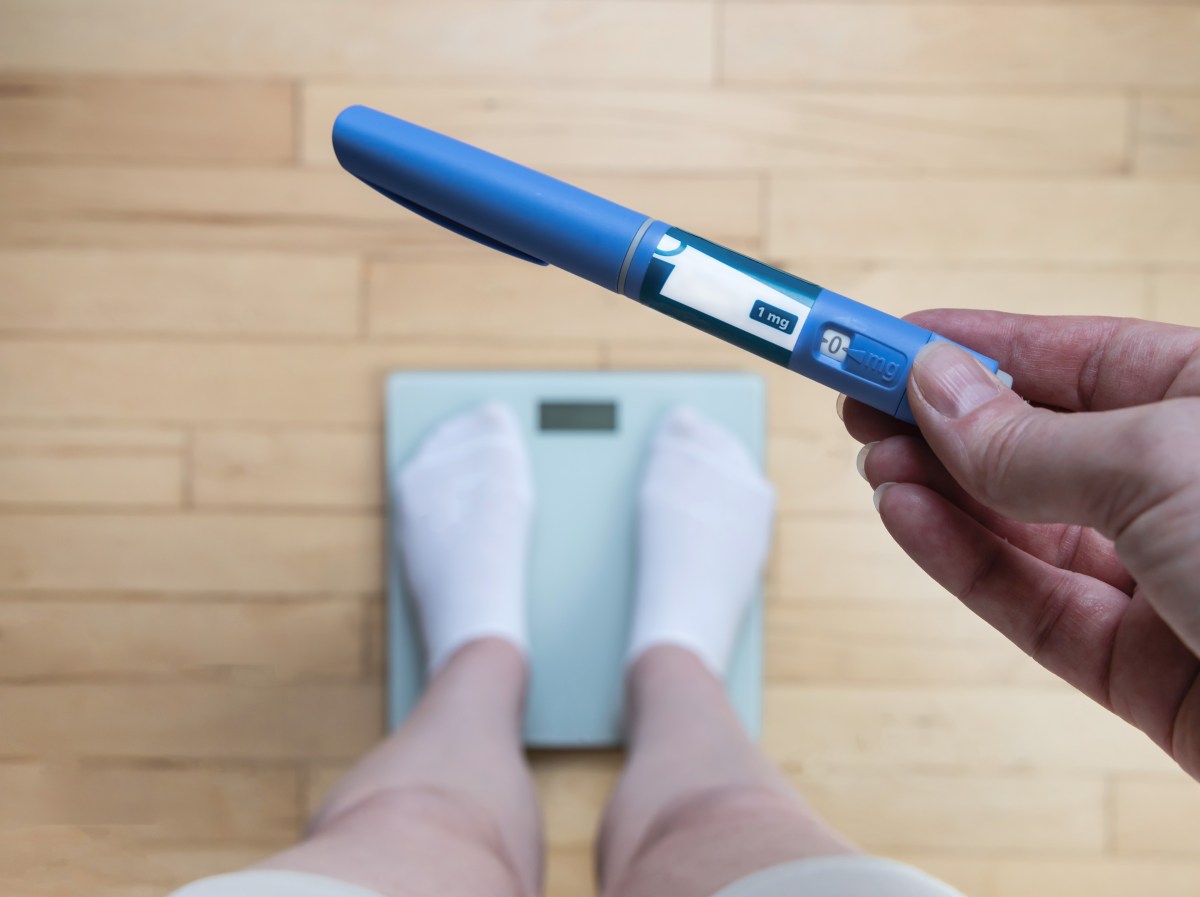
Martin Luther King III argues that obesity is a serious chronic disease affecting many Americans, especially in low-income and minority communities. He calls for better access to obesity treatments through Medicaid to ensure fairness and reduce health disparities.
Key Facts
Obesity is a chronic disease linked to heart disease, diabetes, stroke, and other serious illnesses.
It affects low-income communities and people of color more than others.
New medicines for obesity, like GLP-1 treatments, show promise but are often expensive and not covered by Medicaid.
Some states, including California, limit Medicaid coverage for obesity treatments.
Lack of access means many people must wait until their health gets worse before receiving care.
Delaying treatment may increase emergency room visits and hospital stays, raising overall health costs.
Stigma around obesity causes people to face judgment instead of support.
King urges policymakers to treat obesity like other chronic diseases and provide equal access to treatment regardless of income.
Read the Original
Want the full story? Tap a source to open the original
article.
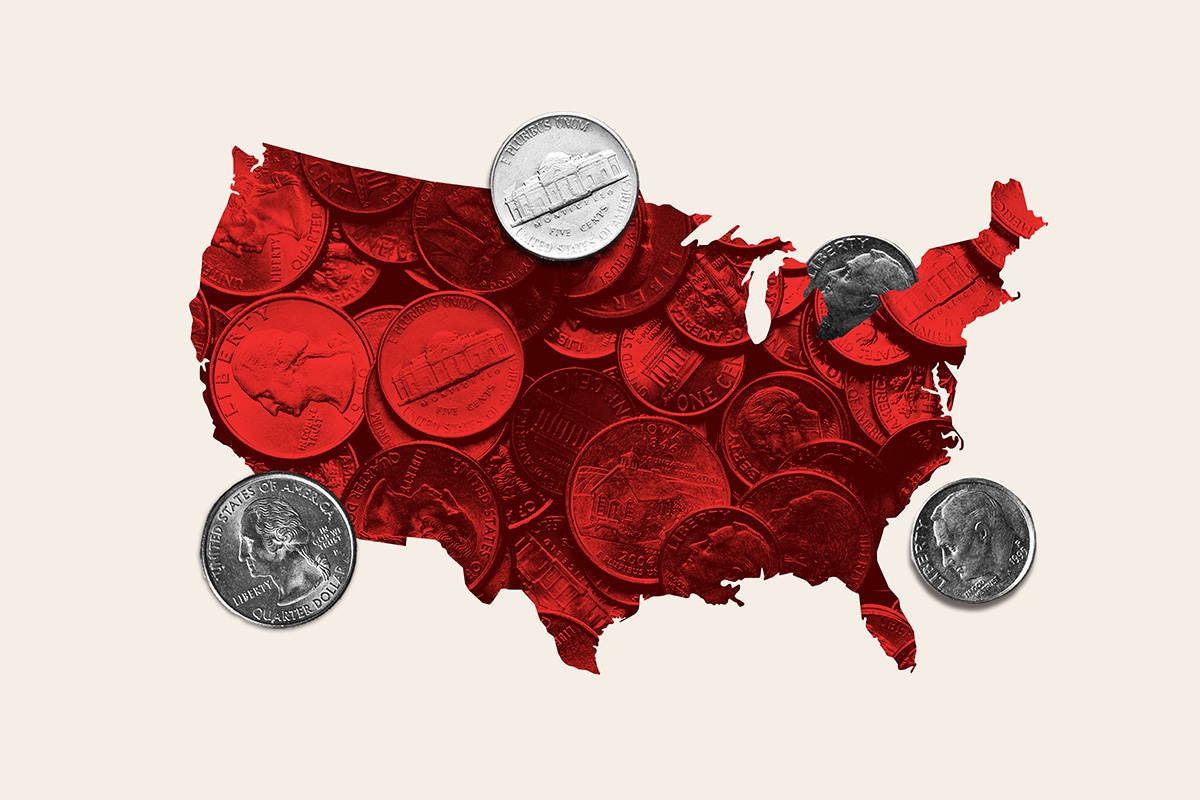
The U.S. national debt has grown from $71 million in the late 1700s to over $39 trillion today. This huge rise happened during wars, financial crises, and periods of economic growth, reflecting the country's economic changes over 250 years.
Key Facts
The first recorded U.S. national debt was $71 million in 1790, mostly from the Revolutionary War.
President Andrew Jackson paid off the entire U.S. debt by 1835, the only time the country was debt-free.
The Civil War caused the debt to rise from $65 million in 1860 to nearly $3 billion in 1865.
World War II spending pushed the debt from $43 billion in 1940 to over $250 billion in 1945.
After World War II, the debt was more than 100% of the U.S. economy's size (GDP) for the first time.
The national debt passed $1 trillion in 1981 during President Ronald Reagan’s term.
The debt has grown much faster in recent decades, reaching over $39 trillion today.
Concerns are rising about how sustainable this level of debt is and its possible effects on the economy.
Read the Original
Want the full story? Tap a source to open the original
article.
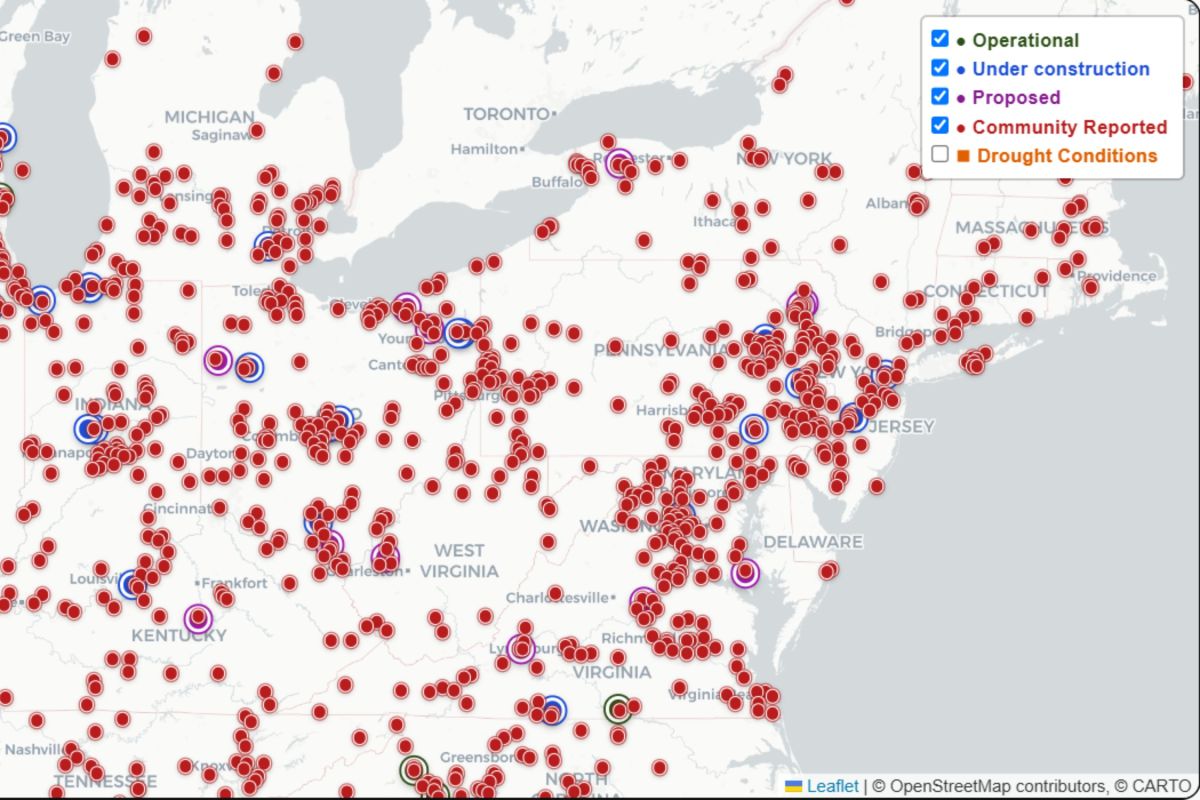
Some of the largest data centers in the U.S. are located in areas where power grids are already under stress or may face problems soon. In regions like the Mid-Atlantic and Texas, high electricity demand caused by heat waves and fast growth in data centers is pushing the power systems to near or above record levels.
Key Facts
The Mid-Atlantic grid, managed by PJM Interconnection, is seeing electricity demand close to or above its highest summer peak from 2006.
PJM serves parts of 13 states and Washington, D.C., including areas with many data centers like Northern Virginia.
The Department of Energy says rising demand in PJM is mainly driven by data centers, along with electrification and manufacturing.
Emergency orders allow cutting power to data centers with backup electricity in extreme situations to protect the overall grid.
Northern Virginia has the world’s largest concentration of data centers, with capacity of 11.3 gigawatts.
Texas’s grid operator ERCOT expects electricity demand to break records again in 2024 due partly to new data centers and other big projects.
ERCOT believes blackouts this summer are unlikely due to new power plants coming online, but rising demand remains a concern.
Electricity use in Texas is projected to grow by 7% in 2025 and 14% in 2026 because of data centers and cryptocurrency mining.
Read the Original
Want the full story? Tap a source to open the original
article.
The United States has experienced a sharp drop in immigration since President Donald Trump’s second term began in 2025, due to strengthened immigration enforcement and deportations. This decrease in immigration has slowed U.S. population growth and could affect the country’s future workforce and demographics.
Key Facts
President Donald Trump began a large-scale deportation effort after his 2025 inauguration, resulting in nearly 3 million migrants leaving the U.S. within a year.
The Pew Research Center found that 51% of voters see illegal immigration as a big problem, with higher concern among Republicans (78%) than Democrats (27%).
Net immigration to the U.S. became negative for the first time in at least ten years in 2025, with estimates ranging from about -295,000 to -10,000 people.
Census data showed net international migration peaked at 2.7 million in 2024, then dropped to 1.3 million in 2025, and could fall to about 321,000 in 2026.
The U.S. population growth slowed to 0.5% between mid-2024 and mid-2025, the lowest rate since the COVID-19 pandemic.
Experts disagree on immigration’s future impact: some warn a drop in immigration will age the workforce and shrink the population, while others advocate for lower immigration levels.
The two immigration researchers mentioned have outlined three possible future scenarios based on varying migration levels.
Immigration remains a highly partisan and controversial topic in American politics and society.
Read the Original
Want the full story? Tap a source to open the original
article.
A large heat dome will cause very hot and dry weather in the western and southern United States around the Fourth of July. Meanwhile, some areas in the central and eastern U.S. will have thunderstorms that might affect outdoor holiday events.
Key Facts
A heat dome will cause temperatures in the 90s and over 100 degrees in parts of the West and Texas.
Hot, dry conditions raise concerns about wildfires, especially where fireworks are planned.
Some western states have banned fireworks or canceled displays to prevent fires.
Thunderstorms could disrupt celebrations from the Great Plains to the East Coast.
The Midwest and some mid-Atlantic states are expected to have mostly dry and comfortable weather.
Smoke from wildfires may affect areas downwind, including parts of the Plains and Midwest.
Weather can change quickly, so people should follow local updates and safety guidelines.
Officials recommend checking rules related to fireworks before celebrating.
Read the Original
Want the full story? Tap a source to open the original
article.
The United Nations weather agency warns that the El Nino weather pattern is already happening and will likely get stronger between July and September. This could cause extreme weather like heatwaves, droughts, and heavy rain in many parts of the world.
Key Facts
The World Meteorological Organization (WMO) says El Nino has started and will intensify soon.
El Nino usually peaks between November and February.
The WMO has set up warning systems to help governments and aid groups prepare.
El Nino warms the surface of the Pacific Ocean and changes weather worldwide.
It happens every 2 to 7 years and lasts about 9 to 12 months.
El Nino cycles with La Nina as part of the ENSO weather cycle.
Global ocean temperatures reached a new high in June, partly due to El Nino.
The last El Nino helped make 2023 the second-hottest year and 2024 the hottest since the 1800s.
Read the Original
Want the full story? Tap a source to open the original
article.
President Donald Trump called it "ridiculous" for the U.S. to keep giving more support to NATO than other member countries. He said Europe should take charge of its own defense and criticized allies for not helping the U.S. enough, especially about the war in Iran. A NATO meeting in Turkey is planned soon to discuss these issues.
Key Facts
President Trump said the U.S. has a "one sided" relationship with NATO, meaning the U.S. pays more than others.
He posted on Truth Social that NATO countries "were not there for us."
Trump has criticized European allies for limiting U.S. military base use during the Iran conflict.
He suggested the U.S. might leave NATO, but Congress must agree first.
NATO members agreed last year to increase defense spending to 5% of their economies by 2035.
The NATO summit will take place in Ankara, Turkey, with 32 member states attending.
NATO was created in 1949 to protect Europe and maintain U.S. influence in world security.
The U.S. spends much more on NATO than other member countries, shown in a chart shared by Trump.
Read the Original
Want the full story? Tap a source to open the original
article.
Last week, western Europe experienced a heatwave that broke many June and all-time temperature records, with countries like the UK, Germany, Netherlands, and Hungary reaching unusually high temperatures. Meanwhile, north-western China is undergoing a week-long heatwave with temperatures above 45°C, causing health warnings and risks to infrastructure.
Key Facts
The UK reached 37.7°C in Norfolk on 27 June, breaking its June record by 2.1 degrees.
Germany recorded 41.7°C on 28 June, surpassing its previous all-time record three days in a row.
The Netherlands set a new June high of 39.4°C on 26 June.
Hungary hit 42°C in Szécsény on 30 June, breaking its all-time temperature record.
Tropical nights, where temperatures stay above 20°C overnight, were widespread in these countries, with a high minimum temperature of 29.4°C in East Saxony, Germany.
France had multiple days above 40°C, causing some nuclear power plants to shut down.
North-western China is experiencing temperatures around 45-47°C, with extreme heat warnings and risks of heatstroke, fires, and damage to roads and railways.
Local authorities in China advise reducing outdoor work, caring for vulnerable people, and implementing fire prevention.
Read the Original
Want the full story? Tap a source to open the original
article.
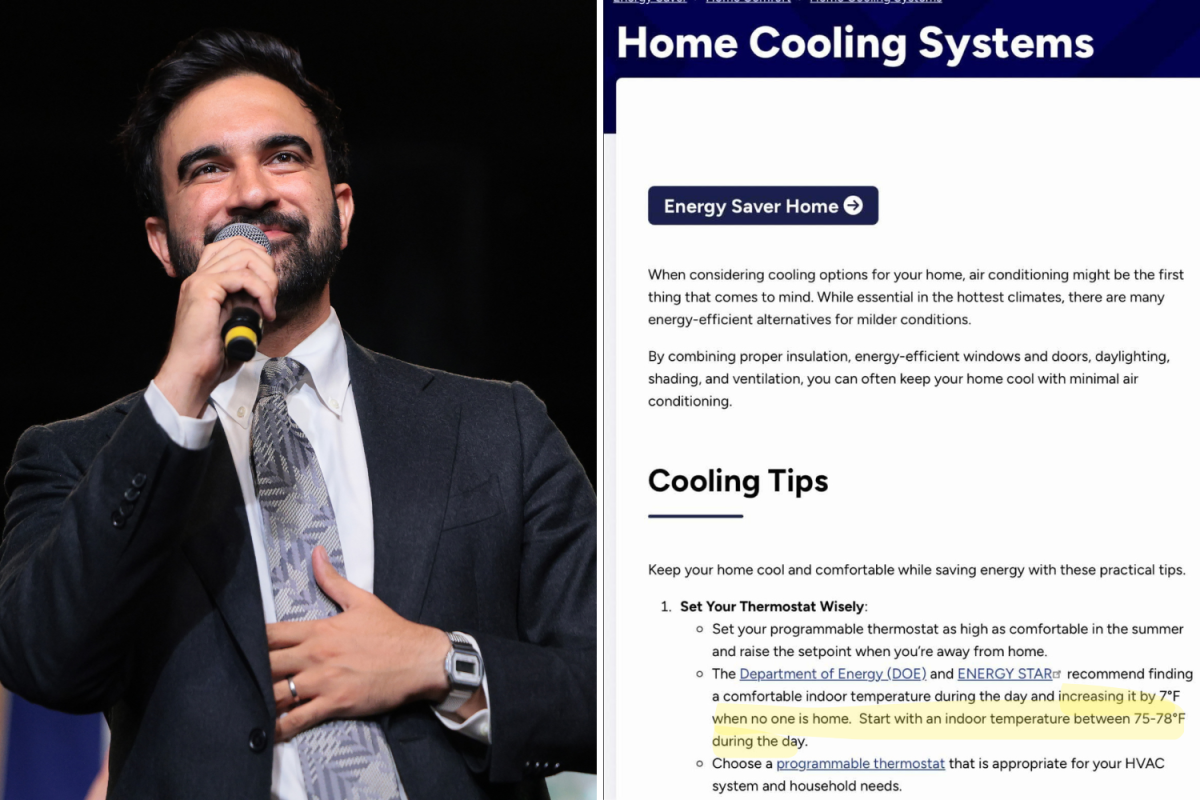
The U.S. Department of Energy (DoE) removed a webpage that recommended setting home thermostats between 75 and 78 degrees Fahrenheit in summer to save energy. This happened shortly after New York City’s mayor encouraged residents to set their air conditioners to 78 degrees to avoid overloading the power grid during a heat wave.
Key Facts
The DoE’s removed webpage was part of its "Energy Saver" advice and suggested setting indoor temperatures between 75-78°F during the day.
The webpage also recommended increasing the thermostat by 7°F when no one is home.
Other energy-saving tips included weatherproofing homes, using window coverings, and maintaining air conditioners.
The webpage remained online at least until early July but now shows a “Page not found” error.
NYC Mayor Zohran Mamdani urged residents to set AC units to 78 degrees to reduce power demand during a dangerous heat wave.
Some conservative politicians criticized the mayor’s advice, calling it “socialism” or “communism.”
Similar thermostat-setting appeals were made in Texas in 2015 to reduce electricity use during heat waves.
The heat wave has led the National Weather Service to issue Extreme Heat Warnings in 26 states.
Read the Original
Want the full story? Tap a source to open the original
article.
President Trump’s family crypto company, World Liberty Financial, earned over $500 million from selling digital tokens in 2025. Pakistan signed an agreement to explore using the company’s stablecoin, USD1, for cross-border payments, giving Pakistan unique access to the Trump administration, though no actual stablecoin transactions have taken place.
Key Facts
World Liberty Financial, linked to President Trump’s family, made more than $500 million from token sales in 2025.
Pakistan’s Ministry of Finance signed a memorandum of understanding with WLF’s affiliate SC Financial Technologies in January to explore using USD1 stablecoin.
Pakistan’s Prime Minister Shehbaz Sharif and army chief Asim Munir welcomed WLF executives during the signing ceremony.
No pilot projects, licenses, or transactions involving the USD1 stablecoin have occurred in Pakistan so far.
A stablecoin is a digital currency tied to a fixed value, usually the US dollar, used for internet money transfers without banks.
Pakistan ranks third globally in crypto adoption but most local crypto activity uses the stablecoin USDT, not USD1.
Pakistan received $38.3 billion in remittances last year, a record high and a 27% increase from the year before.
Financial experts question the need for USD1 since formal banking channels already handle large remittance flows efficiently.
Read the Original
Want the full story? Tap a source to open the original
article.
The Ukrainian military has increased its ability to strike targets deep inside Russia, hitting oil refineries, weapons factories, and other key sites. These attacks have caused fuel shortages and disruptions in Russia, while Russian forces continue heavy attacks in Ukraine, particularly around Kyiv and Donetsk.
Key Facts
Ukraine is striking targets far inside Russia, including major cities like Moscow and St. Petersburg.
Russian fuel refineries have been repeatedly hit, causing fuel shortages and explosions visible to civilians.
Russia has moved many air defenses to protect key areas, leaving other targets more vulnerable.
Ukraine uses domestically made drones and modified missiles for these attacks, instead of relying on planes.
Russian President Putin has admitted to supply problems caused by the strikes but downplayed their impact.
Russia has suffered about 1.4 million battlefield casualties since the 2022 invasion of Ukraine.
Russian forces continue heavy shelling and attacks on Ukrainian cities, resulting in civilian deaths.
Ukraine’s President Zelensky announced a 40-day campaign aiming to pressure Russia to negotiate peace.
Read the Original
Want the full story? Tap a source to open the original
article.
New Jersey lawmakers have passed the Fair Price Protection Act to stop retailers from using shoppers’ personal data to charge different prices for the same grocery items. The bill now waits for Governor Mikie Sherrill’s signature and would ban using data collected through electronic surveillance and other sources to set individualized food prices.
Key Facts
The New Jersey Senate approved the Fair Price Protection Act by a 22-14 vote; the Assembly passed it 51-20-1.
The bill bans retailers and grocery delivery services from using personal data to charge different prices for the same products.
Personal data includes information gathered through electronic surveillance, biometric monitoring, and genetic data.
The bill includes a one-year pause on new electronic shelf labels while their role in surveillance pricing is studied.
Democrats support the bill, calling surveillance pricing a form of consumer fraud that hurts families.
Republicans oppose the bill, warning it may end loyalty programs and personalized discounts.
The bill allows promotions for broad groups like teachers and seniors and does not ban all discounts.
Maryland and Connecticut have similar laws, and New York has a pending bill on this issue.
Read the Original
Want the full story? Tap a source to open the original
article.
The United States is celebrating its 250th anniversary of independence this year. President Donald Trump plans to use this occasion to redesign Washington, DC, and update national museums, parks, and monuments to reflect his vision of American history.
Key Facts
The US marks 250 years since the Declaration of Independence in 2026.
Celebrations are taking place across the country.
President Donald Trump aims to make this event a highlight of his second term.
He plans to change the look of Washington, DC according to his preferences.
His vision will influence the appearance of museums, parks, and monuments.
The goal is to reshape how US history is presented to the public.
This makeover is part of a larger presidential project connected to the anniversary.
The changes focus on national symbols and public spaces in the capital.
Read the Original
Want the full story? Tap a source to open the original
article.
Paralives is a new life simulation game similar to The Sims, letting players create and control virtual people and their homes. Released in early access on PC in May 2026, it quickly sold many copies and attracted players with its creative building tools and inclusive character options.
Key Facts
The Sims series has dominated life simulation games for 26 years.
Paralives was originally a solo project by designer Alex Massé and now has a small development team.
Paralives launched on Steam in early access in May 2026 and sold 250,000 copies in eight hours.
It reached nearly 79,000 players online at the same time, close to The Sims 4’s peak.
The game emphasizes creativity and customization, allowing detailed body features and removing gender limits.
Building tools let players place and resize objects freely, unlike The Sims which restricts placement.
Paralives includes personalizable items like text on gravestones and doormats and has a "medical clutter" category with items like wheelchairs and sign language books.
Its art style is a comic-book look, different from The Sims’ more realistic style, and has sparked mixed reactions.
Read the Original
Want the full story? Tap a source to open the original
article.
A former European Parliament member and Greek journalist, Stelios Kouloglou, was hacked multiple times with Pegasus spyware while investigating the use of this spyware in the EU. A research group called Citizen Lab found the infections happened during Kouloglou’s work on a committee examining illegal surveillance.
Key Facts
Stelios Kouloglou served as a Member of the European Parliament (MEP) from 2015 to 2024.
Kouloglou’s iPhone was infected at least three times with Pegasus spyware in 2022 and 2023.
The infections occurred while Kouloglou worked on the PEGA Committee investigating illegal use of Pegasus spyware.
Pegasus spyware is developed by the Israeli company NSO Group and can take full control of a phone remotely.
Pegasus has been used to spy on journalists, lawyers, activists, and politicians worldwide.
Citizen Lab did not identify who was behind the hacks but found no evidence implicating the Greek government.
The spyware compromises confidential discussions and parliamentary matters related to the Pegasus investigations.
NSO Group claims it sells Pegasus only to vetted law enforcement agencies and denies responsibility for abuses.
Read the Original
Want the full story? Tap a source to open the original
article.