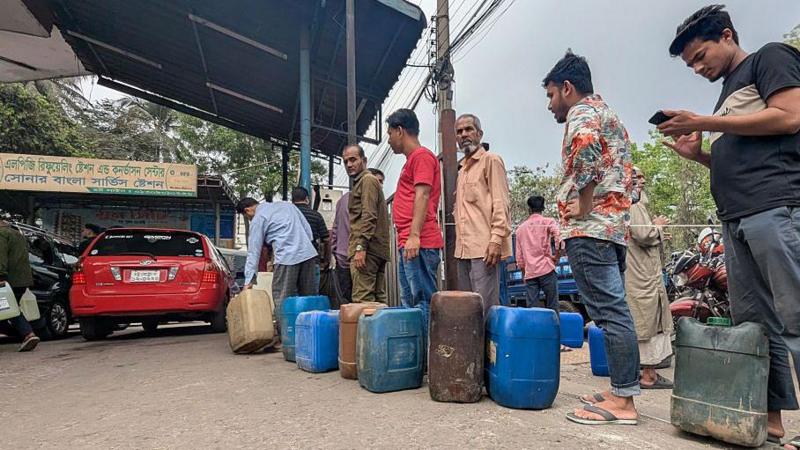
How Iran war laid bare the world's reliance on Gulf oil and gas
Summary
The conflict involving the US, Israel, and Iran has highlighted how much the world, especially Asia, depends on oil and gas from the Gulf region. The war has led to a significant increase in oil prices. Various countries are trying to cope by introducing fuel-saving measures and price caps.Key Facts
- The conflict has caused oil prices to rise by over a third, reaching $100 a barrel.
- The Strait of Hormuz, a crucial waterway for energy, has been effectively closed.
- Around 90% of oil and gas passing through the Strait of Hormuz is bound for Asia.
- South East Asia has been particularly affected by the disruption in oil supply.
- Many Asian refineries are specifically set up to process Gulf region crude oil.
- Some countries, like the Philippines, heavily depend on Middle Eastern oil.
- Fuel-saving measures, such as reducing workdays or adjusting air conditioner settings, have been introduced in several Asian countries.
- Various governments around the world, including South Korea and France, have implemented measures to manage rising fuel prices.
Read the Full Article
This is a fact-based summary from The Actual News. Click below to read the complete story directly from the original source.