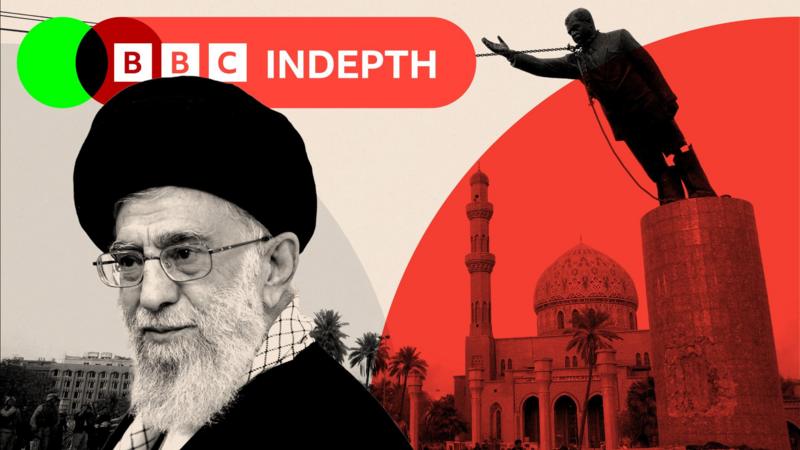
Mission accomplished? The 2003 boast that haunts today's Iran conflict
Summary
The article discusses the impact of the 2003 Iraq War and its relevance to the current U.S. conflict with Iran. It highlights how the Iraq War, which aimed for regime change, caused significant loss of life and financial costs and how its legacy influences today's geopolitics in the Middle East. The article also examines the motives behind the U.S. invasion of Iraq, including regime change and responses to past events.Key Facts
- In April 2003, a statue of Iraq's leader, Saddam Hussein, was pulled down in Baghdad by U.S. troops.
- The U.S. invasion of Iraq began 20 days before the statue's removal with a major bombing campaign.
- President George W. Bush declared "Mission Accomplished" shortly after the statue was toppled, though the conflict continued.
- The Iraq War resulted in approximately 461,000 deaths and cost the U.S. about $3 trillion.
- The war left significant impacts on the Middle East and public trust in politicians.
- Comparisons are drawn between the Iraq War and the current U.S. conflict with Iran.
- The motives for invading Iraq included regime change, human rights concerns, and strengthening U.S. deterrence after the 9/11 attacks.
- The U.S. intervention in Iraq partly aimed to reshape the Middle East by promoting democracy.
Read the Full Article
This is a fact-based summary from The Actual News. Click below to read the complete story directly from the original source.