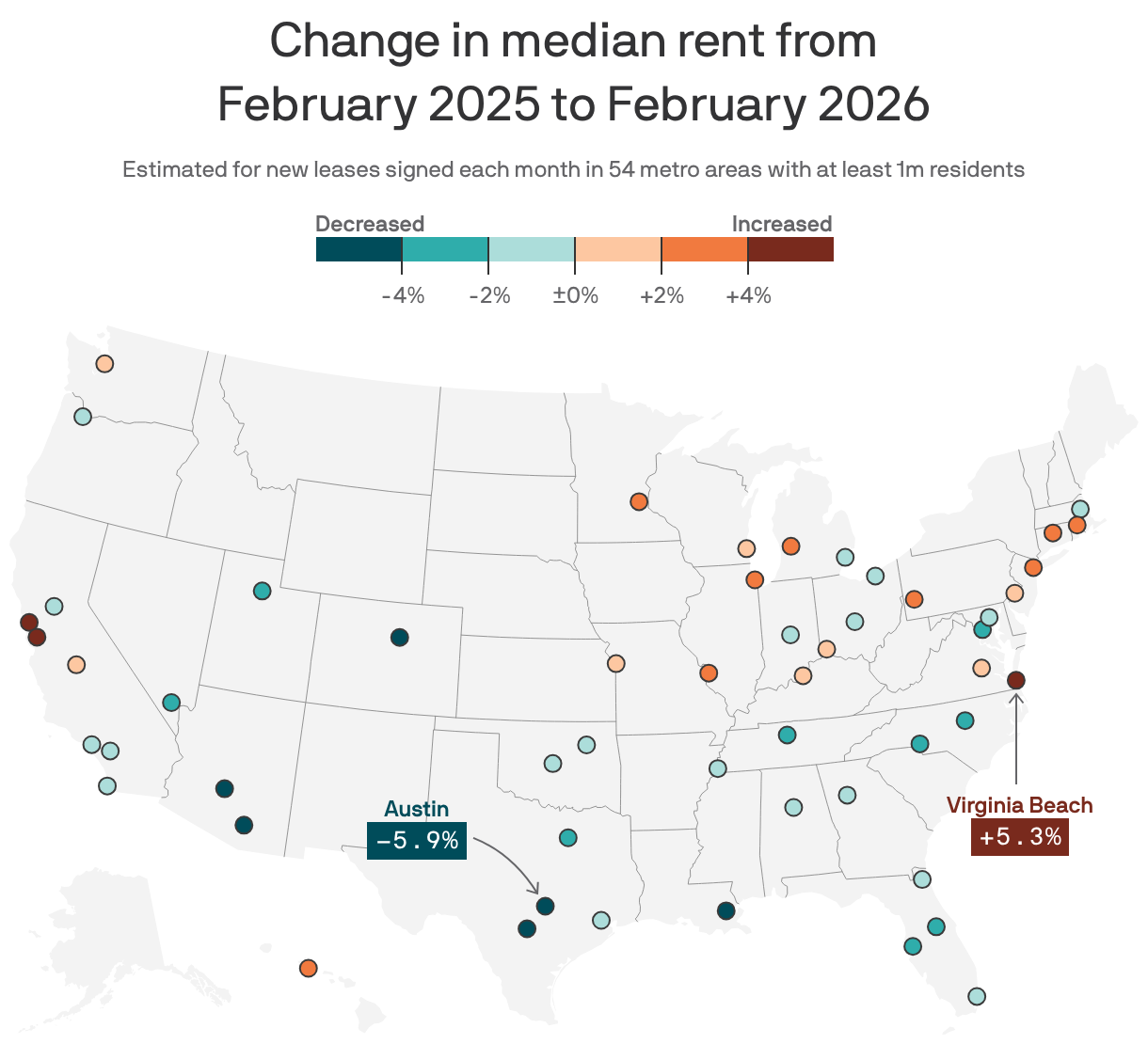
Where rents are falling (or rising) most
Summary
Rents are dropping in areas of the U.S. with a lot of new building, mainly in the South and Mountain West. However, rents remain high in the Midwest, Northeast, and parts of the West Coast due to tight rental markets and limited building space.Key Facts
- Rents in the U.S. have dropped 1.5% from a year ago but are still about 20% higher than before the pandemic.
- Many renters spend more than 30% of their income on rent and utilities, making them "cost-burdened."
- Cities like Austin saw a nearly 6% rent decrease, while San Antonio, New Orleans, and Denver experienced around a 5% drop.
- Phoenix and Tampa saw a 4% decrease, and Salt Lake City had a 2% drop in rents.
- In contrast, rents rose in Virginia Beach, the Bay Area, Chicago, and St. Louis by up to 5%.
- The Midwest, Northeast, and West Coast face tighter rental markets due to less available land for building.
- High building costs and an excess of supply in some areas discourage new projects.
- More people are renting because buying homes is too expensive, which helps keep rents high nationwide.
Read the Full Article
This is a fact-based summary from The Actual News. Click below to read the complete story directly from the original source.