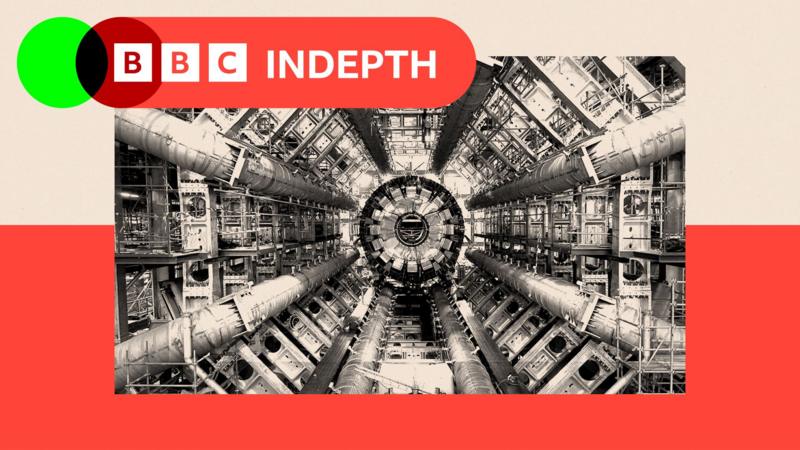
Higgs Boson breakthrough was UK triumph, but British physics faces 'catastrophic' cuts
Summary
British physicists made a significant breakthrough with the discovery of the Higgs boson, which helped win a Nobel Prize. However, recent funding cuts may hinder the UK's involvement in major scientific projects. This situation raises concerns about the future of basic scientific research in the country.Key Facts
- The Higgs boson discovery in 2012 confirmed theories proposed by British scientist Peter Higgs.
- Peter Higgs and François Englert won the Nobel Prize in Physics in 2013 for this work.
- The UK plans to cut funding for future upgrades of the Large Hadron Collider.
- These cuts could reduce UK participation in global physics and astronomy research.
- A leaked document suggests funds are being redirected from basic research to projects with clear economic benefits.
- Dr. Simon Williams, a physicist, highlights how funding cuts affect young scientists' ability to secure research grants.
- The UK Parliament's Science Innovation and Technology committee is investigating the impact of the proposed cuts.
Read the Full Article
This is a fact-based summary from The Actual News. Click below to read the complete story directly from the original source.