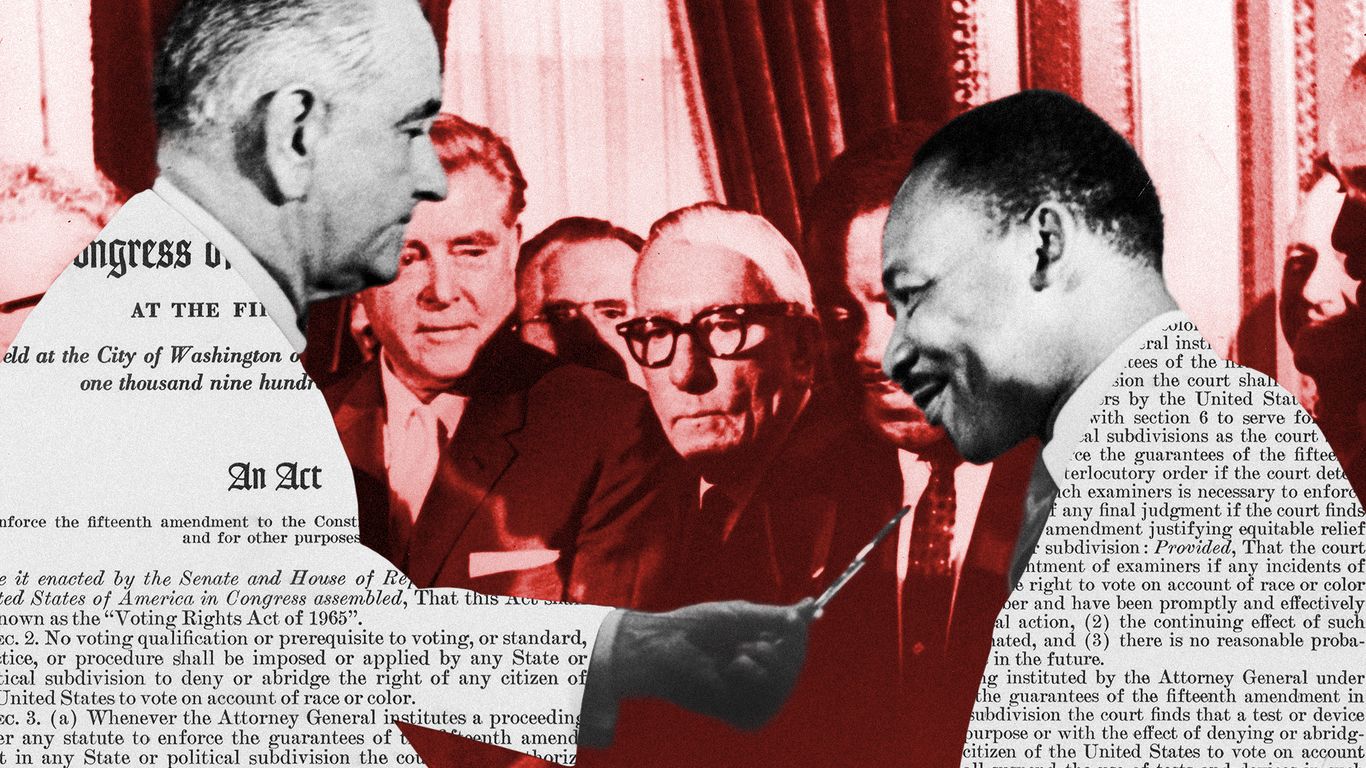
Summary
The 60th anniversary of the Voting Rights Act of 1965 is marked by renewed challenges to voting rights in the U.S. This includes legislative efforts pushing voting restrictions and the pushback from figures such as President Trump, who has promoted claims of voter fraud. Efforts to reinforce the Act face political hurdles, amid debates over voter ID and citizenship requirements impacting minority communities.
Key Facts
- The Voting Rights Act of 1965 aimed to eliminate barriers that prevented minorities from voting, but similar barriers have returned.
- Claims of voter fraud have been used to justify new voting restrictions, often affecting minority communities disproportionately.
- President Trump signed an order to tighten voter restrictions, including proof of citizenship to vote.
- A Republican-led bill, known as the SAVE Act, aims to enforce these restrictions but is stalled in the Senate.
- Sen. Raphael Warnock reintroduced the John R. Lewis Voting Rights Advancement Act to restore federal voting oversight, but it faces challenges.
- Some Republicans argue the new voting changes are necessary to ensure election integrity.
- New laws in Arizona and Montana restrict ballot collection, impacting Native American voters.
- Civil rights advocates argue these restrictions aim to reduce voter participation among minorities.