Summary
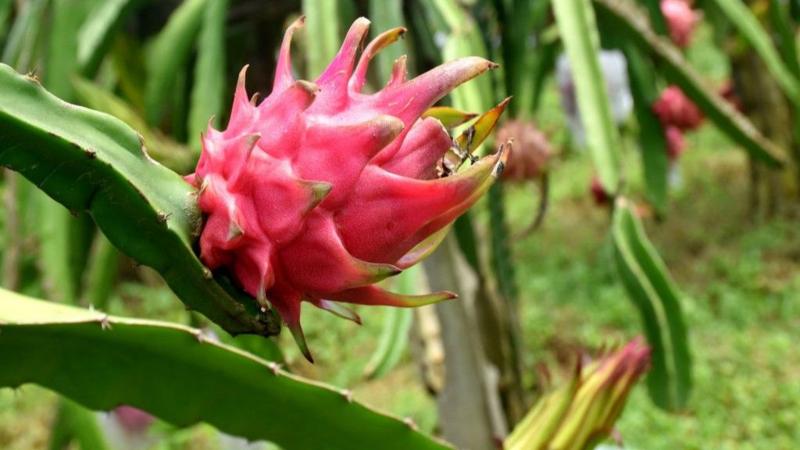
Indian farmers are increasingly turning to dragon fruit as a profitable alternative to traditional crops. The fruit requires less water, has lower disease risks, and offers a steady income over six months. Farmers benefit from stable prices and successful cultivation techniques.
Key Facts
- Arun Srinivas left finance to start farming dragon fruit in Karnataka, India.
- Dragon fruit requires less water and has a lower risk of disease compared to other fruits.
- India began focusing on dragon fruit cultivation after Prime Minister Modi praised farmers in 2020.
- Dragon fruit is cultivated using concrete pillars for the vines to climb.
- Dragon fruit can be harvested for six continuous months, providing steady income.
- Some farmers use honey bees to help pollinate the flowers, which bloom at night.
- In Wayanad, Kerala, farmers choose self-pollinating dragon fruit varieties to avoid nighttime dangers from wildlife.
- The switch to dragon fruit has made farms more financially sustainable.