Summary
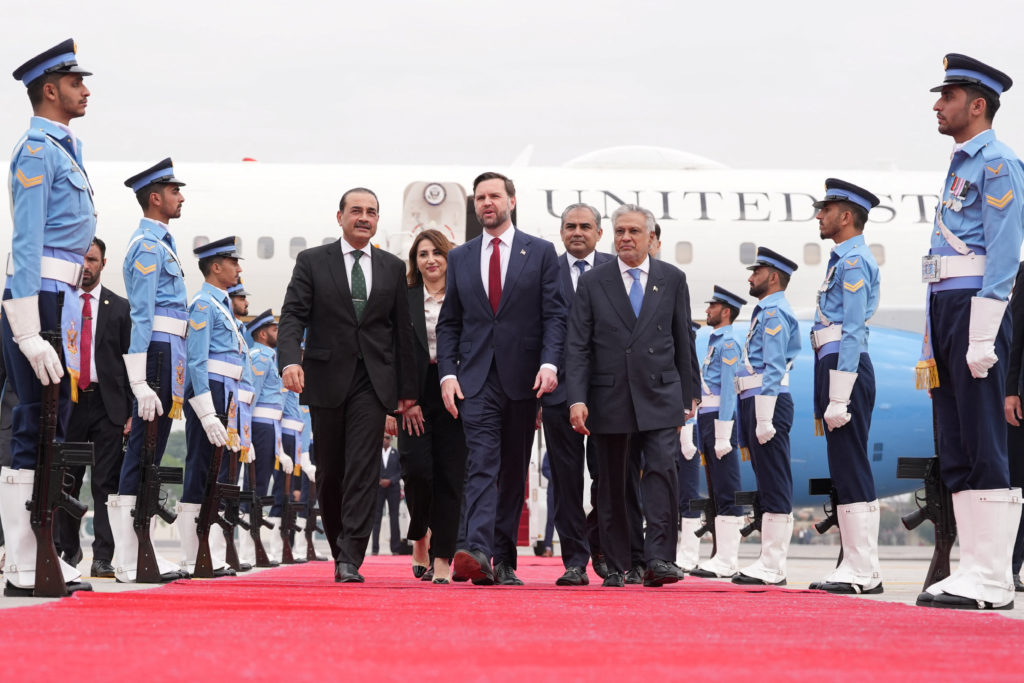
The United States and Iran held talks in Islamabad to discuss a ceasefire and nuclear issues but ended without an agreement. The U.S. delegation, led by Vice President JD Vance, stressed that Iran must commit to not developing nuclear weapons. Pakistani mediators are hopeful a new dialogue will begin soon.
Key Facts
- The U.S. and Iran held face-to-face talks in Islamabad, Pakistan, but did not reach an agreement.
- Vice President JD Vance led the U.S. team and emphasized the need for Iran to commit to not pursuing nuclear weapons.
- The discussions lasted 21 hours and were part of efforts to maintain a fragile two-week ceasefire.
- Pakistani Foreign Minister Ishaq Dar encouraged both sides to keep the ceasefire and offered to help continue talks.
- President Donald Trump and other top U.S. officials were consulted during the negotiations.
- The U.S. military moved two destroyers through the Strait of Hormuz during the talks.
- The ceasefire was challenged by ongoing conflicts involving Iranian-backed Hezbollah in Lebanon.
- This round of negotiations was one of the most direct contacts between the U.S. and Iran since 1979.