'Enormous' cave hidden under medieval castle could rewrite prehistory, researchers say
Summary
Researchers discovered a large cave beneath Pembroke Castle in Wales that holds rare evidence of early humans and animals from over 100,000 years ago. The University of Aberdeen will lead a five-year excavation to learn more about prehistoric life and how early humans lived.Key Facts
- The cave, called Wogan Cavern, is beneath an 11th-century castle in Pembrokeshire.
- It measures about 23 meters long and up to 10 meters high.
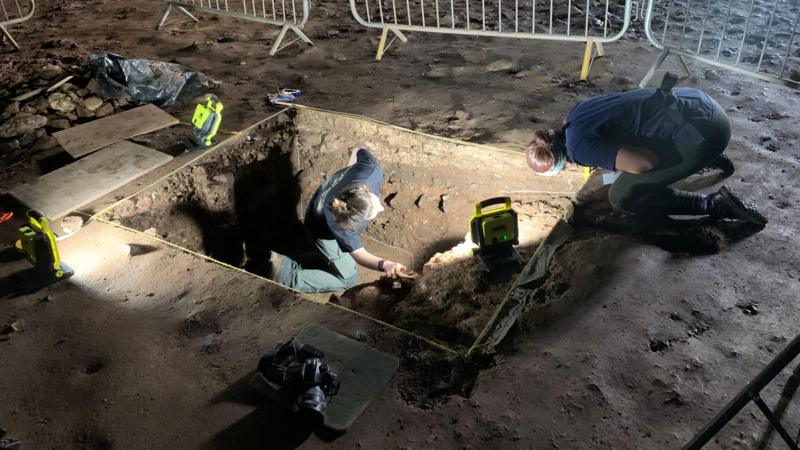
- Excavations between 2021 and 2024 found stone tools and bones of animals like hippopotamuses, mammoths, and woolly rhinoceroses.
- Some bones date back 120,000 years to a warmer period known as the last interglacial.
- Evidence suggests early modern humans (Homo sapiens) lived there between 45,000 and 35,000 years ago.
- There may also be signs of Neanderthal occupation in the cave from even earlier times.
- The site could help scientists understand how climate and environmental changes affected people over a long period.
- A larger excavation project will start in May, led by the University of Aberdeen with support from the Pembroke Castle Trust.
Read the Full Article
This is a fact-based summary from The Actual News. Click below to read the complete story directly from the original source.
