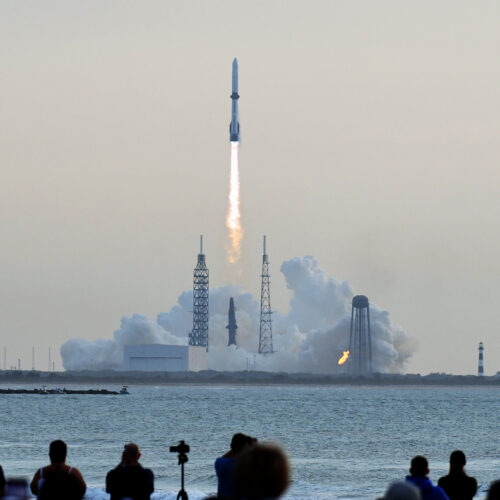
Blue Origin's rocket reuse achievement marred by upper stage failure
Summary
Blue Origin successfully flew and landed its large New Glenn rocket booster for the second time, marking a milestone in rocket reuse. However, the mission’s upper stage failed to place a satellite into the correct orbit, causing the satellite to be lost and planned for de-orbiting.Key Facts
- Blue Origin’s New Glenn rocket flew for the third time on Sunday, using a previously flown booster called Never Tell Me The Odds.
- The 321-foot-tall rocket launched from Cape Canaveral, Florida, with seven methane-powered engines on the main booster stage.
- The booster separated about three minutes after launch and successfully landed on a ship in the Atlantic Ocean after slowing down with engine burns.
- The reusable booster is larger and more powerful than Blue Origin’s smaller New Shepard rocket.
- The upper stage, powered by two hydrogen-oxygen engines, failed to reach the correct orbit for a communications satellite from AST SpaceMobile.
- The satellite entered an orbit too low to operate and will be intentionally brought back into Earth’s atmosphere.
- AST SpaceMobile expects to recover the satellite cost through insurance.
- Blue Origin plans to reuse engines from the November launch for future New Glenn flights and aims to increase its launch rate.
Read the Full Article
This is a fact-based summary from The Actual News. Click below to read the complete story directly from the original source.
