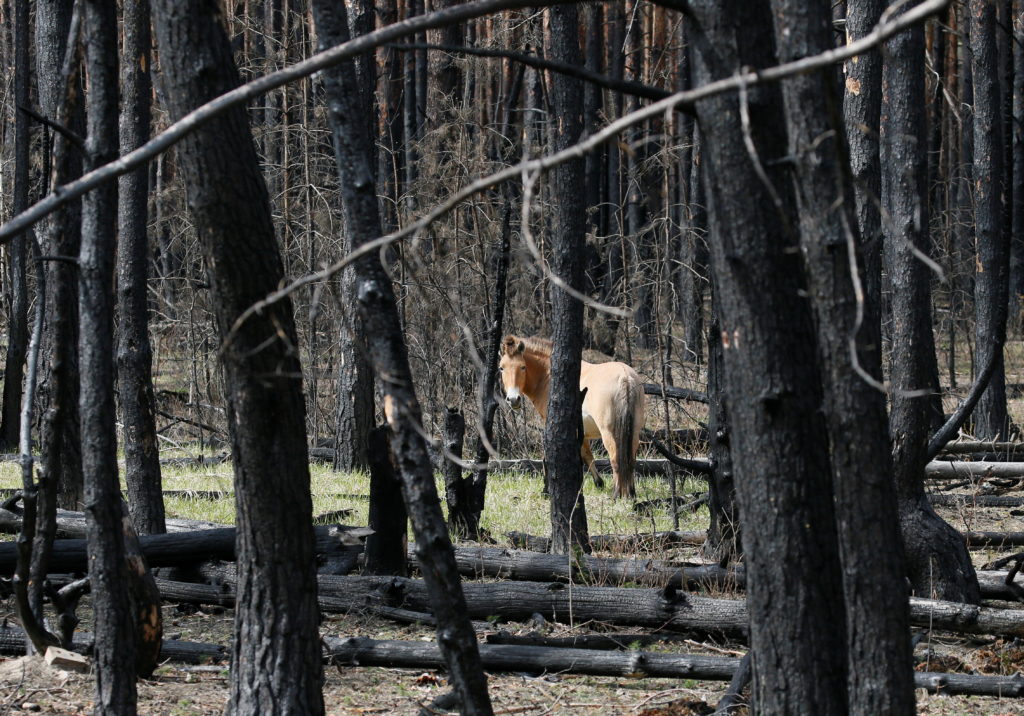
Chernobyl full of life as wildlife reoccupies a radioactive landscape
Summary
The Chernobyl exclusion zone in Ukraine, abandoned after the 1986 nuclear disaster, has become a refuge for wildlife. Animals like wild horses, wolves, bears, and deer have returned to live freely in the radioactive area where humans cannot safely live.Key Facts
- The Chernobyl nuclear accident happened on April 26, 1986, causing dangerous radiation spread across Europe.
- A 30-kilometer radius around the plant remains unsafe for people but is now a wildlife reserve.
- Przewalski's horses, native to Mongolia and once endangered, were introduced in 1998 and now roam freely.
- Other animals such as wolves, brown bears, lynx, moose, and red deer have also come back.
- The area’s nature is recovering quickly, with forests overtaking abandoned buildings and roads.
- Some wildlife show effects of radiation, like frogs with darker skin and birds developing cataracts.
- Military actions during Russia’s 2022 invasion caused fires and damage, creating new challenges for the ecosystem.
- Firefighters in the zone face risks like fires started by downed drones, which can spread radioactive particles.
Read the Full Article
This is a fact-based summary from The Actual News. Click below to read the complete story directly from the original source.
