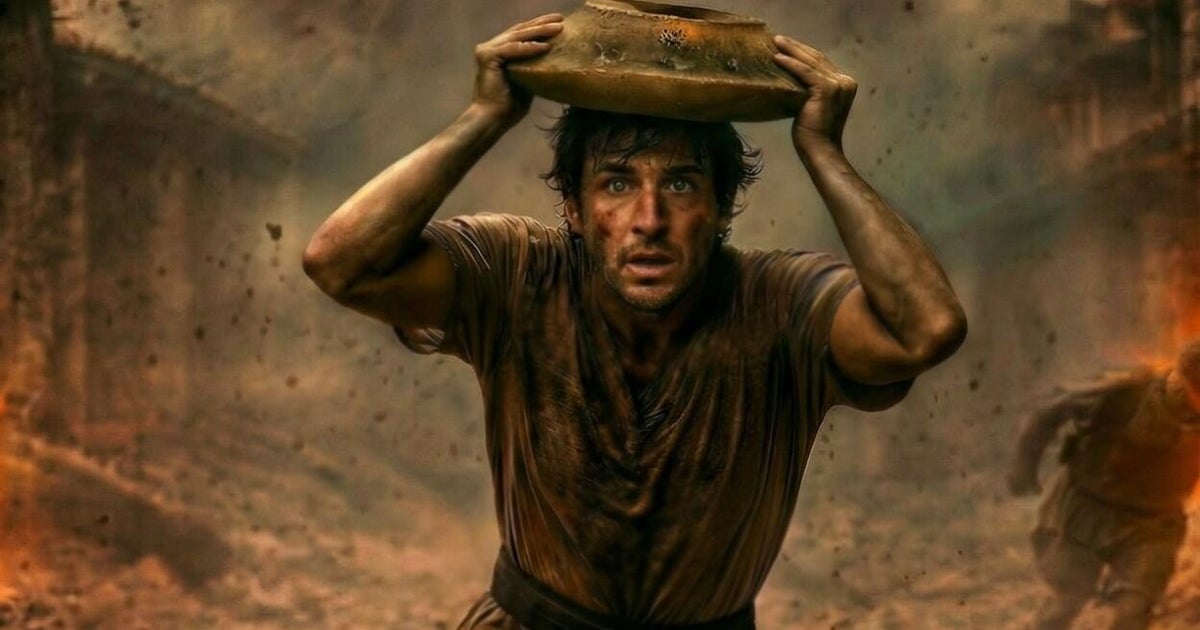
AI used to reveal face of victim fleeing Mount Vesuvius eruption
Summary
Archaeologists have used artificial intelligence (AI) to recreate the face of a man who died during Mount Vesuvius’s eruption in AD 79, which buried the ancient city of Pompeii. This digital portrait was created from skeletal data and helps us better understand this historic disaster and the people who lived through it.Key Facts
- The face reconstruction shows an older man who died while fleeing Pompeii during the volcanic eruption.
- The man was found near the city gates holding a terracotta mortar, likely used to protect his head from falling volcanic stones.
- He also carried personal items such as an oil lamp, an iron ring, and 10 bronze coins.
- The digital face was created using AI and photo-editing to turn archaeological data into a lifelike image.
- The project was done by Pompeii Archaeological Park and the University of Padua using data from excavations near the Porta Stabia necropolis.
- Pompeii was buried under ash and pumice, preserving details about the city and its people for nearly 2,000 years.
- Researchers hope AI can help protect archaeological data and make history more accessible and engaging for the public.
- The discovery provides new insights into the daily life and tragic final moments of Pompeii’s residents.
Read the Full Article
This is a fact-based summary from The Actual News. Click below to read the complete story directly from the original source.