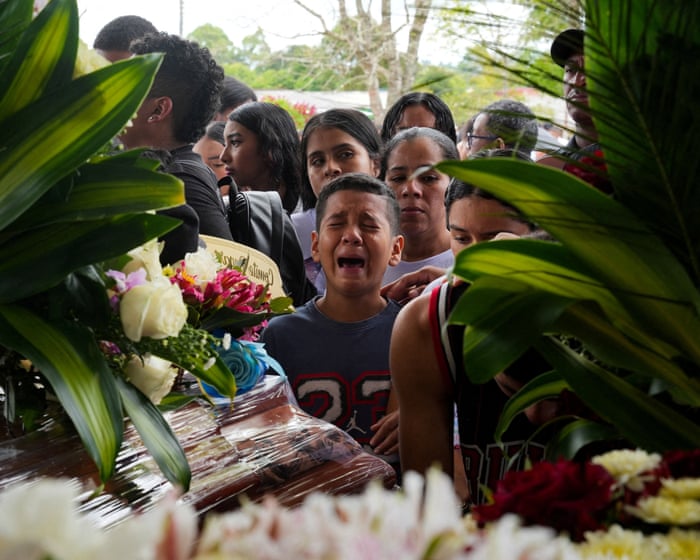
Colombian election reflects on ‘total peace’ promise as violence surges again
Summary
Colombia's 2016 peace deal helped reduce violence by stopping the main rebel group, Farc, from fighting. However, violence is rising again as some rebel factions reject the deal, and recent attacks have increased before the May 2026 presidential election, making peace a major issue for voters.Key Facts
- The 2016 peace deal led Farc to stop armed conflict and reduced violence in Colombia.
- Some rebel groups, including Farc dissidents and others, did not accept the peace deal.
- President Gustavo Petro, elected in 2022, promised “total peace” by seeking agreements with all armed groups.
- Despite a ceasefire announcement, attacks and violence have increased, including a deadly bombing that killed 21 people.
- The National Liberation Army (ELN), Colombia’s largest rebel group, denied agreeing to a truce with the government.
- Fighting between rebel groups recently caused over 80 deaths and displaced 60,000 people.
- The peace program’s failure has led to debate, with some presidential candidates wanting to end it and return to military action.
- Armed groups use ceasefires to grow their control over drug trafficking and mining territories.
Read the Full Article
This is a fact-based summary from The Actual News. Click below to read the complete story directly from the original source.