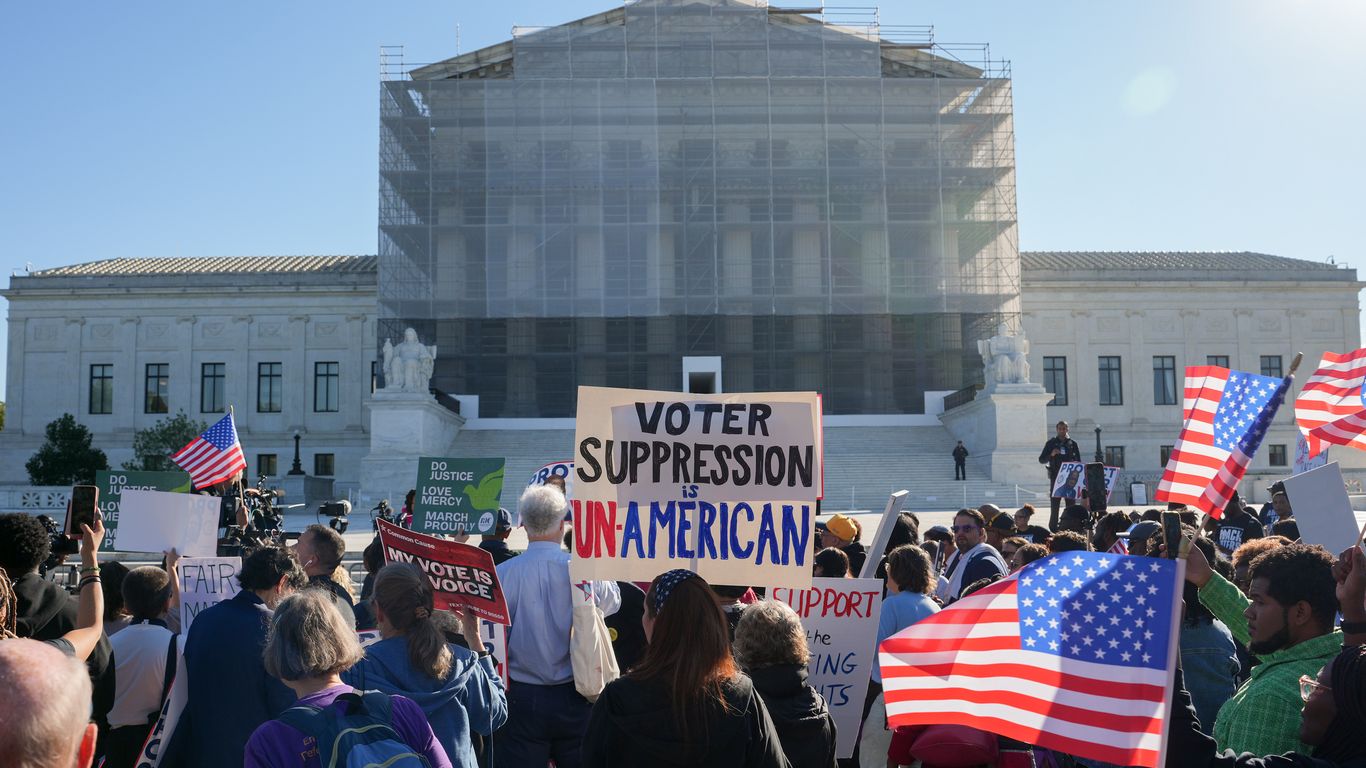
Supreme Court narrows key voting rights law
Summary
The Supreme Court limited a key part of the Voting Rights Act, ruling that Louisiana’s use of race to create a voting district was unconstitutional racial gerrymandering. This decision narrows protections against racially discriminatory election maps and could affect voting rights and political balance in the South.Key Facts
- The Supreme Court ruled against Louisiana’s congressional map that created a second majority-Black district.
- The court said no strong reason justified using race to draw that district, calling it racial gerrymandering.
- This decision narrows Section 2 of the Voting Rights Act, which protected against racial discrimination in voting.
- Section 2 helped end racist Jim Crow laws and expanded voting rights for Black Americans, especially in the South.
- Black voters in Louisiana, about 30% of the population, had sued for fair representation and won in 2022.
- Non-Black voters later sued, claiming race was used too much in redrawing districts, leading to the recent court ruling.
- The ruling could increase Republican seats in the House by about 19 compared to current maps.
- Some states, like Florida, were awaiting this ruling to support their redistricting plans that limit voting rights protections.
Read the Full Article
This is a fact-based summary from The Actual News. Click below to read the complete story directly from the original source.