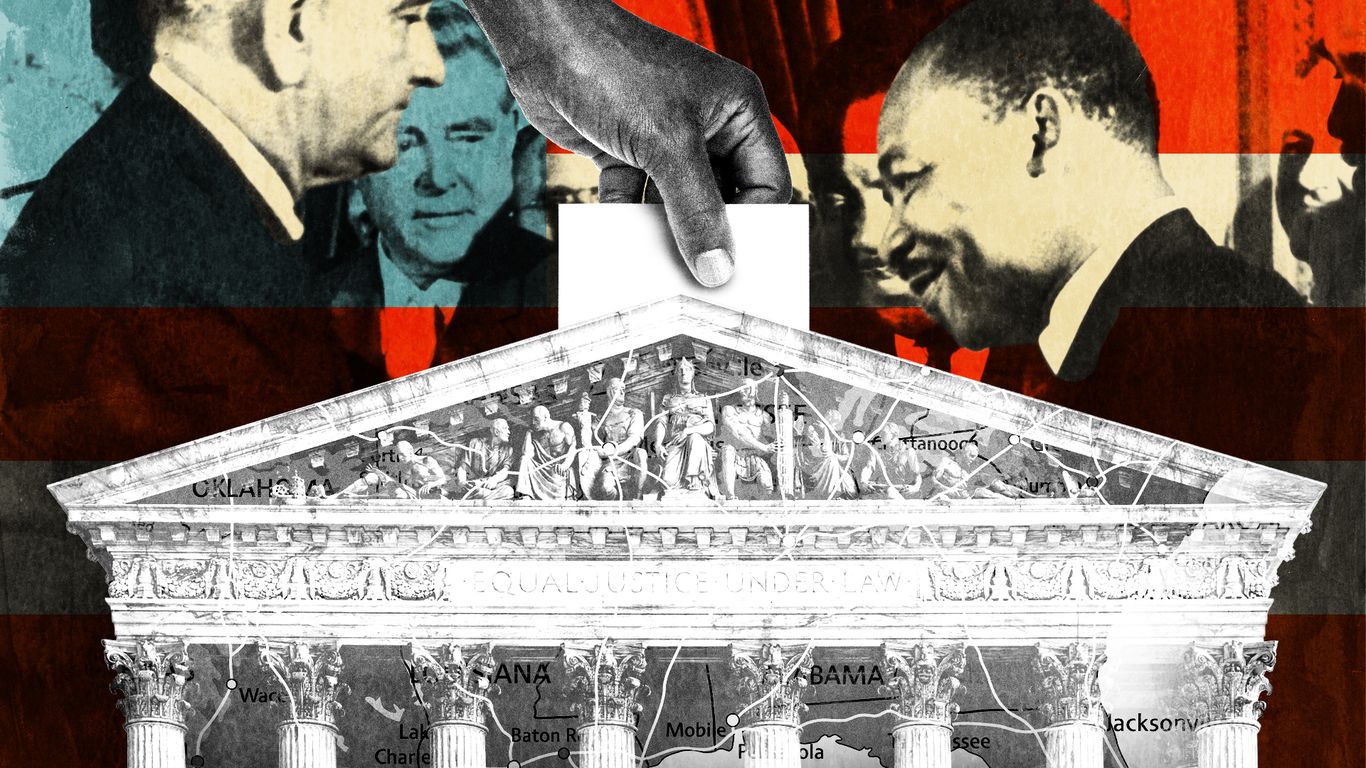
What a weakened Voting Rights Act means in today's America
Summary
The Supreme Court has limited a key part of the Voting Rights Act that protects against racial discrimination in voting. This change comes as the United States has become more diverse and politically divided, raising concerns about fair representation in elections.Key Facts
- The court's ruling in Louisiana v. Callais narrowed Section 2 of the Voting Rights Act, which stops racially discriminatory election practices like gerrymandering.
- Section 2 helped end Jim Crow laws and expanded voting rights for Black Americans in the South.
- The U.S. population was about 85% white in 1965 and is now about 59% white, with multiracial populations growing rapidly.
- Latino and Asian American populations have increased notably, changing political maps in states such as Texas, Georgia, and Arizona.
- The American South is seeing strong population growth, especially in cities that have histories of voting rights struggles.
- Critics worry the ruling weakens protections for voters of color and could allow politicians to manipulate election districts unfairly.
- The ruling argues that some court applications of Section 2 may force states into race-based decisions that the Constitution forbids.
- Legal challenges over voting rights are expected to move to state courts and Congress, affecting future elections in 2026 and 2028.
Read the Full Article
This is a fact-based summary from The Actual News. Click below to read the complete story directly from the original source.