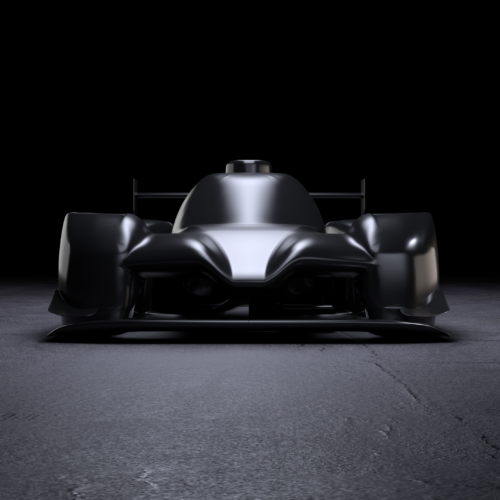
In motorsport, there's nowhere to hide as AI becomes new CFD tool
Summary
Motorsport teams are using artificial intelligence (AI) to speed up the design process of race cars by simulating airflow more quickly and cheaply than traditional methods. IBM and Dallara developed an AI tool called GIST that can predict car aerodynamics in seconds, a task that normally takes thousands of hours on powerful computers.Key Facts
- Aerodynamics have been crucial in racing since the 1960s to help cars grip the track and go faster, especially through corners.
- Teams traditionally used wind tunnels and limited track testing to study airflow effects on race cars.
- Computational Fluid Dynamics (CFD) simulations replaced some wind tunnel work, offering faster and cheaper airflow modeling.
- CFD simulations have become more detailed but also require a lot of computer processing time, slowing down development.
- IBM and racing car maker Dallara created an AI tool called Gauge-Invariant Spectral Transformer (GIST) to simulate car airflow.
- GIST uses a neural network trained on large sets of CFD data from racing prototypes.
- The AI can predict drag and downforce with similar accuracy to traditional CFD but runs in seconds on a normal processor.
- This approach helps teams save time and costs while improving car designs for competitions like IndyCar and endurance racing.
Read the Full Article
This is a fact-based summary from The Actual News. Click below to read the complete story directly from the original source.