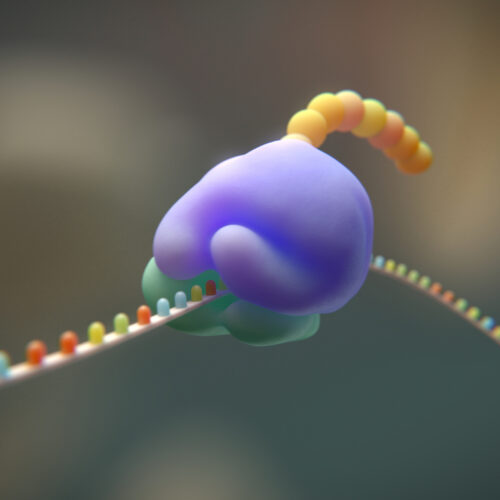
Researchers try to cut the genetic code from 20 to 19 amino acids
Summary
Scientists from Columbia and Harvard tried to simplify the genetic code by removing one of the 20 common amino acids, isoleucine, from certain proteins in E. coli bacteria. They focused on altering essential genes and parts of the ribosome to see if life could function without isoleucine, using AI tools to help design these changes.Key Facts
- The genetic code normally uses 20 amino acids to build proteins in all life on Earth.
- Researchers believe early life might have used fewer than 20 amino acids.
- Isoleucine, leucine, and valine are three similar amino acids that are hydrophobic, meaning they avoid water inside cells.
- Isoleucine was chosen to be removed because it is often swapped out in nature and is similar to valine.
- The team replaced isoleucine with valine in 36 essential E. coli genes; 17 genes worked without isoleucine, but 22 did not.
- Even when cells survived without isoleucine in some genes, their growth usually slowed down.
- The researchers began testing this idea by engineering a ribosome, a key cell machine that makes proteins, without using isoleucine.
- AI-based protein design tools helped make this complex protein editing more feasible.
Read the Full Article
This is a fact-based summary from The Actual News. Click below to read the complete story directly from the original source.