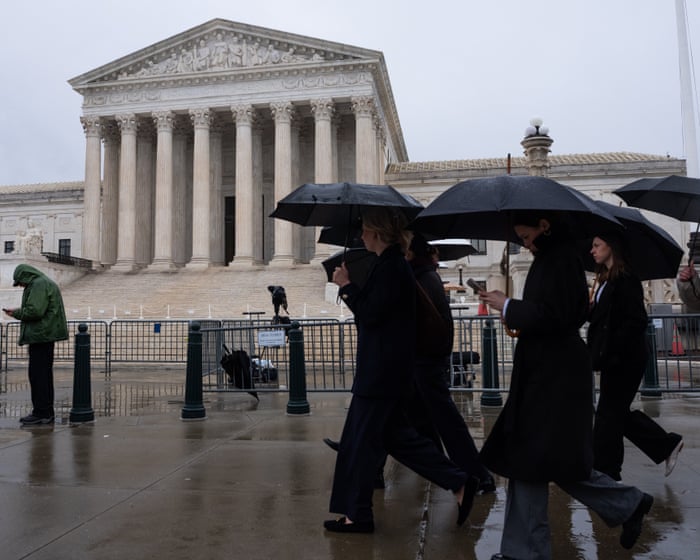
The supreme court’s voting rights decision wasn’t about law – it was about politics | David Daley and Eric J Segall
Summary
The US Supreme Court made a 6-3 decision in Callais v. Louisiana that limits protections against racial gerrymandering and vote dilution under the Voting Rights Act (VRA). This ruling allows state lawmakers, especially in the South, to redraw election maps that could reduce Black political representation and benefit Republican candidates.Key Facts
- The Supreme Court’s decision weakens section 2 of the Voting Rights Act.
- Section 2 used to protect minority voters from unfair district boundaries that dilute their votes.
- The ruling was along party lines, with six justices supporting the change.
- Republican state legislatures are expected to redraw maps favoring their party, especially in Southern states.
- This could lead to the loss of up to 19 Black-held seats in the US House of Representatives and many state legislative seats.
- The decision follows earlier court actions starting in 2013 that limited the original Voting Rights Act.
- Some Republican politicians have already called to redraw districts to increase their electoral advantage.
- Critics say the court ignored Congress’s intent and altered the law for political reasons.
Read the Full Article
This is a fact-based summary from The Actual News. Click below to read the complete story directly from the original source.