‘Such huge consequences’: pressure mounts on France to act on enslavement reparatory justice
Summary
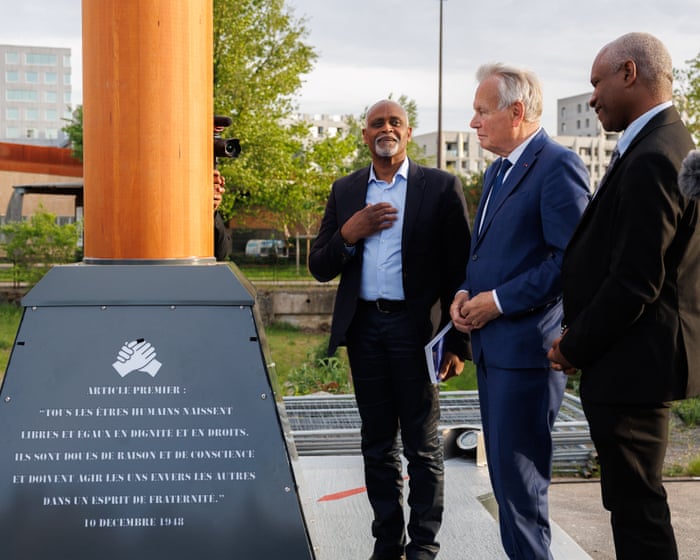
In Nantes, France, a new wooden mast called the Mast of Fraternity and Memory was installed to recognize the history of slavery and honor descendants of enslaved Africans. This event comes as President Emmanuel Macron faces growing calls to develop policies for reparatory justice, which means making amends for the harms caused by slavery.Key Facts
- Nantes was France’s largest port for ships involved in the transatlantic slave trade.
- The Mast of Fraternity and Memory was created by descendants of enslaved Africans and built by local students.
- The mast symbolizes a global movement for reparatory justice and may be replicated in other cities worldwide.
- France abstained from a recent UN vote condemning the transatlantic slave trade as a crime against humanity and calling for reparations.
- France trafficked around 13% of the estimated 13 to 17 million Africans enslaved in the Atlantic slave trade from the 16th to 19th centuries.
- In 2001, France legally recognized slavery and the slave trade as crimes against humanity.
- French overseas territories like Martinique, Guadeloupe, and French Guiana still experience social inequalities linked to the legacy of slavery.
- Campaigners and politicians want President Macron to announce clear reparatory justice measures during the 25th anniversary of the 2001 law.
Read the Full Article
This is a fact-based summary from The Actual News. Click below to read the complete story directly from the original source.