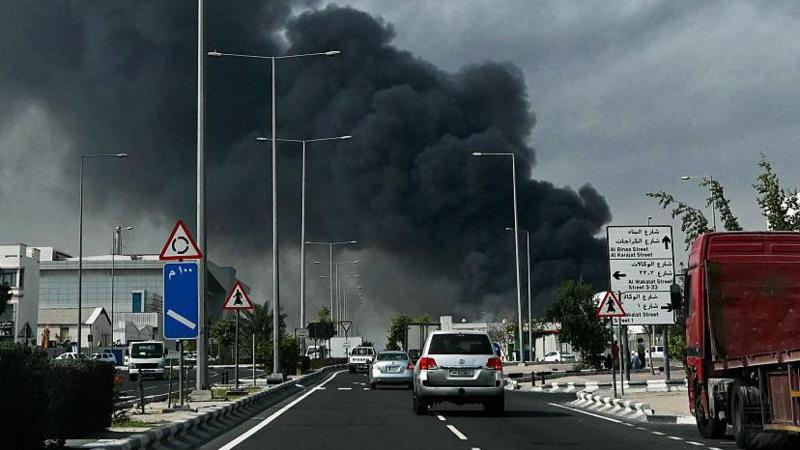
Gulf economies face long-term hit from Iran conflict
Summary
An Iranian missile strike hit Qatar’s main liquefied natural gas (LNG) complex, cutting about 17% of global LNG supply and causing major damage. The conflict between Iran, Israel, and the US has harmed Gulf states’ energy infrastructure, leading to economic losses and slowing growth in the region.Key Facts
- Qatar’s Ras Laffan LNG facility was struck by an Iranian missile on March 18, damaging roughly 17% of the world’s LNG supply.
- QatarEnergy expects $20 billion in lost annual revenue and estimates repairs will take 3 to 5 years.
- The strike followed Israeli bombings on Iran’s South Pars gas field, which shares reserves with Qatar’s North Dome field.
- Over 80 energy facilities in Gulf countries like Bahrain, Kuwait, Saudi Arabia, and the UAE have been hit since February 28.
- The Gulf region has suffered about $58 billion in damage due to ongoing conflict.
- The World Bank reduced its Middle East growth forecast for 2024 to 1.8% from an earlier 4% estimate for 2026, citing war-related impacts.
- The closure of the Strait of Hormuz, a key oil and gas shipping route, has forced Gulf producers to rely on less efficient pipelines, reducing export capacity.
- Saudi Arabia and the UAE are somewhat less affected due to alternative oil routes that bypass the Strait of Hormuz.
Read the Full Article
This is a fact-based summary from The Actual News. Click below to read the complete story directly from the original source.