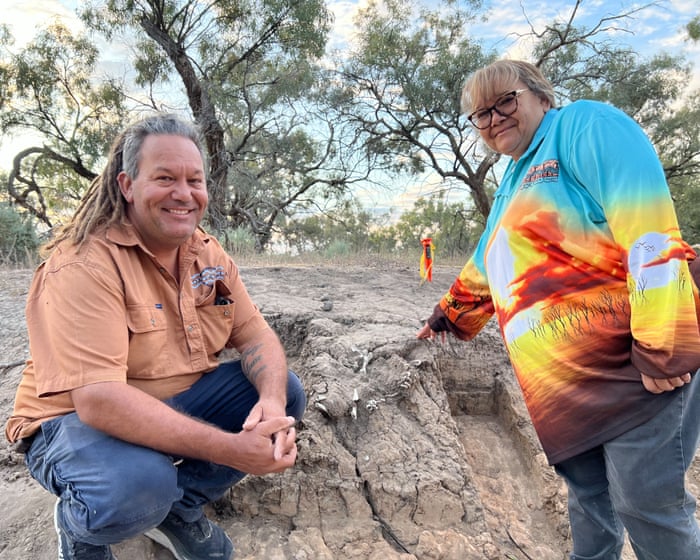
Signs of ‘feeding’ ritual at dingo burial site shed new light on bond between First Nations people and canines
Summary
Archaeologists discovered a dingo burial site about 900 to 1,000 years old in western New South Wales, Australia. The site shows evidence that the Barkindji people performed a unique “feeding” ritual by adding river mussel shells to the burial place over 500 years, highlighting the close relationship between First Nations people and dingoes.Key Facts
- The dingo burial was found near the Baaka (Darling River) in Kinchega National Park.
- Radiocarbon dating indicates the dingo was buried between 916 and 963 years ago.
- The burial site included a shell midden, to which Barkindji people added river mussel shells for about 500 years.
- This “feeding” ritual at a burial site has not been documented archaeologically anywhere else in the world.
- The dingo showed old injuries, suggesting it was cared for by the community after being hurt.
- The site was first discovered in 2000 but was excavated in 2023 after floods damaged some remains.
- Barkindji Elders see the ongoing shell additions as a way to respect ancestors and keep a connection.
- Dingoes were companions to Indigenous people until colonization led to their regional extinction in some areas.
Read the Full Article
This is a fact-based summary from The Actual News. Click below to read the complete story directly from the original source.