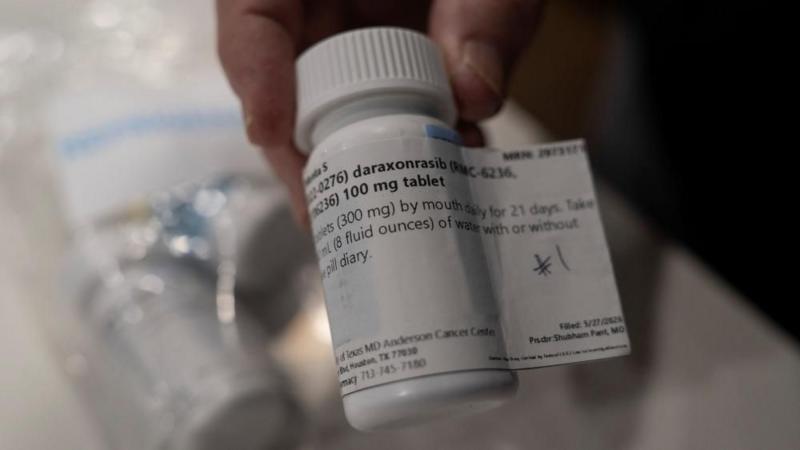
Daily pill doubles survival time for pancreatic cancer patients
Summary
A new daily pill called daraxonrasib has nearly doubled the survival time for patients with advanced pancreatic cancer by targeting a common mutation in the cancer cells. In a large international trial, patients taking daraxonrasib lived on average 13.2 months compared to 6.6 months for those on chemotherapy, and they experienced fewer severe side effects.Key Facts
- Daraxonrasib is a pill that blocks the mutated KRAS gene found in over 90% of pancreatic tumors.
- The drug was tested in a trial with 500 patients from North America, Europe, and Asia.
- Patients on daraxonrasib survived on average 13.2 months, while those on chemotherapy survived 6.6 months.
- The pill caused fewer serious side effects (43.6%) than chemotherapy (57.5%).
- Pancreatic cancer is often diagnosed late and is very difficult to treat, with more than half of patients dying within three months after diagnosis.
- Around 11,500 people are diagnosed with pancreatic cancer each year in Britain, with about 10,200 deaths annually.
- Symptoms of pancreatic cancer can include jaundice, itching, dark urine, pale stools, weight loss, tiredness, and fever, but these signs often appear late or resemble other illnesses.
- The trial results were presented at a major cancer conference in the United States, highlighting this treatment as a major advance for patients with metastatic pancreatic cancer.
Read the Full Article
This is a fact-based summary from The Actual News. Click below to read the complete story directly from the original source.