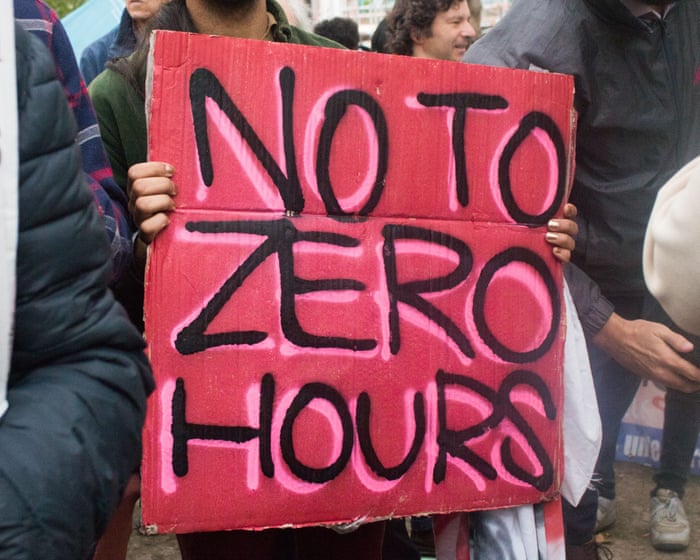
Zero-hours contracts: ministers’ detailed plans for ban criticised by firms and unions
Summary
The UK government plans to ban zero-hours contracts by requiring employers to offer workers a guaranteed minimum number of hours each week, based on their usual work pattern. The proposed rules would guarantee between 8 and 20 hours weekly, but some unions and employers have criticized the details and impact of these plans.Key Facts
- Zero-hours contracts mean workers have no guaranteed minimum hours each week.
- More than 1 million people in the UK currently work under zero-hours contracts.
- New rules aim to guarantee weekly hours based on a worker’s regular hours over a 12-week period.
- Workers could still choose zero-hours contracts but could get compensation if shifts change at short notice.
- The changes come from the Labour Employment Rights Act passed last year.
- Some unions say guaranteeing only up to 20 hours a week is not enough for many workers.
- Employers warn strict rules could reduce job opportunities, especially for young people.
- Businesses suggest a longer 26-week reference period to better reflect seasonal work patterns.
Read the Full Article
This is a fact-based summary from The Actual News. Click below to read the complete story directly from the original source.