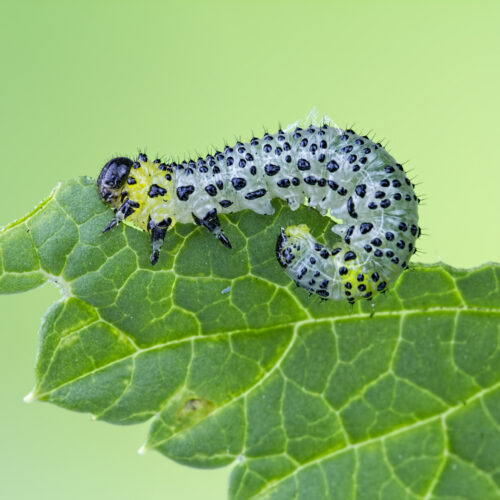
Beans use an immune receptor to call in airstrikes on caterpillars
Summary
Scientists discovered how common bean plants detect caterpillars eating their leaves. They found that the plants use a special immune receptor to sense a small molecule in caterpillar saliva, which then triggers signals to attract predators against the caterpillars.Key Facts
- Plants can release airborne chemical signals to attract the enemies of their herbivores, like caterpillars.
- Caterpillars introduce saliva containing molecules called HAMPs when they eat plants.
- One key molecule is a peptide called inceptin, or a fragment named In11, which comes from a plant protein.
- Bean plants evolved an inceptin receptor to detect In11 and start an immune response.
- This receptor triggers the plant to send signals that call predators to attack the caterpillars.
- Researchers found bean varieties naturally missing a working inceptin receptor due to a gene deletion.
- Using breeding methods, scientists created nearly identical plants with and without the receptor to study its effect.
- The study took several years because the plants are hard to genetically modify, so traditional breeding was used instead.
Read the Full Article
This is a fact-based summary from The Actual News. Click below to read the complete story directly from the original source.