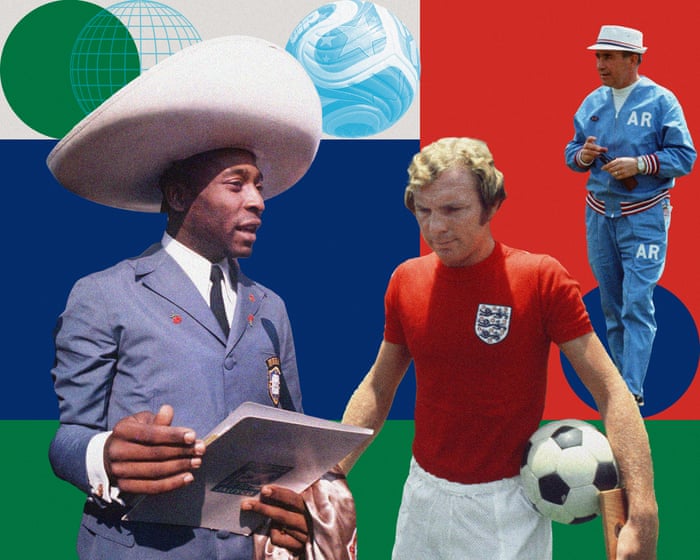
Why preparation isn’t everything at a World Cup | Jonathan Wilson
Summary
The article looks at how different national football teams prepared for the 1970 World Cup in Mexico, focusing on challenges like heat and altitude. It explains early methods, such as Bulgaria’s unusual dehydration training, England’s strict controls, and Brazil’s scientific approach to preparation.Key Facts
- The 1970 World Cup was held in Mexico, where heat and high altitude posed problems for players.
- Bulgaria tried to prepare by training in cold mountains and restricting water, which did not work well; they lost their first two games.
- Many teams trained at high-altitude locations to get used to the conditions, such as Israel in Ethiopia and Colorado, and Uruguay in Quito and Bogotá.
- England, the defending champions, took detailed medical precautions, including salt tablets and advice from a physiologist experienced in high-altitude climbing.
- England’s manager Alf Ramsey distrusted local food and drink, so the team brought their own supplies, causing tension with Mexican authorities who destroyed their frozen meat.
- England’s captain Bobby Moore was briefly arrested in Colombia before the tournament but was released in time to play.
- Brazil’s team prepared with a scientific approach, involving experts and making detailed plans to handle the physical demands of the tournament.
- The article challenges the idea that Brazil’s success came from sheer talent alone, highlighting their serious preparation efforts.
Read the Full Article
This is a fact-based summary from The Actual News. Click below to read the complete story directly from the original source.