Rainfall and landslides fuelled by climate crisis killed 7% of world’s rarest great apes – study
Summary
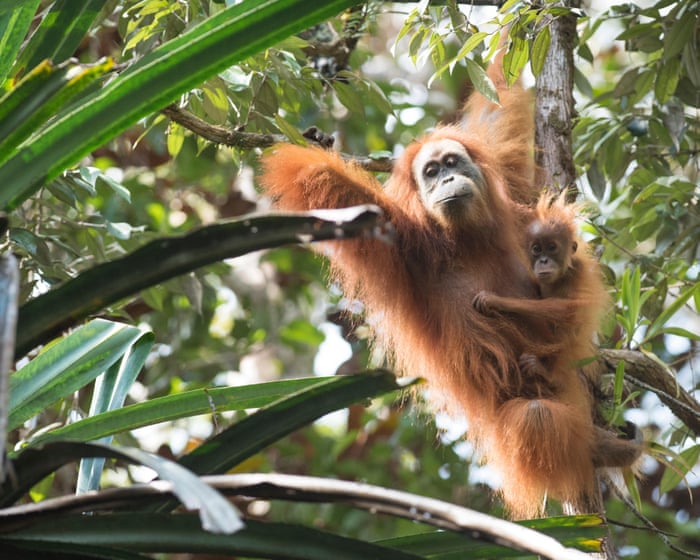
Heavy rainfall and landslides caused by climate change killed about 7% of the world’s rarest great ape species, the Tapanuli orangutan, in North Sumatra, Indonesia. The disaster destroyed a large part of their habitat, raising serious concerns about their survival.Key Facts
- Around 58 out of 800 Tapanuli orangutans died after 39 inches of rain fell over four days in November 2025.
- This death toll represents 11% of the local population and 7% of the total species population.
- Landslides wiped out 8,300 hectares (about 20,510 acres) of the orangutans’ forest home in the Batang Toru ecosystem.
- Scientists say climate change caused by fossil fuel burning increased rainfall by up to 50%.
- The Batang Toru ecosystem is already threatened by mining, palm oil farming, and a large hydropower project.
- Researchers call for stopping harmful land use and expanding protected areas to save the orangutans.
- The Indonesian government has paused major industrial work in the area to help protect the species.
- Losing just 1% of the orangutan population yearly could lead to their extinction, according to earlier studies.
Read the Full Article
This is a fact-based summary from The Actual News. Click below to read the complete story directly from the original source.