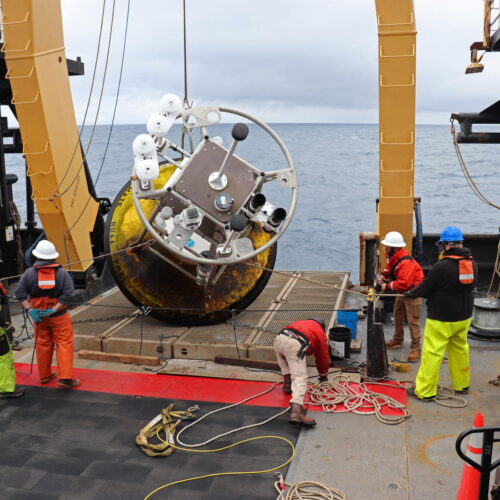
Alaskans will be flying blind after NSF decommissions ocean monitoring network
Summary
The National Science Foundation (NSF) plans to shut down the Ocean Observatories Initiative, a deep-ocean monitoring network that gathers real-time data on ocean conditions. This decision concerns Alaska, which relies on this network to track changes affecting its large fishing industry and to prepare for environmental threats.Key Facts
- The Ocean Observatories Initiative is a $368 million network of about 900 deep-sea instruments across the Pacific and Atlantic Oceans.
- It collects data on ocean chemistry, temperature, waves, and salinity, helping scientists and fishery managers.
- Alaska is the top fish-producing state with a $5.3 billion seafood industry and nearly 42,000 jobs tied to fishing.
- Ocean Station Papa, located 14,000 feet deep in the Gulf of Alaska, is a key part of the monitoring system.
- Real-time data from the system helps track marine heatwaves, fish population crashes, and severe storms in Alaska.
- NSF says the decision is part of a strategy to focus on new scientific priorities and technologies while managing research resources.
- Critics link the shutdown to wider political moves seen as reducing climate research funding.
- Alaska experts warn losing this data is like driving in the dark without lights, as it removes critical information about ocean changes under a warming climate.
Read the Full Article
This is a fact-based summary from The Actual News. Click below to read the complete story directly from the original source.