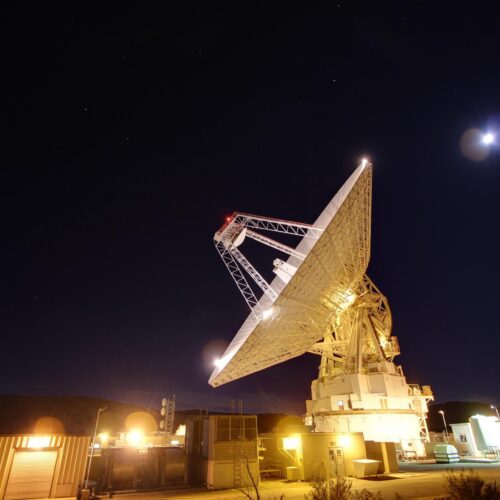
After nearly breaking, NASA's Deep Space Network "worked well" on Artemis II
Summary
NASA used its Deep Space Network (DSN) to communicate with the Artemis II spacecraft carrying astronauts beyond the Moon. After facing challenges during the longer Artemis I mission, NASA improved its systems and scheduling to handle the high demand for data. NASA plans to build new antennas and use new technologies like laser communications to support future Moon missions.Key Facts
- The Deep Space Network is a global set of antennas that communicates with spacecraft far from Earth.
- Artemis I mission in 2022 pushed the DSN to its limits, causing delays in some science missions.
- Artemis II launched on April 1 with four astronauts and required even more data but lasted shorter than Artemis I.
- NASA added new systems and improved scheduling to help the DSN manage higher demand during Artemis II.
- NASA received positive feedback from its science teams on the DSN’s performance for Artemis II.
- Future Moon missions will increase demand on the DSN, with around 40 current missions still operating.
- NASA is working with commercial companies to build more ground antennas called Lunar Exploration Ground Sites (LEGS).
- NASA successfully tested laser (optical) communications on Artemis II to help increase data capacity in the future.
Read the Full Article
This is a fact-based summary from The Actual News. Click below to read the complete story directly from the original source.